
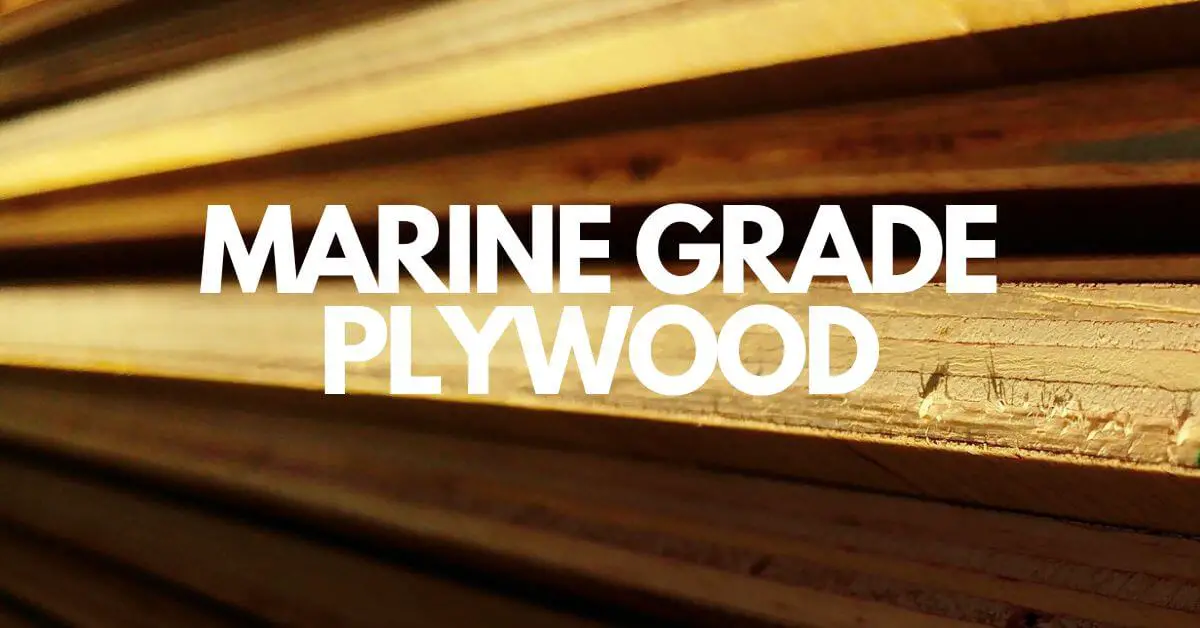
What Is Marine Grade Plywood?
Marine-grade plywood is a high-quality engineered wood panel designed for applications exposed to moisture, humidity, and occasional wet conditions. It is manufactured by bonding multiple thin wood veneer sheets with waterproof adhesive under high heat and pressure.
Unlike ordinary plywood, marine plywood is made with high-quality veneer sheets that contain very few or no core voids. The veneers are arranged with alternating grain directions, giving the panel excellent strength, dimensional stability, and resistance to warping.
Marine-grade plywood is commonly manufactured from durable hardwood or softwood species, depending on the manufacturer and regional standards.
Because of its superior construction, marine plywood is widely used for boats, docks, outdoor furniture, bathroom cabinets, kitchen cabinets, decks, and other high-moisture applications.
Although marine plywood has excellent moisture resistance, it is not completely waterproof. Proper sealing and finishing are still recommended for long-term outdoor performance.
A Brief History of Marine Plywood
Marine plywood became increasingly popular during the 1930s as lightweight boat construction evolved.
During World War II, it was widely used in military boats because it offered an excellent combination of strength, light weight, and durability. Compared with solid lumber, marine plywood allowed boats to be built more quickly while reducing overall weight.
Today, marine plywood remains one of the most trusted engineered wood products for marine and exterior construction.
Common Uses of Marine Plywood
Marine plywood is one of the most versatile plywood products available. Its excellent strength and moisture resistance make it suitable for many indoor and outdoor applications.
1. Boats
Marine plywood is one of the best materials for building boats, boat interiors, and boat components.
It is lightweight, strong, and easy to machine, making it easier to work with than many solid wood species.
For maximum durability, all exposed surfaces should be sealed using high-quality marine paint, epoxy resin, polyurethane, or marine varnish.
2. Lake Platforms
Lake platforms are constantly exposed to moisture, rain, and changing weather conditions.
Marine plywood provides the strength and stability needed for these structures while resisting swelling and delamination better than ordinary plywood.
3. Docks
Docks remain exposed to humid environments throughout the year.
Because marine plywood is manufactured with waterproof adhesive and high-quality veneers, it performs much better than ordinary plywood in these conditions.
Proper sealing and regular maintenance further extend its service life.
4. Bathroom Cabinets and Kitchen Countertops
Bathrooms and kitchens are areas where moisture is present almost every day.
Marine plywood is commonly used for:
- Bathroom cabinets
- Vanity units
- Kitchen cabinets
- Kitchen countertops
- Utility room furniture
Its improved moisture resistance helps reduce swelling and delamination compared with standard interior plywood.
5. Decks and Outdoor Furniture
Marine plywood is widely used for outdoor benches, decks, seating, and garden furniture.
Although it is highly resistant to moisture, applying a protective finish significantly improves its long-term durability outdoors.
Types of Marine Plywood
Marine plywood is available in several grades depending on the quality of the face and back veneers.
1. AA Marine Plywood
AA grade is the highest-quality marine plywood available.
Both faces are smooth, defect-free, and virtually knot-free, making this grade ideal for premium boat building, yacht interiors, luxury furniture, and other visible applications.
It is also the most expensive marine plywood grade.
2. BB Marine Plywood
BB grade marine plywood has good-quality face veneers with small repaired knots or minor imperfections.
It is commonly used for cabinets, boat interiors, furniture, and general marine construction where a perfectly clear face is not essential.
3. AB Marine Plywood
AB grade plywood has one premium-quality face and one lower-grade back.
This grade is commonly used when only one side of the panel will remain visible, such as cabinets, bathroom furniture, and wall paneling.
4. Medium Density Overlay (MDO)
Medium Density Overlay (MDO) plywood is manufactured by bonding a resin-treated fiber overlay to one or both faces of an exterior-grade plywood panel.
The smooth surface makes MDO an excellent choice for:
- Painted signs
- Exterior trim
- Concrete forming
- Outdoor panels
- Commercial signboards
It accepts paint exceptionally well and provides a smooth, durable finish.
5. High Density Overlay (HDO)
High Density Overlay (HDO) plywood is similar to MDO but uses a denser resin-impregnated overlay.
Compared with MDO, HDO offers:
- Better abrasion resistance
- Higher durability
- Greater moisture resistance
- Longer service life
It is widely used for:
- Concrete forms
- Industrial containers
- Highway signs
- Exterior siding
- Heavy-duty construction projects
How to Identify Marine Grade Plywood
Because marine plywood costs more than standard plywood, it is important to ensure you are purchasing genuine marine-grade material.
Here are a few characteristics to look for.
1. Check the Edges
Quality marine plywood should have very few or no visible voids or gaps between the veneer layers.
The core should appear solid and uniform.
2. Inspect the Surface
Higher-grade marine plywood has a smooth, clean surface with very few knots or defects.
Premium grades such as AA marine plywood are almost completely free from visible imperfections.
3. Look for the Certification Stamp
Always check the manufacturer’s grade stamp or certification.
For example, in India, genuine marine plywood is commonly manufactured according to IS:710 standards.
4. Check the Weight
Marine plywood is generally denser and heavier than ordinary plywood because it is manufactured using high-quality veneer sheets.
Although weight alone is not enough to identify marine plywood, it can provide a useful indication of quality.
5. Verify the Manufacturer
Always purchase marine plywood from a reputable manufacturer or authorized dealer.
A trusted brand is more likely to meet the required quality standards and provide genuine waterproof bonding and quality veneer construction.
Is Marine-Grade Plywood Waterproof?
One of the most common questions about marine plywood is whether it is completely waterproof.
The short answer is no.
Marine-grade plywood is not waterproof, but it is highly water-resistant. It is manufactured using waterproof adhesive and high-quality veneer sheets, allowing it to withstand moisture, humidity, and occasional wet conditions much better than ordinary plywood.
However, the wood itself can still absorb moisture over time if left unfinished.
For long-term outdoor or marine use, marine plywood should always be protected with one of the following finishes:
- Marine epoxy resin
- Marine varnish
- Exterior polyurethane
- Waterproof paint
- Fiberglass coating (for boats)
A proper finish helps prevent moisture from entering the wood and significantly extends the lifespan of the plywood.
What Glue Is Used in Marine Plywood?
Marine plywood is manufactured using waterproof adhesives, typically phenol-formaldehyde (PF) resin or other waterproof exterior-grade adhesives that meet recognized manufacturing standards.
These adhesives create strong, durable bonds that resist delamination even after repeated exposure to moisture.
Unlike ordinary interior plywood, marine plywood is specifically designed to perform in wet environments without the veneer layers separating.
Marine Plywood vs Pressure-Treated Plywood
Marine plywood and pressure-treated plywood are both designed for outdoor applications, but they are manufactured differently and serve different purposes.
| Feature | Marine Plywood | Pressure-Treated Plywood |
|---|---|---|
| Treatment | Not chemically treated | Chemically treated to resist decay and insects |
| Core Construction | High-quality veneers with few or no voids | May contain internal voids |
| Adhesive | Waterproof adhesive | Usually exterior-grade adhesive |
| Moisture Resistance | Excellent | Good |
| Warp Resistance | Excellent dimensional stability | More likely to warp as it dries |
| Cost | More expensive | More affordable |
| Common Uses | Boats, docks, bathroom cabinets, outdoor furniture | Deck framing, fences, landscaping, outdoor structures |
Which One Should You Choose?
Choose marine plywood if your project requires:
- High structural quality
- Excellent dimensional stability
- Smooth surfaces
- Boat building
- Cabinetry in humid environments
Choose pressure-treated plywood if your project involves:
- Deck framing
- Outdoor sheds
- Fencing
- Landscaping
- Ground-contact applications
Advantages of Marine Plywood
Marine plywood offers several advantages over standard plywood.
1. Excellent Moisture Resistance
Its waterproof adhesive and high-quality veneer construction allow it to perform exceptionally well in humid environments.
2. Strong and Durable
Marine plywood has excellent strength and load-bearing capacity, making it suitable for demanding construction projects.
3. Minimal Internal Voids
Unlike ordinary plywood, marine plywood contains very few internal gaps, improving both strength and durability.
4. Good Dimensional Stability
The cross-laminated veneer construction helps reduce shrinking, swelling, and warping.
5. Easy to Machine
Marine plywood can be cut, drilled, glued, painted, and finished using standard woodworking tools.
Disadvantages of Marine Plywood
Despite its many advantages, marine plywood also has a few limitations.
1. Higher Cost
Marine plywood is considerably more expensive than standard interior plywood because of its premium veneer quality and waterproof adhesive.
2. Not Completely Waterproof
Although highly moisture-resistant, marine plywood still requires sealing and finishing for long-term outdoor performance.
3. Limited Availability
In some regions, marine plywood is less readily available than standard plywood or MDF.
Marine Plywood Alternatives
Marine plywood is an excellent material, but it is not always the most economical choice.
Several alternatives may be suitable depending on your project.
1. Fiber Cement Board
Fiber cement board is highly resistant to moisture, insects, and fire.
It is commonly used for:
- Exterior wall cladding
- Ceilings
- Bathroom walls
- Soffits
2. Exterior-Grade Plywood
Exterior plywood uses waterproof adhesive and performs well in many outdoor applications.
While it is generally not manufactured to the same quality standards as marine plywood, it is often sufficient for sheds, outdoor furniture, and similar projects.
3. Medium Density Overlay (MDO) Plywood
MDO plywood provides a smooth, weather-resistant surface that is ideal for painted outdoor projects such as signs and exterior panels.
4. Reinforced Polyurethane Foam Board
Reinforced polyurethane foam panels are lightweight, waterproof, rot-resistant, and widely used in marine construction and composite boat building.
Frequently Asked Questions
Is Marine Plywood Better Than Ordinary Plywood?
Yes.
Marine plywood is generally stronger, more durable, and much more resistant to moisture than standard interior plywood.
It also contains fewer internal voids, making it more reliable for demanding applications.
Can Marine Plywood Be Used Outdoors?
Yes.
Marine plywood is specifically designed for outdoor and high-moisture environments.
However, applying a protective finish is still recommended to maximize its lifespan.
Can Marine Plywood Rot?
Yes.
Like any wood product, marine plywood can eventually rot if left continuously exposed to moisture without proper sealing or maintenance.
Regular finishing and proper installation greatly reduce this risk.
Is Marine Plywood Worth the Cost?
If your project will be exposed to moisture, rain, or high humidity, marine plywood is usually worth the additional cost because it offers better durability and a longer service life than ordinary plywood.
Conclusion
Marine-grade plywood is one of the highest-quality engineered wood products available for outdoor and marine applications. Its waterproof adhesive, high-quality veneer construction, and excellent dimensional stability make it a preferred choice for boats, docks, bathroom cabinets, kitchen furniture, decks, and many other moisture-prone projects.
Although marine plywood is not completely waterproof, it provides outstanding resistance to moisture and weather when properly sealed and maintained. While it is more expensive than ordinary plywood, its strength, durability, and long service life often make it a worthwhile investment for projects where reliability matters.
Comments are closed.