If you’ve researched flooring, furniture, tool handles, or firewood, you’ve probably encountered hickory wood. Known for its incredible strength and durability, hickory is one of the toughest domestic wood species available in North America. But is hickory a hardwood or a softwood?
The short answer is yes, hickory is a hardwood. In fact, hickory is considered one of the hardest and strongest commercially available hardwoods, making it a popular choice for flooring, cabinetry, furniture, and high-impact applications.
In this guide, we’ll explain why hickory is classified as a hardwood, examine its properties, compare it to other woods, and explore its most common uses.
What Makes a Wood Hardwood or Softwood?
Many people assume that hardwood means hard wood and softwood means soft wood. While hardness often correlates with the classification, the actual distinction is botanical.
Hardwoods
Hardwoods come from deciduous trees, which typically lose their leaves each year and produce seeds enclosed within fruits, nuts, or flowers.
Examples include:
- Hickory
- Oak
- Maple
- Walnut
- Cherry
- Ash
Softwoods
Softwoods come from coniferous trees, which generally have needles and cones.
Examples include:
- Pine
- Cedar
- Spruce
- Fir
- Redwood
Because hickory comes from a deciduous tree, it is classified as a hardwood.
Is Hickory a Hardwood?
Yes, hickory is a hardwood.
Hickory trees belong to the genus Carya, a group of deciduous hardwood trees native primarily to North America and parts of Asia.
Hickory is not only a hardwood but also one of the hardest domestic hardwoods commonly used in woodworking. Its exceptional strength, shock resistance, and durability have made it a favorite among woodworkers and craftsmen for generations.
Why Hickory Is Classified as a Hardwood
Hickory is considered a hardwood because:
- It comes from a deciduous tree.
- It produces flowers and nuts.
- It sheds its leaves annually.
- It has a dense cellular structure typical of hardwoods.
Unlike softwoods, which reproduce through cones, hickory trees produce edible nuts enclosed in protective shells.
How Hard Is Hickory?
One reason hickory is so popular is its remarkable hardness.
On the Janka Hardness Scale, hickory scores approximately:
| Wood Species | Janka Rating |
|---|---|
| Eastern White Pine | 380 |
| Western Red Cedar | 350 |
| Cherry | 950 |
| Black Walnut | 1,010 |
| Red Oak | 1,290 |
| White Oak | 1,360 |
| Hard Maple | 1,450 |
| Hickory | 1,820 |
This means hickory is significantly harder than oak, walnut, and cherry.
Its high Janka rating makes it highly resistant to dents, wear, and heavy use.
Hickory Wood Characteristics
Exceptional Strength
Hickory is widely recognized as one of the strongest domestic hardwoods.
Its strength makes it ideal for:
- Flooring
- Furniture
- Tool handles
- Sports equipment
- Stair treads
Outstanding Shock Resistance
Few woods absorb impact as effectively as hickory.
For this reason, hickory has long been used for:
- Axe handles
- Hammer handles
- Sledgehammer handles
- Drumsticks
Distinctive Appearance
Hickory typically features:
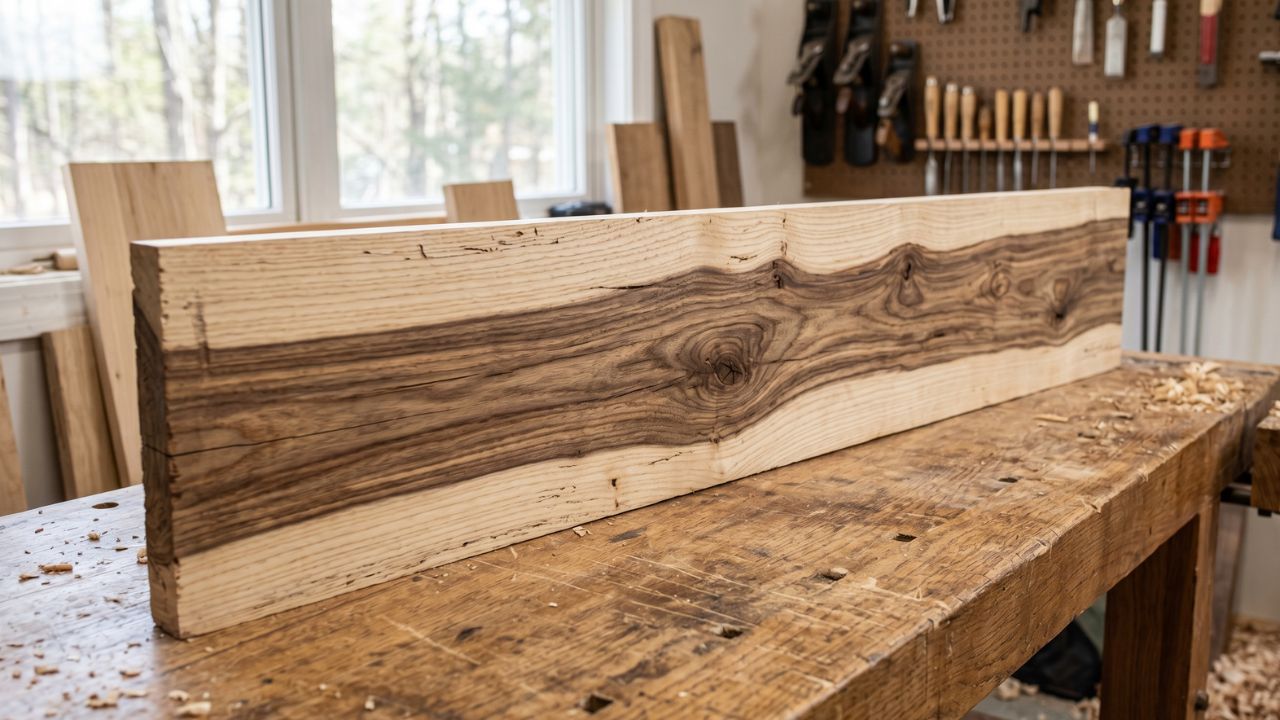
- Light cream-colored sapwood
- Medium to dark brown heartwood
- Bold grain patterns
- Rustic character
The contrast between sapwood and heartwood gives hickory a unique and attractive appearance.
Good Durability
Although not naturally rot-resistant like cedar or teak, hickory performs extremely well indoors when properly maintained.
Types of Hickory Wood
Several species are sold commercially as hickory.
Shagbark Hickory
One of the most common species.
Known for:
- Strong wood
- Excellent firewood
- Distinctive bark
Pignut Hickory
Frequently used in lumber production and tool handles.
Shellbark Hickory
Produces large edible nuts and high-quality lumber.
Mockernut Hickory
Valued for its strength and durability.
Most commercial lumber is sold simply as “hickory” without specifying the exact species.
Hickory vs Other Hardwoods
| Property | Hickory | Oak | Maple | Walnut |
|---|---|---|---|---|
| Hardness | Very High | High | High | Medium |
| Strength | Excellent | Very Good | Very Good | Good |
| Shock Resistance | Excellent | Moderate | Moderate | Moderate |
| Workability | Difficult | Moderate | Moderate | Easy |
| Grain Pattern | Bold | Prominent | Fine | Attractive |
| Cost | Moderate | Moderate | Moderate | High |
While hickory is stronger than many hardwoods, it can be more challenging to machine and work with because of its density.
Uses of Hickory Wood
Thanks to its strength and durability, hickory is used in a variety of applications.
Hardwood Flooring
Hickory flooring is highly popular because it:
- Resists wear
- Handles heavy foot traffic
- Offers a distinctive rustic appearance
Furniture
Common furniture applications include:
- Dining tables
- Chairs
- Cabinets
- Dressers
- Bed frames
Tool Handles
Hickory remains the industry standard for many hand tools because of its shock resistance.
Sports Equipment
Traditionally used for:
- Baseball bats
- Lacrosse sticks
- Drumsticks
Smoking and Barbecue
Hickory wood is famous for producing rich smoke flavor when cooking:
- Pork
- Beef
- Ribs
- Poultry
Advantages of Hickory
Extremely Durable
Hickory can withstand decades of heavy use.
High Strength
Few domestic woods offer comparable strength.
Excellent Wear Resistance
Ideal for floors and high-traffic areas.
Beautiful Grain Patterns
Creates a rustic and natural appearance.
Great Firewood
Produces high heat output and long burn times.
Disadvantages of Hickory
Difficult to Work With
Its density can make cutting, drilling, and machining more challenging.
Heavy Weight
Hickory is significantly heavier than many wood species.
Can Be Expensive
Higher-quality hickory lumber may cost more than common hardwoods.
Limited Outdoor Durability
Unlike cedar or teak, hickory is not naturally resistant to rot and moisture.
Is Hickory Good for Firewood?
Absolutely.
Many homeowners consider hickory one of the best firewood species available.
Benefits include:
- Very high BTU output
- Long burn times
- Excellent coaling properties
- Pleasant smoky aroma
Because of its density, hickory burns hotter and longer than most other firewood species.
Frequently Asked Questions
Is hickory harder than oak?
Yes. Hickory is generally harder and stronger than both red oak and white oak.
Is hickory a good wood for furniture?
Yes. Hickory’s durability and unique grain make it an excellent furniture wood.
Is hickory water resistant?
Hickory has moderate moisture resistance but is not naturally rot-resistant. Outdoor applications usually require protective finishes.
Why are tool handles made from hickory?
Hickory’s exceptional shock resistance helps absorb impacts and reduces the chance of handle failure.
Is hickory expensive?
Hickory is typically moderately priced. It usually costs more than common species like poplar but less than premium woods such as walnut.
Final Thoughts
Hickory is unquestionably a hardwood, and one of the strongest hardwoods commonly available in North America. Its exceptional hardness, shock resistance, durability, and distinctive grain make it a favorite for flooring, furniture, tool handles, and firewood.
While it can be more difficult to work with than softer woods, the strength and longevity of hickory often make the extra effort worthwhile. If you need a wood that can withstand heavy use and provide decades of service, hickory is one of the best hardwood choices available.