
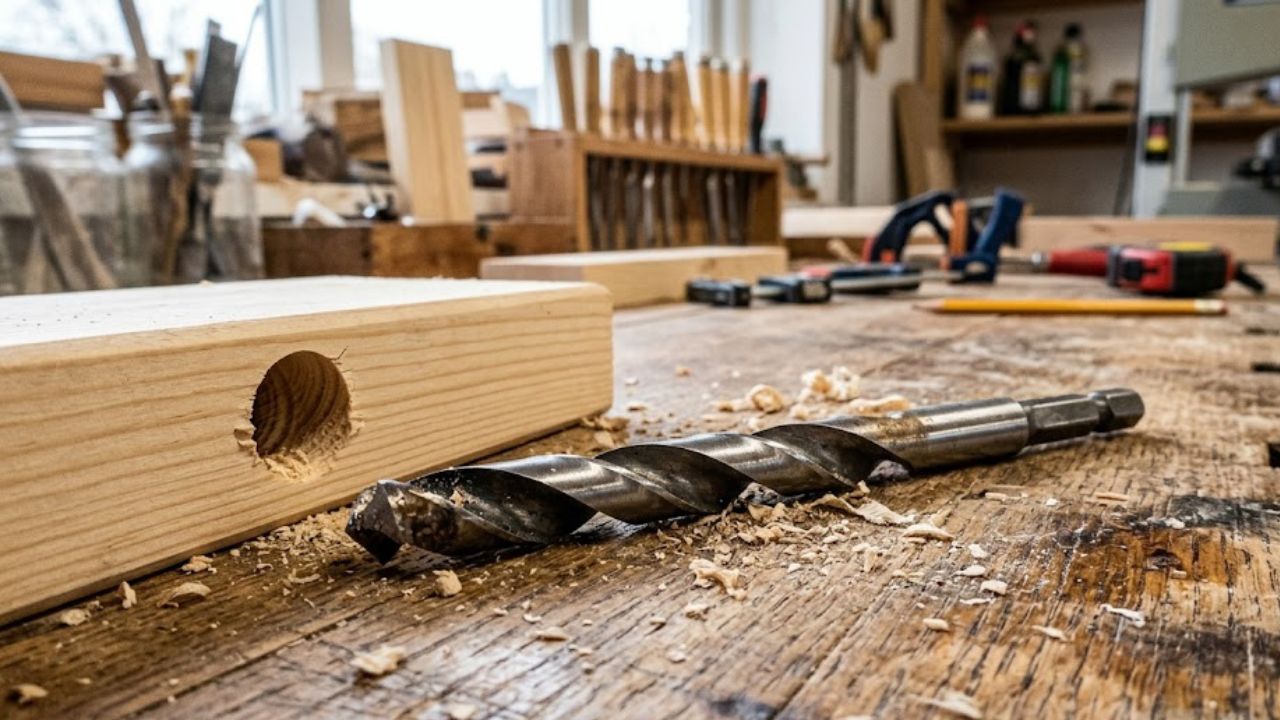
When working with wood screws, choosing the correct drill bit size is just as important as selecting the right screw. Using a pilot hole that is too small can split the wood, while a hole that is too large may reduce the screw’s holding strength.
If you’re wondering what size drill bit to use for a #10 wood screw, the answer depends on whether you’re drilling a pilot hole in hardwood or softwood and whether you’re drilling a clearance hole.
Quick Answer
For a #10 wood screw, the recommended pilot drill bit sizes are:
| Wood Type | Pilot Hole Size |
|---|---|
| Softwood (Pine, Cedar, Fir) | 7/64″ (2.8 mm) |
| Hardwood (Oak, Maple, Hickory) | 1/8″ (3.2 mm) |
| Clearance Hole | 3/16″ (4.8 mm) |
In most woodworking projects, a 1/8-inch drill bit is the safest choice for a #10 wood screw, especially when working with hardwoods.
What Is a #10 Wood Screw?
The “#10” designation refers to the screw’s diameter. A #10 wood screw has an approximate major diameter of:
- 0.190 inches
- 4.83 mm
It is commonly used for:
- Deck construction
- Furniture assembly
- Cabinet installation
- Framing connections
- Outdoor woodworking projects
- Heavy-duty wood fastening
Because a #10 screw is larger than common #6 and #8 screws, creating the proper pilot hole is important to prevent splitting and make installation easier.
Why Use a Pilot Hole?
A pilot hole is a small hole drilled before driving the screw.
Pilot holes provide several benefits:
- Prevent wood splitting.
- Reduce screw breakage.
- Make driving screws easier.
- Improve screw alignment.
- Reduce stress on cordless drills and impact drivers.
Pilot holes are especially important when working near board edges or with dense hardwood species.
The Pilot Hole Size for a #10 Wood Screw
The ideal pilot hole should be approximately the same diameter as the screw’s shank (the solid center portion excluding the threads).
Softwood Pilot Hole
For softwoods such as:
- Pine
- Spruce
- Cedar
- Fir
- Redwood
Use: 7/64-inch drill bit
The softer wood fibers allow the screw threads to cut into the material without excessive resistance.
Hardwood Pilot Hole
For hardwoods such as:
- Oak
- Maple
- Hickory
- Walnut
- Cherry
Use: 1/8-inch drill bit
Hardwoods are denser and more prone to splitting, so a slightly larger pilot hole reduces installation force while maintaining strong holding power.
What Size Clearance Hole for a #10 Screw?
A clearance hole allows the screw to pass freely through the top board while pulling the second board tightly against it.
For a #10 wood screw, the recommended clearance hole is: 3/16 inch (0.1875″)
This size allows the screw threads to engage only the lower piece of wood, creating a stronger joint.
Drill Bit Sizes for Different Applications
| Application | Drill Bit Size |
|---|---|
| Softwood Pilot Hole | 7/64″ |
| Hardwood Pilot Hole | 1/8″ |
| Clearance Hole | 3/16″ |
| Countersink Pilot Set | #10 Countersink Bit |
Using a countersink bit is recommended when the screw head needs to sit flush with the wood surface.
How to Drill a Pilot Hole for a #10 Wood Screw
Step 1: Mark the Location
Use a pencil or center punch to mark the exact screw location.
Step 2: Select the Correct Drill Bit
Choose:
- 7/64″ for softwood
- 1/8″ for hardwood
Step 3: Drill Straight
Hold the drill perpendicular to the wood surface and drill to the desired depth.
Step 4: Add a Clearance Hole (Optional)
If joining two boards together, drill a 3/16″ clearance hole through the top board.
Step 5: Drive the Screw
Insert the #10 wood screw and drive it until snug. Avoid overtightening, which can strip the wood fibers.
Common Mistakes to Avoid
Using No Pilot Hole
Driving a #10 screw directly into hardwood often causes splitting or broken screws.
Using an Oversized Pilot Hole
A hole that is too large reduces thread engagement and weakens the joint.
Forgetting a Clearance Hole
Without a clearance hole, the top board may not pull tightly against the lower board.
Drilling Too Deep
Excessively deep pilot holes reduce the screw’s grip.
#10 Screw Pilot Hole Chart
| Screw Size | Softwood Pilot | Hardwood Pilot |
|---|---|---|
| #6 | 3/32″ | 7/64″ |
| #8 | 7/64″ | 1/8″ |
| #10 | 7/64″ | 1/8″ |
| #12 | 1/8″ | 9/64″ |
Keeping this chart handy can save time during woodworking projects.
Frequently Asked Questions
Can I use a 1/8-inch drill bit for all #10 wood screws?
Yes. A 1/8-inch drill bit works well for most hardwood applications and can also be used in softwoods if necessary.
Do deck screws need pilot holes?
Many modern deck screws are self-drilling, but pilot holes are still recommended near board ends and when using hardwood decking.
What size countersink bit should I use for a #10 screw?
Use a countersink specifically designed for #10 screws. Most combination countersink bits are labeled by screw size.
Can a pilot hole be too small?
Yes. A hole that is too small increases driving force, which may split the wood or break the screw.
Final Thoughts
The best drill bit size for a #10 wood screw is typically 7/64 inch for softwoods and 1/8 inch for hardwoods. If you’re joining two boards together, use a 3/16-inch clearance hole in the top board for the strongest connection.
Taking a few seconds to drill the proper pilot hole helps prevent splitting, makes screw installation easier, and results in stronger, more professional-looking woodworking projects.