
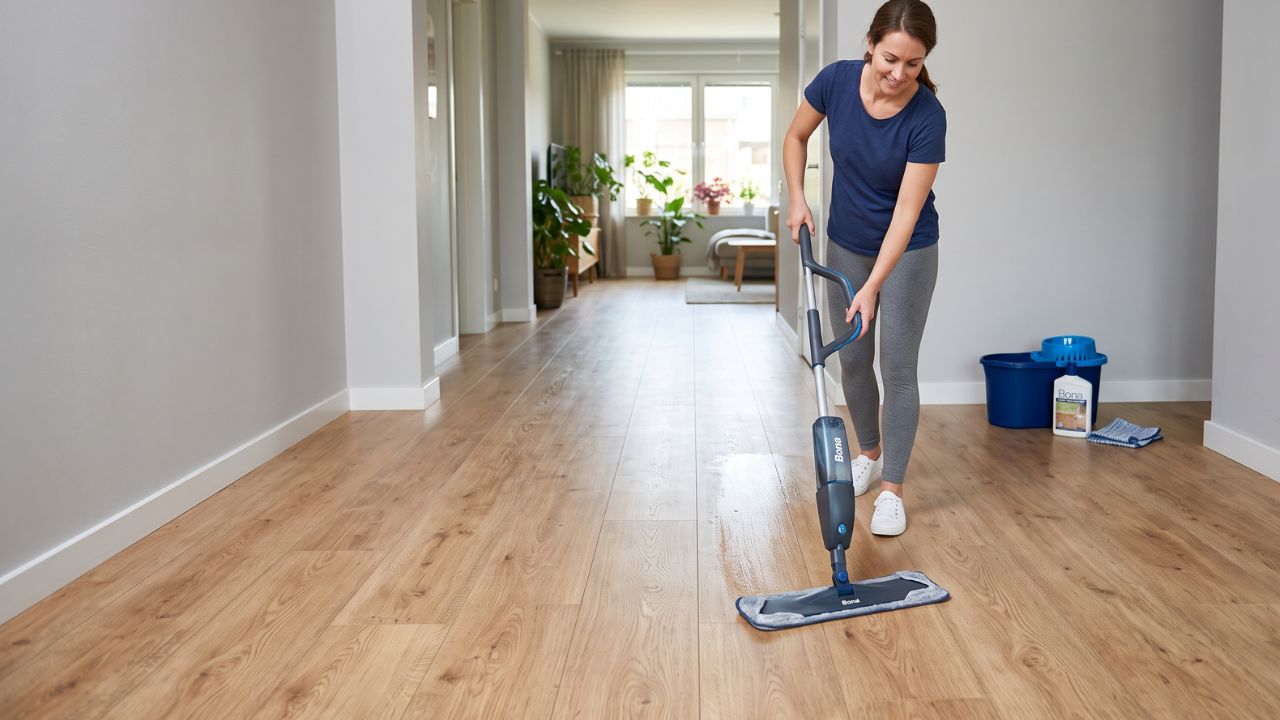
Laminate wood floors are one of the most popular flooring choices in homes today — and for good reason. They mimic the warm, natural look of hardwood at a fraction of the cost, resist scratches better than solid wood, and hold up well in busy households. But here’s the thing most homeowners get wrong: laminate floors are not waterproof, and cleaning them the wrong way can cause irreversible damage.
As someone who has spent years working with wood and wood-composite flooring products, I can tell you that laminate is both forgiving and fragile — forgiving of foot traffic and pet claws, but surprisingly sensitive to excess moisture, harsh chemicals, and abrasive tools. This guide will walk you through everything you need to know to clean your laminate floors correctly, keep them looking fresh for years, and avoid the costly mistakes that prematurely dull or warp them.
What Is Laminate Flooring Made Of? (And Why It Matters for Cleaning)
Before we dive into cleaning methods, it helps to understand what you’re actually dealing with. Laminate flooring is a multi-layer synthetic product, not real wood. It typically consists of four layers:
- Wear Layer (Top): A clear, hard aluminum oxide coating that protects against scratches and UV light.
- Design Layer: A high-resolution photographic image of wood grain (or stone, tile, etc.).
- Core Layer: Dense fiberboard (HDF/MDF) — this is the most vulnerable layer. It swells and warps when exposed to excess water.
- Backing Layer (Bottom): A moisture-resistant base that adds stability and prevents moisture from rising through the subfloor.
The core layer is why water is laminate’s biggest enemy. Once moisture seeps between the planks or under the wear layer, the HDF core absorbs it like a sponge — causing the planks to swell, buckle, and separate at the seams. This damage is usually permanent. That’s why every cleaning method in this guide prioritizes low moisture above everything else.
What You’ll Need: Tools & Cleaning Products
Recommended Tools
- Soft-bristle broom or dust mop
- Microfiber flat mop (not a string mop)
- Vacuum cleaner with a hard floor setting (no beater bar)
- Microfiber cloths or pads
- Two spray bottles (one for cleaner, one for plain water)
- Dry towel or dry microfiber cloth for buffing
Recommended Cleaning Solutions
- Commercial laminate floor cleaner (e.g., Bona Hard-Surface Floor Cleaner, Black Diamond, Method)
- DIY solution: 1 part white vinegar + 3 parts warm water (use sparingly — see caution below)
- Dish soap solution: A few drops of mild dish soap in a gallon of warm water
- Rubbing alcohol: For tough stains like ink, nail polish, or marker
- Acetone (nail polish remover): For very stubborn stains — use with caution
Products to AVOID on Laminate Floors
| Product / Method | Why You Should Avoid It |
|---|---|
| Steam mops | High heat and steam force moisture into seams, warping the core layer |
| Wet string mops | Deposit too much water; leave standing moisture on the surface |
| Wax or polish | Leaves a filmy residue; not designed for laminate wear layers |
| Oil-based soaps (Murphy’s Oil Soap) | Leaves a dull, streaky buildup that attracts dirt |
| Bleach or ammonia cleaners | Strips the protective wear layer, causes discoloration |
| Abrasive scrubbers / steel wool | Scratches and dulls the wear layer permanently |
| Undiluted vinegar (straight) | Acidity can etch and dull the finish over time with repeated use |
| Vacuum beater bar attachment | Can scratch or chip the laminate surface |
Step-by-Step: Daily & Routine Cleaning
Routine cleaning is about keeping grit, dust, and debris off your floors before they can scratch the wear layer. This should happen at least 2–3 times per week in busy households, or daily in homes with pets and kids.
Step 1 — Dry Sweep or Vacuum First (Always)
Before any liquid touches your laminate floor, remove all loose dirt, dust, pet hair, and grit. Use a soft-bristle broom or a microfiber dust mop, working in long, overlapping strokes in the direction of the planks. If you prefer vacuuming, use the hard floor setting and make sure the beater bar (rotating brush) is completely turned off — this single detail prevents thousands of micro-scratches over time.
Pro tip: Grit is the silent killer of laminate floors. Even fine sand particles act like sandpaper under foot traffic, slowly grinding away the protective wear layer. A consistent dry-sweep habit will extend the life of your floors dramatically.
Step 2 — Spot-Clean Any Fresh Spills Immediately
Time is critical with spills on laminate. The faster you blot it up, the less chance moisture has to seep into seams. Use a dry microfiber cloth or paper towel and blot — do not wipe or spread the liquid. Work from the outside of the spill toward the center. Once the bulk of the liquid is absorbed, dry the area completely with a clean cloth.
Step 3 — Damp Mop (Lightly)
Spray your laminate floor cleaner (or DIY solution) directly onto a microfiber mop pad — never onto the floor itself. The mop pad should be damp, not wet. When you squeeze it, no water should drip. Mop in the direction of the planks using smooth, overlapping strokes.
Work in sections of about 10–15 square feet at a time. If any section looks wet after mopping, immediately dry it with a clean, dry microfiber cloth or towel. The floor should air-dry within 1–2 minutes. If it’s taking longer, your mop is too wet.
Step-by-Step: Deep Cleaning Laminate Floors
Deep cleaning should be done once a month, or whenever your floors look dull, feel sticky underfoot, or have a visible film buildup. The process is more thorough than routine cleaning but still follows the low-moisture rule.
Step 1 — Clear the Area
Move furniture, rugs, and other objects off the laminate surface. This lets you access every corner and edge, and prevents you from pushing dirt underneath furniture.
Step 2 — Thorough Dry Clean
Vacuum the entire floor carefully with the beater bar off. Pay special attention to corners, edges along baseboards, and transitions between rooms where dust accumulates most. Follow up with a microfiber dust mop to catch anything the vacuum missed.
Step 3 — Prepare Your Cleaning Solution
For deep cleaning, a slightly stronger solution works better. Mix:
- 1 gallon of warm (not hot) water
- 1/4 cup of white vinegar or a few drops of mild dish soap
Or use a dedicated laminate floor cleaner at the dilution ratio recommended on the label. Avoid making the solution too concentrated — more cleaner doesn’t mean cleaner floors, it just leaves more residue.
Step 4 — Mop in Sections, Dry as You Go
Dampen your microfiber mop pad in the solution, wring it out thoroughly, then mop a section. Immediately follow each mopped section with a dry microfiber pad or towel. Never let the solution sit on the surface. Work your way from the far corner of the room toward the exit so you don’t walk on freshly cleaned areas.
Step 5 — Buff Dry
Once the entire floor has been mopped and dried, do a final pass with a completely dry microfiber mop. This removes any remaining streaks or film and restores the floor’s natural sheen. Streak marks are often caused by product residue or water mineral deposits — this final buffing step eliminates both.
How to Remove Tough Stains from Laminate Floors
Different stains require different approaches. Here’s a targeted guide for the most common problem stains:
| Stain Type | Recommended Removal Method | What to Avoid |
|---|---|---|
| Grease / cooking oil | Apply a small amount of dish soap diluted in warm water on a microfiber cloth; blot and wipe | Scrubbing; excess water |
| Dried food / mud | Let it dry completely, then scrape gently with a plastic scraper; follow with damp cloth | Metal scrapers; wetting before scraping |
| Ink / marker / dye | Dab with rubbing alcohol (isopropyl) on a microfiber cloth; work from edges inward | Spreading the stain; excess rubbing |
| Nail polish / paint | Acetone (nail polish remover) on a cloth — test in hidden area first; wipe immediately | Soaking the area; harsh scrubbing |
| Scuff marks (shoe rubber) | Rub gently with a clean pencil eraser or dry microfiber cloth | Any wet solution; abrasive pads |
| Candle wax / gum / adhesive | Harden with ice pack in a bag, then gently chip off with plastic scraper; wipe residue with mineral spirits | Heat (don’t use hair dryer); metal tools |
| Pet urine | Blot immediately with paper towels; clean with enzyme-based pet cleaner or vinegar solution; dry completely | Letting it sit; over-wetting; bleach |
| Wine / juice / coffee | Blot immediately; clean with warm water + mild dish soap; dry thoroughly | Leaving it to soak in; hot water |
General stain rule: Always blot, never rub. Rubbing spreads the stain and works it deeper into any surface texture in the wear layer. Start from the outer edges and work inward.
DIY Laminate Floor Cleaner Recipes
You don’t need to spend a lot on commercial cleaners. These simple DIY recipes work well and are safe for most laminate floors:
Recipe 1 — Everyday All-Purpose Cleaner
- 2 cups warm water
- 1/2 cup white vinegar
- Few drops of essential oil (optional — lavender or tea tree for scent)
Mix in a spray bottle. Spray onto microfiber mop pad (not the floor), then mop. Best for routine maintenance cleaning.
Recipe 2 — Streak-Free Shine Cleaner
- 1 gallon warm water
- 1 tablespoon dish soap (plain, no moisturizers)
- 1/4 cup rubbing alcohol
The rubbing alcohol evaporates quickly, helping the floor dry fast and reducing streak risk. Great for deep cleaning sessions.
Recipe 3 — Scuff & Grease Remover
- 1/2 cup warm water
- 1/2 cup rubbing alcohol
- 1/2 cup white vinegar
This stronger solution cuts through grease and sticky residue. Use on a spot basis — not for full-floor mopping.
Vinegar caution: While diluted vinegar is a popular and effective cleaner, using it at full strength or too frequently over months/years can gradually etch the finish on some laminate brands. Use it diluted and not as your only cleaning solution if possible.
Dealing with Common Laminate Floor Problems
Problem: Streaks and Film Buildup
If your floors look dull or leave a streaky film even after cleaning, the culprit is almost always product residue — either too much cleaner, a wax-based product, or oil soap. To fix it, mop with a 50/50 mixture of white vinegar and water (no soap) and follow immediately with a dry microfiber buff. You may need to repeat this 2–3 times to lift heavy buildup.
Problem: Sticky Surface
Stickiness happens when too much cleaning solution is left on the surface. Reduce the amount of cleaner you use and always follow with a dry pass. If stickiness persists, do a plain warm-water damp mop to remove all residue, dry thoroughly, then re-clean with minimal solution.
Problem: Swelling or Buckling Near Seams
This is water damage — the core layer has absorbed moisture. Unfortunately, this is largely irreversible and the affected planks usually need replacement. Prevention is the only real answer: keep moisture off the floor, fix leaks promptly, and never use a wet mop.
Problem: Scratches and Scuffs
Light scuffs can sometimes be rubbed out with a dry cloth or pencil eraser. For actual scratches, a laminate floor repair kit (available at hardware stores) uses color-matched filler and a touch-up pen to minimize visibility. Deep gouges may require plank replacement.
Problem: Dull Finish
A dull finish is usually caused by either product buildup, micro-scratching from grit underfoot, or sun damage (UV fading). For buildup: strip with a vinegar solution and buff dry. For scratches and UV fade: there’s no restoration process for laminate — its wear layer cannot be sanded or refinished like real hardwood. At that point, replacement is the only option — another reason preventive care matters so much.
Laminate Floor Cleaning Frequency Guide
| Task | Recommended Frequency | Notes |
|---|---|---|
| Dry sweep / dust mop | Daily or every other day | More often with pets or kids |
| Vacuum (hard floor setting) | 2–3 times per week | Reaches corners and edges better than broom |
| Damp mopping | Once a week | Use very lightly dampened microfiber only |
| Deep cleaning | Once a month | Or when floors look dull or feel sticky |
| Spot stain treatment | Immediately when stains occur | Never let stains sit — act fast |
| Inspect seams for moisture damage | Every 3–6 months | Especially near kitchens, bathrooms, and entrances |
Long-Term Maintenance Tips: Keep Your Laminate Floors Looking New
Cleaning is only part of the equation. How you maintain the environment around your floors matters just as much as how you clean them.
Use Felt Pads Under All Furniture
The single most damaging thing to laminate floors is dragging furniture. Stick felt adhesive pads on the bottom of every chair, table, sofa, and cabinet leg. Replace them when they wear thin — typically once or twice a year depending on use.
Place Entry Mats at Every Door
Outdoor grit, moisture, and salt (in winter) are all tracked in on shoes. An exterior mat to catch the worst of it and an interior mat to trap what’s left will dramatically reduce the amount of debris reaching your floors. Choose mats without rubber backing when placing directly on laminate — rubber can discolor the surface over time.
Keep Indoor Humidity Stable
Laminate expands and contracts with humidity changes, just like wood. Keep indoor relative humidity between 35–65% year-round. Very dry air (common in winter) causes planks to shrink and separate; very humid air causes swelling. A whole-home humidifier or dehumidifier helps stabilize this.
Trim Pet Nails Regularly
Dog nails in particular create deep, linear scratch patterns across laminate wear layers. Regular grooming, combined with pet-friendly mats in high-traffic pet areas, protects the surface effectively.
Use Window Treatments to Limit UV Exposure
Direct sunlight causes laminate to fade unevenly over time, creating visible color differences between exposed and shaded areas. UV-filtering window film or curtains on south- and west-facing windows will slow this down significantly.
Never Use Wet Cleaning Methods Near Seams
Laminate seams — the joints between planks — are the most vulnerable points on the floor. Even a “damp” mop can introduce enough moisture at seams to cause problems over time. When mopping, keep the mop pad dryer near seam areas and dry them immediately if moisture is visible.
Laminate vs. Hardwood Cleaning: Key Differences
| Factor | Laminate Floor | Hardwood Floor |
|---|---|---|
| Water tolerance | Very low — avoid all standing moisture | Low — some finishes more tolerant |
| Best cleaning tool | Microfiber flat mop (barely damp) | Microfiber mop (slightly more moisture OK) |
| Refinishing possible? | No — wear layer cannot be sanded | Yes — can be sanded and refinished multiple times |
| Wax / polish use | Never use wax or polish | Some hardwood finishes benefit from paste wax |
| Steam mop safe? | Never | Only on some finishes — check manufacturer |
| Vinegar safe? | Diluted only, occasional use | Not recommended — can strip finish |
| Scratch repair | Repair kit / plank replacement | Sand and refinish |
Frequently Asked Questions
Can I use a steam mop on laminate floors?
No — never use a steam mop on laminate floors. The combination of heat and moisture forces steam into the seams and pores of the HDF core, causing permanent swelling, warping, and delamination. Even if your floor looks fine after the first few uses, the damage accumulates and eventually becomes visible. Stick to a barely-damp microfiber mop.
How do I get rid of streaks on my laminate floors?
Streaks are almost always caused by product residue — too much cleaner, or the wrong type of cleaner (like oil soap or wax). Mop with a 50/50 diluted white vinegar and water solution on a dry microfiber pad, then immediately buff dry with a second clean pad. Repeat once or twice for stubborn buildup.
Is vinegar safe for laminate floors?
Diluted vinegar (1 part vinegar to 3–4 parts water) is generally safe for occasional use. However, using undiluted vinegar or using it as your primary cleaner on a daily basis can gradually dull the finish due to its mild acidity. For regular cleaning, a commercial laminate floor cleaner or mild dish soap solution is a safer long-term choice.
What’s the best mop for laminate floors?
A flat microfiber mop is the best choice for laminate floors. It holds just enough moisture when sprayed lightly, doesn’t drip, and the microfiber material picks up dust and fine particles without scratching. Avoid string mops, sponge mops, and any mop that needs to be wet and squeezed before use.
Can I use Murphy’s Oil Soap on laminate?
No. Murphy’s Oil Soap is designed for real wood and oil-finished surfaces. On laminate, it leaves a dull, greasy film that builds up over time, making the floor look dirty even right after cleaning. It can also make the surface slippery. Stick to water-based cleaners designed specifically for laminate.
How do I get pet urine out of laminate floors?
Act immediately — pet urine left on laminate will seep into seams and damage the core layer. Blot up as much liquid as possible with paper towels without rubbing. Clean the area with an enzyme-based pet stain cleaner (these break down urine proteins and eliminate odor) or a solution of equal parts white vinegar and water. Dry the area completely. If the urine has penetrated the seams and the plank has swollen, replacement is likely necessary.
Final Thoughts: The Golden Rules of Laminate Floor Care
After years of working with wood-composite flooring, the advice I give every homeowner comes down to these core principles:
- Keep it dry. Moisture is laminate’s only real enemy. Everything else is manageable.
- Sweep before you mop. Loose grit scratches the wear layer every time you run a wet mop over it.
- Use the right tools. A microfiber flat mop and a quality laminate cleaner are all you need.
- Act fast on spills. The longer liquid sits, the more it has time to find its way into seams.
- Prevent rather than cure. Felt pads, doormats, and humidity control will do more for your floors than any cleaning product.
Laminate floors, when properly cared for, can look beautiful for 15–25 years. They’re one of the most forgiving floor types in terms of daily wear — but only if you give them the low-moisture, low-chemical care they need. Follow this guide consistently, and your floors will reward you with decades of good looks and easy maintenance.