
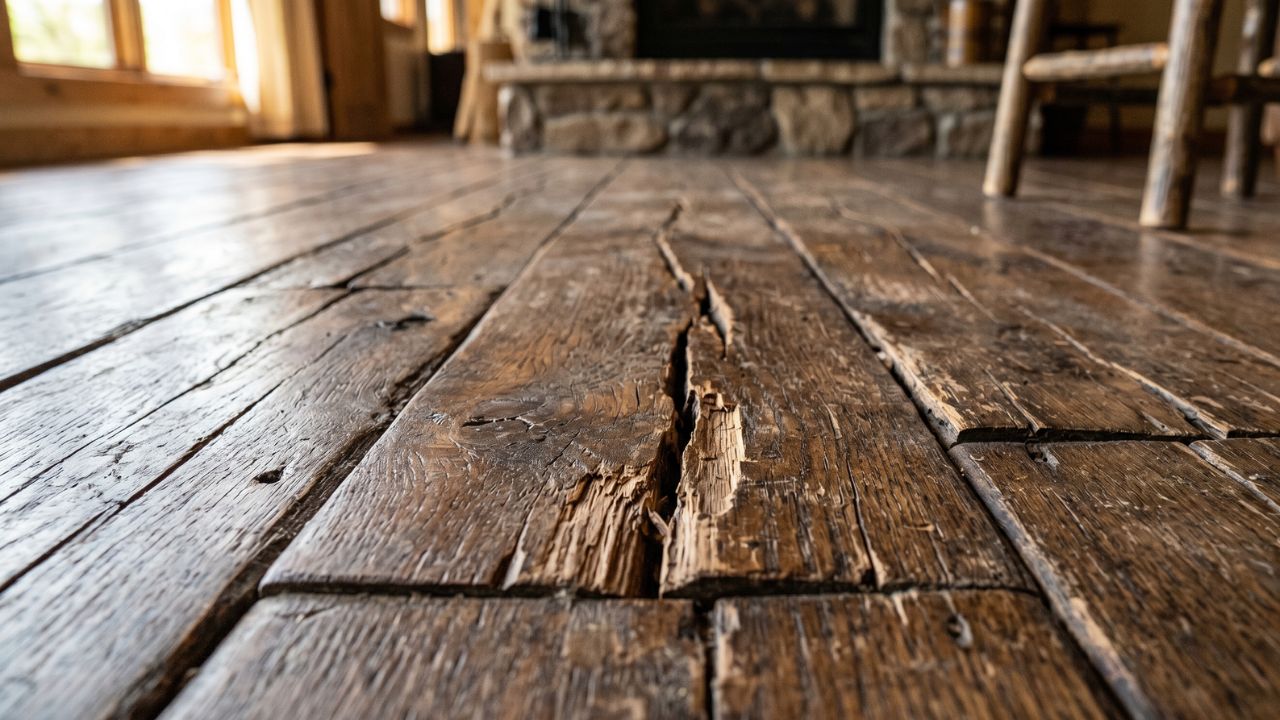
Few things are more unsettling than looking down at your beautiful hardwood floor and noticing cracks appearing across the boards. The good news: most wood floor cracking is not a sign of structural disaster. The bad news: if you ignore it or treat the wrong cause, it will get worse. This guide covers every major reason wood floors crack — and exactly what to do about each one.
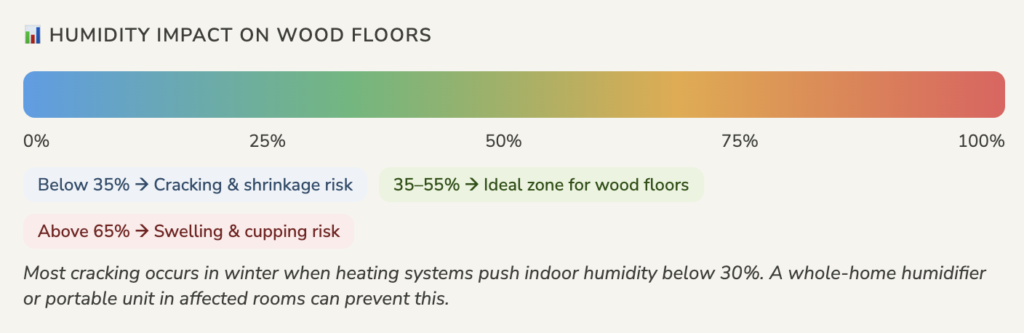
🔍 The most common cause of cracking wood floors is low indoor humidity — particularly in winter when heating systems dry out the air. When wood loses moisture, it shrinks and pulls apart at the joints and along the grain, forming visible cracks. Most seasonal cracks will partially or fully close when humidity returns in spring.
The 7 most common reasons wood floors crack
1. Low indoor humidity (Most common):
Wood is hygroscopic — it constantly absorbs and releases moisture from the surrounding air. When indoor humidity drops (especially in winter when heating systems run continuously), wood fibres dry out and shrink. This pulls boards apart at the seams and can create lengthwise cracks along the grain. Floors near heat vents, radiators, and fireplaces are especially vulnerable.
2. Seasonal temperature fluctuations (Very common):
As temperatures shift between seasons, wood naturally expands in summer heat and contracts in winter cold. This repeated cycle of expansion and contraction creates ongoing stress at the board edges and finish layer. Over years, this stress accumulates into visible cracks — particularly in older floors that have been through many seasonal cycles.
3. Improper installation or inadequate acclimation (Common):
Before installation, hardwood flooring must be allowed to acclimate to the room’s temperature and humidity for several days — sometimes up to two weeks for solid hardwood. Boards installed when still damp will shrink after fitting. Boards installed too dry in summer may expand and buckle. Either scenario puts stress on the boards that leads to cracking later.
4. Subfloor problems (Common):
An uneven, soft, or moisture-damaged subfloor creates an unstable foundation beneath your hardwood. When boards flex under foot traffic because the subfloor has gaps, rot, or inconsistent support, stress concentrates at weak points and produces cracks. This is particularly common in older homes where the subfloor has deteriorated over time.
5. Water damage or flooding (Serious):
Direct water exposure — from leaks, flooding, or habitually wet mopping — saturates wood fibres, causing rapid swelling. When the water then evaporates, the wood shrinks back unevenly, often producing cracks, cupping (edges higher than the centre), or crowning (centre higher than the edges). Boards can also turn dark or black from prolonged water contact. Severe water damage often requires replacement.
6. Over-drying from excessive heat (Moderate):
Underfloor heating systems, direct sunlight through south-facing windows, and high-temperature heating all pull moisture from wood faster than it can naturally replenish. Wood that becomes excessively dry becomes brittle and prone to splitting along the grain — especially in thicker solid hardwood planks that can’t flex as easily as thinner engineered boards.
7. Age and natural wear (Gradual):
Very old hardwood floors develop small cracks and separations as a natural consequence of decades of seasonal movement, foot traffic, and finish breakdown. Fine hairline cracks between boards in a 50-year-old floor are generally cosmetic rather than structural. However, age-related cracking combined with any of the above factors can accelerate significantly.
What’s the ideal humidity for wood floors?
Maintaining consistent indoor humidity is the single most effective thing you can do to prevent wood floor cracking. The recommended range for most hardwood species is 35–55% relative humidity year-round, with a stable indoor temperature between 60–80°F (15–27°C).
Types of cracks: seasonal vs. permanent
Not all cracks are equal. Understanding what type of crack you have determines whether you need to act immediately, wait for the season to change, or call a professional.
Hairline cracks between boards
(Usually seasonal)
Narrow gaps that appear in winter and close in summer. Very common in solid hardwood. If they disappear by spring, no action is needed beyond humidity control.
Lengthwise splits along a board
(Often permanent)
Cracks running down the middle of a plank indicate over-drying or uneven moisture loss. May need filler, refinishing, or board replacement depending on severity.
End-grain cracking
(Common & expected)
Small splits at the ends of boards are very normal in solid hardwood. End grain loses moisture faster than face grain, making this almost universal in dry climates.
Wide or spreading gaps
(Needs investigation)
Gaps wider than a quarter-inch that don’t close seasonally may signal subfloor movement, joist issues, or serious moisture problems. Consult a professional.
⚠️ Don’t rush to fill seasonal cracks with rigid wood filler in winter. If the crack is caused by dry winter air, it may close naturally in spring when humidity rises. Filling it with a hard, non-flexible filler when contracted can cause the boards to buckle when they expand again.
How to fix cracked wood floors
The right fix depends entirely on the cause and severity. Here’s a practical reference guide:
| Problem | Best fix | Approach |
|---|---|---|
| Seasonal hairline gaps (winter) | Add a humidifier; monitor until spring. Often self-corrects. | DIY |
| Narrow permanent cracks | Flexible wood filler or colour-matched wood putty. Refinish to blend. | DIY |
| Cracks from low humidity | Raise humidity to 40–50%, allow wood to re-expand, then assess. | DIY |
| Boards cracked from over-drying / heat | Humidify room; replace severely split boards individually. | Pro recommended |
| Cupping or crowning from water | Identify and stop moisture source; allow to dry; sand and refinish. | Pro recommended |
| Subfloor-related cracking | Inspect and repair subfloor before addressing the surface floor. | Pro recommended |
| Severe water damage | Full board replacement; address underlying moisture source first. | Replace boards |
How to prevent wood floor cracking
Use a whole-home humidifier
The most effective prevention. Keeps indoor humidity in the 40–50% range year-round, eliminating the biggest cause of seasonal cracking.
Keep temperature consistent
Avoid dramatic temperature swings. Maintain 60–80°F (15–27°C) consistently. Don’t let the home go cold for days then blast heat on return.
Clean correctly
Never wet mop hardwood or use steam cleaners. Use only damp (not wet) mops and cleaners formulated specifically for hardwood floors.
Acclimate before installation
New flooring must sit in the room for 3–14 days before installation to match the room’s humidity and temperature — a critical step many installers rush.
Control sunlight exposure
UV rays and direct sun dry out floor surfaces and fade finishes. Use curtains or UV-filtering window films in sun-exposed rooms.
Inspect regularly
Check floors seasonally — especially at the end of winter. Catching small cracks early means simple repairs rather than board replacements.
When to call a professional
Some cracking situations genuinely require expert assessment. Don’t delay calling a flooring professional if you notice any of the following:
- Cracks wider than ¼ inch that don’t close after humidity is restored
- Boards that feel soft, spongy, or hollow underfoot — may indicate subfloor rot
- Visible cupping, crowning, or buckling across multiple boards
- Dark staining or discolouration around cracks (sign of prolonged moisture damage)
- Cracks spreading in patterns that suggest structural movement or joist issues
- More than 10–15% of the floor surface showing significant cracking
The bottom line
Wood floor cracking is almost always caused by moisture — either too little (dry winter air), too much (leaks, flooding), or rapid changes between the two. The great news is that the majority of cracks in well-maintained floors are seasonal and cosmetic, and will partially or fully resolve when humidity levels return to normal. Focus first on controlling your indoor humidity year-round, investigate any subfloor issues promptly, and resist the urge to fill seasonal cracks with rigid fillers in winter. When cracks are wide, spreading, or accompanied by soft spots or staining, that’s the time to bring in a flooring professional.