
Wood stain enhances the natural beauty of wood by adding color and highlighting the grain pattern. However, there are many situations where you may want to remove an old stain. Perhaps the finish has faded, the color no longer matches your décor, or you simply want to restore the wood to its natural appearance before applying a new stain.
Stripping stain from wood may seem challenging, but with the right tools and techniques, it can be done successfully. In this guide, you’ll learn how to strip stain from wood, the tools you’ll need, different stain removal methods, and tips for achieving professional-quality results.
Why Remove Stain From Wood?
There are several reasons why woodworkers and homeowners remove old wood stain:
- The stain color is outdated or unattractive.
- The finish is scratched, chipped, or worn.
- You want to apply a lighter or different-colored stain.
- The wood surface has uneven stain absorption.
- You’re restoring antique or vintage furniture.
- Water damage or sun exposure has discolored the finish.
Removing the old stain creates a clean surface that allows new finishes to adhere properly and look their best.
Tools and Materials Needed
Before starting, gather the following supplies:
Safety Equipment
- Chemical-resistant gloves
- Safety goggles
- Respirator or dust mask
- Long-sleeve clothing
Wood Stain Removal Tools
- Chemical wood stripper
- Paint scraper or plastic putty knife
- Steel wool or stripping pads
- Sandpaper (80, 120, 180, and 220 grit)
- Orbital sander (optional)
- Clean rags
- Mineral spirits
- Paintbrush
- Drop cloth or plastic sheeting
- Vacuum or tack cloth
Method 1: Using a Chemical Wood Stripper
Chemical strippers are the most effective way to remove stain from wood, especially when multiple layers of finish are present.
Step 1: Prepare the Workspace
Work in a well-ventilated area. Cover nearby surfaces with drop cloths to protect them from chemical spills. Remove any hardware such as knobs, hinges, or handles from the furniture.
Step 2: Apply the Stripper
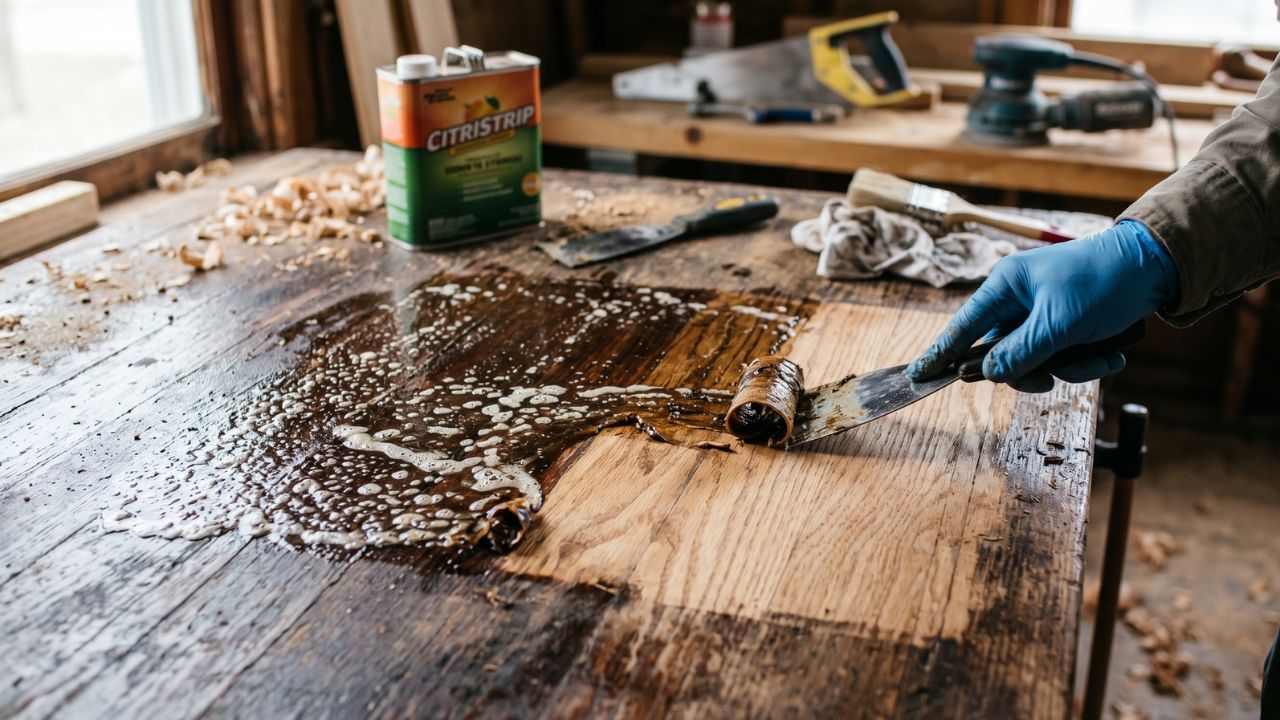
Using a paintbrush, apply a thick layer of wood stripper onto the stained surface. Follow the manufacturer’s instructions regarding application thickness and waiting time.
Most strippers require 15–30 minutes to soften the stain and finish.
Step 3: Scrape Off the Finish
Once the stain begins to bubble or soften, gently scrape it away using a plastic scraper or putty knife. Always scrape in the direction of the wood grain to avoid scratches.
Step 4: Remove Residue
Use steel wool or a stripping pad soaked in mineral spirits to remove any remaining stain residue from the wood pores.
Step 5: Clean the Surface
Wipe the entire surface with a clean rag dampened with mineral spirits. Allow the wood to dry completely before sanding.
Method 2: Sanding Off Wood Stain
Sanding is a common method for removing stain from wood, especially if the stain has penetrated deeply into the grain.
Step 1: Start With Coarse Sandpaper
Begin with 80-grit sandpaper or an orbital sander fitted with an 80-grit disc.
Sand evenly across the entire surface until most of the stain is removed.
Step 2: Move to Medium Grit
Switch to 120-grit sandpaper to remove scratches left by the coarse grit and further smooth the surface.
Step 3: Finish Sanding
Use 180-grit or 220-grit sandpaper for the final sanding pass. This creates a smooth, ready-to-finish surface.
Step 4: Remove Dust
Vacuum the surface thoroughly and wipe it with a tack cloth to remove sanding dust.
Method 3: Combining Chemical Stripping and Sanding
For heavily stained or previously finished wood, the best approach is often a combination of chemical stripping and sanding.
Chemical strippers remove most of the finish quickly, while sanding removes the remaining stain embedded in the wood fibers.
This method provides the cleanest and most uniform results, especially when refinishing furniture.
How to Remove Stain From Different Wood Surfaces
Furniture
Tables, chairs, dressers, and cabinets often require careful stripping around corners and decorative details. Use steel wool and small brushes for hard-to-reach areas.
Hardwood Floors
For large floor areas, drum sanders or floor sanders are commonly used. Chemical strippers may be impractical for entire rooms.
Decks
Outdoor decks can be stripped using deck stain removers and pressure washing systems designed for exterior wood.
Doors and Trim
A combination of chemical stripping and hand sanding works best for moldings and trim pieces.
Common Mistakes to Avoid
Using Excessive Force
Aggressive scraping can gouge the wood surface and create permanent damage.
Skipping Safety Equipment
Many chemical strippers contain strong solvents that can irritate skin, eyes, and lungs.
Sanding Too Deep
Excessive sanding can alter dimensions, soften edges, and damage veneer surfaces.
Not Following Grain Direction
Always sand and scrape along the grain to minimize visible scratches.
Applying New Finish Too Soon
Allow the wood to dry completely after stripping and cleaning before applying a new stain or finish.
How to Know When the Stain Is Fully Removed
You can tell the stain has been removed when:
- The wood color appears uniform.
- No dark patches remain.
- Water droplets absorb evenly across the surface.
- Sanding dust appears natural wood color rather than stained.
If darker spots remain, additional sanding or stripping may be required.
Preparing Wood for Restaining
Once the stain is removed:
- Sand with 180-220 grit sandpaper.
- Remove all dust.
- Test the new stain on a hidden area.
- Apply wood conditioner if working with softwoods.
- Apply the new stain evenly.
Proper preparation ensures a professional-looking finish and even color absorption.
Can You Remove Stain Without Chemicals?
Yes, but results vary.
Sanding alone can remove many stains, especially shallow surface stains. Heat guns may also help soften finishes, but they are typically more effective for paint than stain.
For deeply penetrated stains, chemical strippers are usually the fastest and most effective solution.
Frequently Asked Questions
Does wood stain come completely off?
In many cases, yes. However, some stains penetrate deeply into the wood fibers and may leave a slight color tint even after stripping and sanding.
Can I stain over existing stain?
Yes, but the new stain generally needs to be darker than the old stain. For significant color changes, removing the old stain is recommended.
How long does it take to remove stain from wood?
Small furniture pieces may take 2–4 hours, while larger projects can require an entire day or weekend.
Is sanding or chemical stripping better?
Chemical stripping is faster for removing heavy finishes, while sanding provides a smoother final surface. Combining both methods often produces the best results.
Final Thoughts
Learning how to strip stain from wood is an essential skill for woodworkers, DIY enthusiasts, and furniture restorers. Whether you’re updating old furniture, correcting a staining mistake, or preparing wood for a new finish, removing the existing stain properly will greatly improve the final result.
Chemical strippers, sanding, or a combination of both can successfully remove old stain when used correctly. By following proper safety precautions and taking your time, you can restore wood surfaces to a clean, beautiful state that’s ready for refinishing.