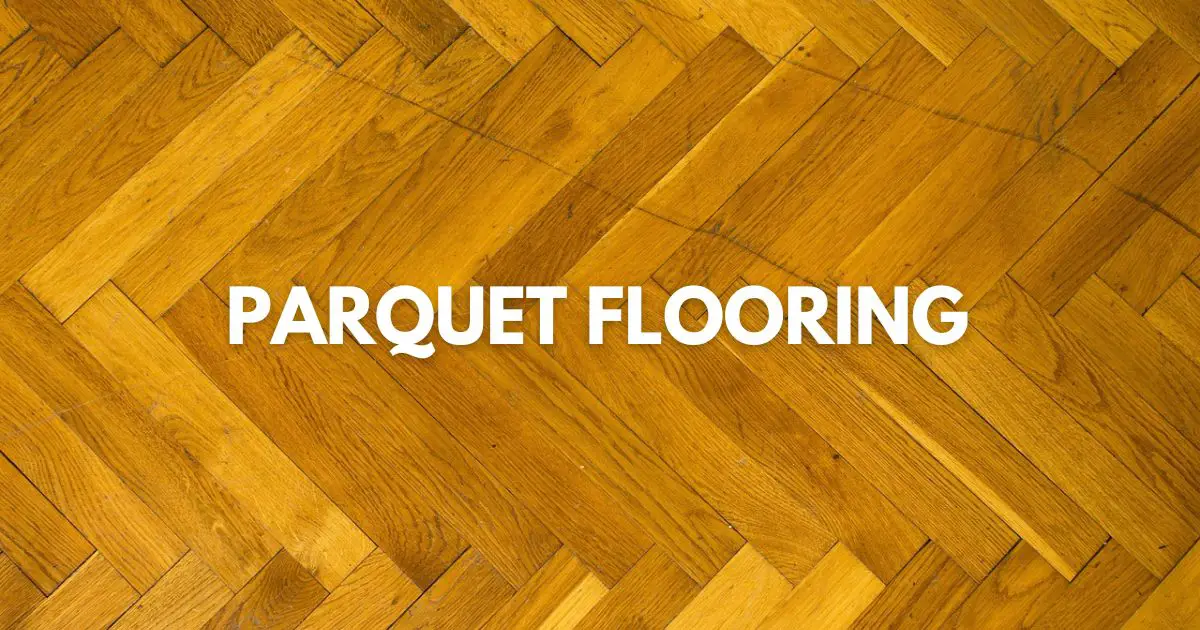
Parquet flooring is a type of wood flooring made from small pieces or blocks of wood arranged in decorative geometric patterns. Unlike traditional wood flooring, where long planks are usually installed in parallel rows, parquet flooring creates patterns such as herringbone, chevron, basketweave, brick bond, and Versailles.
Parquet flooring can be made from solid hardwood or engineered wood, depending on the product. The wood species, construction, pattern, thickness, and finish all affect its appearance, durability, installation method, and price.
Because parquet combines natural wood with decorative patterns, it is commonly used in living rooms, bedrooms, hallways, offices, restaurants, and other interior spaces.
Looking specifically for the advantages and disadvantages? Read our detailed guide to Parquet Flooring Pros and Cons.
What Is Parquet Flooring?
Parquet flooring is wood flooring made by arranging relatively small pieces of wood into a repeating geometric design.
The term parquet describes the arrangement or pattern of the wood rather than one specific type of wood. Oak, walnut, maple, cherry, teak, mahogany, and other species can be used to make parquet flooring.
Parquet flooring is available in different forms, including:
- Solid wood parquet
- Engineered wood parquet
- Pre-assembled parquet panels
- Parquet-look flooring made from laminate, vinyl, or other synthetic materials
Traditional parquet is usually made from individual wood blocks, while many modern products are supplied as engineered blocks or pre-assembled panels that make installation faster.
How Is Parquet Flooring Made?
Traditional parquet flooring is made from small pieces of wood cut to consistent dimensions. These pieces are then arranged into a specific geometric pattern.
Modern parquet flooring can be manufactured as individual blocks or as factory-assembled panels. Engineered parquet generally consists of a real wood wear layer bonded to a more dimensionally stable core, such as plywood or another engineered wood material.
The installation method depends on the product. Parquet may be glued directly to a suitable subfloor, nailed where the product allows it, or installed as a floating floor in certain engineered systems.
Therefore, not every parquet tile has tongue-and-groove edges. Some products use square edges and are installed with adhesive, while others use click or tongue-and-groove systems.
History of Parquet Flooring
Parquet flooring has a long history in European interior design. The use of decorative wood floors became especially prominent in France during the 16th and 17th centuries, where patterned wood flooring was used in aristocratic residences and palaces.
One of the best-known examples is the Parquet de Versailles, a decorative panel pattern associated with the Palace of Versailles.
Parquet became popular because it provided an attractive alternative to some traditional stone and marble flooring while also allowing craftsmen to create highly detailed geometric designs.
Over time, parquet flooring spread beyond palaces and became available in residential and commercial buildings.
Today, parquet remains popular because it combines the natural appearance of wood with distinctive geometric patterns.
Types of Parquet Flooring
Parquet flooring can be classified by its construction, wood species, and pattern.
Solid Wood Parquet
Solid wood parquet blocks are made from a single piece of natural wood.
They offer the traditional appearance of parquet and can generally be sanded and refinished multiple times, depending on the thickness of the blocks and remaining wear layer.
Solid wood also responds more strongly to changes in temperature and humidity than engineered wood, so proper installation and environmental control are important.
Engineered Wood Parquet
Engineered parquet consists of a real hardwood wear layer attached to a more stable engineered core.
The construction makes it generally more dimensionally stable than solid wood when humidity changes. However, the number of times it can be refinished depends on the thickness of its real-wood wear layer.
Engineered parquet is available in patterns such as herringbone and chevron and is widely used in modern residential interiors.
Parquet Panels
Some manufacturers produce parquet as pre-assembled panels rather than individual blocks.
The pattern is assembled at the factory, which can reduce installation time and help maintain consistent spacing and alignment.
Types of Parquet Flooring by Wood Species
Different wood species give parquet flooring different colors, grain patterns, hardness, and wear characteristics.
Oak Parquet Flooring
Oak is one of the most widely used woods for parquet flooring. It has a distinctive grain pattern and is available in light to medium brown shades.
Oak also accepts stains well, giving homeowners many options for changing the appearance of the floor.
Walnut Parquet Flooring
Walnut is known for its rich brown to chocolate-brown color and attractive grain.
It provides a darker and more luxurious appearance but is generally softer than many oak species.
Maple Parquet Flooring
Maple usually has a light, clean appearance with relatively subtle grain.
It works well in contemporary interiors where a bright and uniform wood floor is desired.
Cherry Parquet Flooring
Cherry has warm reddish-brown tones that can become deeper with age and light exposure.
It is often chosen for traditional and formal interiors.
Mahogany Parquet Flooring
Mahogany parquet can provide rich brown to reddish-brown tones and a refined appearance.
However, the properties of mahogany vary significantly by species, so the specific wood should be identified before comparing durability or hardness.
Teak Parquet Flooring
Teak has a warm golden-brown appearance and naturally contains oils and extractives that contribute to its durability.
It is generally more expensive than many commonly used parquet woods and is usually selected for premium interiors.
Herringbone vs Chevron Parquet Flooring
| Feature | Herringbone | Chevron |
|---|---|---|
| Pattern | Broken zigzag | Continuous V shape |
| Piece ends | Usually rectangular | Usually angled |
| Appearance | Classic and slightly less formal | More precise and formal |
| Installation | Requires careful alignment | Requires precise cutting and alignment |
| Labor | Higher than straight flooring | Usually higher than standard herringbone |
| Best for | Traditional and modern interiors | Premium and formal interiors |
The exact installation cost depends on the product, room layout, subfloor, pattern complexity, and installer.
Where Can Parquet Flooring Be Used?
Parquet flooring is primarily an interior flooring product.
It can be used in:
- Living rooms
- Bedrooms
- Dining rooms
- Hallways
- Home offices
- Libraries
- Hotels
- Restaurants
- Offices
- Retail interiors
It is generally not recommended for continuously wet locations such as outdoor areas or spaces that regularly experience standing water.
Bathrooms and kitchens require additional consideration because repeated moisture exposure can damage wood flooring and its finish.
Parquet Flooring Installation
Parquet installation requires more planning and precision than installing simple straight wood planks.
Before installation, the subfloor should be:
- Clean
- Dry
- Structurally sound
- Sufficiently level
- Suitable for the selected installation system
For glue-down parquet, the adhesive must be compatible with both the flooring product and the subfloor.
Pattern alignment is particularly important. Installers normally establish reference lines before placing the first pieces because even a small alignment error can become noticeable across a large geometric pattern.
Does Parquet Flooring Need Underlayment?
It depends on the flooring product and installation method.
Some engineered parquet systems are designed for floating installation and may require a specified underlayment. Glue-down parquet generally requires a suitable prepared subfloor rather than a conventional floating-floor underlayment.
Always follow the flooring manufacturer’s installation instructions.
Parquet Flooring Cost
Parquet flooring prices vary considerably because the total cost depends on the wood species, construction, pattern, thickness, finish, subfloor preparation, installation method, and location.
Current market examples show that parquet flooring can range from relatively affordable engineered products to premium solid hardwood installations. In India, current listings show parquet products around ₹150–₹550+ per square foot, while more premium materials and complete installations can cost substantially more.
In the U.S., current guides put basic parquet material around $3–$5 per square foot, while premium products and professional installation can cost considerably more.
Factors That Affect Parquet Flooring Cost
The main cost factors include:
- Wood species – Premium woods generally cost more.
- Solid vs engineered construction – Solid hardwood can cost more depending on species and thickness.
- Pattern – Complex patterns require more labor and cutting.
- Room size and layout – Irregular rooms can increase installation time and waste.
- Subfloor preparation – Repairs or leveling add to the total cost.
- Installation method – Glue-down, nail-down, and floating systems have different labor requirements.
- Finishing – Sanding, staining, oiling, or polyurethane finishing can add to the final cost.
Parquet Floor Care and Maintenance
Proper maintenance helps preserve both the wood and its finish.
Regular Cleaning
Remove dust and dirt regularly using a soft broom, vacuum designed for hard floors, or microfiber mop.
When using a cleaning product, choose one specifically recommended for the floor’s finish. Avoid soaking the floor with water.
Clean Spills Quickly
Wood flooring should not be left wet for long periods.
Wipe spills promptly to reduce the chance of moisture entering joints or damaging the finish.
Protect the Floor From Scratches
Use felt pads under furniture legs and avoid dragging heavy furniture across the floor.
Area rugs and mats can also help reduce wear in high-traffic areas.
Control Indoor Humidity
Wood naturally expands and contracts as moisture conditions change.
Large humidity fluctuations can contribute to gaps, cupping, crowning, or other movement. Maintaining relatively stable indoor humidity can help reduce these problems.
Protect Against Sunlight
Direct sunlight can gradually change the color of natural wood.
Curtains, blinds, or UV-resistant window treatments can help reduce uneven fading.
Avoid Harsh Cleaners
Do not automatically use bleach, ammonia, abrasive cleaners, or other harsh chemicals on parquet flooring.
The correct cleaning product depends on the finish, so follow the flooring manufacturer’s recommendations.
Can Parquet Flooring Be Refinished?
Yes, many real-wood parquet floors can be sanded and refinished, but the number of times depends on the construction and remaining wood thickness.
Solid parquet blocks generally provide more material for future sanding than thin engineered products.
Engineered parquet can also sometimes be refinished, but its suitability depends primarily on the thickness of the real-wood wear layer.
Therefore, the old claim that all parquet flooring can simply be sanded four or five times is not accurate.
Parquet Flooring Repair
Damaged parquet pieces can sometimes be repaired or replaced individually.
Minor scratches may be addressed through cleaning, recoating, or refinishing, depending on their depth and the floor’s finish.
If a block is severely damaged, a flooring professional can remove the affected piece and install a replacement.
Matching an old parquet floor can be challenging because the original wood may have changed color over time. New replacement pieces may initially look different even when they are made from the same species.
Oak Parquet Flooring
Oak is a popular choice for parquet flooring because it combines an attractive grain with good hardness and availability.
Both red oak and white oak are commonly used for wood flooring, although their appearance and physical properties differ.
Oak also takes stains well, which allows the same parquet pattern to be finished in different colors. Its versatility is one reason oak remains a popular flooring species.
Wooden Parquet Flooring
Wooden parquet flooring refers to parquet made from natural wood.
Depending on the product, it can be manufactured from:
- Oak
- Walnut
- Maple
- Cherry
- Teak
- Mahogany
- Ash
- Other hardwood species
The performance of a wooden parquet floor depends on the species, construction, thickness, finish, installation quality, and maintenance.
Vinyl Parquet Flooring
Vinyl parquet flooring is designed to reproduce the appearance of traditional parquet while using a synthetic flooring material.
It can imitate patterns such as herringbone and chevron without containing a solid wood wear layer.
Vinyl parquet can be easier to maintain and may offer better resistance to everyday moisture than real wood, depending on the product. However, it does not have the same natural wood surface as genuine wood parquet.
Wood Parquet vs Vinyl Parquet
| Feature | Wood Parquet | Vinyl Parquet |
|---|---|---|
| Material | Natural wood or engineered wood | Synthetic vinyl |
| Appearance | Natural wood grain | Printed wood appearance |
| Feel | Natural wood surface | Synthetic surface |
| Moisture tolerance | More sensitive to moisture | Generally more moisture tolerant |
| Refinishing | Possible with suitable real-wood products | Usually not refinished like wood |
| Maintenance | Requires wood-floor care | Generally easier |
| Longevity | Can last for decades with proper care | Depends on product quality and wear layer |
| Repair | Individual wood pieces can sometimes be replaced | Damaged sections may require replacement |
What Is Parquet Flooring Made Of?
Traditional parquet flooring is made from small pieces of natural wood, usually hardwood.
Modern parquet products may be made from:
- Solid hardwood
- Engineered wood
- Wood veneer over an engineered core
- Laminate
- Vinyl or other synthetic materials designed to imitate parquet
Therefore, the term “parquet” describes the flooring pattern or style and does not necessarily mean that every parquet-look product is made from solid wood.
Is Parquet Flooring Durable?
Parquet flooring can be very durable, but its durability depends on the wood species, construction, thickness, finish, installation, and maintenance.
Well-maintained solid hardwood parquet can potentially last for many decades and may be refinished multiple times.
Engineered parquet can also be highly durable, but its refinishing potential depends on the thickness of the real-wood wear layer.
Historical parquet floors that have survived for generations demonstrate the potential longevity of properly maintained wood flooring, but this should not be interpreted as a guarantee that every modern parquet floor will last for centuries.
Is Parquet Flooring Moisture Resistant?
Parquet flooring is not waterproof.
Natural wood absorbs and releases moisture as environmental conditions change. Excessive moisture can cause swelling, movement, gaps, cupping, or damage to the finish.
Some engineered parquet products are more dimensionally stable than solid wood, but they should still be protected from standing water and excessive moisture.
Is Parquet Flooring Good for Outdoor Use?
No. Standard parquet flooring is generally designed for interior use.
Outdoor exposure to rain, direct sunlight, temperature changes, and repeated moisture can damage both the wood and its finish.
If you need outdoor wood flooring, choose a product specifically designed and rated for exterior conditions rather than using standard interior parquet.
Is Parquet Flooring Good for Kitchens?
It can be used in a kitchen, but it requires more care than moisture-tolerant flooring materials.
Spills should be cleaned quickly, and the floor should not be exposed to standing water. Product specifications and the manufacturer’s recommendations should be checked before installation.
Is Parquet Flooring Good for Pets?
Parquet can work well in homes with pets, but scratches and dents are possible.
Choosing a harder wood species, using a durable finish, keeping pets’ nails trimmed, and cleaning dirt regularly can help reduce visible wear.
Where to Buy Parquet Flooring?
Parquet flooring can be purchased from:
- Flooring specialty stores
- Home improvement stores
- Wood flooring manufacturers
- Local flooring suppliers
- Online flooring retailers
- Professional flooring contractors
Before purchasing, compare the wood species, construction, thickness, wear layer, finish, installation method, warranty, and total installed cost rather than comparing only the price per square foot.
Final Thoughts
Parquet flooring combines the natural appearance of wood with decorative geometric patterns. It is available in solid and engineered constructions and can be made from many different wood species.
Herringbone, chevron, basketweave, Versailles, and brick bond are among the most popular parquet patterns. The right choice depends on your preferred appearance, budget, traffic level, room conditions, and willingness to maintain the floor.
For a detailed breakdown of the benefits and drawbacks, see our guide to Parquet Flooring Pros and Cons.
FAQs
What is parquet flooring?
Parquet flooring is a type of wood flooring made by arranging small pieces or blocks of wood into geometric patterns such as herringbone, chevron, basketweave, and Versailles.
Is parquet flooring real wood?
It can be. Traditional parquet is generally made from natural wood, while modern parquet may be solid hardwood, engineered wood, laminate, or vinyl designed to reproduce a parquet pattern.
What is the most popular parquet pattern?
Herringbone is one of the most popular parquet patterns. Chevron is another widely used option, particularly for more formal and contemporary interiors.
Is herringbone the same as parquet?
No. Parquet is the broader category, while herringbone is one specific pattern used in parquet flooring.
Is chevron parquet more expensive than herringbone?
It can be. Chevron usually requires more precise cutting and alignment, which can increase labor and material waste compared with simpler patterns.
Can parquet flooring be installed over concrete?
Yes, some parquet flooring systems can be installed over concrete when the concrete is properly prepared, sufficiently dry, level, and compatible with the selected installation method.
Can parquet flooring be refinished?
Many real-wood parquet floors can be refinished. However, the number of times depends on whether the floor is solid or engineered and how much usable wood remains above the tongue, groove, or engineered core.
Is parquet flooring waterproof?
No. Real wood parquet flooring is not waterproof and should be protected from standing water and excessive moisture.
How long does parquet flooring last?
A properly installed and maintained solid wood parquet floor can last for decades and may last much longer when periodically refinished. Engineered parquet can also have a long service life, but its lifespan and refinishing potential depend on its construction and wear layer.
Can parquet flooring be repaired?
Yes. Individual damaged wood pieces can often be repaired or replaced, although matching the color and appearance of an older floor can be difficult.