
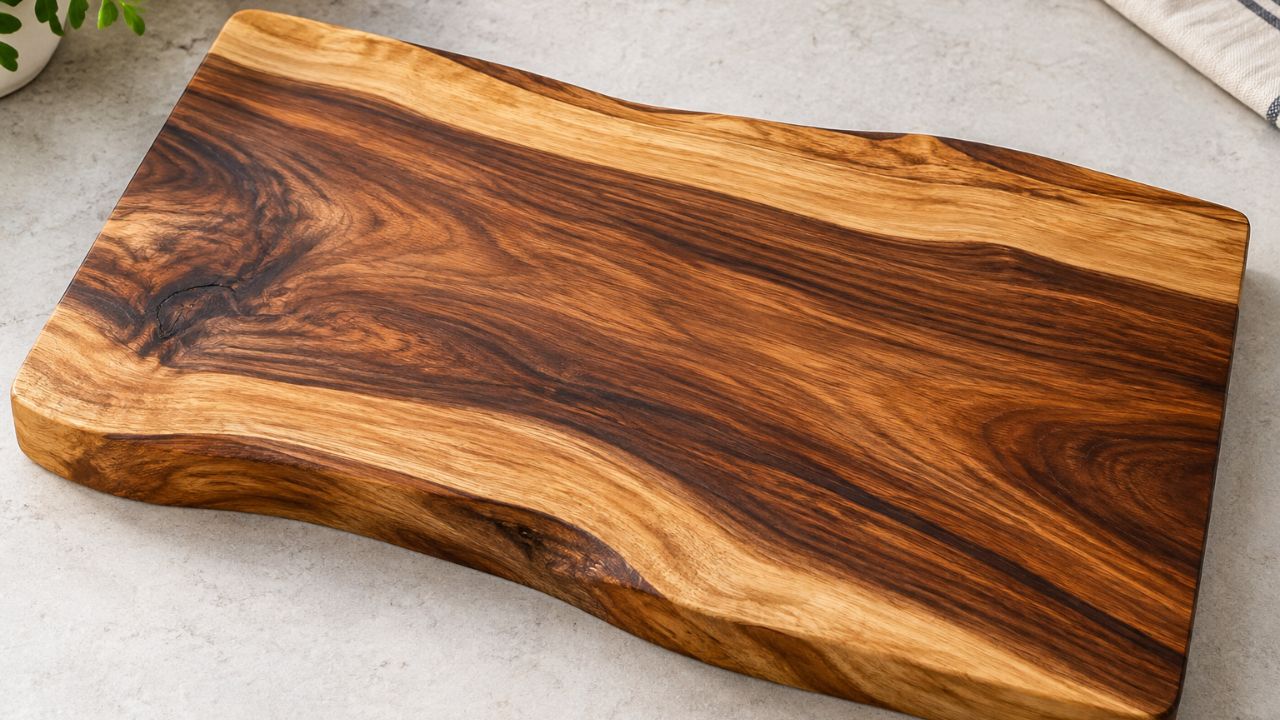
Monkey pod wood can be expensive, especially when sold as a wide live-edge slab or a finished custom table. However, the price depends heavily on size, preparation, appearance, and what the seller includes.
For example, selected U.S. supplier listings checked in September 2026 ranged from $800 to $2,490 for individual monkey pod slabs. These are examples of different-sized pieces, not a market-wide average or a price range for finished tables.
To judge whether an offer is reasonable, compare the wood’s usable dimensions, drying condition, included work, and delivered cost.
What Is Monkey Pod Wood?
Monkey pod, also written as monkeypod, is a tropical hardwood commonly identified as Samanea saman. Sellers may also use names such as saman, rain tree, or suar.
It is often chosen for furniture because of its contrasting heartwood and lighter sapwood, flowing grain, and availability in broad slabs.
Common projects include dining tables, coffee tables, desks, benches, and decorative pieces.
When buying, confirm the species rather than relying only on a trade name. Also check whether the product is a single slab, joined solid boards, or a veneered panel.
How Much Does Monkey Pod Wood Cost?
Monkey pod may be priced by the board foot, by the slab, or as a completed piece of furniture. These prices describe different stages of a project.
Examples of Monkey Pod Slab Prices
The following advertised prices were checked in September 2026. They are U.S. dollar asking prices, not confirmed transaction prices.
| Supplier and item | Advertised dimensions | Listed price |
|---|---|---|
| Tropical American Timber, M212 | 100 × 29 × 2 inches | $800 |
| Tropical American Timber, M216 | 104 × 44 × 1.75 inches | $1,290 |
| Tropical American Timber, M780 | 182 × 36 × 2.75 inches | $2,490 |
| Rustic Lumber Store, K35835 | 123 inches long, 38–46 inches wide, approximately 2 inches thick | $1,460 |
The first three examples come from Tropical American Timber’s inventory. Its combined monkeypod and guanacaste lumber listing also advertises width-based prices of $12–$25 per board foot; confirm the price for the specific monkey pod stock you want.
The Rustic Lumber Store listing specifies a slab-only price and includes kiln drying, partial clear epoxy filling, and surface planing. Shipping is quoted separately for the slab.
Prices and availability can change. Confirm finishing, delivery, and taxes before comparing the total.
Why These Prices Differ
A longer, wider, or thicker slab contains more material, but dimensions are only part of the explanation.
A piece that has already been dried, flattened, and repaired is a different purchase from an unfinished slab that still needs those services.
Likewise, a slab price should not be compared directly with the price of a finished dining table. The table includes additional materials and labor.
Why Can Monkey Pod Wood Be Expensive?
1. Wide Slabs Command Attention—and a Different Price
A single slab wide enough for a dining table offers a continuous surface and natural edge that some buyers prefer.
Before paying extra for width, check the narrowest usable section. A slab advertised as 44 inches wide may not provide that width along its entire length.
If you plan to cut the edges straight, consider how much material will remain after trimming.
2. Drying and Preparation Add Work
A freshly cut slab and a prepared furniture slab are not equivalent products.
Depending on the purchase, additional work may include drying, flattening, trimming, sanding, and repairing defects.
Ask whether the listed thickness is the current rough thickness or the expected finished thickness. Flattening can remove material, so a thick-looking slab may finish thinner than expected.
3. Grain and Shape Affect the Asking Price
Buyers may pay more for a piece with distinctive figure, an attractive outline, or a preferred balance of dark heartwood and pale sapwood.
These features are partly a matter of taste. A more expensive slab is not automatically better for your project.
For a simple desk with straight edges, an irregularly shaped statement slab may offer little practical advantage.
4. Repairs and Custom Details Increase the Total
Cracks, voids, and knots can become part of a design, but incorporating them may require extra work.
Ask whether the quote includes filling, joinery repairs, or decorative features. If you want resin work, request a separate breakdown so you can compare it with a simpler finish.
5. Delivery Can Change the Value
Large slabs are bulky and can require freight shipping, crating, and unloading arrangements.
A lower purchase price may lose its advantage once delivery is included. Compare the total cost of getting the wood into your workshop or home.
How to Calculate Monkey Pod Lumber Cost
A board foot measures wood volume. It equals a piece measuring 12 inches long, 12 inches wide, and 1 inch thick.
When all dimensions are in inches:
Board feet = thickness × width × length ÷ 144
For example, a rectangular piece measuring 2 inches thick, 36 inches wide, and 96 inches long contains:
2 × 36 × 96 ÷ 144 = 48 board feet
At a hypothetical price of $20 per board foot:
48 × $20 = $960
This is a calculation example, not a quotation.
For live-edge slabs, ask how the seller measures width and calculates volume. Maximum width, average width, and usable width can produce different comparisons.
How Much Does a Monkey Pod Table Cost?
The slab price is only one part of the finished table’s cost.
A complete quotation may include:
- The wood slab or joined top.
- Flattening and repairs.
- Sanding and finishing.
- Legs or a custom base.
- Mounting hardware.
- Assembly.
- Delivery and installation.
- Applicable taxes.
Ask whether the advertised price covers the whole table or only the top. Product photographs sometimes show a completed piece even when the listing is for the slab alone.
For a fair comparison, request quotes for the same finished dimensions, base style, finish, and delivery service.
Is Monkey Pod More Expensive Than Walnut, Oak, or Teak?
There is no reliable price ranking that applies to every purchase.
A standard board, a wide slab, and a custom table are different products, even when they share a species name. Local availability and the amount of preparation can also change the comparison.
| Comparison | What to match |
|---|---|
| Monkey pod vs walnut | Slab dimensions, figure, drying, and preparation |
| Monkey pod vs oak | Ordinary boards versus wide slabs or joined tops |
| Monkey pod vs teak | Exact species, grade, source, and product type |
| Monkey pod vs veneered furniture | Construction, base quality, finish, and included services |
The most useful approach is to price alternatives against the same project specification.
For example, compare a finished monkey pod dining table with a finished walnut table of similar size—not with the cost of walnut lumber alone.
Is Monkey Pod Wood Worth the Price?
Monkey pod may be worth paying for when its grain and natural shape are central to the design.
It is especially worth considering if you have found a particular slab you like and the seller can clearly explain its condition and preparation.
However, paying for a decorative slab makes less sense if you plan to cut away most of its shape or conceal the surface.
Before deciding, consider three questions:
- Do I want this particular appearance?
- Is the material ready for the work I plan to do?
- Is the complete project cost within my budget?
Appearance should not distract from flatness, sound construction, and suitability for use.
How to Save Money on Monkey Pod Wood
Choose the Size You Need
Start with the finished dimensions of the project. Avoid buying a much larger slab unless you have a useful plan for the offcuts.
Compare Local Pickup With Delivery
Obtain the delivery price early. Include any vehicle rental, lifting help, or workshop transport needed for local collection.
Consider a Joined Top
Ask for a quote using joined boards if a single slab is not essential to your design. Compare the finished result and total cost rather than assuming either construction is always cheaper.
Pay for Preparation You Cannot Do Efficiently
An apparently cheap slab may require machinery or specialist work you do not have access to.
Price those services before purchasing. A prepared slab can be the more practical option even when its initial price is higher.
Keep the Design Simple
A straightforward base and finish can help control the budget. Request optional decorative work as a separate item.
Questions to Ask Before Buying
Use these questions to make the quotation clear:
- What species is the wood?
- Is it a single slab, joined solid wood, or veneer?
- What are its minimum usable dimensions?
- Has it been dried, and what is its current moisture content?
- Is flattening included?
- Are cracks or voids already repaired?
- Is the price for unfinished wood, a finished top, or a complete table?
- What will delivery and unloading cost?
- What return or damage-reporting terms apply?
Request photographs of both faces and the edges, particularly when purchasing a unique slab online.
Frequently Asked Questions
Is Monkey Pod a Luxury Wood?
It can be used in luxury furniture, especially large custom tables. However, the label does not establish the quality or value of a particular piece.
Why Is One Monkey Pod Slab Much Cheaper Than Another?
Check size, drying condition, defects, usable shape, and included preparation. A lower price may reflect a smaller piece or more work remaining.
Does “Kiln-Dried” Mean Ready to Build?
Not necessarily. Ask about current moisture content, storage, flatness, and whether further conditioning or machining is needed for your project.
Is a Monkey Pod Slab Price the Same as a Table Price?
No. Unless stated otherwise, a slab price may exclude the base, finish, assembly, and delivery.
Can a Cheaper Slab Become an Expensive Project?
Yes. Drying, flattening, repairs, finishing, and shipping can increase the total. Compare the cost of the usable finished piece rather than the initial wood price alone.