
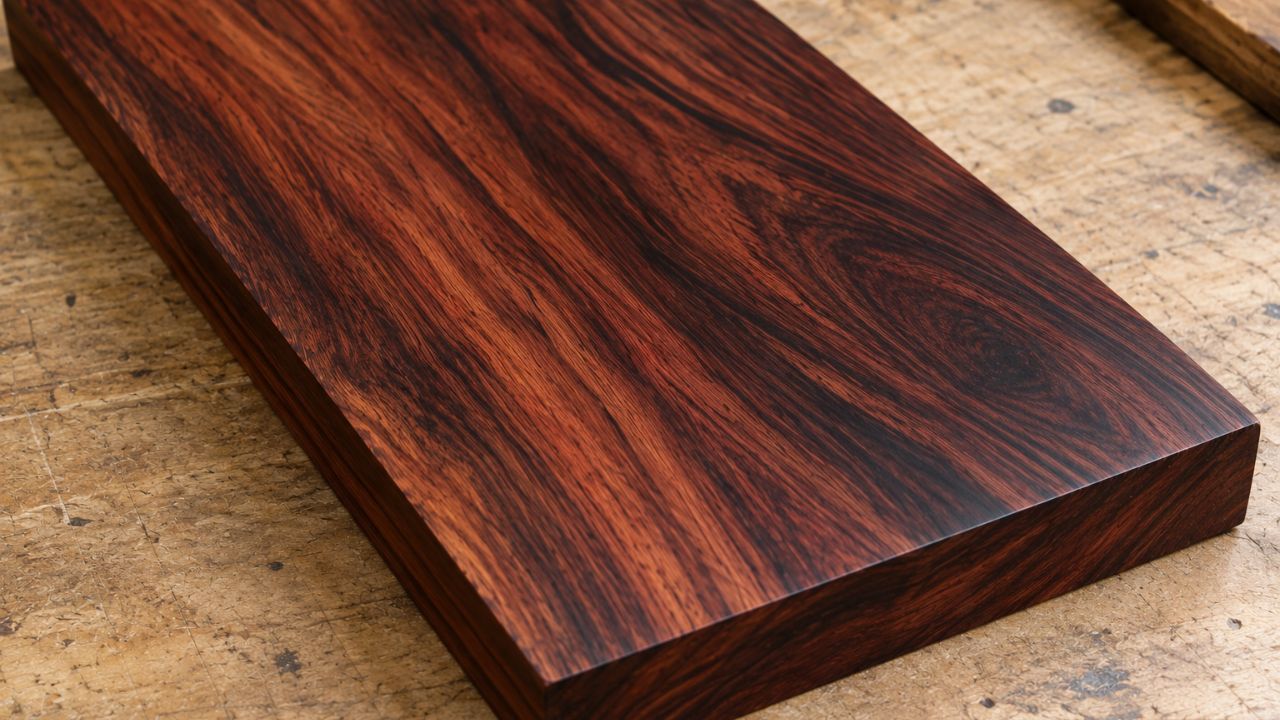
Rosewood trade is restricted because overharvesting, illegal logging, and habitat loss have threatened many rosewood species. Strong demand for valuable timber, particularly for luxury furniture, has put pressure on wild populations.
However, rosewood is not completely banned everywhere. The rules depend on the species, the product, its origin, and whether it crosses an international border.
Brazilian rosewood faces particularly strict restrictions. Other rosewoods can often be traded legally when the required conditions and documentation are met.
Why Was Rosewood Trade Restricted?
1. Overharvesting for Valuable Timber
Rosewood is prized for its rich color, attractive grain, and durability. Those qualities have made it desirable for furniture, decorative objects, and musical instruments.
High demand has encouraged intensive harvesting. When valuable trees are removed faster than populations can recover, the supply of mature timber declines.
A CITES proposal covering the Dalbergia genus identifies timber exploitation and demand for luxury furniture as major threats to these species.
2. Illegal Logging and Smuggling
High timber prices can make illegal harvesting profitable. Logging restrictions are less effective when wood is taken from protected areas, transported with false documents, or misidentified as another species.
As some rosewoods became scarce, traders sought supplies in other countries and regions. The UNODC World Wildlife Crime Report’s rosewood chapter describes how demand expanded beyond Asian sources into Africa and Latin America.
International controls help authorities check whether wood was legally obtained and whether trade threatens the species.
3. Loss of Natural Habitat
Logging is only part of the problem. Forest clearance for agriculture and other land uses also reduces the habitat available for rosewood trees.
Protecting the remaining trees while their habitat continues to disappear would not solve the wider conservation problem. Trade restrictions therefore work alongside national forestry laws and habitat protection.
Is All Rosewood Banned?
No. “Rosewood” is a common name covering multiple species, and they do not all have identical rules.
Many true rosewoods belong to the genus Dalbergia. Other trees sold under rosewood trade names belong to different genera.
CITES—the Convention on International Trade in Endangered Species of Wild Fauna and Flora—regulates international trade through different levels of protection.
| Rosewood category | General trade position |
|---|---|
| Brazilian rosewood, Dalbergia nigra | Appendix I: international commercial trade is generally prohibited, with limited exceptions |
| East Indian rosewood, Dalbergia latifolia | Appendix II: covered products can be traded subject to applicable controls |
| Other woods called rosewood | Requirements depend on the exact species, origin, and product |
An Appendix-II listing is a system for controlling trade, rather than a blanket ban. Product exemptions, national restrictions, and country-specific trade suspensions may also apply. The U.S. Fish and Wildlife Service’s timber guidance explains how to check a species and its listing.
Why Is Brazilian Rosewood More Strictly Protected?
Brazilian rosewood became highly sought after for furniture, veneers, and musical instruments. Heavy exploitation and declining availability led to its inclusion in CITES Appendix I in 1992.
Appendix I provides the Convention’s strictest level of protection. International commercial trade is generally prohibited, although qualifying exceptions exist.
For example, older material that meets pre-Convention requirements may be eligible for trade with the appropriate documents. “Pre-Convention” refers to material acquired before the relevant CITES protections applied—not simply wood that looks old.
The U.S. Fish and Wildlife Service explains the conditions and documentation relevant to Appendix-I specimens.
Are Rosewood Guitars Banned?
No. Many guitars containing rosewood can be owned, sold, and transported legally.
In 2019, CITES revised Annotation #15 to exempt qualifying finished musical instruments, finished instrument parts, and finished accessories from its controls. This includes many instruments made with East Indian rosewood.
However, that exemption does not apply to Brazilian rosewood. Certain other species and origins also have different provisions, so it should not be treated as an exemption for every wood called rosewood. CITES documentation on Annotation #15 explains its scope.
Raw lumber and unfinished instrument blanks do not automatically receive the same treatment as finished guitars.
Can You Still Buy Rosewood Furniture or Lumber?
Yes, legal rosewood products remain available. But the requirements for buying an item locally can differ from those for importing or exporting it.
Before purchasing, particularly across borders, check:
- Scientific name: Identify the species rather than relying on “rosewood.”
- Origin: Ask where the wood was harvested.
- Documentation: Request records supporting lawful acquisition and any required permits.
- Product type: Lumber, furniture, and finished instruments may be treated differently.
- Destination rules: The importing country may impose additional restrictions.
A description such as “reclaimed,” “antique,” or “naturally fallen” does not by itself prove that an item is eligible for international trade.
Frequently Asked Questions
Is it illegal to own rosewood?
CITES is primarily concerned with international trade; it does not create a universal ban on owning existing rosewood items. National laws and acquisition history can still matter.
Is Indian rosewood banned?
East Indian rosewood is regulated under CITES Appendix II. Legal trade remains possible, with requirements depending on the product and applicable exemptions.
Was the rosewood ban lifted in 2019?
No. The 2019 change exempted certain finished musical instruments and related products. It did not remove all rosewood trade controls or lift Brazilian rosewood’s Appendix-I protection.
Is rosewood restricted because it is poisonous?
No. The trade restrictions discussed here address conservation and illegal trade. Wood-dust precautions are a separate issue from whether a species can be legally imported or exported.