
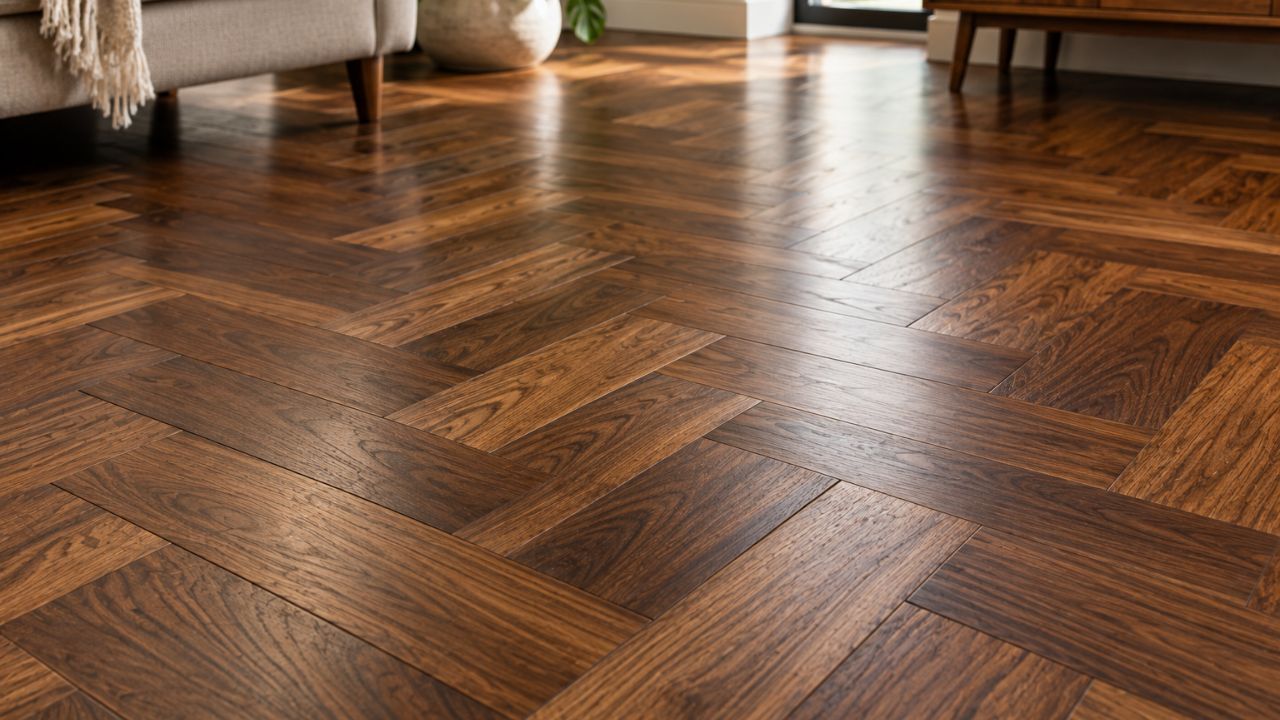
Parquet flooring has a character that standard plank flooring simply cannot imitate. Instead of long boards running in one direction, parquet uses small pieces of wood arranged in geometric patterns such as herringbone, chevron, basket weave, or squares.
It can make an ordinary room feel tailored, warm, and architectural. But while parquet is beautiful, it is not automatically the easiest or most practical flooring choice for every space.
Here is a clear look at the pros and cons of parquet flooring before you decide.
What Is Parquet Flooring?
Parquet flooring is made from small wood pieces or wood veneers arranged into a decorative repeated pattern. Traditional parquet floors are solid wood, individually installed with great care. Today, many homeowners choose engineered parquet, which has a real hardwood top layer over a stable plywood-based core.
Common parquet patterns include:
- Herringbone
- Chevron
- Basket weave
- Versailles panels
- Brick and block patterns
The pattern is the defining feature. It gives parquet more movement and visual interest than conventional wood planks.
Pros of Parquet Flooring
1. It Creates a High-End Look
Parquet flooring is visually distinctive. A herringbone or chevron floor can become a design feature in its own right, making entryways, living rooms, dining rooms, and bedrooms feel more refined.
It works especially well in traditional homes, European-inspired interiors, historic properties, and contemporary spaces that need warmth and texture.
2. It Offers Many Design Options
Parquet is remarkably flexible in appearance. Homeowners can choose different wood species, stain colors, plank sizes, borders, and patterns.
Oak parquet provides a classic and durable look, while walnut adds richness and darker color. Lighter finishes can make a small room feel open, while darker wood can create a more formal atmosphere.
3. It Can Add Value to a Home
Well-installed, well-maintained parquet flooring is often seen as a premium feature. Real wood floors are attractive to many buyers, and a timeless parquet pattern can help a property stand out.
The value depends on the quality of the material and installation. A carefully finished hardwood parquet floor generally carries more appeal than a low-quality imitation.
4. It Is Durable When Properly Maintained
Quality wood parquet can last for decades. Solid hardwood parquet can often be sanded and refinished, allowing homeowners to refresh a worn surface instead of replacing the entire floor.
Engineered parquet may also be refinished, depending on the thickness of its real-wood wear layer.
5. It Feels Warmer Than Tile
Wood naturally feels warmer and more comfortable underfoot than tile or stone. In living spaces and bedrooms, parquet creates a softer, more inviting surface.
It also works well with area rugs, which can add another layer of comfort while preserving the beauty of the pattern around the room.
Cons of Parquet Flooring
1. Installation Can Be Expensive
Parquet flooring is generally more difficult to install than standard wide-plank flooring. The pattern must be aligned precisely, and any mistakes are highly visible.
Labor costs may be higher, particularly for custom solid-wood parquet, intricate patterns, borders, or rooms with many angles and obstacles.
2. It Requires More Care Around Moisture
Like most real wood flooring, parquet does not perform well with standing water or repeated heavy moisture exposure. Spills should be wiped up promptly, and it is usually not the best choice for full bathrooms, laundry rooms, or below-grade areas with moisture concerns.
Engineered parquet is more stable than solid wood in changing humidity, but it still needs sensible moisture protection.
3. Repairs Can Be More Complicated
A scratched or damaged plank in a standard wood floor can be relatively straightforward to replace. With parquet, a repair may require matching the exact wood tone, block size, grain direction, and pattern.
If the floor is old or discontinued, finding matching material can be difficult.
4. The Pattern May Not Suit Every Interior
Parquet has a strong visual identity. In a busy room with patterned rugs, bold wallpaper, or heavily detailed furniture, it can feel overwhelming.
It is usually best paired with a balanced design scheme. Let the floor be the feature, then keep the surrounding finishes more restrained.
5. It Can Show Gaps or Movement
Wood expands and contracts with changes in humidity. If parquet is installed without proper acclimation, subfloor preparation, or expansion space, gaps, cupping, or movement may appear over time.
Professional installation and humidity control are especially important with patterned wood flooring.
Parquet Flooring vs. Standard Hardwood Planks
| Feature | Parquet Flooring | Standard Hardwood Planks |
|---|---|---|
| Appearance | Decorative geometric pattern | Clean, linear look |
| Installation | More detailed and labor-intensive | Usually simpler |
| Cost | Often higher | Broad range of price points |
| Repairs | Can be more challenging | Typically easier |
| Visual impact | Strong statement feature | More understated |
| Best spaces | Entryways, living rooms, dining rooms | Nearly any dry living space |
Neither option is automatically better. The choice comes down to the style you want, your budget, and how much maintenance you are comfortable with.
Is Engineered Parquet Better Than Solid Parquet?
For many homes, engineered parquet is the practical option. Its layered construction makes it more stable in areas with normal seasonal humidity changes, and it is often easier to install than traditional solid parquet.
Solid parquet remains an excellent choice for homeowners who want authentic hardwood throughout and expect to refinish the floor over many years. It is generally best installed by an experienced flooring professional.
Where Should You Install Parquet Flooring?
Parquet flooring works best in dry, climate-controlled rooms, including:
- Living rooms
- Dining rooms
- Bedrooms
- Hallways
- Home offices
- Entryways
Avoid using traditional wood parquet in areas with frequent water exposure. If you want the parquet look in a kitchen, choose a durable engineered product and maintain it carefully.
Final Verdict: Is Parquet Flooring Worth It?
Parquet flooring is worth considering if you want a timeless, character-rich wood floor that feels special. It offers exceptional beauty, design flexibility, and long-term appeal when installed correctly.
Its drawbacks are mainly cost, installation complexity, and sensitivity to moisture. If you are working with a tight budget or want a simple, low-maintenance floor, standard hardwood planks, luxury vinyl, or laminate may be more practical.
But if you want flooring that makes a room memorable, parquet has a depth and craftsmanship that is hard to match.