
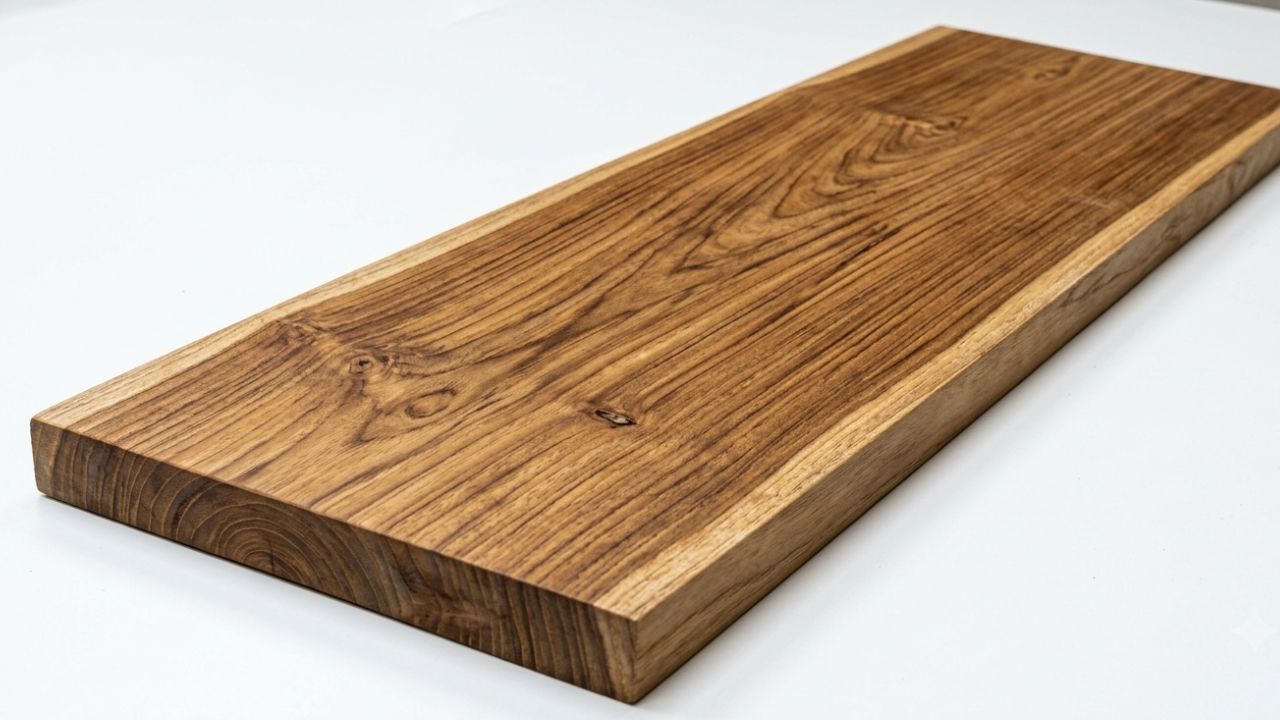
Yes, you can paint teak wood, but proper preparation is essential. Its natural oils can interfere with paint adhesion, so applying paint directly to an oily, dirty, or poorly prepared surface may lead to peeling.
For a reliable finish, clean the wood, address any existing coating, prepare the surface, and use a primer-and-paint system suitable for teak and its intended location.
Painting can give an old teak table, chair, or cabinet a completely different appearance. However, it covers the natural color and grain, so decide whether you want an opaque finish before starting.
Why Is Teak Wood Difficult to Paint?
Teak is an oily hardwood. Those oils create a challenge when applying coatings because the paint needs a properly prepared surface to bond securely.
Previously applied teak oil, wax, furniture polish, and old finishes can add further complications. A surface may look clean while still carrying residue that affects adhesion.
Preparation also depends on the condition of the piece. Bare teak, varnished teak, and previously painted teak do not necessarily need the same treatment.
Should You Paint Teak Furniture?
Painting is worth considering if you want a solid color or need an existing piece to match other furniture. It can also help create a uniform appearance after suitable cosmetic repairs.
Before committing, consider the trade-offs.
| Painting teak may suit you if… | Consider a natural finish if… |
|---|---|
| You want a completely different color | You want to keep the visible grain |
| The furniture already has a painted finish | You like teak’s natural appearance |
| You want to cover mismatched cosmetic repairs | You prefer maintaining a wood finish |
| You accept future paint maintenance | You want to avoid removing paint later |
For valuable or collectible furniture, identify the piece before changing its original finish. Removing paint later can be time-consuming, especially around joints, carvings, and thin veneers.
What Paint Should You Use on Teak Wood?
Choose the primer and topcoat together. A paint’s label saying “suitable for wood” is not enough to confirm that it will work directly on oily teak.
Ask the coating manufacturer to confirm suitability for:
- Teak or oily tropical hardwood.
- The existing finish, if you plan to retain it.
- Indoor or outdoor exposure.
- The amount of wear the surface will receive.
For an indoor cabinet, look for a furniture or cabinet coating system appropriate for the prepared surface. Outdoor chairs and tables need a system approved for exterior use and the relevant furniture surfaces.
Do not choose solely by whether a product is water-based or oil-based. Compatibility, preparation, and the manufacturer’s instructions matter more than that broad description.
What Is the Best Primer for Teak?
The best primer is one specifically approved for the substrate, topcoat, and exposure involved.
A bonding primer helps with adhesion, while a stain-blocking primer addresses discoloration. Some products do both, but those functions are not interchangeable.
Avoid assuming that every shellac, oil-based, or multipurpose primer is suitable for an entire outdoor teak project. Check whether its approval covers full exterior use or only limited applications.
What You Need Before Starting
Gather your materials after selecting the coating system:
- Cleaner suitable for the existing surface.
- Any degreaser or solvent specified by the coating manufacturer.
- Sandpaper in the recommended grades.
- Scraper, if the existing finish is loose.
- Suitable filler for minor defects.
- Vacuum and clean, lint-free cloths.
- Compatible primer and paint.
- Brushes or rollers recommended for those coatings.
- Drop cloths and masking tape.
- Appropriate protection for sanding and handling the selected products.
Work with adequate ventilation and follow the product labels for protective equipment, solvent handling, and disposal.
How to Paint Teak Wood Step by Step
1. Inspect the Furniture
Check the piece before buying paint. Identify loose joints, damaged areas, failing coatings, and any signs of moisture problems.
Also determine whether the surface is solid teak or teak veneer. Veneer requires particular care because aggressive sanding can cut through the thin wood layer.
Repair structural problems first. Paint will not fix a loose chair joint or weakened component.
2. Clean the Surface
Remove dirt, grease, polish, and other contamination using a cleaner compatible with the existing finish and planned coating.
Follow the cleaner’s instructions for rinsing and drying. Pay attention to armrests, tabletops, and areas that have been handled frequently.
If the furniture has been oiled or waxed, tell the coating supplier. A quick wash may not be enough to prepare that surface for paint.
3. Deal With the Existing Finish
Remove loose, peeling, or poorly bonded material. A new coating cannot create a secure foundation over an old finish that is already failing.
You may be able to retain a sound coating if the new system is compatible. Otherwise, stripping back may be necessary.
Zinsser’s guidance for painting exterior stained or varnished wood emphasizes a clean, dry surface, removal of failing material, and suitable preparation before priming. For teak, also confirm the system’s oily-hardwood requirements.
4. Sand as Required
Use the sanding grades specified for your chosen coating system. The aim is to prepare a sound surface and remove unwanted gloss or roughness—not to polish the wood as finely as possible.
Sand carefully around corners, edges, and veneer. Afterward, remove the dust thoroughly.
Do not rely on sanding alone to deal with oil, wax, or grease. Follow the manufacturer’s cleaning sequence so contamination is not simply worked into the surface.
5. Complete the Final Surface Preparation
Bare teak may require a final degreasing step with the coating manufacturer’s specified solvent.
International’s guide to painting weathered bare wood recommends properly degreasing oily woods such as teak and applying the first coating promptly afterward, once the solvent has fully evaporated.
Where specified, use separate cloths to apply the cleaner and lift away contamination. Change them frequently rather than spreading residue around.
Do not substitute an arbitrary household solvent. Follow the instructions for the actual coating system you are using.
6. Test the Complete Coating System
Before painting the entire piece, prepare a small, inconspicuous area and apply the intended primer and topcoat.
Allow the test to dry and cure as directed. Check for poor adhesion, discoloration, wrinkling, or a finish that remains unusually soft.
If the test fails, resolve the cause before continuing. Additional coats will not correct an unsuitable foundation.
7. Apply the Primer
Apply the primer at the recommended coverage rate. Work it into accessible details without leaving thick pools around joints or between slats.
Follow the specified drying and recoating times. If sanding between coats is required, use the recommended abrasive and remove the dust afterward.
The number of primer coats depends on the product and surface. Do not assume that extra coats always improve the result.
8. Apply the Paint
Apply the topcoat according to its instructions, using the recommended brush, roller, or approved application method.
Keep the film even and observe the stated coat thickness and recoating interval. For slatted furniture, inspect the opposite side as you work so you can catch runs before they dry.
Outdoor painting also requires suitable conditions. Check the product’s limits for temperature, humidity, rain, and dew.
9. Let the Finish Cure Before Use
Dry to the touch does not mean ready for normal use.
Wait for the manufacturer’s recommended return-to-service or curing period before replacing cushions, placing objects on the surface, or exposing the furniture to demanding conditions.
Record the products and colors you used. That makes future touch-ups easier.
Can You Paint Over Teak Oil?
Do not apply paint directly over a freshly oiled surface.
“Teak oil” describes various finishing products, so there is no single waiting period that makes every oiled surface paintable. The preparation depends on what was applied, its condition, and the proposed coating.
Identify the oil if possible and ask the paint manufacturer how to prepare it. Cleaning, removal, or further surface preparation may be required.
A hidden test patch is especially useful when the finishing history is unknown.
Can You Paint Outdoor Teak Furniture?
Yes, provided the preparation and coating system are suitable for outdoor teak.
Check whether the paint is approved for horizontal surfaces, seating, and the wear expected on your furniture. Approval for exterior trim does not automatically establish suitability for a tabletop.
After painting, inspect exposed edges, joints, and areas where water collects. Address chips and coating failures before they spread.
Painting adds a finish that needs maintenance; it does not make the furniture waterproof.
Common Mistakes When Painting Teak
| Mistake | Better approach |
|---|---|
| Painting over oil or furniture polish | Identify and remove contamination as directed |
| Using a generic primer without checking suitability | Confirm approval for teak and the intended exposure |
| Coating over peeling paint or varnish | Remove failing material and prepare a sound base |
| Sanding veneer aggressively | Use a careful approach appropriate to its thickness |
| Applying heavy coats to finish faster | Follow the stated coverage and recoating instructions |
| Using the furniture as soon as it feels dry | Allow the required curing time |
| Skipping a test on an unknown finish | Test the complete system in a hidden area |
How Long Does Paint Last on Teak?
There is no reliable lifespan that applies to every painted teak item.
An indoor cabinet and an outdoor table face very different conditions. Preparation, coating compatibility, sunlight, moisture, handling, and maintenance all affect performance.
Rather than relying on a fixed number of years, inspect the finish periodically. Look for lifting edges, cracks, blisters, and worn areas, then follow the coating supplier’s repair guidance.
Frequently Asked Questions
Can You Paint Teak Wood Without Sanding?
Only if the chosen coating system specifically permits it on that surface. A “no sanding” claim does not remove the need to clean, assess adhesion, or remove failing finishes.
Can You Paint Teak Wood White?
Yes. Ask for a compatible system that addresses both adhesion and potential discoloration. Test the white finish before painting the entire piece.
Can You Use Chalk Paint on Teak?
Possibly, but chalk-style paint does not eliminate teak’s preparation requirements. Confirm the required primer, protective finish, and suitability for indoor or outdoor use.
Can You Spray-Paint Teak Furniture?
Yes, if the coating is suitable and its instructions permit spraying. Spraying changes the application method, not the cleaning, preparation, or compatibility requirements.
Do You Need a Clear Sealer Over Painted Teak?
Not always. Many paints serve as the final finish. Add a clear coating only when the paint manufacturer recommends a compatible product for that purpose.
Is Painting Better Than Oiling Teak?
Painting suits a solid-color finish, while oiling is generally chosen to retain a more natural wood appearance. Choose the look and maintenance approach you prefer before starting, because changing from an oiled surface to paint requires additional preparation.