Laminated means made by bonding layers together or attaching a protective layer to a surface. The process is called lamination, and it can improve a material’s strength, appearance, or resistance to everyday wear.
For example, a laminated document has a protective plastic covering. A laminated furniture panel may have a decorative surface bonded to a wood-based core. Laminated timber, meanwhile, contains layers of real wood joined together.
The meaning depends on the product. The word “laminated” alone does not tell you whether something is plastic, real wood, waterproof, or suitable for outdoor use.
What Does Laminated Mean in Simple Words?
In simple terms, laminated means layers joined together to form one finished material.
Think of a printed menu covered with clear plastic. The paper carries the information, while the plastic helps protect it during handling. Together, they form a laminated item.
The same basic idea applies to other products, although the layers and bonding methods differ.
| Product | What “laminated” means |
|---|---|
| Paper or a document | A protective film is bonded to the paper |
| Furniture panel | A decorative surface is attached to a supporting board |
| Laminate flooring | A plank combines a protective surface, decorative image, core, and backing |
| Laminated timber | Layers of real wood are bonded together |
| Laminated glass | Glass layers are bonded with an interlayer |
These products share a layered construction, but they do not have the same properties.
How Does Lamination Work?
Lamination joins materials using an adhesive, resin, or another bonding system. Depending on the product, the process may involve heat, pressure, or both.
The general steps are:
- Prepare the layers. Select and clean the materials that will be joined.
- Arrange the materials. Position the surface, core, or protective layers.
- Bond the layers. Apply the required adhesive, heat, or pressure.
- Finish the product. Allow the bond to set or cool, then trim or machine it as needed.
Not all lamination requires heat. Some document films use pressure-sensitive adhesive, while industrial laminates may require controlled pressing and curing.
What Does Laminated Mean in Woodworking?
In woodworking, “laminated” commonly describes two different things: a board with a decorative facing or a component built from bonded layers of wood.
Decorative Laminated Boards
A decorative laminated board has a surface layer attached to a supporting material, often MDF, particleboard, or plywood.
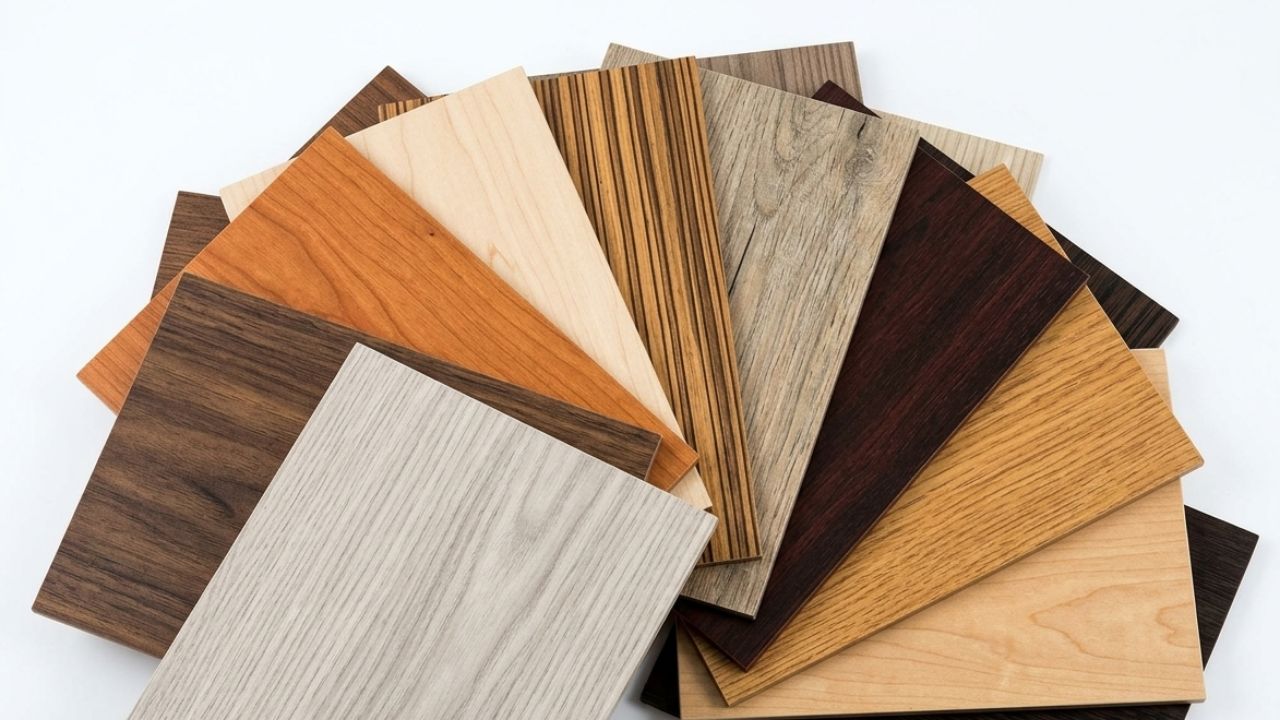
The visible surface may imitate oak, walnut, marble, or another material. A woodgrain pattern does not necessarily mean that the surface contains real wood veneer.
High-pressure decorative laminate is commonly made from resin-treated paper layers pressed together under heat and pressure. As Formica explains, paper forms an important part of this material’s construction.
These boards are commonly used for cabinets, desks, shelving, and other interior surfaces.
Laminated Timber
Laminated timber uses bonded layers of actual wood. Here, lamination forms the component itself rather than simply adding a decorative covering.
Examples include:
- Glulam: Lumber layers bonded together to make beams and other structural members.
- Laminated veneer lumber, or LVL: Thin wood veneers bonded with their grain mainly running along the member’s length.
- Plywood: Veneer layers typically arranged with the grain direction alternating between adjacent layers.
These are different engineered wood products with different applications. The APA engineered wood glossary explains their construction and terminology.
A decorative laminated shelf and a structural laminated beam should never be treated as interchangeable products.
What Does Laminated Mean in Furniture?
When a furniture listing says “laminated,” it often means the piece has a decorative surface over a supporting board.
For example, a desk described as having a walnut laminate finish may have a walnut-look surface over particleboard. It does not necessarily contain solid walnut.
However, “laminated” is sometimes used loosely in product descriptions. Before buying, check:
- Surface material: Decorative laminate, printed film, or real wood veneer?
- Core material: MDF, particleboard, plywood, or solid wood?
- Edges: How are the exposed edges covered and joined?
- Intended use: Is the product suitable for the location where you will use it?
A useful question for the seller is: “What are the surface and the core made from?”
That gives you more information than simply asking whether the furniture is laminated.
Laminate vs Veneer vs Solid Wood
These terms describe different constructions.
| Material | What it means | Appearance | Refinishing considerations |
|---|---|---|---|
| Decorative laminate | Manufactured facing bonded to a supporting material | Can imitate wood, stone, or other designs | Cannot be sanded and refinished like a solid-wood surface |
| Wood veneer | A thin layer of real wood over a core | Genuine wood grain | Sanding depends on veneer thickness and product construction |
| Solid wood | Wood throughout the relevant piece or component | Genuine wood grain | Often allows refinishing, depending on condition and construction |
A veneered panel is technically a layered, bonded product. However, furniture sellers usually distinguish “veneer” from “laminate” because veneer has a real-wood face.
Solid wood can also contain glued joints. For example, a tabletop made from several solid boards joined edge to edge is still commonly described as solid wood.
What Is Laminate Flooring?
Laminate flooring is a manufactured floor covering built from several layers. A typical plank includes:
- A protective wear layer.
- A decorative image layer.
- A wood-fiber core.
- A backing layer.
The image can reproduce the appearance of wood or another surface. Unlike engineered wood flooring, conventional laminate flooring does not have a real-wood veneer as its decorative top layer.
This distinction matters when considering repairs. Sanding conventional laminate flooring would damage its decorative surface rather than reveal fresh wood underneath.
When comparing flooring, read the construction details instead of relying only on terms such as “wood-look” or “laminated wood.”
Does Laminated Mean Waterproof?
No. Laminated does not automatically mean waterproof.
The word describes how a product is constructed. Water performance depends on the surface, core, adhesive, edges, joints, and installation.
A laminated tabletop may tolerate a wiped-up spill while remaining vulnerable where water reaches an exposed edge. Likewise, flooring products can have different moisture limits despite sharing the laminate label.
Before using a laminated product near water, check:
- Whether the manufacturer describes it as water-resistant or waterproof.
- Which types of exposure are covered.
- Whether edges or joints require sealing.
- Whether the product is approved for the intended room or location.
Do not assume that a protective surface makes the entire product suitable for soaking, outdoor exposure, or standing water.
Advantages of Laminated Materials
The benefits depend on the product, but lamination can offer several practical advantages.
Surface Protection
A protective layer can help shield the material underneath from handling, dirt, or everyday wear. This is one reason documents and frequently handled surfaces are laminated.
Design Options
Decorative laminates offer a wide selection of colors, patterns, and textures. They allow a consistent appearance across multiple furniture panels.
Efficient Use of Materials
A decorative facing can provide the desired appearance without using a thick piece of that material throughout the product.
Engineered Construction
Bonding selected wood layers allows manufacturers to produce components with specified dimensions and performance characteristics. Structural products still need to be selected for their intended application.
Disadvantages of Laminated Materials
Damage Can Be Difficult to Repair
A deep chip in a decorative surface may expose a differently colored core. Repairs may remain visible, and some products require replacement rather than refinishing.
Edges and Joints Matter
A durable face does not guarantee equally durable edges. Inspect corners, seams, and edge coverings when assessing furniture or panels.
Layers Can Separate
Separation between bonded layers is called delamination. Causes can include unsuitable exposure, damage, or problems with the bond.
Quality Varies
“Laminated” is a broad construction term, not a quality rating. Two laminated products may have very different cores, surface thicknesses, and performance.
Frequently Asked Questions
Does Laminated Mean Plastic?
Not always. Laminated documents commonly use plastic film, but laminated timber contains bonded wood layers. The materials depend on the product.
Is Laminated Wood Real Wood?
It can be. Glulam and LVL contain real wood layers. A piece of furniture with a wood-look laminate surface may instead have a printed decorative face over a wood-based board.
Is Laminated the Same as Coated?
Not exactly. Lamination generally involves bonding layers together. A coating is typically applied to a surface as a liquid or another deposited material, such as paint or varnish.
Is Laminated Furniture Good Quality?
It can be, but the word alone does not establish quality. Examine the core, surface, edges, joints, hardware, and suitability for your intended use.
Can You Paint a Laminated Surface?
Some decorative laminated surfaces can be painted with appropriate preparation and a compatible primer and paint. Follow the coating manufacturer’s instructions and test a small area first.
What Is the Difference Between Laminate and Laminated?
“Laminate” commonly names a layered material, such as a decorative laminate sheet. “Laminated” describes something that has undergone the process, such as a laminated panel or document.
When reading a product label, use “laminated” as a starting point. Identifying the layers and their intended purpose will tell you much more about how the product should perform.