
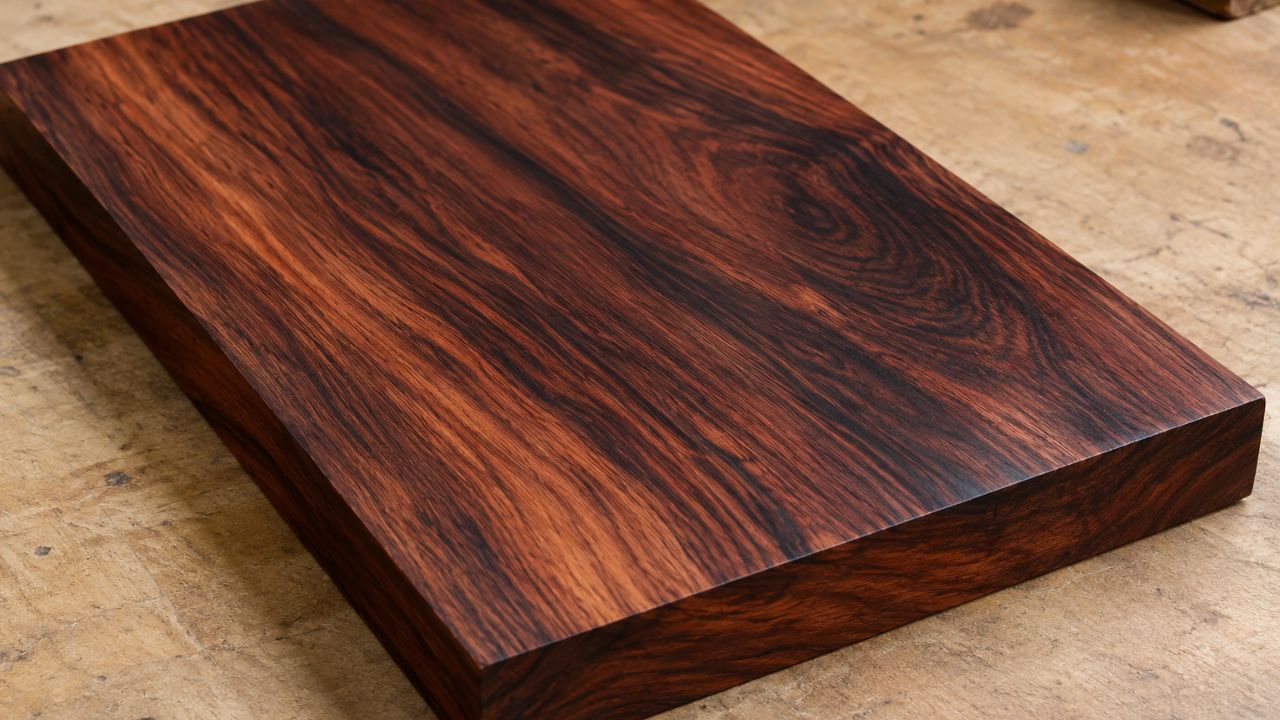
Yes, Brazilian rosewood is expensive. Specialist listings show guitar back-and-side sets priced around $1,000 or more, while even a single fingerboard blank can cost nearly $300. These prices are for the wood alone, before the instrument is built.
Its high cost comes mainly from limited availability, strict trade restrictions, and demand from guitar makers and collectors. However, the price varies considerably with the size, condition, appearance, and documented history of each piece.
Here is what buyers can expect to pay and why prices differ.
How Much Does Brazilian Rosewood Cost?
Brazilian rosewood is often sold as individual boards, blanks, or matched guitar sets rather than at a standard price per board foot.
The following supplier listings provide useful examples:
| Product | Listed Price | Supplier |
|---|---|---|
| Fingerboard blank described as pre-1970 | $295 | American Tonewood |
| Parlor guitar back-and-side set, No. 083 | $1,000 sale price; $1,750 regular price | StewMac |
| Guitar back-and-side set, BR38 | $1,170 sale price; $1,950 regular price | Morrissey Guitars |
| Guitar back-and-side set, BRS34 | £1,500 | David Dyke Luthier Supplies |
Listings checked in September 2026. Prices and availability can change. Dollar prices are in U.S. dollars; the UK listing is in pounds. Shipping, taxes, and any documentation costs should be checked separately.
A back-and-side set usually contains matched pieces for an acoustic guitar’s back and sides. It does not include the soundboard, neck, hardware, or construction labor.
These examples show why Brazilian rosewood is considered a premium material: a relatively small quantity of prepared wood can cost hundreds or thousands of dollars.
What Is the Price per Board Foot?
There is no dependable single retail price per board foot for Brazilian rosewood. Much of the material available today is sold by the piece, with its intended use affecting the asking price.
For example, a thin, carefully selected guitar set may cost much more relative to its volume than a thick board with cracks or irregular grain. Converting that guitar set into a board-foot price would not give a fair estimate for ordinary lumber.
If you need boards for furniture or woodworking, request a quotation for the exact dimensions and condition required. Confirm the scientific name, Dalbergia nigra, because other woods sold under “rosewood” names can have very different prices.
Why Is Brazilian Rosewood So Expensive?
Limited Available Stock
Dealers often offer Brazilian rosewood from older inventories rather than a steady supply of newly harvested lumber.
For example, Morrissey Guitars describes its stock as wood stored since the late 1960s. StewMac similarly describes its sets as material preserved for decades. These limited inventories help explain the high asking prices.
Strict Trade Restrictions
Brazilian rosewood is listed in CITES Appendix I, which generally prohibits international commercial trade, subject to limited exceptions. Qualifying older material may be traded with the appropriate documentation.
These restrictions make sourcing and selling the wood more complicated. The U.S. Fish and Wildlife Service explains the restrictions and exceptions for Appendix-I specimens.
Demand for Instrument Wood
Brazilian rosewood has a long association with prized acoustic guitars. Buyers may pay extra for that history, its appearance, and the opportunity to use a scarce traditional material.
That premium reflects desirability as well as practical usefulness. A higher wood price does not automatically mean a better finished instrument.
Quality and Usable Dimensions
A clear, properly seasoned piece large enough for a matched guitar back is more useful than several small offcuts.
Cracks, holes, excessive distortion, and insufficient thickness can reduce the usable material. Attractive grain may increase the price, but appearance should always be considered alongside condition.
Is Brazilian Rosewood More Expensive Than Indian Rosewood?
Yes, Brazilian rosewood generally costs substantially more than East Indian rosewood.
For perspective, StewMac lists an Indian rosewood back-and-side set at $199.99, although that particular set is out of stock. Its Brazilian rosewood example above is listed at $1,000 on sale.
That is approximately five times the listed price. The sets differ in dimensions and characteristics, so this is an illustration of the price gap rather than an exact like-for-like comparison.
For a project with a limited budget, Indian rosewood is usually the more practical option.
Is Brazilian Rosewood Worth the Money?
It may be worth the premium for a collector, a specialist restoration, or a custom instrument where Brazilian rosewood is specifically desired.
For ordinary woodworking, the extra expense is harder to justify. More accessible woods can deliver attractive results at a much lower cost.
Before buying, check:
- Species: Is it genuine Dalbergia nigra?
- Dimensions: Will the piece fit your project after preparation?
- Condition: Are cracks, repairs, holes, or defects disclosed?
- Provenance: What records support its origin and trade eligibility?
- Final cost: Are delivery, taxes, and other charges included?
For an international purchase, confirm the documentation requirements before paying.
Frequently Asked Questions
Can a small piece of Brazilian rosewood be expensive?
Yes. The $295 fingerboard blank listed above shows that even a small piece can carry a substantial price when selected and prepared for instrument making.
Is all Brazilian rosewood worth thousands of dollars?
No. Size, quality, condition, and provenance matter. A small damaged offcut should not be valued like a complete matched guitar set.
Does expensive Brazilian rosewood guarantee better sound?
No. A guitar’s construction, soundboard, design, and setup also influence its sound. Buy the instrument for how it performs, rather than judging it only by the price of its wood.