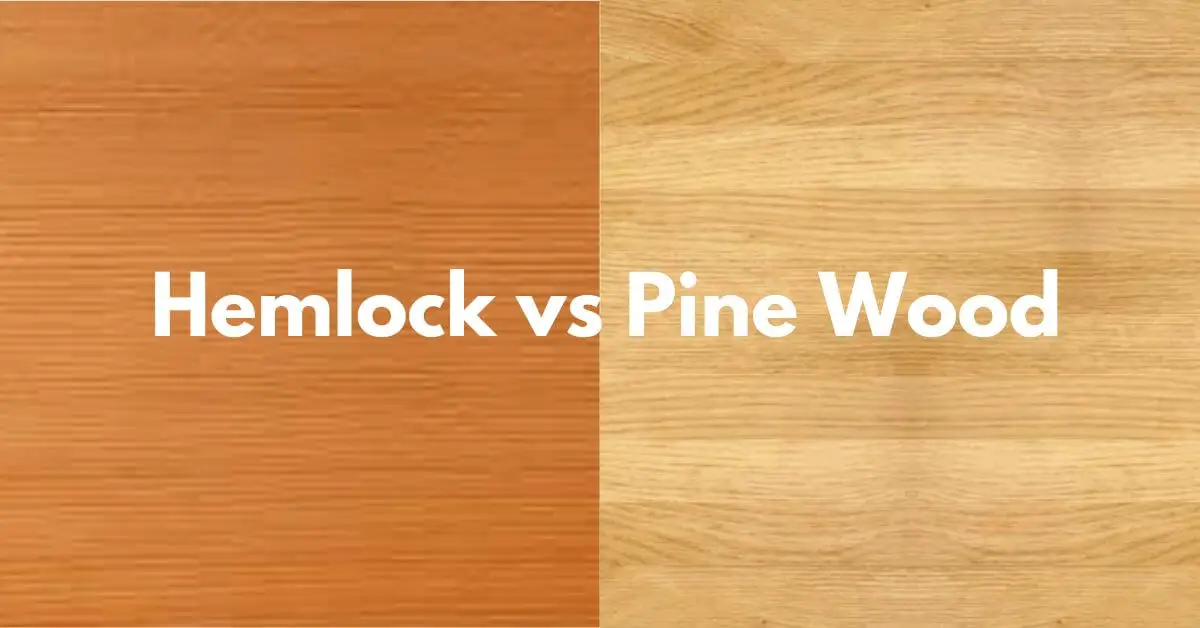
When choosing lumber for furniture, framing, trim, or outdoor projects, Hemlock and Pine are two of the most commonly available softwoods. Both are lightweight, easy to machine, and widely used in construction and woodworking. However, they differ in strength, appearance, durability, workability, and price.
Hemlock is generally stronger, stiffer, and more dimensionally stable than many common pine species, making it a popular choice for framing, beams, doors, and structural applications. Pine, on the other hand, is easier to work, widely available, and more affordable, making it one of the most popular woods for furniture, shelving, paneling, and DIY projects.
If you’re unsure which wood is right for your project, this guide compares Hemlock and Pine in detail, covering their identification, hardness, durability, workability, common uses, and overall performance.
Hemlock Wood Overview
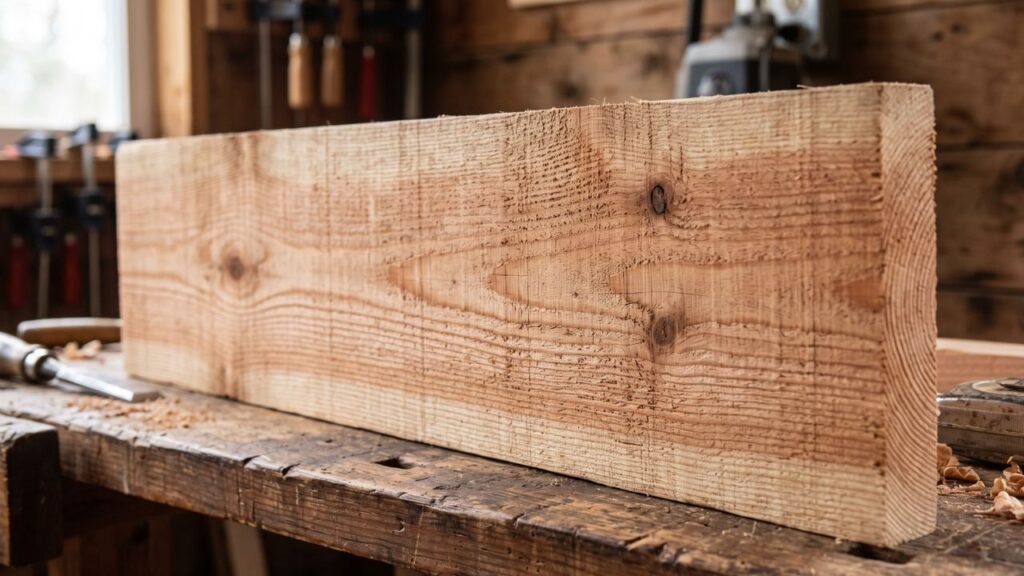
Hemlock is a group of softwood trees belonging to the Tsuga genus. Despite being classified as a softwood, Hemlock is relatively strong and stiff, making it suitable for both structural construction and fine woodworking.
Several Hemlock species are commercially available, including:
- Eastern Hemlock (Tsuga canadensis)
- Western Hemlock (Tsuga heterophylla)
- Mountain Hemlock (Tsuga mertensiana)
- Carolina Hemlock (Tsuga caroliniana)
Western Hemlock is the most widely used species in the lumber industry because of its straight grain, good strength-to-weight ratio, and excellent machining characteristics.
Hemlock trees are native to North America and parts of Asia. Mature trees commonly reach heights of 120–200 feet (36–60 m), with trunk diameters of 2–5 feet (0.6–1.5 m).
Hemlock lumber has a pale appearance with a fine, uniform texture, making it an excellent choice for painted finishes and interior millwork.
Pine Wood Overview
Pine belongs to the Pinus genus, one of the largest groups of coniferous trees in the world, with more than 120 recognized species.
Some commonly used commercial species include:
- Eastern White Pine
- Southern Yellow Pine
- Longleaf Pine
- Ponderosa Pine
- Lodgepole Pine
- Radiata Pine
- Western White Pine
Because different pine species vary greatly in density and hardness, the properties of Pine lumber can differ considerably. For example, Eastern White Pine is relatively soft and lightweight, while Southern Yellow Pine is significantly harder and stronger.
Pine is widely grown throughout North America, Europe, and Asia. It grows quickly, making it one of the most sustainable and economical woods available.
Its affordability, ease of machining, and attractive grain have made Pine one of the world’s most commonly used construction and furniture woods.
Hemlock vs Pine Comparison
| Property | Hemlock | Pine |
|---|---|---|
| Scientific Name | Tsuga spp. | Pinus spp. |
| Wood Type | Softwood | Softwood |
| Color | Pale yellowish-brown to light reddish-brown | Creamy white to pale yellow or light brown |
| Grain | Straight with occasional interlocked grain | Mostly straight, sometimes uneven |
| Texture | Fine and even | Medium and uniform |
| Weight | Medium | Light to medium (varies by species) |
| Janka Hardness* | About 500–600 lbf (Western Hemlock) | 380–870 lbf depending on species |
| Strength | Good | Moderate to high (species dependent) |
| Dimensional Stability | Good | Moderate |
| Natural Rot Resistance | Low | Low |
| Workability | Good | Excellent |
| Nail & Screw Holding | Good | Good |
| Gluing | Excellent | Excellent |
| Staining | Good | Very Good |
| Outdoor Use | Only when properly protected | Pressure-treated Pine recommended |
| Cost | Moderate | Affordable |
*Values vary depending on species.
Appearance and Identification
At first glance, Hemlock and Pine may appear similar because both are light-colored softwoods. However, there are several features that make them easy to distinguish.
Hemlock Appearance
Freshly cut Hemlock has heartwood that ranges from light reddish-brown to pale brown, while the sapwood is nearly white to light brown. Unlike Pine, Hemlock has very little visible resin, giving it a cleaner appearance.
Growth rings are usually subtle, creating a smooth and uniform look.
The wood develops only slight color changes as it ages, making it a good choice where a consistent appearance is desired.
How to Identify Hemlock
- Pale brown to light reddish-brown color
- Fine, even texture
- Little visible resin
- Straight grain
- Narrow growth rings
- Small, tight knots in higher grades
Because of its uniform texture, Hemlock is often selected for trim, moldings, and painted woodwork.
Pine Appearance
Pine has a brighter appearance than Hemlock.
Heartwood ranges from light yellow to reddish-brown, while sapwood is creamy white or pale yellow.
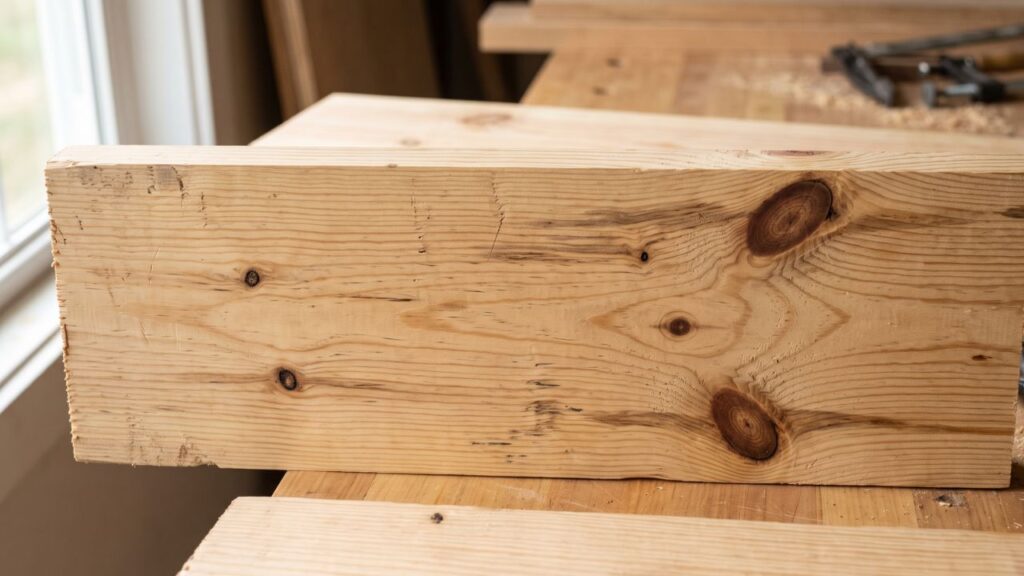
One of Pine’s most recognizable characteristics is the strong contrast between earlywood and latewood, producing distinct annual growth rings.
Many Pine boards also contain resin pockets and prominent knots, giving them a rustic appearance.
As Pine ages, its color gradually deepens into a warm golden or amber tone.
How to Identify Pine
- Creamy white to pale yellow color
- Obvious annual growth rings
- Frequent knots
- Resin canals or sticky pitch pockets
- Characteristic pine scent
- Medium texture
The noticeable grain pattern makes Pine popular for rustic furniture and farmhouse-style interiors.
Grain and Texture
The grain pattern influences both appearance and ease of machining.
Hemlock Grain
Hemlock usually has a straight grain, although some boards display slight interlocking.
Its texture is fine and even, allowing smooth surfaces after planing and sanding.
Because of its subtle grain pattern, Hemlock is often painted rather than stained.
Pine Grain
Most Pine species also have straight grain, but their annual growth rings are much more pronounced.
The contrast between earlywood and latewood creates attractive grain patterns that many homeowners prefer for furniture.
Pine accepts stain well, although uneven absorption can occur if a wood conditioner is not used before staining.
Winner for appearance: Pine (for natural finishes)
Winner for painted projects: Hemlock
Weight, Density and Hardness
Although both are softwoods, they are not equally hard.
Hemlock
Western Hemlock has a Janka hardness of approximately 540 lbf, making it slightly harder than Eastern White Pine but softer than Southern Yellow Pine.
It has a good strength-to-weight ratio, which explains why it is frequently used for structural lumber.
Its moderate density also provides good screw-holding ability without making it difficult to machine.
Pine
Hardness varies significantly by species.
Examples include:
| Pine Species | Approximate Janka Hardness |
|---|---|
| Eastern White Pine | 380 lbf |
| Radiata Pine | 470 lbf |
| Ponderosa Pine | 460 lbf |
| Southern Yellow Pine | 690–870 lbf |
| Longleaf Pine | Around 870 lbf |
This wide variation means some Pine species are softer than Hemlock, while others are considerably harder.
For general woodworking, Eastern White Pine remains one of the easiest woods to machine.
Winner: Depends on the species.
Strength and Stability
Strength is an important consideration for framing, beams, shelving, and furniture.
Hemlock
Hemlock offers:
- Good bending strength
- High stiffness
- Good compression strength
- Excellent dimensional stability
These characteristics make it a preferred choice for:
- House framing
- Roof trusses
- Beams
- Structural timbers
- Stair components
Because Hemlock shrinks relatively little during drying, finished projects are less likely to warp or twist.
Pine
Pine also performs well structurally, especially Southern Yellow Pine.
However, softer Pine species are more prone to dents and surface damage when used for furniture.
Pine generally experiences more movement with changes in humidity than Hemlock, although proper kiln drying greatly reduces this issue.
For indoor furniture, Pine performs very well, especially when properly sealed.
Winner: Hemlock
Durability and Rot Resistance
Neither Hemlock nor Pine is naturally considered a highly durable wood.
Hemlock
Hemlock has low natural resistance to decay and is susceptible to fungal attack if exposed to prolonged moisture.
It also has limited resistance to termites and other wood-boring insects.
For outdoor applications, Hemlock should always be protected with a quality exterior finish or preservative treatment.
Pine
Most Pine species also have low natural decay resistance.
However, pressure-treated Pine is widely used outdoors because the preservative treatment dramatically improves its resistance to rot, insects, and moisture.
Pressure-treated Pine is commonly used for:
- Decking
- Fences
- Pergolas
- Garden structures
- Outdoor framing
Without treatment, ordinary Pine should generally be reserved for interior applications.
Winner: Neither wood has excellent natural decay resistance. For outdoor use, pressure-treated Pine is generally the better option because it is widely available and designed for exterior exposure.
Workability
Both woods are beginner-friendly, but they behave differently in the workshop.
Working with Hemlock
Hemlock machines well using both hand and power tools. It cuts cleanly, glues easily, and holds nails and screws securely.
One drawback is its tendency to splinter, particularly when cutting across the grain or using dull blades. Sharp tools help minimize tear-out.
Hemlock also sands smoothly and accepts paint exceptionally well because of its fine, even texture.
Unlike Pine, it contains very little resin, so it rarely gums up saw blades or sandpaper.
Working with Pine
Pine is widely regarded as one of the easiest woods to work with. Its straight grain and relatively soft texture make it ideal for sawing, routing, carving, drilling, and sanding.
It glues well and accepts both paint and stain. However, some species—particularly Southern Yellow Pine and Longleaf Pine—contain resin that can build up on cutting tools and clog sandpaper during extended machining.
When staining Pine, applying a pre-stain wood conditioner helps reduce blotching and produces a more even finish.
Winner: Pine is generally easier for beginners, while Hemlock offers cleaner painted finishes and less resin-related tool buildup.
Common Uses of Hemlock and Pine
Although Hemlock and Pine are both softwoods, they are often chosen for different woodworking and construction projects because of their unique properties.
Common Uses of Hemlock
Hemlock is valued for its strength, stability, and uniform texture. It is widely used in residential construction and interior woodworking.
Common applications include:
- Structural framing
- Roof trusses and rafters
- Beams and joists
- Interior doors
- Window frames
- Stair parts
- Trim and moldings
- Plywood
- Crates and pallets
- Interior paneling
- Shelving
- Utility furniture
Because Hemlock has a relatively smooth surface and fine texture, it is an excellent choice for painted trim and millwork.
Common Uses of Pine
Pine is one of the most versatile and widely available softwoods. Its affordability and ease of machining make it popular among professional woodworkers and DIY enthusiasts alike.
Common uses include:
- Furniture
- Cabinets
- Bookshelves
- Bed frames
- Interior doors
- Paneling
- Flooring (harder pine species)
- Boxes and crates
- Wood carvings
- Moldings
- DIY woodworking projects
- Pressure-treated decking and fencing
The attractive grain and warm color of Pine make it a favorite for rustic and farmhouse-style furniture.
Indoor vs. Outdoor Applications
Choosing the right wood also depends on where it will be used.
Is Hemlock Good for Outdoor Use?
Hemlock is not naturally decay-resistant. Although it performs well indoors, prolonged exposure to moisture can lead to fungal decay and insect damage.
If Hemlock is used outdoors, it should be:
- Properly sealed
- Painted or stained
- Maintained regularly
- Kept away from standing water whenever possible
Exterior doors, covered porches, and protected structures are generally suitable applications.
Is Pine Good for Outdoor Use?
Untreated Pine also has poor natural rot resistance.
However, pressure-treated Pine is one of the most commonly used woods for outdoor construction because preservative treatments significantly improve its resistance to moisture, decay, and insects.
Pressure-treated Pine is commonly used for:
- Decks
- Fences
- Pergolas
- Raised garden beds
- Outdoor stairs
- Gazebos
Winner for outdoor projects: Pressure-treated Pine.
Price and Availability
Price is often one of the biggest deciding factors.
Hemlock Price
Hemlock generally costs slightly more than common Pine because it is less abundant in many regions.
The final price depends on:
- Species
- Lumber grade
- Board dimensions
- Moisture content
- Local availability
Clear, knot-free Hemlock boards are usually sold at a premium.
Pine Price
Pine is one of the most affordable lumber options available.
Fast growth, widespread cultivation, and high availability keep prices relatively low.
Common Pine boards can be found in nearly every home improvement store.
Winner: Pine
Maintenance
Neither Hemlock nor Pine requires complicated maintenance, but proper care can significantly extend their lifespan.
Hemlock Maintenance
For indoor projects:
- Dust regularly.
- Clean with a damp cloth.
- Reapply finish if the surface becomes worn.
For outdoor projects:
- Seal all exposed surfaces.
- Repaint or restain every few years.
- Inspect regularly for signs of moisture damage.
Pine Maintenance
Indoor Pine furniture should be cleaned using a soft cloth and mild cleaner.
Outdoor Pine should always be:
- Pressure-treated or sealed.
- Repainted or resealed when the finish begins to wear.
- Protected from standing water whenever possible.
Routine maintenance greatly improves the service life of both woods.
Pros and Cons
Hemlock Pros
- Stronger and stiffer than many common Pine species
- Good dimensional stability
- Fine, uniform texture
- Takes paint exceptionally well
- Low resin content
- Good screw and nail holding
Hemlock Cons
- Low natural decay resistance
- Can splinter during machining
- Less widely available
- Slightly more expensive than Pine
Pine Pros
- Affordable
- Widely available
- Easy to machine
- Attractive natural grain
- Accepts stain and paint well
- Excellent choice for beginner woodworkers
Pine Cons
- Softer species dent easily
- Resin may gum up cutting tools
- Can stain unevenly without conditioner
- Low natural decay resistance unless pressure-treated
Which Wood Is Better for Furniture?
Both woods make excellent furniture, but the best choice depends on your priorities.
Choose Hemlock if you want:
- Greater strength
- Better dimensional stability
- Painted furniture
- Modern, clean-looking pieces
Choose Pine if you want:
- Lower material cost
- Rustic appearance
- Visible wood grain
- Easy machining
- DIY-friendly lumber
For premium painted furniture, many woodworkers prefer Hemlock.
For farmhouse furniture and rustic cabinets, Pine is usually the better choice.
Which Wood Is Better for Construction?
For structural framing, Hemlock generally performs better because of its higher stiffness and good strength-to-weight ratio.
However, Pine—especially Southern Yellow Pine—is also widely used in structural applications due to its excellent strength and availability.
Both woods are approved for construction when they meet local building code requirements.
Frequently Asked Questions
Is Hemlock stronger than Pine?
Generally, Hemlock is stronger and stiffer than softer Pine species such as Eastern White Pine. However, some species, including Southern Yellow Pine, are harder and stronger than Hemlock.
Which wood is easier to work with?
Pine is generally easier for beginners because it cuts, shapes, and sands with minimal effort. Hemlock also machines well but may splinter when worked with dull tools.
Which wood lasts longer outdoors?
Neither wood has high natural decay resistance. Pressure-treated Pine usually lasts longer outdoors because it is specifically treated to resist moisture, fungi, and insects.
Does Hemlock resist insects?
Hemlock has limited natural resistance to insects and should be protected with preservatives if used outdoors.
Is Pine good for furniture?
Yes. Pine is one of the world’s most popular furniture woods because it is affordable, lightweight, easy to work with, and attractive when stained or painted.
Which wood is better for painting?
Hemlock is generally considered the better choice for painted projects because of its fine texture and low resin content.
Final Verdict
Hemlock and Pine are both versatile softwoods, but they excel in different applications.
Hemlock is stronger, stiffer, and more dimensionally stable than many common Pine species. Its smooth texture, low resin content, and excellent paintability make it a popular choice for structural framing, interior trim, doors, and painted furniture.
Pine, on the other hand, is more affordable, widely available, and easier to work with. Its attractive grain, warm color, and beginner-friendly machining characteristics make it one of the best choices for furniture, cabinetry, shelving, and DIY woodworking projects. Pressure-treated Pine is also one of the most reliable options for outdoor construction.
If your priority is strength, stability, and painted finishes, Hemlock is an excellent choice. If you want an affordable, versatile wood with attractive natural grain, Pine offers outstanding value and remains one of the best all-around softwoods available.
Quick Comparison Summary
| Feature | Winner |
|---|---|
| Strength | Hemlock |
| Dimensional Stability | Hemlock |
| Ease of Working | Pine |
| Natural Appearance | Pine |
| Paint Finish | Hemlock |
| Outdoor Applications | Pressure-treated Pine |
| Availability | Pine |
| Affordability | Pine |
| Beginner Friendly | Pine |
| Structural Lumber | Hemlock |
Overall Recommendation:
- Choose Hemlock for framing, painted trim, doors, beams, and projects where strength and stability are important.
- Choose Pine for furniture, shelving, cabinetry, DIY woodworking, and budget-friendly projects.
- For outdoor projects, select pressure-treated Pine or apply a suitable preservative finish to either wood before exposure to the weather.