What Is Yew Wood?
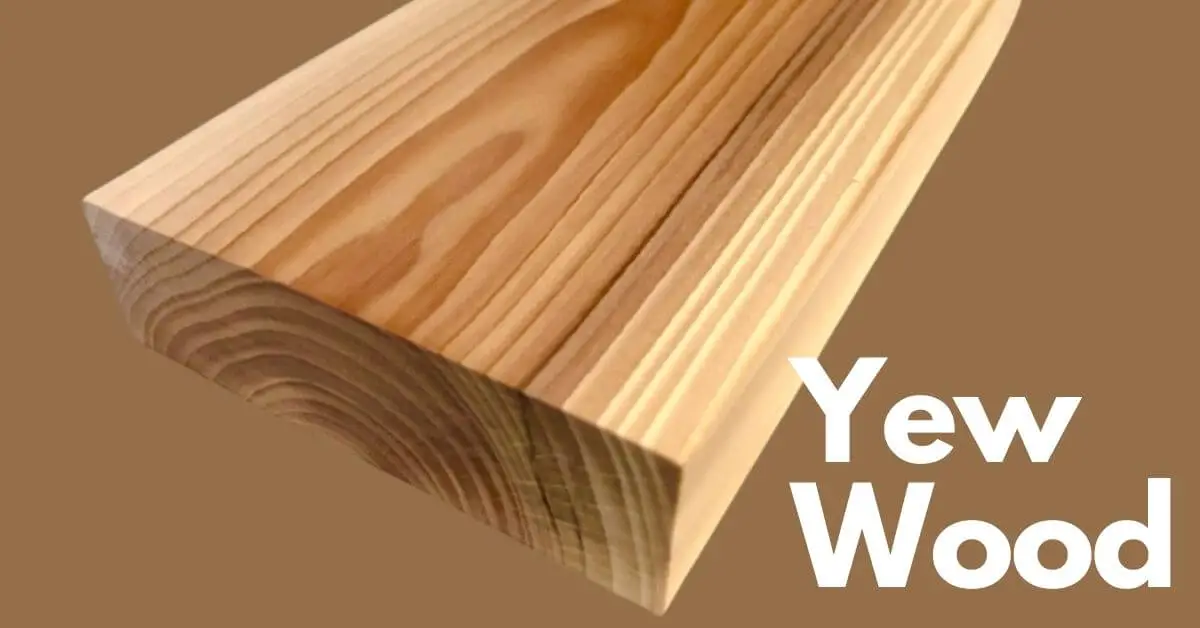
Yew wood is a highly durable, dense, and naturally decay-resistant softwood that has been valued for centuries. Despite being classified as a softwood, yew is harder than many popular hardwoods and is renowned for its strength, flexibility, and beautiful appearance.
Yew wood comes from trees in the Taxus genus. It has historically been used to make longbows, furniture, cabinetry, veneers, carvings, and musical instruments. Thanks to its combination of strength and elasticity, yew has earned a reputation as one of the finest woods for specialized woodworking projects.
In this guide, we’ll explore yew wood’s characteristics, uses, durability, workability, advantages, disadvantages, and how it compares to other wood species.
Yew Wood Overview
| Property | Yew Wood |
|---|---|
| Scientific Name | Taxus spp. |
| Wood Type | Softwood |
| Average Height | 30–65 ft (10–20 m) |
| Trunk Diameter | 3–5 ft (1–1.5 m) |
| Rot Resistance | Very Good |
| Workability | Easy to Moderate |
| Density | High |
| Common Uses | Bows, furniture, cabinetry, veneer, plywood, carvings, musical instruments |
| Availability | Limited |
Yew trees are native to Europe, North Africa, parts of Asia, and North America. They are commonly grown as ornamental trees due to their attractive evergreen foliage and long lifespan.
Is Yew Hardwood or Softwood?
Yew is classified as a softwood because it comes from a coniferous tree.
However, this often surprises woodworkers because yew is much harder than many hardwood species. The terms hardwood and softwood refer to the tree’s botanical classification rather than the actual hardness of the wood.
Although yew belongs to the softwood group, its density, strength, and durability make it perform more like a hardwood in many applications.
Yew Wood Properties
Yew possesses several unique characteristics that have made it valuable for centuries.
High Density
Yew is a dense wood that feels heavy compared to most softwoods.
Excellent Flexibility
One of yew’s most famous characteristics is its ability to bend without breaking. This combination of strength and elasticity made it the preferred wood for traditional English longbows.
Natural Durability
Yew heartwood has excellent natural resistance to decay and insect attack.
Attractive Appearance
The wood features rich orange-brown heartwood contrasted by pale sapwood, creating a distinctive and attractive appearance.
Fine Texture
Yew generally has a fine and uniform texture that finishes beautifully.
Yew Wood Uses
Bow Making
Historically, yew is best known as the premier wood for making bows.
Its unique combination of:
- High tensile strength
- Excellent compression strength
- Flexibility
makes it ideal for traditional longbows and archery equipment.
Furniture
Yew is used for:
- Tables
- Cabinets
- Chairs
- Decorative furniture
- Custom woodworking projects
Its beautiful grain pattern makes it particularly attractive for high-end furniture.
Cabinetry
Yew’s stability and appearance make it an excellent choice for cabinetry and interior millwork.
Veneer and Plywood
High-quality yew veneer is used for decorative panels and premium furniture.
Carvings and Turnings
The wood’s fine texture allows it to be carved and turned with excellent results.
Musical Instruments
Yew is occasionally used to make:
- Lutes
- Stringed instruments
- Decorative instrument components
How to Identify Yew Wood
Yew wood has several distinctive identifying features.
Color
- Heartwood: Orange-brown to reddish-brown
- Sapwood: Pale yellow to cream-colored
The contrast between heartwood and sapwood is often very noticeable.
Grain
The grain is usually:
- Straight
- Slightly irregular
- Occasionally wavy
Texture
Yew has a fine, smooth, and uniform texture.
Aging
Like many woods, yew darkens over time, especially when exposed to sunlight and UV rays.
Types of Yew Wood
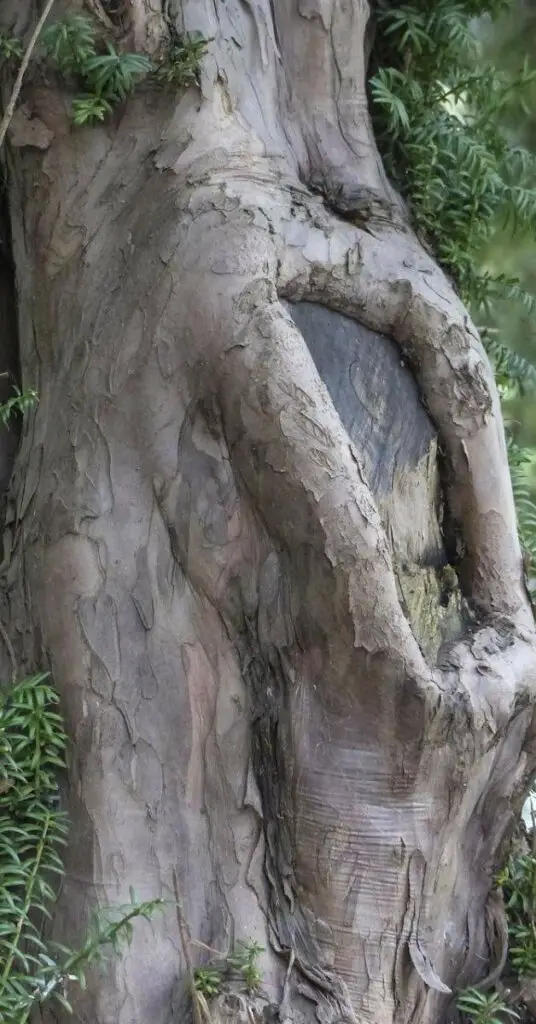
The term “yew” refers to several species within the Taxus genus.
European Yew (Taxus baccata)
Also known as:
- Common Yew
- English Yew
Characteristics:
- Very durable
- Highly rot resistant
- Excellent for bow making
- Widely used in woodworking
Pacific Yew (Taxus brevifolia)
Also known as:
- Western Yew
- Oregon Yew
Characteristics:
- Dense and strong
- Highly durable
- Excellent for carvings and musical instruments
Other Yew Species
- Canadian Yew (Taxus canadensis)
- Chinese Yew (Taxus chinensis)
- Japanese Yew (Taxus cuspidata)
- Florida Yew (Taxus floridana)
- Mexican Yew (Taxus globosa)
- Himalayan Yew (Taxus wallichiana)
- Sumatran Yew (Taxus sumatrana)
Is Yew Wood Hard or Soft?
Botanically, yew is a softwood.
In terms of actual hardness, however, it is surprisingly hard.
Janka Hardness Ratings
| Species | Janka Hardness |
|---|---|
| European Yew | 1,520 lbf |
| Pacific Yew | 1,520 lbf |
| Black Walnut | 1,010 lbf |
| Cherry | 950 lbf |
| White Oak | 1,360 lbf |
As you can see, yew is harder than black walnut, cherry, and even white oak.
This is why many woodworkers refer to it as a “hard softwood.”
Is Yew Wood Strong and Durable?
Yes, yew is exceptionally strong and durable.
Its bending strength (MOR) is approximately:
15,200 psi
Yew combines:
- High strength
- Excellent flexibility
- Good shock resistance
- Long service life
This rare combination of properties explains why it has been used for bows and specialized woodworking for centuries.
Is Yew Wood Weather Resistant?
Yew is considered moderately to highly weather resistant.
Its dense structure helps slow moisture absorption, while its natural extractives provide resistance to fungal decay and insects.
For outdoor projects, a quality exterior finish is still recommended to maximize longevity.
Suitable Outdoor Uses
- Garden furniture
- Outdoor decorative pieces
- Gates
- Exterior trim
With proper maintenance, yew can perform well outdoors.
Yew Wood Advantages
Extremely Durable
Yew can last for decades when properly maintained.
Strong and Flexible
Few woods combine strength and elasticity as effectively as yew.
Attractive Appearance
The rich color contrast creates stunning furniture and decorative pieces.
Easy to Carve
Its fine texture makes carving and turning easier.
Natural Rot Resistance
Yew naturally resists decay and insect attacks.
Excellent Finishing Qualities
Yew accepts oils, varnishes, and other finishes exceptionally well.
Yew Wood Disadvantages
Rare and Expensive
Quality yew lumber can be difficult to find and often commands premium prices.
Limited Board Sizes
Many yew trees develop hollow centers, reducing the amount of usable lumber.
Slow Growth Rate
Yew trees grow slowly compared to most commercial timber species.
Toxicity
Nearly all parts of the yew tree contain toxic compounds and should never be consumed.
Is Yew Wood Sustainable?
Yew is generally considered sustainable when sourced responsibly.
The species is not currently listed in the CITES Appendices, and many yew species are classified as being of low conservation concern.
However, because yew grows slowly and is not widely cultivated for timber production, availability remains limited.
When purchasing yew lumber, it is advisable to buy from reputable suppliers who source wood responsibly.
Yew Wood as Firewood
Most people do not use yew as firewood because:
- It is relatively rare
- It is expensive
- The tree contains toxic compounds
If burned outdoors, yew can produce good heat, but it should never be used for cooking or barbecuing due to concerns about toxic smoke.
For these reasons, yew is generally considered too valuable to burn.
Yew Wood Price
Yew wood is considerably more expensive than common softwoods such as:
- Pine
- Cedar
- Spruce
Several factors contribute to its higher price:
- Slow growth rate
- Limited availability
- Small tree size
- Difficulty obtaining clear, knot-free boards
High-quality yew lumber with minimal knots and defects can command premium prices in specialty lumber markets.
Frequently Asked Questions
Is yew wood hardwood or softwood?
Yew is a softwood because it comes from a coniferous tree, although it is harder than many hardwood species.
Is yew wood good for furniture?
Yes. Yew’s durability, attractive appearance, and fine texture make it an excellent furniture wood.
Why was yew used for longbows?
Its exceptional combination of strength, flexibility, and elasticity made it ideal for traditional bow making.
Is yew wood rot resistant?
Yes. Yew has very good natural resistance to decay and insect attack.
Is yew wood expensive?
Yes. Yew is generally more expensive than most common softwoods because of its rarity and slow growth.
Final Thoughts
Yew is one of the most remarkable softwoods available. Although it is technically a softwood, its hardness, strength, durability, and beautiful appearance allow it to compete with many hardwoods.
From legendary English longbows to fine furniture and musical instruments, yew has proven its value for centuries. While its rarity and cost may limit its use in large-scale projects, woodworkers continue to prize yew for its unique combination of beauty, strength, flexibility, and durability.