
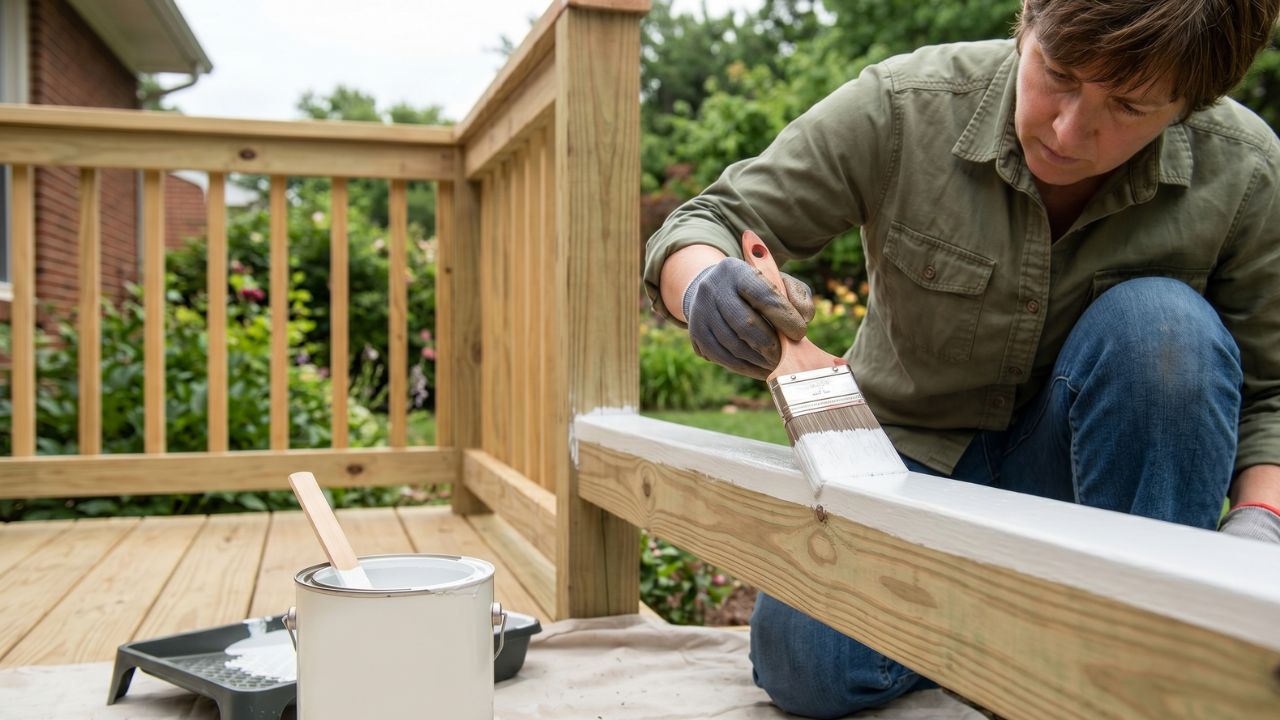
Pressure treated wood is a go-to material for decks, fences, raised garden beds, and outdoor structures. It’s tough, rot-resistant, and insect-proof — but it arrives from the lumber yard with a greenish tinge and a surface that can be frustratingly resistant to paint. So can you paint it? Absolutely. But there’s a right way and a wrong way, and the difference determines whether your paint job lasts two seasons or two decades.
Yes — you can paint pressure treated wood. The critical rule: the wood must be completely dry first, which typically takes 3–6 months for standard lumber. Paint applied to wet treated wood will blister, peel, and fail within weeks.
Why pressure treated wood is different
Pressure treated wood gets its durability from chemical preservatives — typically copper-based compounds — that are forced deep into the wood fibres under high pressure. This process makes the lumber highly resistant to rot, fungal decay, and insect damage, which is why it’s the standard choice for any outdoor wood that contacts soil or moisture.
The catch for painters is that this treatment process saturates the wood with moisture. Fresh pressure treated lumber can have a moisture content of 40–60% — compared to around 15% for typical untreated lumber. That trapped moisture needs to escape before the wood can accept paint or primer. Apply a coat too soon and you’re essentially sealing water inside the wood, which then pushes the paint off from below.
40–60%
Moisture content when fresh
3–6 mo
Drying time for standard lumber
2–3 yrs
How often to repaint
How long should you wait before painting?
Drying time depends on the type of pressure treated wood you’re working with, your local climate, and how the lumber is stored. Here’s a useful reference:
| Wood type | Drying time | Timeline |
|---|---|---|
| Standard air-dried PT lumber | 3 – 6 months | Standard wait |
| Kiln-dried after treatment (KDAT) | A few weeks | Paint-ready fastest |
| Thick posts & beams (4″+ wide) | 6 – 12 months | Allow extra time |
| Humid climate storage | Up to 12 months | Climate-dependent |
If your project timeline is tight, ask your lumber supplier specifically for KDAT (kiln-dried after treatment) lumber. It undergoes a drying process at the mill after treatment and is typically ready to paint within a few weeks of purchase — a significant advantage for time-sensitive projects.
💧 The water bead test — your best readiness check
Sprinkle a few drops of water onto the wood surface. If the droplets bead up and sit on top, the wood is still too wet to paint. If the water soaks straight in and darkens the surface within a few seconds, moisture levels are low enough — your wood is ready for primer.
Choosing the right primer and paint
Not all primers and paints are suitable for pressure treated wood. The chemical preservatives in the wood can react with certain formulations, preventing proper adhesion. Here’s what works and what to avoid:
✓ Recommended
Latex (water-based) primer
The best starting point for pressure treated wood. Flexible, breathable, and bonds well with the treated surface. Look for a formula explicitly rated for exterior use on treated lumber.
✓ Recommended
Exterior latex topcoat
Water-based exterior latex paint offers excellent adhesion, UV resistance, and flexibility as the wood expands and contracts with temperature changes. Premium formulas last significantly longer.
✗ Avoid
Oil-based paints (standard)
Oil-based paints don’t bond well with the chemical treatments in pressure treated wood and are prone to premature peeling. Only use oil-based if the product is specifically labelled for treated wood.
✓ Alternative
Semi-transparent stain
If you want to preserve the wood’s natural grain, a quality exterior stain (such as Thompson’s WaterSeal) is often easier to apply and maintain than full paint — and penetrates rather than sitting on the surface.
⚠️ Avoid oil-based paints on pressure treated wood unless the label specifically states compatibility. The copper compounds in treated lumber interfere with oil-based adhesion, making premature peeling almost inevitable.
Step-by-step: how to paint pressure treated wood
- Confirm the wood is fully dry: Perform the water bead test (described above). If water beads, wait longer. If it absorbs, proceed. Never skip this step — it’s the single biggest predictor of whether your paint job succeeds or fails.
- Clean the surface thoroughly: Remove dirt, mildew, and any mill glaze (a slick surface coating sometimes left from manufacturing) with a stiff brush and a deck cleaner or diluted bleach solution. Rinse well and allow to dry completely — at least 48 hours.
- Sand lightly if needed: If the wood surface feels rough or splintery, a light pass with 80-grit sandpaper smooths it out and improves primer adhesion. Always sand with the grain. Wipe away all dust before priming.
- Apply an exterior latex primer: Use a primer rated for pressure treated wood. Apply a thin, even coat with a brush, roller, or sprayer. Allow it to cure fully — typically 24 hours, or per the manufacturer’s instructions. Having the primer tinted to match your topcoat colour improves coverage efficiency.
- Apply your first coat of exterior latex paint: Work in manageable sections, maintaining a wet edge to avoid lap marks. Brush or roll in the direction of the wood grain. One coat of primer plus two coats of topcoat is the standard for a durable finish.
- Allow to dry, then apply the second coat: Wait at least 2–3 hours between coats (longer in humid conditions). A second topcoat significantly improves durability and colour depth. Don’t rush — trapped moisture between coats leads to bubbling and peeling.
- Maintain the finish every 2–3 years: Painted pressure treated wood needs periodic repainting to stay protected. Clean the surface each season and inspect for peeling or cracks. Catching problems early means spot-touching rather than a full strip and repaint.
Paint vs. stain: which is better for pressure treated wood?
Both are valid options, but they serve different goals. Paint creates a solid, opaque barrier that hides the wood’s natural colour and offers a bold aesthetic. It provides excellent weather protection but sits on top of the wood rather than penetrating it — meaning it can peel over time as the wood moves seasonally.
Stain penetrates the wood fibres rather than coating the surface, making it less prone to peeling and easier to maintain. Semi-transparent stains preserve the natural grain and are the preferred choice among deck and fence professionals for low-maintenance results. The trade-off is less colour coverage and a more natural, less polished look.
✓ Paint advantages
- ✓ Full, bold colour coverage
- ✓ Hides imperfections in wood
- ✓ Strong weather barrier
- ✓ Wide colour range available
✗ Paint considerations
- ✗ Can peel as wood moves
- ✗ Requires repainting every 2–3 yrs
- ✗ Harder to strip if peeling
- ✗ Hides natural wood grain
The verdict
Yes, you can absolutely paint pressure treated wood — but patience is the most important ingredient. Wait for the wood to fully dry (3–6 months for standard lumber, a few weeks for KDAT), use a latex primer rated for treated wood, and finish with a quality exterior latex topcoat. Done right, a painted pressure treated structure looks sharp, stays protected, and holds up for years. Rush it, and you’ll be repainting before the season is out.