
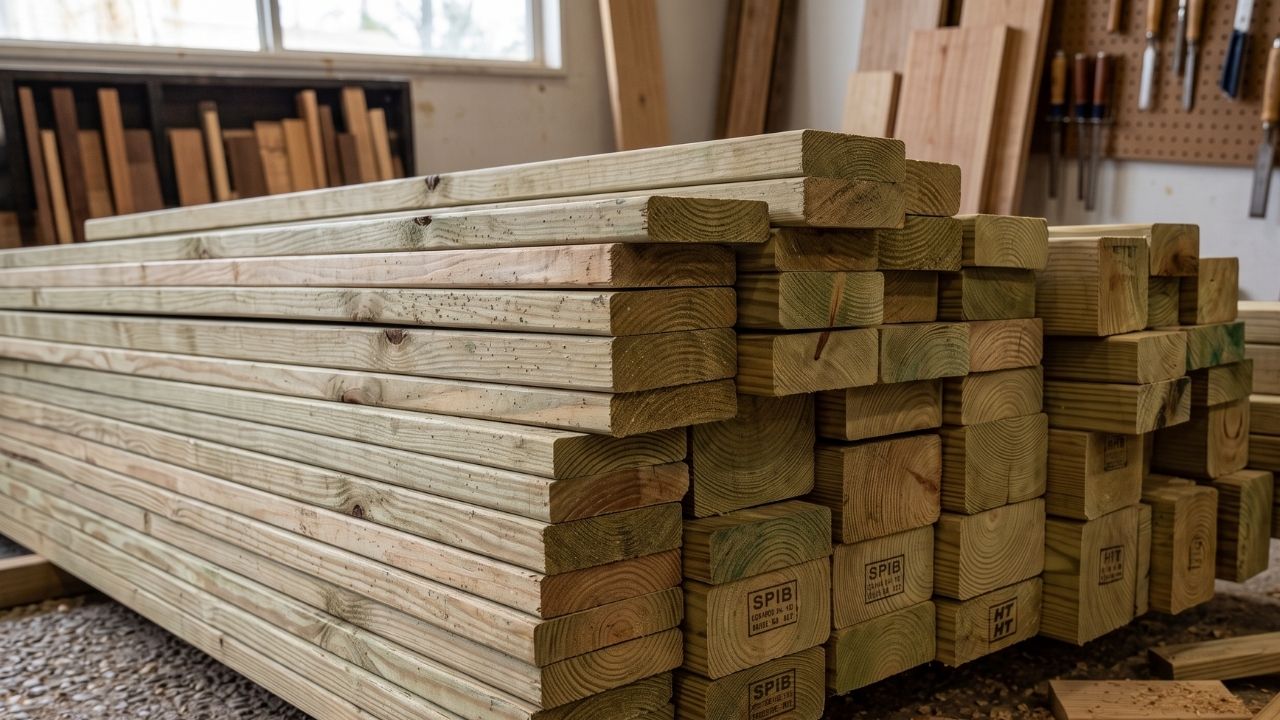
If you’ve ever built a deck, fence, or any outdoor wood structure, you’ve probably come across pressure-treated lumber. It’s the most widely used wood product for exterior construction in North America, prized for being affordable, strong, and resistant to rot and insects. But there’s more to pressure-treated lumber than just “wood that lasts outside” — the treatment process, the different grades, and how you handle it all matter for a safe, long-lasting build. This guide covers everything you need to know before your next project.
What Is Pressure-Treated Lumber?
Pressure-treated (PT) lumber is wood — typically Southern Yellow Pine, though other species are used regionally — that has been infused with chemical preservatives to protect it from moisture, fungal decay, and wood-boring insects like termites. The process is done in a large sealed cylinder called a treatment vessel. The wood is loaded in, a vacuum removes air from the wood cells, and then a preservative solution is forced in under high pressure. This pushes the chemicals deep into the wood fibers rather than just coating the surface, which is what makes pressure-treated lumber so much more durable than simply painting or staining untreated wood.
How the Treatment Process Works
The pressure treatment process generally follows four steps:
- Vacuum stage: Air is removed from the wood’s cellular structure to create space for the preservative to enter.
- Pressure infusion: A preservative solution is pumped into the treatment cylinder under high pressure, forcing it deep into the wood.
- Post-treatment vacuum: Excess chemical solution is drawn back out, leaving only the amount the wood needs to absorb.
- Drying/curing: The wood is left to dry so the preservatives fully bond with the wood fibers before it’s shipped to lumber yards.
This process is what allows pressure-treated lumber to resist decay for decades, even when it’s in direct contact with soil or constant moisture — something untreated wood simply can’t handle.
Common Preservative Chemicals
The chemicals used in pressure treatment have changed significantly over the decades, largely due to health and environmental concerns:
- CCA (Chromated Copper Arsenate): The industry standard for decades, but phased out for most residential use in the early 2000s due to concerns about arsenic exposure. Still used for some industrial and marine applications.
- ACQ (Alkaline Copper Quaternary): The most common preservative used in residential lumber today. It’s arsenic-free and relies on copper as the primary fungicide/insecticide, combined with a quaternary compound.
- CA (Copper Azole): Another widely used modern alternative, offering similar performance to ACQ with a slightly different chemical makeup, often used where a lower copper content is preferred.
- MCA (Micronized Copper Azole): A newer variation using micronized (finely ground) copper particles, which allows for lower overall chemical retention while maintaining protection — this is common in today’s big-box store lumber.
One important note: because most modern PT lumber uses copper-based preservatives, it can be more corrosive to certain metals — especially standard steel and aluminum. Always use fasteners and hardware rated for ACQ/CA-treated lumber (typically stainless steel or hot-dipped galvanized) to avoid premature corrosion and structural failure.
Use Categories (UC Ratings)
Not all pressure-treated lumber is treated to the same intensity. The American Wood Protection Association (AWPA) assigns Use Category (UC) ratings that tell you what level of exposure a given board is rated for:
| Use Category | Exposure Level | Typical Application |
|---|---|---|
| UC1 | Interior, dry | Interior framing, above ground |
| UC2 | Interior, occasional moisture | Interior framing in damp areas |
| UC3A / UC3B | Exterior, above ground | Deck boards, railings, fence pickets |
| UC4A | Ground contact, general use | Deck posts, fence posts |
| UC4B / UC4C | Ground contact, severe/critical | Structural posts, foundation-adjacent members |
| UC5 | Marine/salt water exposure | Docks, piers, marine bulkheads |
Using the wrong category — for example, installing UC3B (above-ground rated) lumber for a fence post that sits in soil — is one of the most common and costly mistakes in outdoor construction. Always check the tag stamped on the end of the board before buying, and match it to the correct application.
Pressure-Treated Lumber vs. Naturally Durable Woods
Pressure-treated pine is often compared to naturally rot-resistant hardwoods like cedar, redwood, Ipe, and Massaranduba. The key differences come down to cost, appearance, and longevity:
- Cost: PT lumber is significantly cheaper than any naturally durable hardwood — often 1/3 to 1/2 the price per board foot.
- Lifespan: PT lumber typically lasts 15–25 years depending on climate and maintenance, while dense hardwoods like Ipe can last 40+ years.
- Appearance: PT lumber has a plainer grain and a slightly green or brown tint fresh from treatment, while exotic hardwoods offer richer, more consistent coloring.
- Workability: PT lumber is much easier to cut, drill, and fasten than dense hardwoods, making it more DIY-friendly.
For budget-conscious projects like fences, sheds, and basic deck framing, pressure-treated lumber remains the most practical choice. For premium, long-term outdoor living spaces, hardwoods are worth the extra investment.
Safety Considerations
While modern preservatives are far safer than older arsenic-based CCA treatments, a few precautions are still worth following:
- Wear a dust mask and eye protection when cutting or sanding pressure-treated lumber to avoid inhaling treated sawdust.
- Never burn pressure-treated wood scraps — burning releases the preservative chemicals into smoke and ash, which can be harmful if inhaled or if the ash is used in gardens.
- Wash hands after handling treated lumber, especially before eating.
- Avoid direct food contact applications — for raised garden beds where edible plants will touch the wood directly, many builders prefer cedar or a plastic liner as an extra precaution, even though modern ACQ/CA treatments are considered safe by the EPA for garden use.
Installation and Maintenance Tips
- Let it dry before finishing: Freshly treated lumber often contains residual moisture. Let it dry for several weeks (or check with a moisture meter) before staining or painting.
- Use compatible fasteners: Stick with stainless steel or hot-dip galvanized screws and hardware rated for ACQ/CA-treated wood to prevent corrosion.
- Seal cut ends: Any time you cut a pressure-treated board, apply a copper-naphthenate end-cut preservative to the exposed, untreated core.
- Reapply water sealant: Even though the wood is chemically protected from rot, a water-repellent sealant applied every 1–2 years helps prevent surface checking, warping, and graying.
- Keep it off direct soil where possible: Even ground-contact-rated lumber lasts longer when set on gravel or a concrete footing rather than sitting directly in wet soil.
Frequently Asked Questions
Is pressure-treated lumber safe for raised garden beds?
Modern ACQ and CA treated lumber is EPA-approved for residential use, including garden beds, since it no longer contains arsenic. That said, some gardeners still prefer untreated cedar or a plastic liner as an extra precaution for edible gardens.
How long does pressure-treated lumber last?
Typically 15–25 years depending on climate, ground contact, and maintenance. Lumber that’s kept dry and properly sealed tends to last longer than lumber in constant ground or water contact.
Can I paint or stain pressure-treated lumber right away?
It’s best to wait until the wood has dried out — usually a few weeks to a couple of months after purchase — since fresh PT lumber often still holds moisture from the treatment process that can prevent paint or stain from adhering properly.
Why is my pressure-treated lumber corroding my screws?
Modern PT lumber uses copper-based preservatives, which can accelerate corrosion in standard steel or aluminum fasteners. Always use stainless steel or hot-dip galvanized hardware rated for ACQ/CA-treated wood.
Final Thoughts
Pressure-treated lumber remains one of the most practical and affordable building materials for outdoor construction. Understanding the treatment process, matching the right Use Category to your project, and following a few basic safety and maintenance practices will help you get the most value — and the longest lifespan — out of every board you build with.