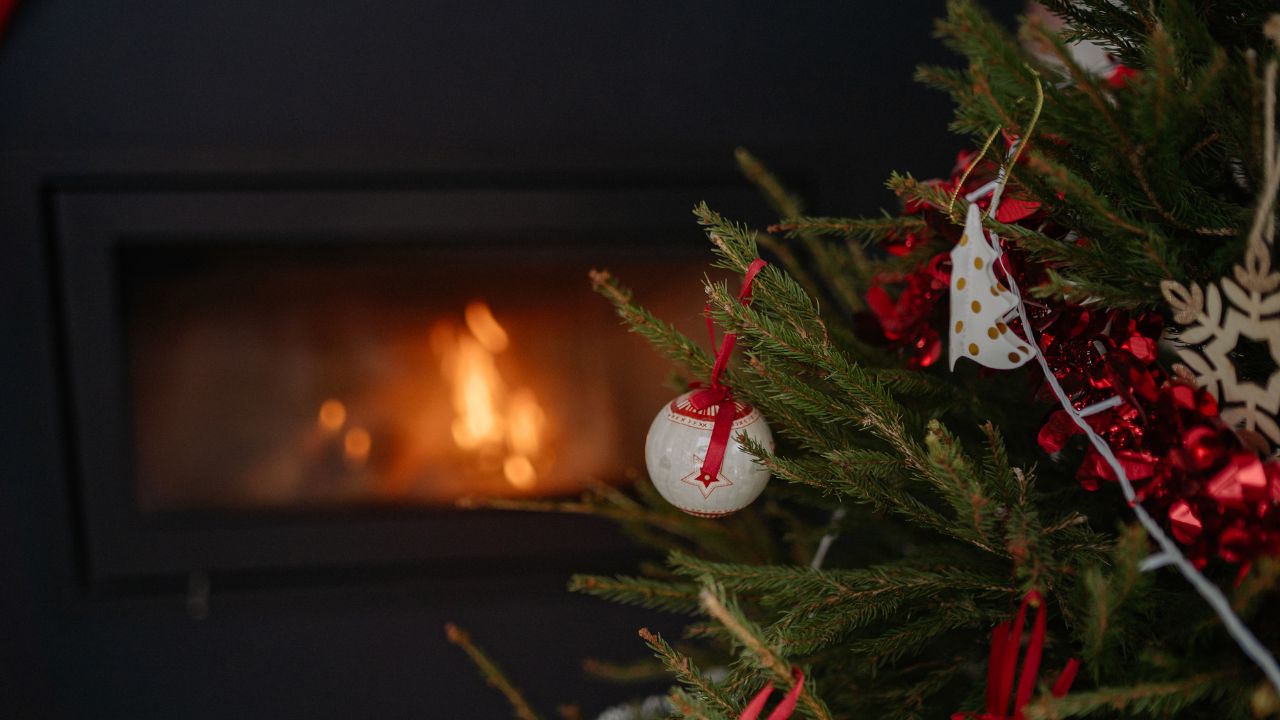
After the decorations come down, burning your Christmas tree might seem like an easy way to dispose of it. It is wood, after all, and you may already have a fireplace ready to use.
No—you should not burn a discarded Christmas tree, its needle-covered branches, or bundles of greenery in a fireplace or wood stove. Dry needles and small branches can ignite rapidly, producing a sudden burst of flames rather than the controlled fire you get from properly prepared logs.
The EPA’s holiday wood-burning guidance specifically advises against burning Christmas trees in fireplaces and wood stoves. Recycling the tree is a better disposal option.
Why Shouldn’t You Burn a Christmas Tree in a Fireplace?
A Christmas tree does not burn like a normal load of split firewood. Its combination of needles, thin branches, and a potentially damp trunk makes its behavior difficult to control.
1. Dry Needles and Branches Ignite Quickly
Needles and fine twigs have a large exposed surface area relative to their size. Once dry, they can catch fire quickly and release heat in a short burst.
A branch that fits inside the firebox can still produce unexpectedly large flames. Cutting the tree into smaller sections does not remove this problem when needles and fine branches remain attached.
2. Sparks and Burning Fragments Can Escape
Loose needles and small burning pieces can become airborne as the fire develops.
In an open fireplace, sparks or embers may escape toward nearby flooring, furniture, or decorations. A fireplace screen helps contain ordinary sparks, but it does not make unsuitable fuel safe to burn.
3. A Dry-Looking Tree May Still Contain Wet Wood
Brittle needles do not prove that the trunk is seasoned.
A tree can lose moisture rapidly from its foliage while retaining considerable moisture inside the thicker wood. Burning that damp material can produce more smoke and less useful heat.
A few weeks indoors should not be treated as a substitute for preparing and drying firewood properly.
4. Decorations and Coatings May Remain
Trees can retain ornament hooks, tinsel, light-wire fragments, artificial snow, glitter, or other decorative material.
Flocked, painted, or otherwise coated trees are especially unsuitable for burning. These materials are not fireplace fuel and may produce harmful emissions.
Removing visible decorations does not make the remaining needle-covered tree appropriate for an indoor fire.
Do Christmas Trees Cause Creosote?
They can contribute to conditions that promote creosote buildup, particularly when damp wood burns poorly. However, it is misleading to claim that pine or other softwoods automatically cause chimney fires simply because they contain resin.
Creosote consists of combustible deposits that accumulate inside a chimney or flue. Fuel moisture, combustion conditions, flue temperatures, and appliance operation all affect its formation.
Utah State University Extension explains that green wood produces more smoke and creosote than dry wood.
Properly seasoned softwood logs can be suitable fuel for appliances that permit them. That is different from burning a discarded Christmas tree with its needles and branches attached.
Can You Burn the Christmas Tree Trunk Later?
A clean, untreated trunk that has been stripped of branches, cut, split where appropriate, and thoroughly seasoned is a different material from a freshly discarded tree.
It may eventually be usable as ordinary softwood firewood if your appliance permits it. However, do not assume it is ready immediately after Christmas.
Before considering the trunk as fuel:
- Confirm that it has no flocking, paint, preservatives, or other coatings.
- Remove all attached hardware and decorations.
- Prepare and season it as you would other firewood.
- Check moisture rather than relying only on drying time.
- Follow the appliance manufacturer’s fuel requirements.
For many households, recycling the whole tree is simpler than storing a small quantity of trunk wood until it is suitable.
Is It Safe to Burn Christmas Tree Branches as Kindling?
Avoid using needle-covered Christmas tree branches or handfuls of dried needles as indoor kindling. Their rapid ignition can produce an unnecessarily intense flare-up.
Use the kindling or fire starters recommended for your fireplace or stove instead.
The issue is not that every small piece of softwood is unsuitable. Clean, dry softwood kindling is commonly used. A bundle of Christmas greenery behaves differently and should not be treated as an equivalent substitute.
Can You Burn a Christmas Tree in a Wood Stove?
No. A closed door does not make a discarded tree suitable stove fuel.
Needles and small branches can release heat quickly, making the fire harder to manage and potentially exceeding the appliance’s intended operating conditions.
Use the fuel type, dimensions, and loading quantities specified by the stove manufacturer. A wood stove is a heating appliance, not a disposal unit for holiday greenery.
Can You Burn a Christmas Tree in an Outdoor Fire Pit?
Moving the tree outdoors does not eliminate the rapid-burning hazard. A dry tree can produce tall flames and carry embers beyond the fire pit.
Do not assume a whole tree or a large bundle of branches is suitable just because the fire is outside. Local rules may also restrict yard-waste burning or prohibit fires during certain conditions.
For routine household disposal, choose an approved collection or recycling service rather than burning the tree.
Better Ways to Dispose of a Christmas Tree
Use a Local Tree-Recycling Program
Many communities collect natural Christmas trees or accept them at designated drop-off sites. Trees may be chipped or processed for approved reuse.
Check the program’s preparation requirements before delivery. Collection dates, acceptable tree sizes, and rules for flocked trees vary.
Have Suitable Trees Chipped
An undecorated, untreated natural tree may be suitable for chipping through a tree service or community program.
Remove lights, hooks, tinsel, ornaments, and stands first. Do not put coated or artificial trees into a natural-tree recycling stream unless the operator explicitly accepts them.
Ask About Yard-Waste Collection
Some services accept Christmas trees through their normal yard-waste system, while others require a separate pickup.
Follow their instructions for cutting, bundling, or leaving the tree whole. Do not assume that bagging it will help; some programs require trees to be unbagged.
Reuse Clean Branches in the Garden
Where appropriate, clean, undecorated branches can be used as temporary winter cover for suitable garden plants.
Keep discarded greenery away from buildings and ignition sources. Reuse should not mean leaving a dry tree leaning against the house for months.
What Should You Burn in a Fireplace Instead?
For a wood-burning fireplace, use clean, properly seasoned firewood in the sizes and quantities recommended for the appliance.
Keep painted wood, pressure-treated timber, plywood, MDF, plastic, and holiday wrapping out of the fire.
A gas or electric fireplace should never receive wood unless it is specifically designed and approved for that use. Decorative gas logs are not a grate for adding real logs.
Frequently Asked Questions
Can You Burn a Christmas Tree if It Is Completely Dry?
Do not burn the dried tree or its needle-covered branches in a fireplace. Drying can make the fine material ignite even faster. Properly prepared trunk wood is a separate consideration.
Can You Burn a Flocked Christmas Tree?
No. Flocking and other decorative coatings are not intended to be burned. Follow local disposal instructions, because some natural-tree recycling programs will not accept flocked trees.
Can You Burn an Artificial Christmas Tree?
No. Artificial trees contain manufactured materials and may include wiring or lights. They must not be burned in a fireplace, stove, or fire pit.
Is Pine Always Bad for a Fireplace?
No. Clean, seasoned pine logs can be suitable where the appliance permits them. The condition and preparation of the fuel matter; a discarded Christmas tree is not the same as seasoned pine firewood.
How Long Should You Dry a Christmas Tree Before Burning It?
There is no drying period that makes a whole, needle-covered tree appropriate fireplace fuel. If retaining a clean trunk for future firewood, prepare it properly and verify that it is sufficiently dry before use.
What Is the Best Way to Get Rid of a Christmas Tree?
An approved local recycling or collection program is usually the most straightforward option. Remove decorations and check whether the program accepts your tree, particularly if it has flocking or other coatings.