
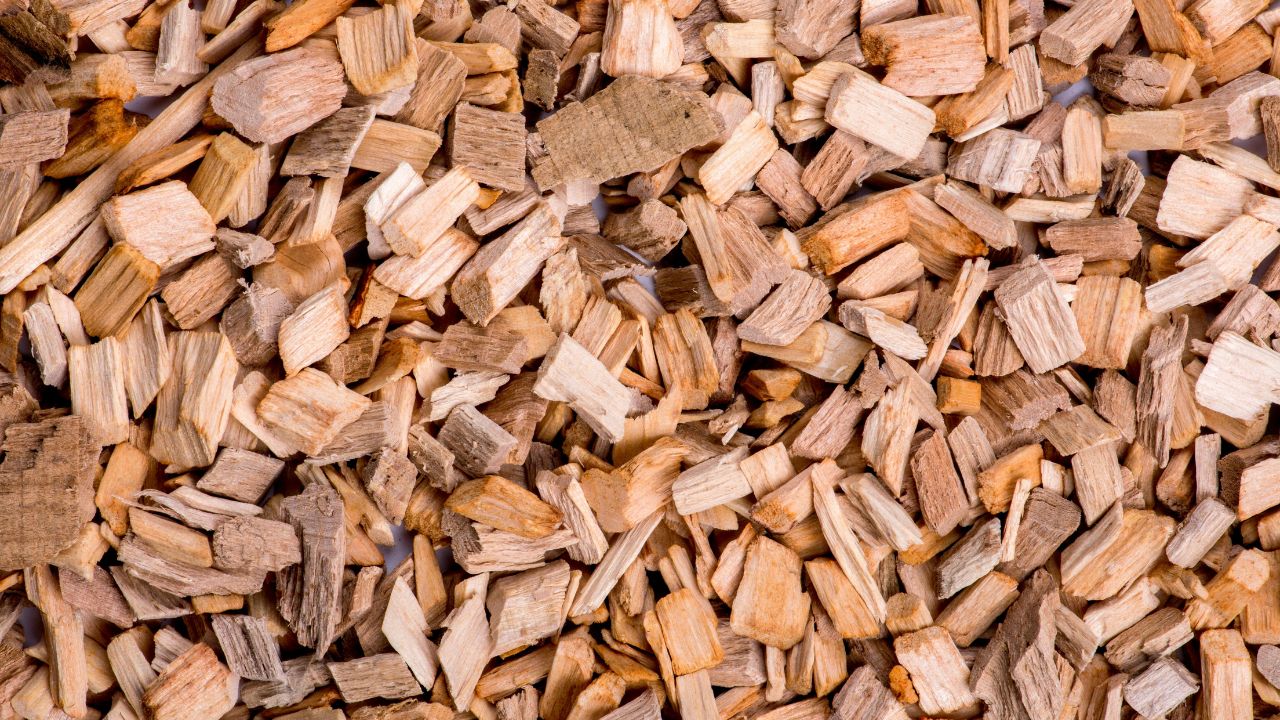
Wood chips turn branches, logs, and sawmill leftovers into useful material. You will find them around garden trees, on woodland paths, in smoking equipment, and in factories that produce paper and wood-based products.
Wood chips are small pieces of wood produced by cutting or chipping larger material. Their main uses include landscaping mulch, pathways, composting, biomass fuel, paper production, and food smoking. However, the right chips for one purpose may be unsuitable for another.
Before buying or using them, consider their source, size, moisture content, and intended application. A load of mixed tree-trimming chips is very different from a bag of wood chips prepared for a barbecue.
What Are Wood Chips?
Wood chips are irregular pieces of wood made by feeding branches, logs, or other suitable material through a chipper. Cutting blades break the material into smaller pieces that are easier to transport and use.
Depending on the source, a load may contain mostly clean wood or a mixture of wood, bark, twigs, and leaves.
Chips do not have one standard size. Industrial processes may require closely controlled dimensions, while landscaping chips often vary considerably in shape and thickness.
Wood Chips vs. Mulch, Bark, and Sawdust
These terms are sometimes used interchangeably, but they describe different things.
| Material | What it means | Common uses |
|---|---|---|
| Wood chips | Small pieces of chipped wood, sometimes mixed with bark and leaves | Landscaping, paths, fuel, industrial processing |
| Mulch | Any suitable material spread over the soil surface | Conserving moisture, suppressing weeds, protecting soil |
| Bark mulch | Mulch made mainly from tree bark | Decorative landscape beds |
| Wood shavings | Thin curls or flakes produced during woodworking | Suitable animal bedding and other specialist uses |
| Sawdust | Fine particles produced by sawing wood | Manufacturing, controlled composting, absorbent applications |
Wood chips are one type of mulch, but not all mulch is made from wood. Leaves, straw, compost, and gravel can also serve as mulch in suitable settings.
Main Types of Wood Chips
1. Arborist Wood Chips
Arborist chips come from tree pruning and removal work. They usually contain a mixture of branches, wood, bark, and sometimes leaves.
Their uneven appearance makes them well suited to informal landscaping, tree beds, and garden paths. They may be available from local tree services, although delivery arrangements and material quality vary.
2. Sawmill Wood Chips
Sawmills produce chips from slabs, offcuts, and other processing residues. These can be more consistent than mixed arborist material, especially when the timber has been debarked.
Depending on their quality and specifications, they may be used for pulp, fuel, or further manufacturing.
3. Landscaping Chips
Bagged or bulk landscaping products may be screened for a more uniform appearance. Some are naturally colored; others are dyed.
Color alone does not tell you whether a product is suitable. Ask about the source material, particularly when buying chips made from recycled wood.
4. Smoking Wood Chips
Smoking chips are selected and prepared for cooking. Common options include hickory, oak, apple, cherry, and alder.
Choose products intended for food smoking. Mixed landscaping chips, painted timber, treated wood, and unknown workshop waste are unsuitable substitutes.
5. Fuel Chips
Fuel chips are produced for compatible boilers and biomass heating systems. Their moisture content, dimensions, and contamination levels must meet the equipment’s requirements.
They are not interchangeable with compressed wood pellets.
What Are Wood Chips Used For?
Landscape Mulch
One of the most practical uses is covering soil around trees and shrubs.
A surface layer helps reduce evaporation, moderate soil temperature, and limit the germination of some weeds. As the material decomposes, it contributes organic matter.
Fresh arborist chips can be used around trees and shrubs without first being composted. The key is to leave them on the surface rather than mixing them into the soil, as explained by University of Maryland Extension.
Garden Paths
Wood chips create an informal walking surface between garden beds and through landscaped areas.
They are relatively easy to spread and replenish. However, they gradually settle and decompose, so paths need occasional topping up.
Loose chips can also shift underfoot. They may be less suitable where a firm, smooth surface is needed for wheelchair access or frequent wheeled traffic.
Composting
Wood chips provide a carbon-rich ingredient for composting. Mixing suitable chips with nitrogen-rich materials can help create a more balanced compost mixture.
Large pieces break down slowly and may remain after softer ingredients have decomposed. These can be screened out and returned to the next batch.
A pile of wood chips alone should not be expected to become finished compost quickly.
Food Smoking
Selected wood chips produce smoke that adds flavor to food.
The species, quantity, airflow, and cooking method all affect the result. Follow your smoker or grill manufacturer’s instructions for loading and preparing the chips.
Keep cooking chips separate from gardening supplies so their source remains clear.
Biomass Fuel
Commercial and institutional heating systems may burn wood chips as fuel.
Fuel performance depends partly on moisture content: wetter chips contain more water that must be heated and evaporated. However, different boilers are designed for different fuel conditions.
Use chips only in equipment approved for them. An ordinary pellet stove or log-burning stove should not automatically be treated as a wood-chip burner.
Paper and Wood-Based Products
Wood chips are an important raw material for pulp production. During processing, the wood fibers are separated and prepared for paper and related products.
Suitable wood residues may also be processed into particles or fibers for certain manufactured panels. Each process has its own requirements for species, cleanliness, and particle size.
Playground Surfacing
Wood-based materials are also used beneath play equipment, but ordinary landscaping chips should not be assumed to provide adequate fall protection.
The U.S. Consumer Product Safety Commission distinguishes engineered wood fiber designed for playground surfacing from similar-looking landscape mulch.
Choose a product appropriate for the equipment and maintain the specified depth and coverage.
Benefits of Wood Chips
They Put Wood Residues to Use
Chipping can give branches and processing leftovers a useful purpose. Locally sourced material may also reduce the need to transport landscaping products over long distances.
They Help Protect Garden Soil
Used appropriately as mulch, chips reduce exposed soil and help retain moisture between watering or rainfall.
They Can Be Economical
Local arborist chips may cost less than packaged decorative products. In some areas, tree services offer free material, although delivery fees, load sizes, and availability vary.
They Suit Several Applications
Different grades serve landscaping, manufacturing, cooking, and energy production. This versatility comes from matching the material to the job—not from using any available chips for every purpose.
Disadvantages and Limitations
Quality Can Be Inconsistent
Mixed loads may contain large sticks, excessive leaves, litter, or unwanted material. Inspect the source and ask what the load contains before accepting delivery.
They Decompose and Settle
Decomposition is useful in landscape beds, but it means pathways and mulch layers need maintenance. There is no universal replacement schedule.
They Can Affect Nitrogen Availability When Mixed into Soil
Microorganisms use nitrogen while breaking down woody material. Incorporating fresh chips into soil can temporarily reduce the nitrogen available to nearby plants.
Surface mulching around established woody plants is a different situation. Do not add fertilizer automatically simply because you have applied wood chips.
They Are Not Suitable Everywhere
Loose chips can move during heavy runoff, collect against structures, or make mowing edges untidy. They are also combustible, so placement near buildings should follow local wildfire guidance where relevant.
How to Use Wood Chips as Mulch
For established trees and shrubs, a layer of approximately 2–4 inches is a useful general starting point, adjusted for existing mulch and site conditions.
- Remove established weeds first. Chips will not reliably eliminate every perennial weed.
- Spread them over the soil surface. Avoid digging fresh chips into the root zone.
- Keep trunks and stems clear. Leave several inches of space rather than piling mulch against bark.
- Check the existing depth before adding more. Refresh thin areas instead of repeatedly burying the bed under new layers.
Avoid creating a “mulch volcano” around a tree trunk. A broad, even layer is more useful than a deep mound at the base.
How Much Do You Need?
Calculate the volume from the area and desired depth:
Cubic yards = Area in square feet × Depth in inches ÷ 324
For example, covering 100 square feet at 3 inches deep requires:
100 × 3 ÷ 324 = approximately 0.93 cubic yards
For metric measurements:
Cubic meters = Area in square meters × Depth in meters
These calculations estimate the spread volume. Uneven ground, settling, and existing material can affect the amount required.
Frequently Asked Questions
Are Fresh Wood Chips Safe for Gardens?
Fresh chips from an appropriate source can be used as surface mulch around trees and shrubs. Keep them away from trunks and avoid mixing them into planting soil.
Can You Use Wood Chips in Vegetable Gardens?
They can be useful on paths between beds. In growing areas, keep them on the surface and away from small seedlings, and avoid incorporating fresh chips during cultivation.
How Long Do Wood Chips Last?
Their lifespan depends on chip size, species, climate, moisture, and foot traffic. Inspect the layer periodically and replenish it when it becomes too thin for its purpose.
Are Wood Chips the Same as Wood Pellets?
No. Chips are pieces cut from wood. Pellets are manufactured by compressing processed wood material into a consistent shape. Appliances usually require a specific fuel type.
Can Any Wood Chips Be Used for Smoking Food?
No. Use clean wood specifically intended for food smoking. Do not use landscaping mulch, construction waste, treated wood, or chips of an unknown species.
Where Can You Get Wood Chips?
Common sources include tree services, landscape suppliers, sawmills, garden centers, and municipal mulch programs. Ask about the source, cleanliness, delivery volume, and intended use before ordering.