
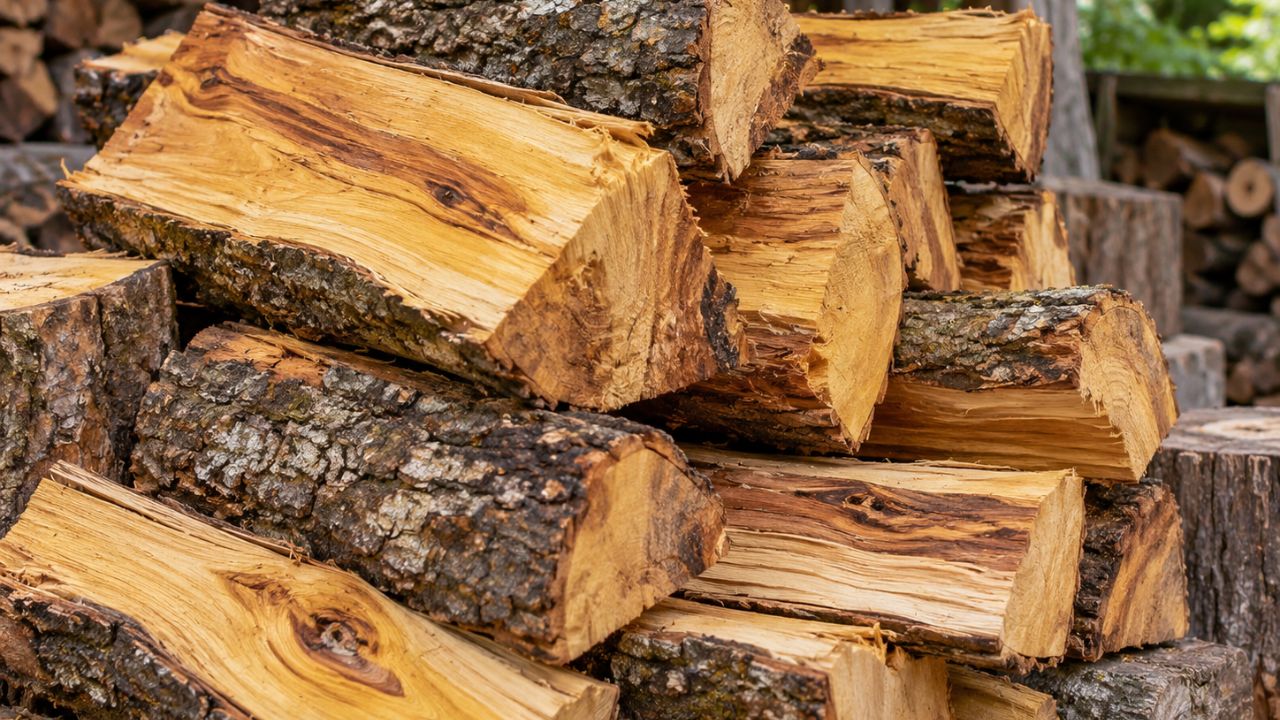
If you have a fallen mulberry tree or access to inexpensive logs, the wood is usually worth considering for your firewood stack. Mulberry can provide substantial heat, but there is one characteristic you should know before putting it in a fireplace: it can throw plenty of sparks.
Yes, mulberry is good firewood when properly seasoned. It produces substantial heat and excellent coals, making it useful for home heating. Its main disadvantage is frequent sparking and popping, which makes it less convenient for an open fireplace than a properly operated, enclosed wood stove.
Good results depend on drying the wood thoroughly, storing it correctly, and using it in a suitable appliance.
Mulberry Firewood at a Glance
| Characteristic | General performance |
|---|---|
| Heat content | Approximately 25.8 million BTUs per dry cord |
| Coal production | Excellent |
| Sparks | Often numerous |
| Splitting | Usually manageable in straight sections |
| Best application | Heating in a suitable enclosed wood-burning appliance |
| Main drawback | Sparking and popping |
| Readiness to burn | Verify moisture rather than relying only on age |
“Mulberry” covers several species, so published figures should be treated as general comparisons rather than exact predictions for every tree.
How Much Heat Does Mulberry Firewood Produce?
Mulberry is a relatively substantial heating fuel. The following figures come from the same Utah State University Extension firewood table.
| Firewood | Approximate heat content per dry cord |
|---|---|
| Black walnut | 22.2 million BTUs |
| Red oak | 24.6 million BTUs |
| Mulberry | 25.8 million BTUs |
| Black locust | 27.9 million BTUs |
| White oak | 29.1 million BTUs |
On this basis, mulberry compares favorably with red oak, although it falls below white oak and black locust.
These are estimates of energy contained in the fuel. They do not represent the amount of heat that will necessarily enter your home. Moisture, appliance efficiency, and operating conditions affect usable heat.
Why Is Mulberry Good Firewood?
1. It Provides Useful Winter Heat
Mulberry is suitable for more than a short decorative fire. A properly prepared supply can contribute to regular winter heating.
Its heat content makes it worth keeping when you are processing a removed tree, provided the wood is sound and practical to handle.
2. It Produces a Good Bed of Coals
Coals help maintain heat between loads and make it easier to establish the next fire.
Mulberry performs well in this respect, but that does not guarantee a particular overnight burn time. Log size, appliance capacity, airflow, and heating demand all influence how long a load remains useful.
3. Straight Sections Can Split Well
Straight-grained rounds are often manageable to split. However, branches, crotches, and knotty sections can be more difficult.
A backyard tree with several low branches may produce very different splitting conditions from a long, straight trunk.
4. Locally Available Wood Can Be Worth Processing
If a mulberry tree has already been removed, using suitable sections as fuel can be practical.
Include the work involved in your decision. Cutting, splitting, moving, and storing the wood all require time, even when the logs themselves are free.
Why Does Mulberry Pop and Spark?
Mulberry has a noticeable tendency to throw sparks. As wood heats, moisture and gases can build pressure within small pockets and escape abruptly, sometimes ejecting glowing fragments.
Wet wood can make burning less predictable, but seasoning does not guarantee that mulberry will stop sparking.
Do not judge its suitability for an open fire only by its heat output. Where escaping embers would be difficult to contain, a less spark-prone fuel may be more convenient.
Can You Burn Mulberry in a Fireplace?
Yes, clean, seasoned mulberry can burn in a fireplace designed for natural firewood. However, its sparks deserve attention.
Use a suitable fireplace screen, keep combustible items clear, and monitor the fire. Follow the fireplace manufacturer’s instructions for any glass doors; their correct position during burning varies by design.
Do not assume that mixing mulberry with another species will prevent sparks. Individual pieces can still pop.
For frequent indoor heating, an enclosed stove or insert approved for firewood generally offers better ember containment than an open hearth.
Is Mulberry Good for a Wood Stove?
Yes. Mulberry’s heat and coal production make it a useful stove fuel when adequately dry.
Keep the loading door closed during normal operation unless the manufacturer directs otherwise. Open it carefully when refueling, and follow the recommended loading and airflow settings.
Avoid overloading the firebox or restricting airflow excessively to extend the burn. A useful fuel still needs appropriate combustion conditions.
How Long Does Mulberry Take to Season?
There is no single seasoning time that guarantees dry mulberry.
The drying period depends on:
- Initial moisture content.
- Log diameter and split size.
- Local weather and humidity.
- Air movement through the stack.
- Exposure to rain and ground moisture.
Allow substantial drying time rather than expecting freshly cut logs to be ready within a few weeks. Large rounds can remain wet internally even when their ends look dry.
The reliable approach is to test the wood before burning. The EPA’s firewood moisture guidance identifies approximately 15–20% moisture content as an appropriate range for efficient burning.
How to Test Mulberry Firewood
Choose several pieces from different parts of the stack. Split each one and check the freshly exposed interior with a moisture meter.
Follow the meter’s instructions for probe placement and any species or temperature corrections.
End cracks, loose bark, and lighter weight can be useful clues, but they are not substitutes for checking internal moisture.
How to Season and Store Mulberry
Cut It to Appliance Length
Prepare logs that fit your stove or fireplace comfortably. Oversized pieces are awkward to load and may need to be cut again later.
Split Larger Rounds
Splitting exposes more wood surface and helps moisture escape. Leaving everything in large rounds usually slows preparation for burning.
Keep the Stack Off the Ground
Use a suitable rack or raised supports. Direct contact with damp soil can keep lower pieces wet and encourage deterioration.
Leave the Sides Ventilated
Choose a location where air can move through the stack. Cover the top against rain and snow without wrapping the entire pile tightly in a tarp.
Separate Dry Wood from New Loads
Keeping seasoned and freshly processed wood apart makes it easier to select suitable fuel. Check older stock periodically instead of assuming storage alone preserves its condition.
Does Mulberry Produce Much Smoke?
Mulberry can produce noticeable smoke, especially if damp or burned with insufficient air.
A persistent smoky fire should prompt a check of the wood’s moisture, loading, airflow, and chimney draft. Changing species alone may not solve the problem.
Like other firewood, mulberry can contribute to creosote accumulation when combustion is poor. It does not eliminate the need for chimney inspection and maintenance.
Mulberry vs. Oak: Which Is Better?
Both can be useful heating fuels. The choice depends on the oak species, fuel condition, price, and appliance.
Mulberry’s published heat content is close to red oak’s, while white oak generally offers more energy per cord. Mulberry’s tendency to spark is a significant practical difference, especially for open fireplaces.
If you have a suitable enclosed stove and a dry local supply, mulberry is worth considering. If you prefer an open fireplace, a less spark-prone wood may be easier to manage.
Always compare adequately seasoned loads. Dry mulberry is more useful immediately than oak that still needs drying.
Is Mulberry Firewood Worth Buying?
It can be, particularly when it is already split, dry, and appropriately priced.
Before ordering, check:
- Quantity: Ask for a stated cord fraction or stacked volume.
- Moisture: Confirm whether the wood is ready to burn.
- Length: Make sure the pieces fit your appliance.
- Condition: Look for sound wood rather than badly deteriorated material.
- Total cost: Include delivery and any additional processing.
Do not pay solely for the species name. A clean, dry load in usable sizes may be better value than cheaper logs that require considerable work.
Frequently Asked Questions
Is Mulberry a Hardwood?
Yes. Mulberry is a hardwood. However, “hardwood” is a botanical classification, not a guarantee of a particular heat output or burn duration.
Can You Burn Freshly Cut Mulberry?
It should be seasoned first. Fresh wood can contain substantial moisture, making it harder to burn efficiently and increasing smoke.
Does Seasoned Mulberry Still Spark?
It can. Drying improves burning performance, but it does not remove the species’ tendency to pop and throw embers.
Can You Mix Mulberry with Other Firewood?
Yes, provided all the wood is clean, dry, and suitable for the appliance. Mixing species does not make damp wood seasoned or eliminate mulberry’s sparks.
Is Mulberry Good for a Fire Pit?
It provides heat, but its sparks can be inconvenient around people and nearby combustible materials. Use only in a suitable setup, follow local fire restrictions, and consider a less spark-prone wood when ember control is important.
Should You Keep Logs from a Removed Mulberry Tree?
Usually, sound and untreated logs are worth considering for firewood. Check that processing and storing them is practical, and give them enough time to dry before use.