
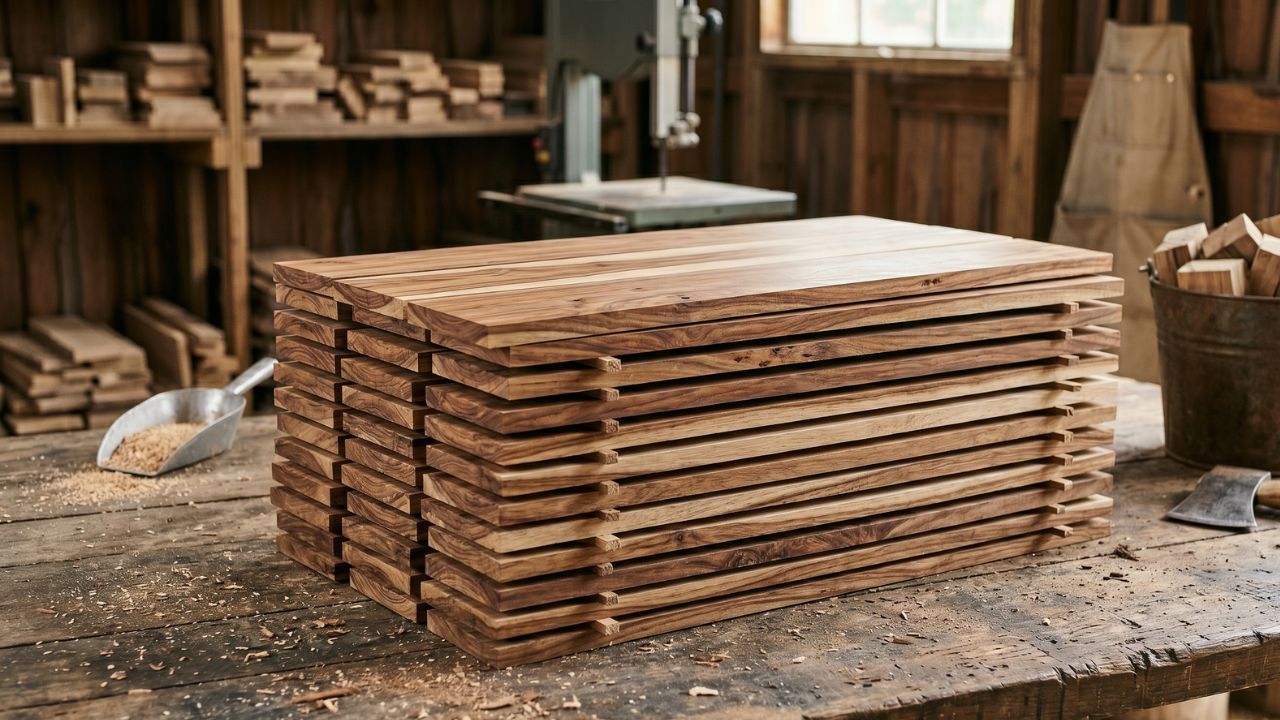
Pecan wood is a strong and attractive hardwood that comes from the pecan tree (Carya illinoinensis), a member of the hickory family. Native to North America, pecan trees are widely known for producing delicious pecan nuts, but their wood is also highly valued for woodworking, furniture making, flooring, and smoking meats.
Because pecan belongs to the hickory group, it shares many of the same characteristics, including exceptional hardness, strength, and durability. Its beautiful grain patterns and warm natural colors make it a favorite among woodworkers looking for a distinctive hardwood.
In this guide, we’ll explore everything you need to know about pecan wood, including its properties, uses, advantages, disadvantages, and workability.
What Is Pecan Wood?
Pecan wood comes from the pecan tree, which grows primarily in the southern and central regions of the United States. It is technically classified as a hardwood and is closely related to true hickories.
The wood features a striking appearance with a mix of light sapwood and darker heartwood. Sapwood is usually pale cream or light tan, while heartwood ranges from medium brown to reddish-brown. This natural color contrast creates attractive visual patterns that make pecan wood unique.
Pecan wood is considered one of the harder domestic hardwoods, making it suitable for applications where strength and wear resistance are important.
Physical Characteristics of Pecan Wood
Color
Pecan wood often displays significant color variation:
- Sapwood: Creamy white to light yellow
- Heartwood: Light brown to reddish-brown
- Natural contrast creates distinctive grain patterns
Grain Pattern
The grain is typically:
- Straight to slightly wavy
- Medium texture
- Naturally attractive appearance
- Capable of producing unique figure patterns
Density
Pecan is a dense hardwood with excellent strength properties. Its density contributes to:
- High durability
- Good impact resistance
- Long service life
- Strong structural performance
Hardness
On the Janka hardness scale, pecan wood generally measures around 1,820 lbf, making it harder than many commonly used hardwoods such as red oak and cherry.
This hardness makes pecan highly resistant to dents and everyday wear.
Common Uses of Pecan Wood
Thanks to its strength and beautiful appearance, pecan wood is used in a wide variety of applications.
Furniture
Pecan wood is commonly used to make:
- Dining tables
- Cabinets
- Chairs
- Dressers
- Bed frames
- Custom furniture
Its attractive grain and durability make it suitable for both rustic and modern furniture designs.
Flooring
Because of its hardness and wear resistance, pecan wood is a popular flooring material. Pecan flooring can withstand heavy foot traffic while maintaining its appearance for many years.
Cabinetry
Homeowners often choose pecan cabinets because of their:
- Distinctive grain patterns
- Warm color tones
- Long-lasting durability
- Premium appearance
Tool Handles
The wood’s excellent shock resistance makes it suitable for:
- Hammer handles
- Axe handles
- Agricultural tools
- Hand tools
Wood Turning
Woodturners frequently use pecan for:
- Bowls
- Decorative items
- Pens
- Craft projects
Its attractive grain creates beautiful finished products.
Smoking and Barbecue
Pecan wood is widely used as a smoking wood for cooking. It provides:
- Rich flavor
- Mild sweetness
- Strong but balanced smoke profile
It is especially popular for smoking:
- Pork
- Poultry
- Beef
- Fish
Read here “Is Pecan Wood Good for Smoking?“
Advantages of Pecan Wood
Exceptional Strength
One of pecan wood’s greatest advantages is its impressive strength. It can withstand heavy loads and significant wear without easily breaking or deforming.
High Durability
Pecan wood offers excellent resistance to everyday abuse, making it suitable for furniture and flooring applications.
Attractive Appearance
The contrasting colors between sapwood and heartwood create a visually striking look that many homeowners and woodworkers appreciate.
Good Shock Resistance
As part of the hickory family, pecan possesses outstanding shock resistance, making it ideal for handles and impact-related applications.
Long Lifespan
When properly maintained, pecan wood products can last for decades.
Excellent Wear Resistance
Its hardness allows it to resist scratches, dents, and general wear better than many softer hardwoods.
Disadvantages of Pecan Wood
Despite its many strengths, pecan wood does have some drawbacks.
Difficult to Machine
Its density and hardness can make machining challenging. Cutting tools may dull more quickly when working with pecan.
Can Be Difficult to Nail
Because the wood is very hard, pre-drilling is often necessary before inserting nails or screws.
Moderate Stability
Pecan wood may experience movement due to changes in humidity levels. Proper drying and storage are important to minimize warping.
Heavy Weight
The wood’s density also makes it relatively heavy, which may not be ideal for every project.
Limited Availability
Compared to species like oak or maple, pecan wood can sometimes be harder to find in certain regions.
Workability of Pecan Wood
Cutting
Pecan can be challenging to cut due to its hardness. Sharp carbide tools are highly recommended for clean cuts and reduced tool wear.
Planing
The wood generally planes well, but interlocked grain areas can occasionally produce tear-out. Sharp blades help achieve smoother surfaces.
Sanding
Pecan sands nicely and can develop an exceptionally smooth finish. Progressing through multiple grit levels produces the best results.
Gluing
The wood glues well with standard woodworking adhesives when surfaces are properly prepared.
Nailing and Screwing
Pre-drilling is recommended because pecan’s density increases the risk of splitting during fastening.
Finishing
Pecan accepts:
- Stains
- Oils
- Lacquers
- Polyurethane finishes
Its grain becomes especially attractive after finishing, often displaying rich depth and contrast.
Is Pecan Wood Good for Furniture?
Yes. Pecan wood is an excellent furniture wood if durability and appearance are priorities.
Furniture made from pecan can withstand years of daily use while maintaining its structural integrity. Its unique grain patterns also provide a premium, custom-crafted appearance that many homeowners prefer.
The main consideration is its weight and machining difficulty, which may increase manufacturing costs compared to softer hardwoods.
Pecan Wood vs Oak
Many woodworkers compare pecan wood with oak because both are popular hardwoods.
| Feature | Pecan Wood | Oak Wood |
|---|---|---|
| Hardness | Higher | Moderate to High |
| Weight | Heavier | Moderate |
| Grain Pattern | More dramatic | Traditional |
| Durability | Excellent | Excellent |
| Workability | More difficult | Easier |
| Cost | Often higher | Widely available |
Pecan is generally harder and more wear-resistant, while oak is often easier to work with and more readily available.
Maintenance Tips for Pecan Wood
To keep pecan wood looking its best:
- Dust regularly with a soft cloth.
- Avoid excessive moisture exposure.
- Clean spills immediately.
- Use furniture pads under heavy items.
- Reapply protective finishes when necessary.
- Maintain stable indoor humidity levels.
Proper maintenance helps preserve both the appearance and durability of the wood.
Final Thoughts
Pecan wood is a beautiful, durable, and highly versatile hardwood that belongs to the hickory family. Its impressive strength, attractive grain patterns, and exceptional wear resistance make it a popular choice for furniture, flooring, cabinetry, tool handles, and even barbecue smoking.
While its hardness can make it more challenging to work with than some other hardwoods, the finished results are often well worth the effort. Woodworkers and homeowners who value durability, character, and long-term performance will find pecan wood to be an excellent material for a wide range of projects.
Whether you’re building custom furniture, installing hardwood flooring, or simply looking for a unique hardwood species, pecan wood remains one of the most reliable and visually appealing options available.