
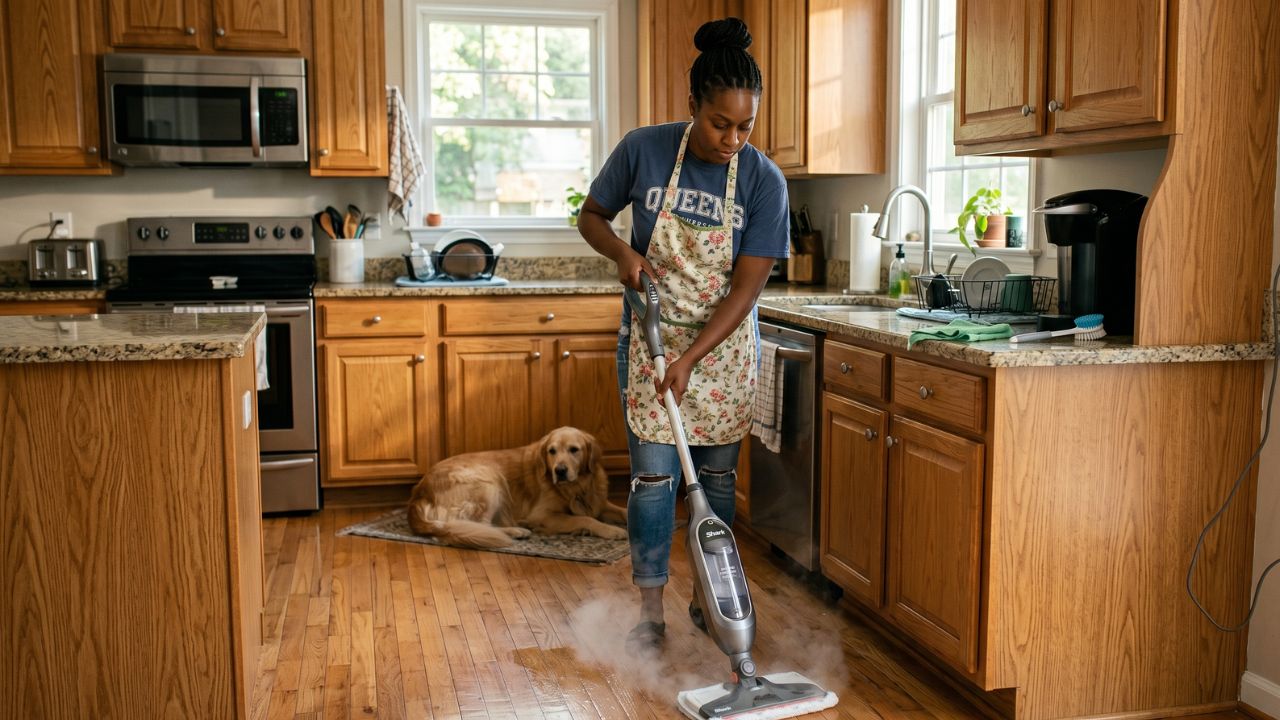
Steam mops are popular cleaning tools. They promise to clean and sanitize floors without chemicals. But if you have wood floors, you might wonder: are they safe to use?
The short answer is no, steam mops are not recommended for wood floors. Let’s explore why and what you should use instead.
Why Steam Mops Can Damage Wood Floors
1. Heat Damages the Finish
Steam mops produce very hot steam, usually around 200-250°F (93-121°C). This intense heat can:
- Break down the protective finish on your floors
- Cause the finish to crack or peel
- Dull the shine over time
- Create cloudy or hazy spots
2. Moisture Penetrates the Wood
Wood and water don’t mix well. Even though steam mops use less water than traditional mopping, the moisture can still:
- Seep between floorboards
- Get under the finish through tiny cracks
- Cause the wood to swell and warp
- Lead to cupping (when board edges are higher than the center)
- Create gaps between boards as they expand and contract
3. Voids Your Warranty
Many hardwood floor manufacturers specifically state that steam cleaning voids the warranty. This is a big red flag that tells you steam isn’t safe for wood.
What Wood Floor Manufacturers Say
Most major wood flooring companies warn against steam mops:
- They don’t recommend any moisture-based deep cleaning
- They emphasize that excess water and heat are the enemies of wood floors
- They suggest only using products specifically approved for wood floors
If your floor manufacturer says no steam, it’s best to listen.
What About “Sealed” Wood Floors?
You might think that if your floors are sealed, steam is okay. Unfortunately, that’s not true.
Even sealed floors have weak points:
- Seams between boards
- Edges near walls
- Small scratches or worn areas
- Older finishes that have tiny cracks
Steam can find these weak spots and cause damage over time. The damage might not show up right away, but it builds up.
Types of Wood Floors and Steam
Solid Hardwood Floors
Never use steam. These are the most vulnerable to moisture and heat damage.
Engineered Hardwood Floors
Avoid steam. While slightly more water-resistant than solid hardwood, they can still be damaged by heat and moisture. The layers can separate or delaminate.
Laminate Floors
Not recommended. Laminate isn’t real wood, but it has a wood core. Steam can cause swelling, warping, and peeling.
Luxury Vinyl Plank (LVP)
Sometimes okay. Some LVP products can handle steam, but always check the manufacturer’s instructions first.
Signs Your Steam Mop Has Damaged Your Floors
If you’ve been using a steam mop on wood floors, watch for these warning signs:
- White or cloudy patches
- Dull or hazy finish
- Warped or cupped boards
- Gaps appearing between boards
- Edges lifting or peeling
- Squeaky floors (from moisture damage underneath)
- Dark spots or discoloration
Safe Alternatives to Steam Mops
Don’t worry! There are plenty of safe ways to clean wood floors.
1. Dry Dust Mop or Vacuum
For daily cleaning:
- Use a microfiber dust mop
- Vacuum with a hardwood floor attachment
- This removes dirt and dust without any moisture
2. Barely Damp Mop
For weekly cleaning:
- Use a mop wrung out extremely well
- The mop should be barely damp, not wet
- Use a cleaner made specifically for wood floors
- Dry the floor immediately if any water is left behind
3. Wood Floor Cleaning Solutions
Good options include:
- Bona Hardwood Floor Cleaner
- Murphy Oil Soap (diluted properly)
- Mix: 1/4 cup white vinegar in 1 gallon warm water (use sparingly)
- Commercial products approved by your floor manufacturer
4. Spray Mop Method
This is safer than a steam mop:
- Use a spray mop designed for wood floors
- It uses minimal moisture
- You control exactly how much liquid goes on the floor
- The microfiber pad picks up dirt effectively
How to Clean Wood Floors the Right Way
Daily Maintenance
- Sweep or vacuum to remove dirt and grit
- Use a dry microfiber mop
- Clean up spills immediately with a dry or slightly damp cloth
Weekly Cleaning
- Vacuum or sweep first
- Use a barely damp mop with wood floor cleaner
- Work in small sections
- Never let water pool on the floor
- Dry any wet spots immediately
- Let the floor air dry completely
Monthly Deep Cleaning
- Vacuum thoroughly, including corners and edges
- Use a wood floor cleaning product according to directions
- Wring your mop until it’s almost dry
- Clean in the direction of the wood grain
- Dry completely
What If You Have Stubborn Stains?
For tough spots on wood floors:
- Use a slightly damp cloth with wood floor cleaner
- Gently rub the spot
- Dry immediately
- For sticky residue, use a tiny amount of mineral spirits on a cloth
- Never scrub hard or use abrasive tools
Protecting Your Wood Floors Long-Term
Beyond avoiding steam mops:
- Use rugs in high-traffic areas
- Put felt pads under furniture legs
- Trim pet nails regularly
- Remove shoes at the door
- Clean up spills right away
- Avoid walking on floors with wet shoes
- Keep humidity levels stable (30-50%)
- Refinish floors when the finish wears thin
The Bottom Line
Steam mops might seem like a convenient cleaning solution, but they’re not worth the risk for wood floors. The combination of heat and moisture can cause serious damage that’s expensive to repair.
Stick to dry cleaning methods for daily maintenance and barely damp mopping with proper wood floor cleaners for deeper cleaning. Your floors will stay beautiful and last much longer.
Remember: if you’re not sure whether your floors can handle a certain cleaning method, check with the manufacturer or installer. When it comes to wood floors, it’s always better to be safe than sorry.
Your wood floors are an investment. Protect them by using the right cleaning methods, and they’ll reward you with decades of beauty.