Introduction
Basswood, Alder, and Balsa are all lightweight and easy-to-work woods, but they serve very different purposes.
- Basswood (Tilia) is a soft hardwood widely used for carving and crafts.
- Alder (Alnus) is commonly used in furniture and cabinetry thanks to its smooth grain.
- Balsa (Ochroma pyramidale) is one of the lightest woods in the world, often used for models and specialty applications.
If you’re choosing between these woods, understanding their differences in strength, durability, and uses is key.
Quick Comparison Table
| Feature | Basswood | Alder | Balsa |
|---|---|---|---|
| Scientific Name | Tilia | Alnus | Ochroma pyramidale |
| Tree Size | 20–37 m | 15–30 m | 18–28 m |
| Color | White to light brown | Light yellow to reddish | Pale brown to off-white |
| Workability | Very easy | Easy | Extremely easy |
| Durability | Low | Low | Very low |
| Common Uses | Carving, instruments | Furniture, cabinetry | Models, rafts, insulation |
| Availability | Widely available | Easily available | Varies by grade |
Uses
Basswood
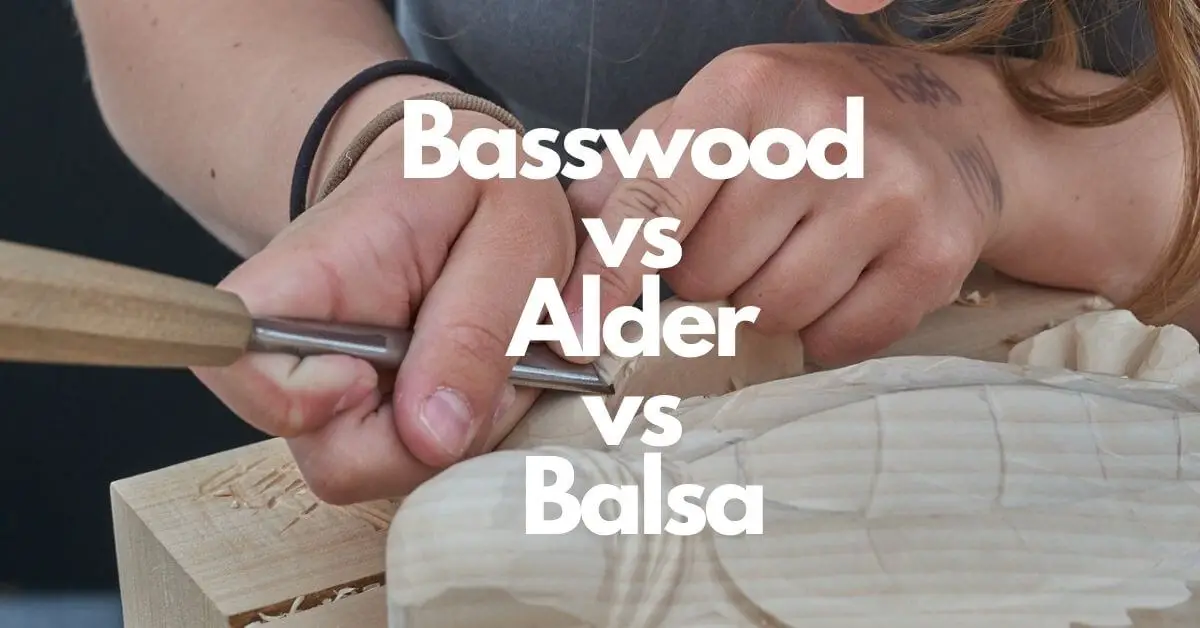
Basswood is one of the best woods for carving because it is soft and consistent. It is also used for:
- Musical instruments (like guitar bodies)
- Veneer and plywood
- Crafts and small projects
However, it is not suitable for outdoor use due to low durability.
Alder
Alder is commonly used in:
- Furniture
- Cabinets
- Millwork
- Plywood
It has a smooth, straight grain and warm color, making it a good choice for interior applications. Like basswood, it performs best indoors.
Balsa
Balsa is extremely lightweight and is used for:
- Model airplanes and structures
- Rafts and surfboards
- Insulation and lightweight panels
Despite being soft, it has good strength-to-weight ratio, which makes it useful in specialized applications.
Rot Resistance
Basswood, Alder, and Balsa all have low resistance to moisture and decay. They:
- Are not suitable for outdoor use
- Can rot quickly in damp conditions
- Require sealing or finishing for longer life
Among them, balsa is the most vulnerable to insects and moisture damage.
Are These Woods Waterproof?
No wood is completely waterproof. These three woods are not naturally water-resistant.
Balsa is sometimes used in boats and surfboards, but only after being fully sealed with coatings. Without protection, moisture will damage all three types.
Workability
All three woods are known for excellent workability:
- Easy to cut, shape, and sand
- Suitable for both hand and power tools
- Usually no pre-drilling required
However:
- They may produce fuzzy surfaces if tools are dull
- Nail and screw holding strength is not very strong
For better results, glue and proper joints are often preferred.
Pros and Cons
Basswood
Pros
- Very easy to carve and shape
- Smooth, fine grain
- Affordable and widely available
Cons
- Low strength
- Poor durability
- Not suitable for outdoor use
Alder
Pros
- Attractive natural color
- Easy to work with
- Good for furniture and cabinetry
Cons
- Absorbs moisture quickly
- Not durable outdoors
- Can cause mild irritation in some people
Bals
Pros
- Extremely lightweight
- Easy to cut and shape
- Good for models and specialty uses
Cons
- Very low durability
- Weak and easily damaged
- Prone to insects and moisture
Pricing and Availability
- Basswood and Alder are widely available in multiple grades
- Balsa quality varies—high-grade (very light) balsa is harder to find and more expensive
Higher grades usually have:
- Fewer knots
- Better strength
- Higher price
Where to Buy
You can find these woods at:
- Local lumber yards
- Craft stores (for smaller pieces)
- Large retailers like Home Depot
For best quality, always buy from a trusted supplier.
Final Thoughts
- Choose Basswood for carving and craft projects
- Choose Alder for furniture and interior woodwork
- Choose Balsa for lightweight models and specialty uses
All three woods are easy to work with, but none are suitable for outdoor use without proper treatment.