
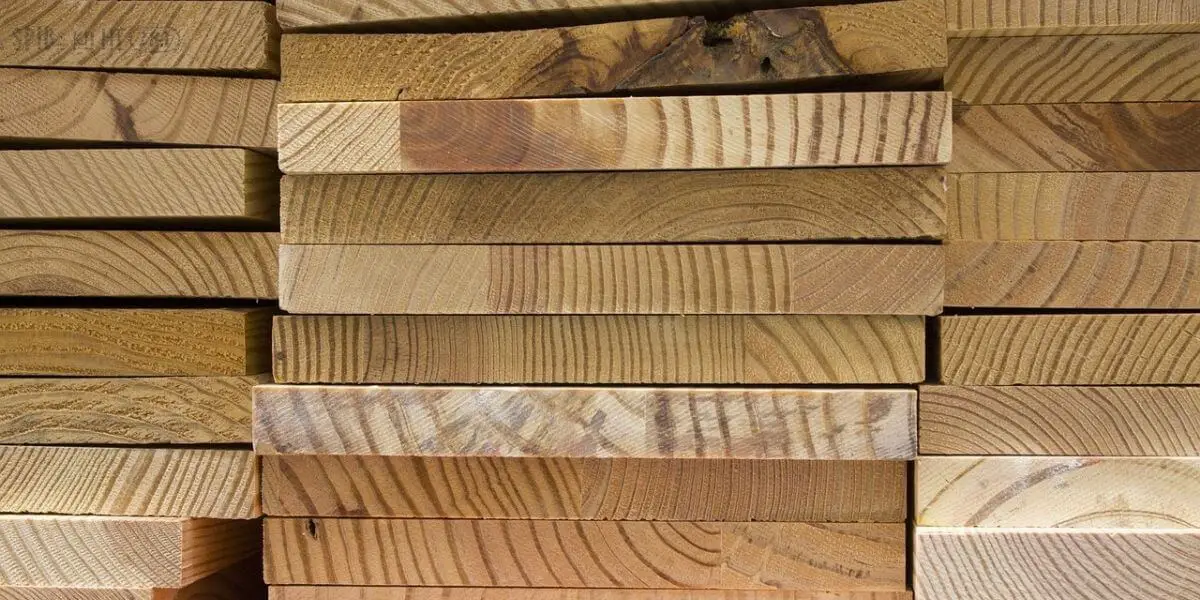
J-grade lumber is commonly produced from SPF—spruce, pine, and fir—softwoods. Canadian SPF lumber is widely supplied to the Japanese market, where appearance and consistent quality are important.
SPF is a commercial grouping of spruce, pine, and fir species with similar characteristics. It is not a separate wood species.
J-grade lumber is typically selected for its bright, clean appearance and limited visible defects. Small, tight knots and light coloring make it appealing for applications where appearance matters.
| Characteristic | Details |
|---|---|
| Species group | Commonly SPF (spruce-pine-fir) |
| Drying condition | Typically kiln-dried |
| Common origin | Canada |
| Common lengths | 6–20 feet; longer lengths may be available |
| Common nominal widths | 4, 6, 8, 10, and 12 inches |
| Common nominal thickness | 2 inches, typically about 1½ inches or 38 mm after dressing |
| Grade designation | J-grade; confirm the supplier’s specifications |
Nominal dimensions are not the same as actual dimensions. For example, Canfor lists a nominal 2×4 as approximately 38 × 89 mm. Available sizes and lengths vary by product. Canfor product specifications
J-Grade Lumber Uses
J-grade lumber is used in construction and DIY projects where its appearance, workability, and specified strength meet the project’s requirements.
It is used in platform-frame construction and is also sold through DIY retailers. Its small, tight knots and bright appearance can provide an attractive finish.
However, knots can affect strength depending on their size, position, and condition. For load-bearing applications, check the grade stamp and applicable structural specifications rather than judging suitability by appearance alone.
SPF lumber generally offers a useful strength-to-weight ratio and is easy to cut, nail, and screw. These qualities make it suitable for many properly designed residential, commercial, and industrial framing applications. West Fraser’s SPF information
Why Choose J-Grade Lumber?
High-quality lumber can be easier to work with and provide a cleaner appearance. However, using the most expensive material throughout a building is not always necessary.
A practical approach is to choose the appropriate species and grade for each application.
Where the wood remains visible, appearance may be particularly important. Where it provides structural support, its assigned strength grade, dimensions, and installation requirements matter more.
A lumber grade does not determine whether a house will last 40 or 100 years. Service life depends on design, construction quality, moisture protection, maintenance, and other conditions.
Similarly, earthquake resistance depends on the complete building system—including connections, bracing, and foundations—not simply the use of J-grade lumber.
Advantages of J-Grade Lumber
Appearance
J-grade SPF lumber is generally white to yellowish-white. Its light coloring and relatively clean appearance can suit visible woodwork and DIY projects.
Strength for Suitable Applications
Properly graded SPF lumber can provide good strength relative to its weight. However, selecting J-grade lumber does not automatically make it stronger or more decay-resistant than every other softwood product.
For outdoor use, choose material and protection appropriate to the exposure. A surface sealer alone should not be treated as a substitute for preservative treatment where treatment is required.
Easy to Work With
SPF lumber is relatively easy to work with using hand and machine tools. It can be cut, drilled, and fastened without the effort required for many dense hardwoods.
It also generally accepts adhesives and finishes well when the surface is properly prepared.
Disadvantages of J-Grade Lumber
Higher Cost
J-grade lumber may cost more than standard framing lumber because of its appearance selection and supplier specifications. This can make it less economical for projects where the wood will be concealed.
Compare local prices and equivalent dimensions before deciding whether the appearance premium is worthwhile.
The Market for J-Grade Lumber
Canadian producers supply J-grade lumber to Japan and other markets. Its price depends on the supplier, dimensions, availability, shipping costs, and demand.
The National Lumber Grades Authority (NLGA) is responsible for writing, interpreting, and maintaining Canadian lumber grading rules and standards.
Common J-grade dimensions include nominal 2×4, 2×6, 2×8, 2×10, and 2×12. Lengths vary by supplier, and some manufacturers offer additional sizes or special orders.
Before purchasing, confirm the actual dimensions, drying condition, grade documentation, and suitability for your intended application.
Comments are closed.