Olive wood is usually considered a specialty hardwood, so it costs more than common furniture woods such as pine, poplar, maple, or oak.
For kiln-dried olive wood lumber in the United States, a typical retail price is often around $19 to $25 per board foot. Highly figured, wide, live-edge, or unusually clean olive wood can cost $30 or more per board foot.
Small olive wood blanks, cutting boards, bowls, and serving pieces are usually sold by the piece rather than by board foot. The final price depends heavily on size, grain pattern, country of origin, drying quality, and craftsmanship.
Olive Wood Price at a Glance
These are general retail ranges in U.S. dollars. Prices can change by supplier, country, exchange rate, shipping cost, and product quality.
| Olive Wood Product | Typical Retail Price |
|---|---|
| Small pen blank | $2 to $10 |
| Knife-handle blank or small craft blank | $5 to $20 |
| Small turning blank | $10 to $35 |
| Large turning blank or bowl blank | $30 to $80 or more |
| Kiln-dried olive lumber | $19 to $25 per board foot |
| Highly figured or premium olive lumber | $30+ per board foot |
| Small olive wood serving board | $35 to $60 |
| Medium cutting or charcuterie board | $50 to $100+ |
| Handmade olive wood bowl | $40 to $125+ |
| Large live-edge slab | Usually priced individually or by quote |
For example, current U.S. hardwood suppliers list olive wood at around $19 to $22 per board foot, while turning blanks range from a few dollars for small pieces to more than $70 for larger blanks. Butler Hardwood Lumber and West Penn Hardwoods
Why Is Olive Wood Expensive?
Olive wood is expensive because it is not normally harvested like large commercial timber species.
Olive trees are often smaller, irregularly shaped, and highly figured. This creates beautiful grain but makes it difficult to produce long, wide, straight boards.
Several factors affect the price.
Size and Availability
Large, clear olive wood boards are uncommon. Olive wood is often sold as smaller slabs, turning blanks, knife scales, or craft pieces rather than standard furniture lumber.
Grain Figure
Golden wood with dark streaks, swirls, knots, and dramatic grain patterns is often more valuable than plain-looking wood.
Drying and Stability
Olive wood is dense and can crack if it is dried too quickly. Properly dried, stable stock usually costs more than green or partially dried wood.
Thickness
Thicker olive wood costs more because it contains more material and can be used for bowls, turning, carving, cutting boards, and other specialty projects.
Import and Shipping Costs
Olive wood is often imported from Mediterranean regions, Africa, or other producing areas. Shipping, handling, and limited supply can increase the final retail price.
Finished Craftsmanship
A handmade olive wood board or bowl includes more than the cost of lumber. The price also reflects cutting, sanding, drying, finishing, packaging, and the maker’s time.
Olive Wood Price Per Board Foot
A board foot is a standard unit used to price lumber.
One board foot equals a board that is 1 inch thick, 12 inches wide, and 12 inches long.
Olive Wood Board Foot Formula
\text{Board Feet} = \frac{\text{Thickness (in)} \times \text{Width (in)} \times \text{Length (ft)}}{12}Olive Wood Lumber Cost Formula
\text{Total Lumber Cost} = \text{Board Feet} \times \text{Price per Board Foot}Example: Olive Wood Board Cost
Suppose you buy a board that is:
- 1 inch thick
- 6 inches wide
- 4 feet long
- Priced at $22 per board foot
First, calculate the board feet.
\text{Board Feet} = \frac{1 \times 6 \times 4}{12}\text{Board Feet} = 2Next, calculate the lumber cost.
\text{Total Cost} = 2 \times 22\text{Total Cost} = \$44This board would cost approximately $44, before tax, shipping, or any milling charges.
How Much Are Olive Wood Cutting Boards?
Olive wood cutting boards are usually sold by size, shape, thickness, and craftsmanship rather than by board foot.
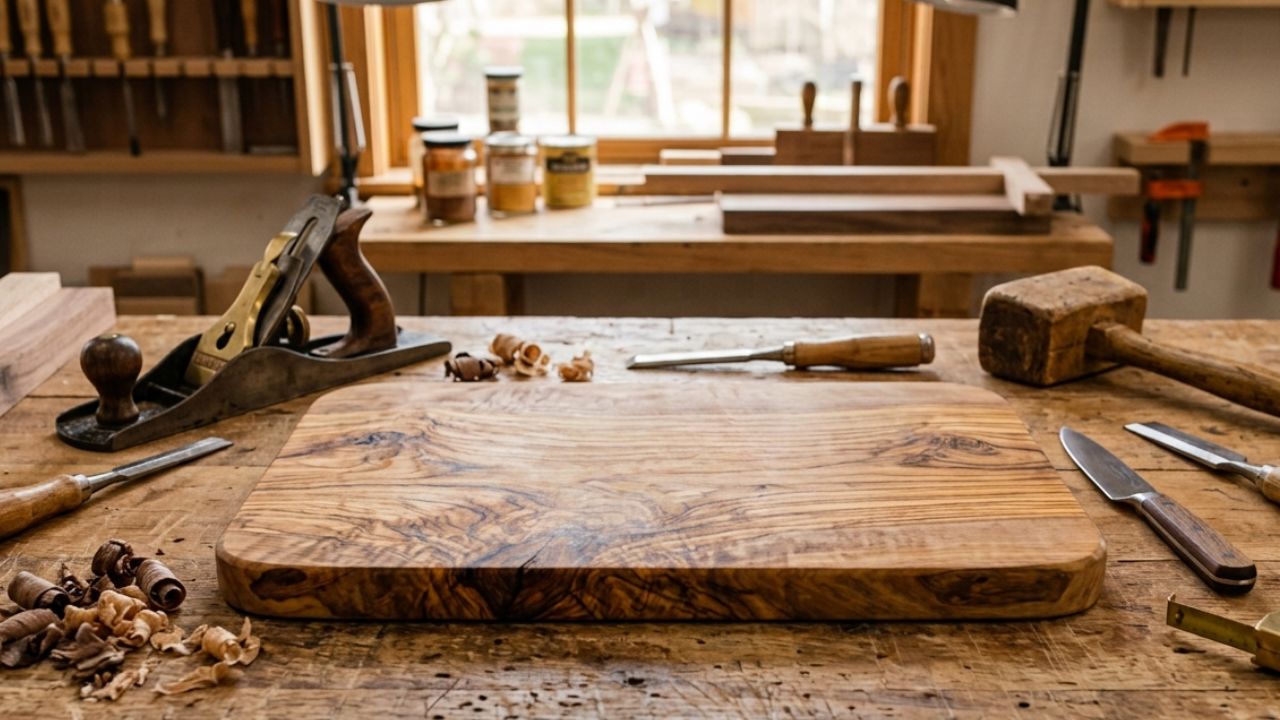
A small serving board or cheese board may cost around $35 to $60. Larger handmade cutting boards, charcuterie boards, and live-edge serving boards often cost $50 to $100 or more.
Premium boards can cost more when they have:
- Large dimensions
- Thick solid construction
- Rare grain patterns
- Live edges
- Resin-filled cracks or decorative details
- Handmade finishing
- A recognised maker or artisan brand
For comparison, one handcrafted olive wood retailer currently lists small and medium cutting boards between about $44 and $64, with larger serving pieces priced higher. Olive Wood Work shop
How Much Are Olive Wood Bowls and Utensils?
Olive wood bowls, spoons, salad servers, mortars, and decorative kitchenware are often priced by the piece.
Small utensils may cost around $15 to $35. Small bowls and mortars may range from $30 to $75, while larger handmade bowls and sets can cost $100 or more.
The price rises when a piece has deep grain figure, a large size, a thick wall, hand-carved details, or a distinctive natural shape.
Is Olive Wood Worth the Price?
Olive wood can be worth the price if you value appearance, uniqueness, and craftsmanship.
It is especially popular for:
- Charcuterie boards
- Cheese boards
- Serving trays
- Bowls
- Utensils
- Knife handles
- Turning projects
- Decorative gifts
- Small handmade furniture accents
It may be less cost-effective for large furniture projects, framing, or everyday utility work. Other woods, such as maple, oak, beech, or walnut, may be easier to source in larger boards and may offer better value for large projects.
How to Save Money When Buying Olive Wood
You can reduce the cost of olive wood by planning the project around the material available.
- Buy small blanks for small projects instead of large slabs.
- Choose plain grain instead of highly figured grain.
- Look for short pieces, offcuts, or turning-stock bundles.
- Buy locally to avoid high shipping costs.
- Compare the price per board foot, not only the price per piece.
- Check whether lumber is kiln dried or green.
- Buy the smallest piece that safely fits your project.
- Allow extra material for cracks, irregular edges, and waste.
Be careful with very cheap olive wood. It may be thin, green, poorly dried, cracked, or inaccurately labelled.
Frequently Asked Questions
How much does olive wood cost per board foot?
Olive wood often sells for around $19 to $25 per board foot at U.S. retail hardwood suppliers. Premium figured stock may cost $30 or more per board foot.
Why is olive wood more expensive than maple or oak?
Olive trees produce smaller, more irregular logs than commercial timber trees. Olive wood is also dense, highly figured, often imported, and commonly sold as specialty material.
Is olive wood expensive for cutting boards?
Olive wood cutting boards are usually more expensive than basic bamboo or acacia boards, especially when handmade. Small serving boards may start around $35 to $60, while larger boards can cost $100 or more.
Is olive wood sold in large boards?
Large straight olive boards are uncommon. Olive wood is more often sold as small slabs, turning blanks, bowl blanks, knife scales, and serving boards.
Does olive wood price depend on grain?
Yes. Highly figured olive wood with dark streaks, knots, burl-like patterns, or live edges generally costs more than plain stock.
Is olive wood worth buying for woodworking?
It can be worth buying for small premium projects where appearance matters. It is less practical for large, low-cost furniture projects because of its price, limited size, and difficult workability.
Final Answer
Olive wood is a premium specialty hardwood. Expect to pay roughly $19 to $25 per board foot for standard retail lumber, with premium pieces costing more.
Small olive wood blanks may cost only a few dollars, while handmade cutting boards, bowls, and serving pieces can range from $35 to well over $100.
The best way to judge value is to compare the wood’s size, drying quality, grain figure, thickness, and intended use—not only its price tag.