Yes, olive wood is a hardwood.
Olive wood comes from olive trees, commonly Olea europaea. Olive trees are broadleaf flowering trees rather than cone-bearing trees, which means olive wood is botanically classified as a hardwood.
In everyday use, olive wood is not only a hardwood by classification—it is also genuinely hard, dense, and durable compared with many other furniture and kitchen woods.
What Makes Olive Wood a Hardwood?
The terms hardwood and softwood describe the type of tree the wood comes from, not simply whether the wood feels hard.
- Hardwoods come from broadleaf trees, usually flowering trees.
- Softwoods come from conifer trees, such as pine, fir, spruce, and cedar.
Olive trees are broadleaf evergreen trees, so olive wood is a hardwood.
However, not all hardwoods are equally hard. Balsa is technically a hardwood but is very soft, while some softwoods can be harder than certain hardwoods.
How Hard Is Olive Wood?
Olive wood is considered a very hard and dense hardwood.
European olive wood is often listed with a Janka hardness of about 2,700 lbf. The Janka test measures how much force is needed to press a steel ball halfway into wood. A higher number generally means better resistance to dents and wear.
For comparison:
| Wood Species | Typical Janka Hardness |
|---|---|
| Black walnut | 1,010 lbf |
| Hard maple | 1,450 lbf |
| White oak | 1,360 lbf |
| Hickory | 1,820 lbf |
| Olive wood | About 2,700 lbf |
This high hardness helps explain why olive wood is popular for small kitchenware, serving boards, utensils, turning projects, and decorative items.
Is Olive Wood Harder Than Oak?
Yes. Olive wood is generally harder than common furniture woods such as white oak, red oak, maple, cherry, and walnut.
That extra hardness gives olive wood some useful benefits:
- Good resistance to dents
- Good resistance to visible surface wear
- A durable feel for small household items
- A smooth finish when properly sanded and polished
However, very hard wood can also be more difficult to cut, drill, sand, and shape. It can wear down woodworking tools faster than softer woods.
Is Olive Wood Strong?
Olive wood is dense and can be strong, but hardness and strength are not exactly the same thing.
- Hardness measures resistance to dents and surface wear.
- Strength relates to how much load wood can handle before bending or breaking.
- Stability describes how much wood expands, shrinks, warps, or cracks as moisture changes.
Olive wood is strong and dense, but it can have irregular or interlocked grain. It also needs to be dried and maintained carefully because rapid moisture changes can lead to cracking.
Why Is Olive Wood So Dense?
Olive trees grow slowly and often develop irregular, twisted grain. The wood tends to have a dense structure with rich golden tones, dark streaks, and dramatic figure.
Its appearance is one of its biggest advantages. Olive wood often has more visual variation than maple, oak, or beech, which makes it popular for decorative kitchenware and small handcrafted items.
Common Uses for Olive Wood
Because olive trees are usually smaller and more irregular than commercial timber trees, olive wood is often used for smaller products rather than long framing boards or large furniture pieces.
Common uses include:
- Cutting boards
- Charcuterie boards
- Serving trays
- Bowls
- Spoons and utensils
- Knife handles
- Turned objects
- Decorative boxes
- Small furniture accents
- Carving and craft projects
Is Olive Wood Good for Furniture?
Olive wood can be used for furniture accents, small tables, decorative panels, and specialty pieces. It is less commonly used for large furniture because large, straight olive boards can be difficult to source.
Its natural character makes it especially attractive for statement pieces, live-edge details, inlays, handles, and decorative tops.
Is Olive Wood Good for Cutting Boards?
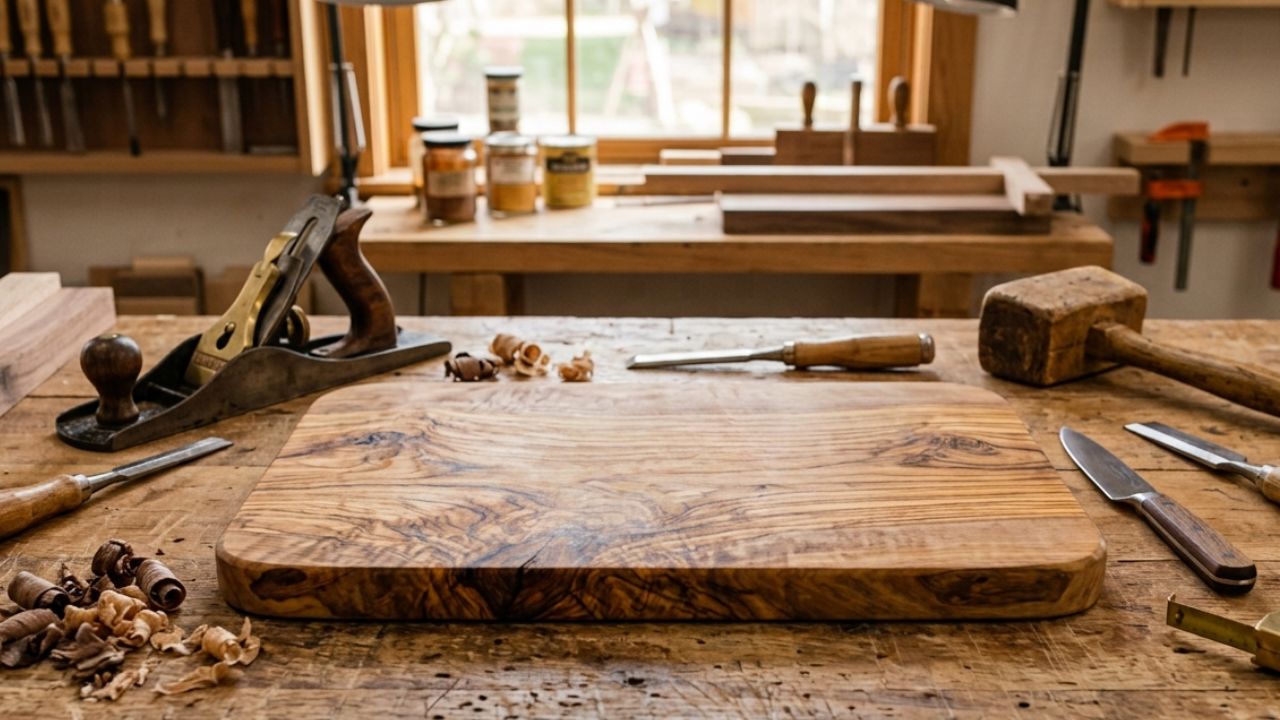
Olive wood is hard enough for cutting boards and is often used for serving boards and light food preparation.
Its density helps it resist surface dents and knife marks. However, because it is very hard, it may be less gentle on knife edges than maple or walnut. It also requires hand washing and regular conditioning to reduce the chance of cracking.
For a decorative charcuterie board, olive wood is an excellent choice. For a large daily chopping board, maple or walnut may be more practical.
Is Olive Wood Waterproof?
No. Olive wood is not waterproof.
Although it is dense and can resist normal kitchen use, it can still absorb moisture, crack, warp, or split if it is soaked, placed in a dishwasher, or exposed to repeated wet-dry cycles.
Hand wash olive wood items, dry them promptly, and condition them with food-grade mineral oil or an appropriate wood conditioner.
Is Olive Wood Sustainable?
Olive wood is often sourced from pruning, orchard renewal, storm-damaged trees, or trees that are no longer productive for fruit. This can make good use of an existing agricultural resource.
However, sustainability depends on the specific source, harvesting methods, transport, processing, and product lifespan. Look for clear supplier information when possible.
Frequently Asked Questions
Is olive wood a hardwood or softwood?
Olive wood is a hardwood because it comes from a broadleaf olive tree.
Is olive wood harder than maple?
Yes. Olive wood is generally much harder than hard maple.
Is olive wood hard to work with?
It can be. Its high density and irregular grain can make cutting, drilling, and shaping more difficult than working with softer woods.
Is olive wood good for outdoor use?
Olive wood is moderately durable, but it is not waterproof. Outdoor use requires proper design, weather protection, and regular maintenance.
Is olive wood good for kitchen utensils?
Yes. Olive wood is commonly used for spoons, bowls, serving boards, and other kitchenware. Choose products intended for food contact and care for them properly.
Does olive wood crack easily?
Olive wood can crack if it is soaked, dried too quickly, exposed to heat, or not conditioned properly. Hand washing and regular oiling help reduce this risk.
Final Answer
Olive wood is a hardwood, and it is one of the harder woods commonly used for kitchenware and decorative woodworking.
Its density, durability, and unique grain make it an excellent material for serving boards, utensils, bowls, and small handmade pieces. Its main limitations are its high hardness, limited board size, and need for careful drying and maintenance.