
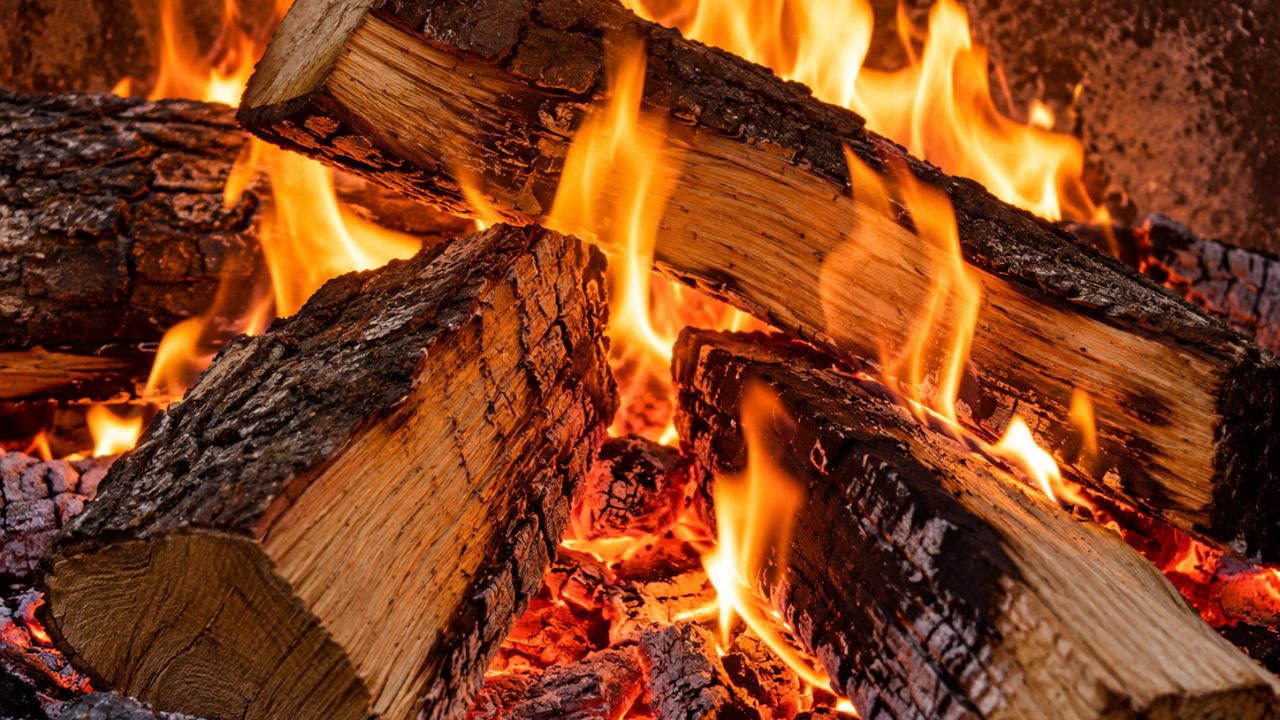
Yes, locust wood is excellent for burning when properly seasoned. Both black locust and honey locust produce substantial heat and lasting coals, making them useful for home heating. Their main drawbacks are heavy logs, potentially difficult splitting, and the need to dry the wood thoroughly before use.
However, “locust” can refer to two different trees. Knowing which one you have helps you understand its handling and burning characteristics.
Black Locust vs. Honey Locust Firewood
Black locust (Robinia pseudoacacia) and honey locust (Gleditsia triacanthos) are different species. Both are dense hardwoods valued as fuel.
| Characteristic | Black locust | Honey locust |
|---|---|---|
| Overall firewood quality | Excellent when dry | Excellent when dry |
| Representative heat content | About 27.9 million BTU per cord | About 26.7 million BTU per cord |
| Coal production | Excellent | Excellent |
| Splitting | Often difficult, especially knotty pieces | Generally easier, though logs vary |
| Smoke when properly burned | Relatively low | Relatively low |
| Handling concern | Heavy wood; thorny branches | Heavy wood; some trees have large, branched thorns |
These heat figures and burning characteristics are reported in Utah State University Extension’s wood-heating guide.
They are representative values, not guaranteed results for every load. Moisture content, the amount of actual wood in a stack, and appliance efficiency affect the heat you receive.
Why Is Locust Good Firewood?
High Heat Output per Cord
Locust packs a substantial amount of dry wood into a given volume. That makes it useful when you want plenty of heating energy from limited storage space.
A standard full cord measures 128 cubic feet when stacked, including the spaces between pieces. It is commonly represented by a stack 4 feet high, 4 feet deep, and 8 feet long.
When buying firewood, confirm the delivered volume. Terms such as “truckload” or “face cord” do not tell you the quantity without dimensions.
Lasting Coals
Both species produce a useful coal bed. This helps sustain heat after the main flames subside and can make subsequent loads easier to ignite.
That does not mean every locust log burns for a fixed number of hours. Split size, stove design, loading, and airflow all influence burn time.
Good Performance for Winter Heating
Locust is particularly useful when steady heating matters more than a quick decorative flame.
For starting a cold stove, smaller dry kindling is usually more convenient. Once the fire is established, add appropriately sized locust splits according to the appliance instructions.
How Long Does Locust Firewood Need to Season?
Allow at least a full drying season, and be prepared for longer. Use a moisture meter to decide when it is ready.
General firewood guidance often describes seasoning periods of around 6–12 months, but that is not a reliable deadline for every locust pile. Large splits, intact rounds, humid weather, shade, and poor airflow can extend the process considerably.
Wood left in a whole log does not season at the same rate as wood that has been cut, split, and stacked.
The EPA’s wood-burning guidance recommends burning wood with a moisture content below 20%.
To check your pile:
- Select several representative pieces, including larger splits.
- Split each piece again to expose its interior.
- Measure the freshly exposed surface using your meter’s instructions.
- Apply any required temperature or species corrections.
Cracked ends, loose bark, and a hollow sound can provide clues, but they do not establish that the center is dry.
How to Season Locust Firewood
Cut and Split It Early
Cut logs to a length suitable for your appliance and split them before stacking. Smaller pieces expose more surface area and generally dry faster than large rounds.
Avoid leaving all the processing until shortly before heating season.
Keep the Stack Off the Ground
Use stable supports that allow airflow underneath. Ground contact can keep the bottom pieces damp and make the pile harder to manage.
Allow Air to Circulate
Choose a ventilated location and leave room around the pile. Do not wrap ordinary air-drying stacks tightly in tarps.
Cover the top against rain and snow while keeping the sides open.
Store It Away From the House
Keep the main supply away from building walls. This improves access and airflow and reduces the chance of bringing wood-associated insects close to the home.
Bring indoors only the amount you need for near-term use.
Is Locust Hard to Split?
Black locust can be challenging, particularly around knots, branch junctions, or irregular grain. Honey locust is often easier, although individual pieces vary.
A straight section may split cleanly while a knotty round from the same tree requires much more effort. Do not assume hardness alone determines splitting difficulty.
Use equipment suited to the log size and your experience. Large or stubborn rounds may be more practical to process with a log splitter.
Check for thorns before handling branches and rounds. Wild honey locust can carry substantial thorns, while many landscape varieties are thornless.
Does Locust Produce Smoke, Sparks, or Creosote?
Properly dried locust generally performs well, but no firewood is smoke-free or creosote-free.
Wet wood and poor combustion can produce excessive smoke regardless of species. A smoldering fire also encourages deposits in the flue.
Locust is commonly rated as producing relatively few sparks, but individual pieces can still pop or throw embers. Use the appropriate fireplace screen or keep stove doors closed as instructed.
Maintain the appliance and have the chimney inspected and cleaned as needed. Choosing dense hardwood does not remove that responsibility.
Can You Burn Locust in a Wood Stove or Fireplace?
Yes, clean, seasoned locust can be used in an appliance designed to burn cordwood.
Follow the manufacturer’s directions for loading and airflow. A large load of dense wood can contain considerable fuel, so avoid overloading the firebox or operating the stove beyond its recommended temperature range.
Do not restrict the air excessively just to make the fire last longer. A slow, smoky burn is not the same as efficient heating.
In an open fireplace, use a suitable screen and supervise the fire. An open fireplace generally delivers less useful room heat than an efficient wood stove or insert.
Is Black Locust Safe to Burn Despite Being a Poisonous Tree?
Black locust contains poisonous compounds in several plant parts, particularly bark and seeds. It should not be treated as edible or left where livestock can browse it.
However, black locust wood is also an established firewood species. Plant-ingestion hazards and suitability as heating fuel are different questions.
Burn only clean, untreated, seasoned wood in a properly vented appliance, and avoid breathing the smoke. Its use for heating should not be taken as a recommendation for cooking or smoking food.
Disadvantages of Locust Firewood
Locust’s heating performance comes with some practical trade-offs:
- Heavy handling: Dense rounds and splits take more effort to lift and move.
- Difficult pieces: Knotty black locust can be demanding to split.
- Drying requirements: Large or poorly stored pieces may remain wet inside.
- Thorns: Some trees require extra care during processing.
- Local availability: Buying and transporting it may cost more than using a suitable local alternative.
Dry, reasonably priced local firewood can be a better purchase than expensive locust that is still too wet to burn.
Frequently Asked Questions
Can You Burn Freshly Cut Locust?
Freshly cut locust may ignite under some conditions, but it is not ready simply because it burns. Season it and check its moisture content before using it for efficient heating.
Is Locust Better Than Oak?
Both can make excellent firewood. Their heat values overlap, and the specific oak species matters. Moisture content, price, splitting effort, and availability are more useful buying considerations than declaring one universal winner.
Can You Burn Old Locust Fence Posts?
Only consider wood whose history you can verify as untreated, unpainted, uncontaminated, and sound. Remove embedded metal before processing. Do not burn posts with unknown treatment history.
Does Dead Locust Need Seasoning?
Possibly. A dead tree can still contain wet wood, especially in larger sections. Split and measure it rather than assuming it is ready.
Is Locust Good for a Campfire?
Yes, seasoned locust can provide sustained heat and coals. Start with smaller dry material, follow local fire restrictions, and use locally sourced firewood to avoid transporting pests.