
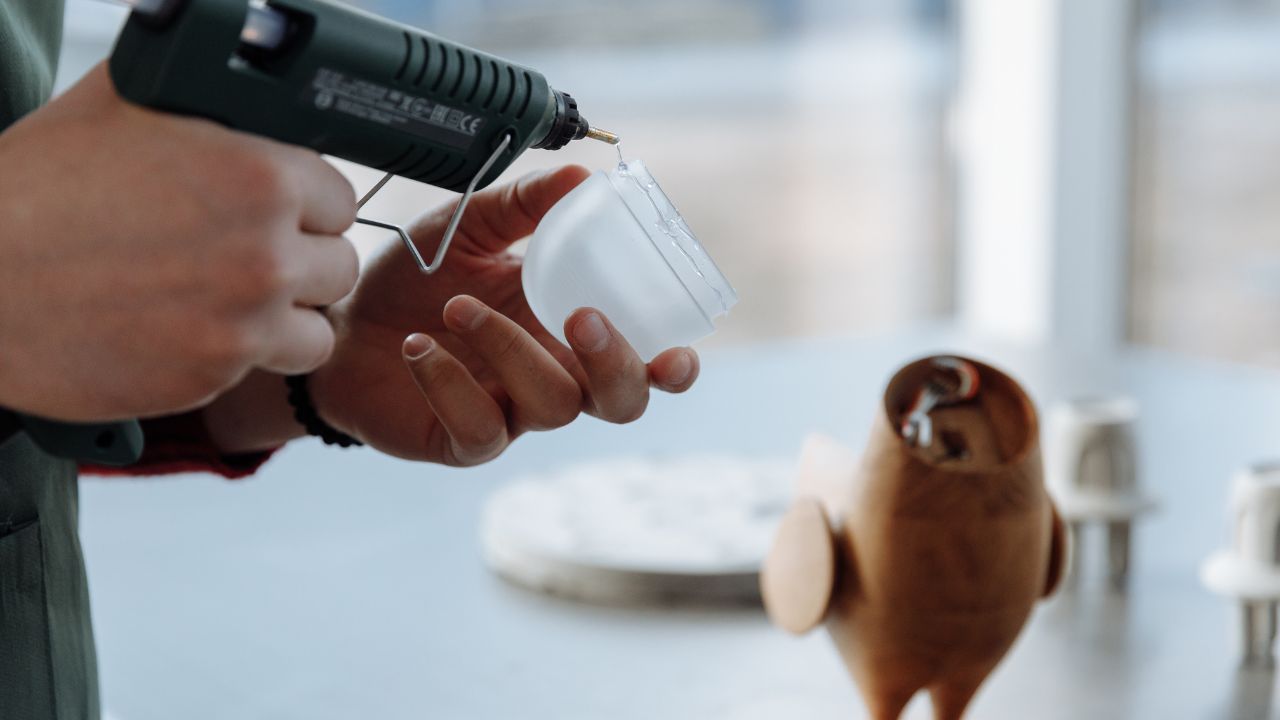
Yes, hot glue works on wood, especially for lightweight crafts, decorations, and small assembly jobs. It bonds best when the wood is clean and dry and the glue is suitable for the materials being joined. However, ordinary craft hot glue is not a dependable choice for repairing chair joints, supporting shelves, or assembling furniture that carries weight.
The important question is what the finished project needs to withstand. Attaching a wooden letter to an indoor sign is very different from fixing a loose table leg.
Here is how to decide whether hot glue suits your project and how to use it successfully.
How Does Hot Glue Stick to Wood?
A glue gun heats a solid adhesive stick until it melts. The melted glue spreads over the wood surface and then solidifies as it cools, holding the pieces together.
Bare wood generally provides a useful bonding surface because of its texture and porosity. Dust, wax, oil, and loose finishes can interfere with that contact.
The adhesive formula matters, too. General-purpose craft sticks and specialty woodworking hot melts do not necessarily provide the same strength, working time, or temperature resistance.
When Is Hot Glue a Good Choice for Wood?
Hot glue is particularly convenient when you need a quick bond on a small project that will experience little stress.
| Project | Is hot glue suitable? |
|---|---|
| Wooden ornaments and craft sticks | Usually suitable for lightweight indoor projects |
| Small decorations on a wooden sign | Often suitable; test the surface first |
| Fabric or ribbon attached to wood | Often suitable with a compatible adhesive |
| Model-making and decorative assemblies | Useful where the joints carry little weight |
| Loose chair legs or table joints | Ordinary craft hot glue is unsuitable |
| Shelf brackets or heavy wall decorations | Use appropriate mechanical fixings |
| Outdoor wooden decorations | Only with a suitable exterior-rated adhesive |
For example, hot glue can work well for attaching a small decorative shape to a picture frame. The frame’s hanging hardware should still be secured with appropriate fasteners.
How Strong Is Hot Glue on Wood?
There is no single strength rating that applies to every hot-glued wood joint. Performance depends on:
- The adhesive formula.
- The size of the bonding area.
- Surface cleanliness and condition.
- Whether the pieces are joined before the glue cools.
- The direction and duration of the force on the joint.
- Heat and moisture exposure.
A broad contact area generally offers a better opportunity for bonding than a tiny contact point. A decoration sitting flat against a board is also a different challenge from a projecting piece that gets pulled or twisted.
A bond that feels firm immediately after cooling is not proof that it will support a continuous load. Ordinary hot glue can gradually deform under stress, particularly in warm conditions.
Industrial hot melts are used in woodworking, but that does not mean a standard craft stick is suitable for every furniture joint.
How to Use Hot Glue on Wood
1. Check the Adhesive and Glue Gun
Choose glue sticks that list wood among their intended materials. Confirm that their diameter and temperature requirements match your glue gun.
For bare wood, a high-temperature setting is commonly recommended when the adhesive and gun support it. When attaching heat-sensitive materials to wood, follow the requirements of both materials.
2. Prepare the Bonding Area
Start with dry wood and remove sawdust, dirt, and loose fibers. If necessary, lightly sand an uneven bonding area, then remove the sanding dust.
Avoid applying glue over wax or oily residue. On painted or varnished wood, the adhesive bonds to the coating, so a loose coating can pull away even if the glue sticks to it.
Test an inconspicuous area before sanding or gluing a finished piece.
3. Arrange the Pieces Before Applying Glue
Dry-fit the assembly so you know exactly where each part belongs. Keep the pieces within easy reach.
Hot glue gives you limited adjustment time. Trying to find the correct position after dispensing it can leave you pressing the pieces against glue that has already started to set.
4. Apply a Controlled Amount
Let the gun reach its recommended operating temperature. Apply a small bead or a few dots suited to the contact area.
A large blob can hold the pieces apart and leave an obvious glue line. Apply enough for contact without flooding the joint.
5. Join the Pieces Promptly
Bring the surfaces together while the adhesive is still workable. Hold them steady until the bond sets, then allow the glue to cool completely before handling the assembly.
Surebonder’s glue-gun instructions recommend controlled application, prompt positioning, and allowing the joint to cool undisturbed.
Keep your fingers away from the nozzle and melted adhesive. Use the gun’s stand and a heat-resistant work surface.
Why Does Hot Glue Peel Off Wood?
If the glue comes away easily, check the following before adding more.
The Surface Is Contaminated
Dust, furniture polish, oil, or wax may prevent direct contact with the wood. Clean the bonding area using a method appropriate for the existing finish.
The Glue Cooled Before Assembly
An adhesive bead may look soft while its surface has already begun to set. Prepare the parts first and join them within the product’s working time.
The Joint Has Too Little Contact Area
A small dot may hold a lightweight decoration but fail when the same decoration is repeatedly pulled or knocked.
The Finish Is Coming Off
Look at the underside of the detached glue. If it carries paint or varnish, the coating may be the weak point.
The Project Needs a Different Adhesive
Repeated failure can indicate that hot glue is unsuitable for the load or conditions. Adding a thicker layer will not necessarily solve the problem.
Hot Glue vs. Wood Glue: Which Should You Use?
For most closely fitted, bare-wood furniture joints, a suitable woodworking glue is the better starting point. Hot glue is more convenient for quick decorative assembly.
| Feature | Ordinary hot glue | PVA wood glue |
|---|---|---|
| Main advantage | Fast setting | Well suited to close-fitting wood joints |
| Typical projects | Crafts and lightweight decorations | Furniture joinery and wood assemblies |
| Working time | Usually short | Usually allows more positioning time |
| Holding the assembly | Hold steady while it cools | Clamping is commonly required |
| Visible glue line | Can leave a raised bead | Can form a thin line in a well-fitted joint |
| Outdoor suitability | Depends on the formula | Depends on the product’s water-resistance rating |
Follow the chosen wood glue’s clamping and curing instructions. Neither adhesive replaces proper joint design or the fasteners required for the project.
Can You Use Hot Glue on Wood Outdoors?
Some hot glues are rated for outdoor use, but ordinary craft glue should not automatically be treated as weatherproof.
Check the manufacturer’s intended applications and temperature limits. An outdoor decoration may experience rain, direct sunlight, and much higher surface temperatures than an indoor project.
For example, Gorilla Hot Glue Sticks are marketed for indoor and outdoor use, but the manufacturer does not recommend continual water exposure. That distinction matters for items that remain wet.
Also, gluing a wooden object does not protect the surrounding wood from moisture or decay.
Frequently Asked Questions
Does Hot Glue Work on Painted Wood?
It can, provided the paint is fully cured, clean, and firmly attached. Test first because adhesion varies with the coating. Removing the glue later may pull off paint.
Does Hot Glue Work on Plywood?
Yes, it can bond lightweight items to plywood. Check whether you are bonding to bare veneer or a surface coating. Loose face veneer or dusty surfaces can weaken the assembly.
How Long Does Hot Glue Take to Set on Wood?
Many products set within seconds to a few minutes. The exact time depends on the formula, glue quantity, and temperatures involved. Allow the entire bead to cool before testing the bond.
Is Hot Glue Permanent on Wood?
It can provide a lasting bond for a suitable indoor craft, but permanence depends on the conditions. Heat, sustained stress, or repeated pulling can cause failure.
Can You Repair Wooden Furniture with Hot Glue?
Hot glue may suit a small decorative attachment. For loose joints, broken supports, or other functional repairs, use an appropriate woodworking adhesive and repair method.
Can Hot Glue Be Removed Without Damaging Wood?
Sometimes, but removal is not guaranteed to be harmless. Pulling hardened glue away may lift paint, finish, veneer, or wood fibers. Test any removal method in a hidden area and avoid forceful prying on delicate surfaces.