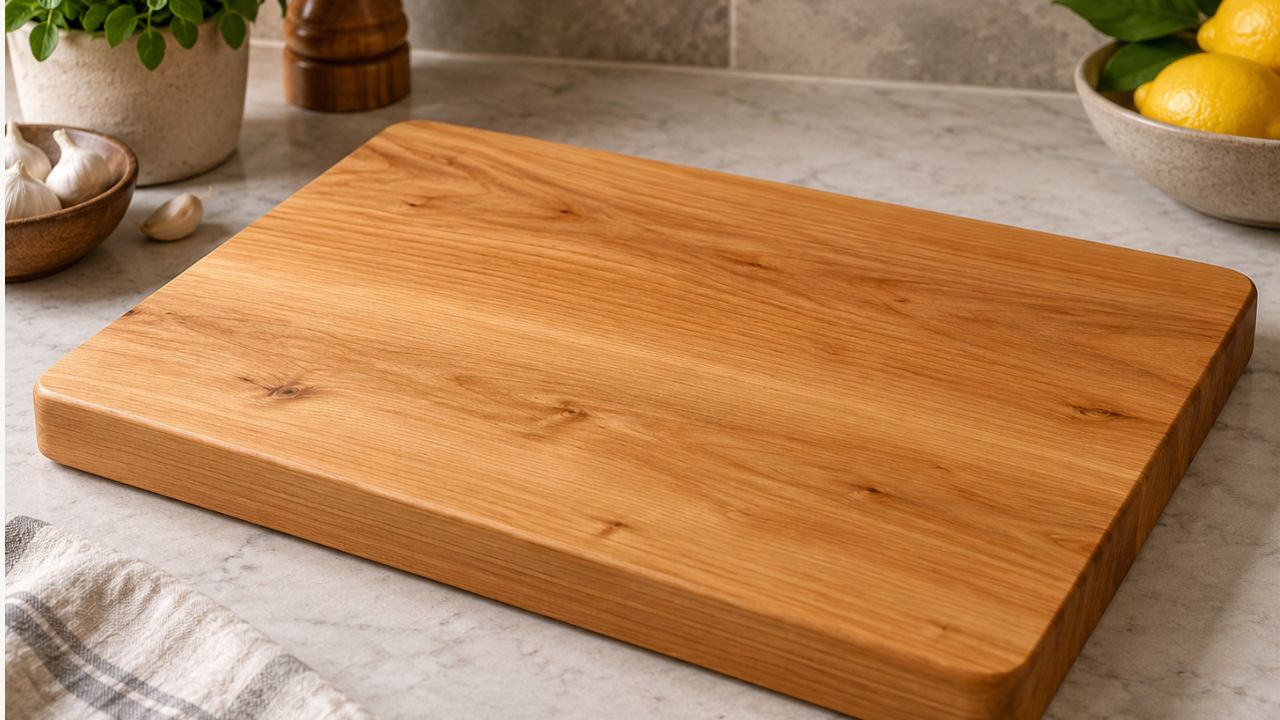
Alder can work for a lightly used cutting board, but it is not the best choice for frequent chopping. Its relatively soft surface develops knife marks and dents more readily than harder cutting-board woods. For a board you plan to use every day, hard maple is generally a more practical choice.
Alder’s warm appearance makes it appealing for kitchen projects. However, a serving board and a chopping board face different demands. Before choosing the wood, consider how often you will cut on it, how aggressively you work, and how much maintenance you are willing to do.
This article focuses on red alder (Alnus rubra).
Why Isn’t Alder a First Choice for Cutting Boards?
The main concern is its softness.
Red alder has a Janka hardness of approximately 590 lbf, making it relatively easy to indent. The American Hardwood Export Council describes it as a comparatively soft hardwood. AHEC’s red alder profile
Janka hardness does not directly measure performance under a kitchen knife. Nevertheless, it helps explain why alder is more vulnerable to surface damage than harder alternatives.
Occasional slicing is less demanding than repeated chopping, forceful cutting, or work with a cleaver. An alder board may be adequate for the first task while wearing quickly under the others.
Advantages of Alder for Cutting Boards
Easy to Shape and Prepare
Alder is generally manageable to cut, shape, and sand. This makes it approachable for a small woodworking project, especially when the design is simple.
However, ease of fabrication does not automatically translate into long service under a knife.
Attractive Appearance
Its light brown and reddish tones can produce an appealing kitchen board. Clear, sound stock allows the natural grain to remain visible without a decorative stain.
This appearance is particularly useful for serving pieces, where the surface receives less cutting damage.
Useful for Occasional Light Cutting
A well-made alder board can be considered for occasional, gentle slicing. The practical tradeoff is accepting that its surface may need attention sooner than a harder board.
Inspect it regularly rather than assuming that a smooth surface will stay that way indefinitely.
Disadvantages of Alder Cutting Boards
Knife Marks Develop More Readily
A relatively soft surface is easier to score. Over time, repeated cuts can leave rough areas and grooves that become difficult to clean.
Normal shallow marks are different from deep damage. When a board develops hard-to-clean grooves, cracks, or failing joints, it needs appropriate resurfacing or replacement.
Moisture Still Requires Care
Cutting boards undergo repeated washing and drying. Alder must be kept from prolonged soaking, just like other wooden kitchen boards.
Oil can help maintain the surface, but it does not make the wood waterproof or protect a poorly made glue joint.
Heavy Chopping Is a Poor Match
Alder is not a practical first choice for cleaver work or a busy preparation station where the board receives repeated forceful impacts.
Choosing a more suitable material at the beginning is usually easier than trying to improve a board that is too soft for its intended use.
Is Alder Safe for Food Contact?
Food-contact suitability depends on the complete board, including the wood’s condition, any adhesive, the finish, and how the board is cleaned.
Choose properly identified, clean, untreated lumber. Avoid reclaimed boards with an unknown history, pressure-treated material, and stock contaminated by paint, chemicals, or workshop spills.
Also, alder’s use as a smoking wood does not by itself prove that every alder board is suitable for cutting food.
For a commercially made board, follow the manufacturer’s intended-use and care instructions. For a restaurant or other regulated food business, confirm the applicable requirements before selecting an unfamiliar board material.
Alder Cutting Board vs Alder Serving Board
A serving board usually receives less wear than a board used for daily food preparation.
| Intended Use | How Alder Fits |
|---|---|
| Serving cheese, crackers, or other prepared foods | More suitable, provided the board and finish are appropriate for food contact |
| Occasional gentle slicing | Possible, with regular inspection |
| Daily chopping | A harder, established cutting-board wood is preferable |
| Heavy cleaver work | Not a recommended choice |
| Decorative display | Suitable, but decoration alone does not establish food-contact suitability |
Calling a product a “charcuterie board” does not remove the need for proper materials and cleaning. If people will cut on it frequently, evaluate it as a cutting board.
Does End-Grain Construction Make Alder a Better Choice?
End-grain construction changes how the knife meets the wood fibers, but it does not turn alder into a harder species.
It also introduces more glue joints and requires careful assembly. The board still needs sound material, suitable adhesive, proper drying, and protection from prolonged moisture.
Do not choose end-grain alder on the assumption that construction alone removes its limitations. For a demanding daily-use board, changing the species is generally the more straightforward decision.
What If You Already Have Alder Lumber?
You can still make a useful kitchen project without committing it to heavy chopping.
Consider a serving board or a board intended for occasional light use. Before starting:
- Select clear, sound wood. Avoid loose knots, cracks, decay, and open defects.
- Use properly dried material. Do not assemble a board from lumber that is still changing substantially as it dries.
- Prepare smooth surfaces and rounded edges. Remove rough fibers and sharp corners.
- Use an adhesive intended for cutting-board construction. Follow its clamping and curing directions.
- Choose an appropriate board finish. Confirm suitability for the intended food-contact use.
A water-resistant glue does not make the completed board safe to soak.
What Finish Should You Use on an Alder Cutting Board?
A straightforward option is food-grade mineral oil, or a care product specifically intended for wooden cutting boards.
Follow the product directions, apply it to clean and dry wood, and wipe away excess. Reapply according to the board’s condition and the product instructions.
Avoid using an ordinary furniture stain simply to make the board darker. Likewise, a coating described as suitable for furniture is not automatically suitable for a surface repeatedly cut with knives.
Oil maintains the wood; it does not harden alder enough to prevent knife marks.
How to Clean and Maintain an Alder Board
Wash After Use
Hand-wash promptly with hot, soapy water, rinse, and dry. Do not leave the board submerged in a sink.
For a homemade glued board, avoid dishwasher cleaning unless the completed product has been specifically designed and approved for it.
Let Both Faces Dry
After wiping it dry, position the board so air can reach both sides. Avoid leaving one face pressed against a wet countertop.
Prevent Cross-Contamination
Keep a separate board for raw meat, poultry, and seafood when possible, rather than using the same unwashed surface for ready-to-eat foods. Wash boards and utensils thoroughly between tasks. FoodSafety.gov’s food-safety guidance
Inspect the Surface
Check for deep grooves, splinters, cracks, and separated glue joints. Oiling does not repair these problems.
A sound board with shallow wear may be resurfaced appropriately. A board with persistent cracks or joints that cannot be cleaned should be removed from food-preparation use.
Is Hard Maple a Better Choice Than Alder?
For a board intended for frequent cutting, hard maple is generally the more practical option because it offers greater resistance to indentation.
That does not mean harder is always better. Cutting-board selection also involves grain, construction, cleanability, and maintenance. However, alder’s softness makes it a compromise when regular chopping is the main purpose.
If you already own a well-made alder board, judge it by its condition and intended use. If you are buying lumber specifically for a daily chopping board, there is less reason to accept that compromise.
Frequently Asked Questions
Can You Make a Cutting Board From Knotty Alder?
Clear stock is preferable. Loose knots, cracks, and open defects are undesirable on a cutting surface because they interrupt the surface and can be difficult to clean.
Will Mineral Oil Make Alder Harder?
No. Mineral oil does not meaningfully increase the wood’s hardness or prevent dents and knife marks.
Can Alder Be Mixed With Maple in a Cutting Board?
It is possible to combine woods, but the softer alder sections may wear differently. Decorative contrast should not take priority over sound construction and a serviceable cutting surface.
Is Alder Good for a Beginner’s Cutting-Board Project?
It can be easy to work, but a serving-board project makes better use of its strengths. For a first board intended for daily chopping, choose a well-established cutting-board material and a simple design.
Final Verdict
Alder is a reasonable option for a serving board or occasional light cutting, provided the finished board is suitable for food contact and properly maintained.
For everyday chopping, its softness is a significant drawback. A well-made hard maple board is generally a better long-term choice.