
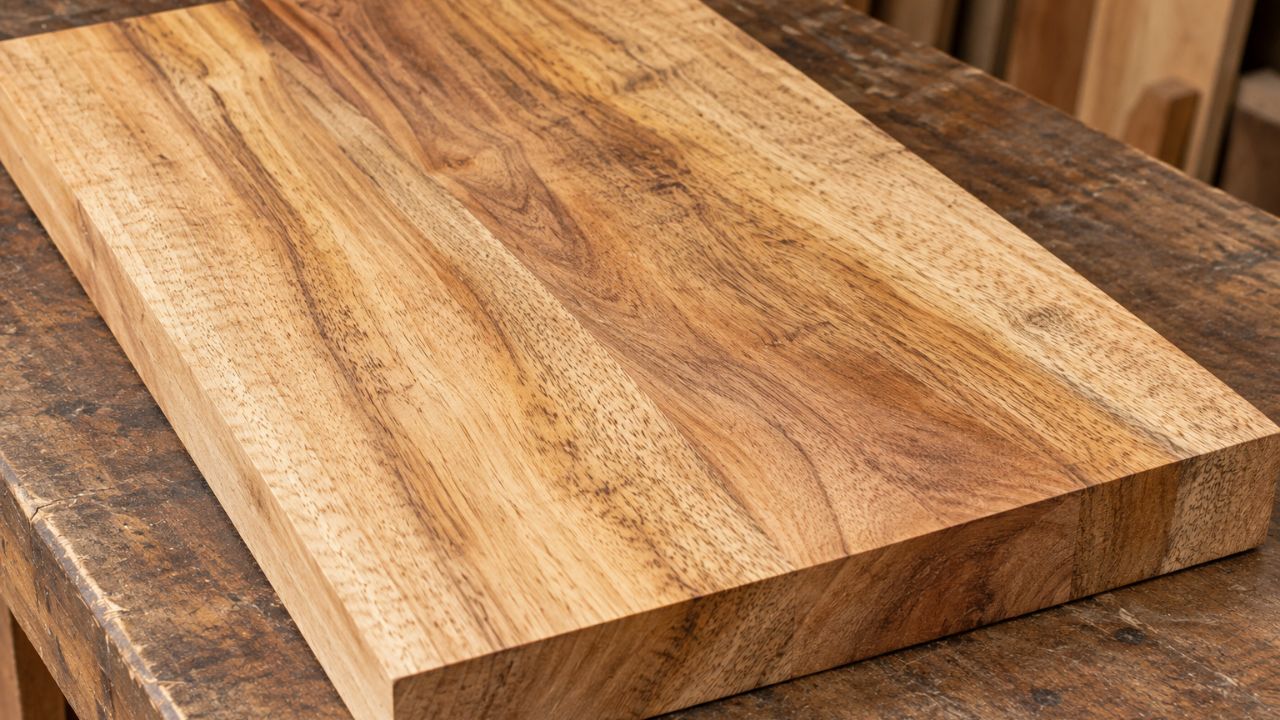
Yes, mango wood is a good choice for indoor furniture when it is properly dried, well constructed, and finished for its intended use. It offers attractive grain, varied natural colors, and useful strength for tables, cabinets, dressers, and other household pieces.
However, the species name alone does not guarantee quality. A poorly assembled mango wood table can disappoint, while a carefully made piece can provide years of service.
The most important things to check are the construction, finish, condition of the wood, and suitability for your room.
What Is Mango Wood?
Mango wood comes from the mango tree, commonly Mangifera indica, which is better known for producing fruit. It is a hardwood, even though the tree is evergreen.
The timber often has golden or brown tones, with variations in grain and color that make individual pieces distinctive. Stains and other factory finishes can change its appearance considerably.
Furniture is an established use for the species, as documented in the World Agroforestry mango profile.
Why Is Mango Wood Used for Furniture?
1. Attractive Grain and Color
Mango wood can provide a warm, natural appearance without a perfectly uniform pattern. Some pieces have subtle grain, while others show dramatic streaks or figure.
This variation works particularly well in furniture where the wood remains visible, such as a dining tabletop or cabinet front.
Ask for photographs of the actual item when possible. A showroom sample may not represent every piece in the range.
2. Suitable for Everyday Indoor Use
Properly selected and constructed mango wood can work well in ordinary household furniture.
Still, a dining chair, a wide shelf, and a decorative side table face different loads. Component dimensions, joints, supports, and hardware must suit the job.
A furniture maker’s load rating is more useful than a broad claim that mango wood is “strong.”
3. Potentially Good Value
Mango wood furniture can offer good value, but it is not always cheaper than oak, walnut, or other alternatives.
Price depends on the design, craftsmanship, finish, hardware, shipping, and brand. Compare complete pieces of similar quality rather than assuming one wood is automatically the budget option.
4. Distinctive Designs
Mango wood is used in everything from simple tables to carved cabinets and textured furniture fronts.
This makes it an option for different styles, but consider practicality as well as appearance. Deeply carved surfaces, for example, take more effort to dust than flat panels.
What Furniture Is Mango Wood Good For?
| Furniture Type | What to Check |
|---|---|
| Dining tables | Finish protection, tabletop flatness, and secure supports |
| Coffee and side tables | Resistance of the finish to spills and everyday marks |
| Cabinets and sideboards | Door alignment, hinges, shelves, and overall stability |
| Dressers | Drawer operation, hardware, and drawer-bottom support |
| Desks | A smooth work surface and adequate legroom and support |
| Bed frames | Rail connections, slat support, and the stated load capacity |
| Chairs and benches | Joint quality and testing for the intended seating load |
For storage furniture, also follow the manufacturer’s anchoring instructions where supplied.
What Are the Disadvantages of Mango Wood Furniture?
It Can Scratch and Dent
Mango wood is not scratchproof. Impacts can mark the wood, while grit, dragged objects, and rough handling can damage its finish.
These are separate issues: a coating may resist surface wear, but it cannot prevent every dent in the material underneath.
Use felt pads beneath decorative objects and avoid dragging heavy items across tabletops.
Moisture Can Cause Problems
Mango wood furniture should not be treated as waterproof. Spills can affect the finish, and prolonged moisture may cause staining, movement, or deterioration.
A dining table needs a finish appropriate for regular use around food and drinks. A lightly waxed decorative table may need more careful handling.
Poorly Dried Wood Can Move After Purchase
Wood changes dimensions as its moisture content changes. Inadequate drying or unsuitable construction can contribute to cracks, warped panels, or drawers that no longer fit properly.
Kiln drying is useful information, but it is not a guarantee that a piece will never move. Storage, room conditions, and construction also matter.
Color Variation May Make Matching Difficult
Natural variation can be attractive, but it may complicate matching furniture bought at different times.
If you want closely coordinated pieces, compare them together before purchasing. Matching collection names do not guarantee identical grain or color.
It Is Not Naturally Pest-Proof
Do not assume mango wood is immune to wood-boring insects or decay.
Inspect new or secondhand furniture for unexplained holes, fresh powder, soft areas, or other damage. Ask the seller about drying, processing, and any treatment rather than relying on a general “hardwood” label.
Is Mango Wood Furniture Durable?
Mango wood can provide durable indoor furniture, but there is no reliable lifespan that applies to every piece.
A well-made cabinet in a dry room faces different conditions from a poorly finished table exposed to daily spills. Long service depends on:
- Sound, suitably dried wood.
- Well-designed joints and supports.
- A finish suited to the application.
- Appropriate indoor conditions.
- Reasonable care and timely repairs.
Claims such as “all mango wood furniture lasts 20 years” leave out these important differences.
Is Mango Wood Good for a Dining Table?
Yes, provided the table is well made and has an appropriate finish.
Before buying, check that the top is reasonably flat, the base is secure, and any extension mechanism works smoothly. Ask whether the finish tolerates routine cleaning and how spills should be handled.
Use coasters and heat-resistant trivets. A hot pan can damage a furniture finish even when the timber beneath it is sound.
For a busy family table, prioritize finish performance and construction over decorative appearance alone.
Is Mango Wood Good for Outdoor Furniture?
Ordinary indoor mango wood furniture should stay indoors.
Natural decay resistance is not dependable enough to assume that an indoor piece will withstand rain, damp ground, and repeated weather exposure. Moving it onto a covered porch can still expose it to humidity and wind-driven rain.
Only consider outdoor use when the manufacturer specifically designs and rates the complete product for that environment. Applying a generic oil to indoor furniture does not automatically make it suitable for outdoors.
Is Mango Wood Furniture Sustainable?
It can make productive use of trees removed from fruit-growing operations, but the environmental claim needs to be specific.
Some suppliers use timber from orchard trees that have reached the end of their commercially useful fruit production. For example, West Elm identifies that source for a particular mango wood cabinet. This is a product-specific sourcing statement, not proof that all mango furniture has the same origin. West Elm’s mango wood sourcing information
Before accepting a sustainability claim, ask:
- Where did the timber come from?
- Is the sourcing explanation tied to this product?
- Does the claimed certification cover the item being sold?
- Can the furniture be repaired and kept in use?
Avoid assuming that every mango tree stops producing fruit at a fixed age or that all mango furniture is made from otherwise wasted timber.
Solid Mango Wood vs Mango Veneer
Furniture described as “mango wood” may contain solid timber, veneer, or a combination of materials.
Solid mango wood uses timber through the thickness of the relevant component. Mango veneer is a thin layer of real mango wood bonded to a supporting panel.
Neither description tells the whole quality story. A well-made veneered panel can perform well, while a poorly constructed solid-wood panel can develop problems.
Check the product description for the top, frame, shelves, drawer sides, and back panel separately. “Solid mango wood frame” does not mean every component is solid mango.
This distinction also matters when refinishing. Thin veneer offers much less sanding allowance than solid wood.
What to Check Before Buying Mango Wood Furniture
Inspect the Joints
Look for gaps, loose connections, and wobbling. Open doors and drawers to assess alignment and movement.
Examine the Surface
Check for cracks, splinters, rough patches, and damaged edges. Distinguish intentional rustic detailing from defects that affect use.
Ask About the Finish
Find out whether the piece is lacquered, oiled, waxed, painted, or finished another way. This determines how it should be cleaned and maintained.
Confirm Dimensions and Capacity
Measure your space and check the stated load limits for shelves, seats, and beds. A substantial appearance does not establish capacity.
Read the Return and Warranty Terms
Pay attention to how the seller handles natural variation, movement, finish damage, and defects discovered after delivery.
How to Care for Mango Wood Furniture
Dust regularly with a soft cloth. For cleaning, follow the maker’s directions and avoid leaving the surface wet.
Protect furniture from hot objects, prolonged direct sunlight, and placement immediately beside radiators or other strong heat sources. Wipe up spills promptly and use protective pads where appropriate.
Do not apply furniture oil automatically. A lacquered surface may not need it, and an unsuitable product can leave residue or change the appearance.
Lift furniture when moving it rather than dragging it by a leg or across the floor.
Frequently Asked Questions
Is Mango Wood Furniture Cheap Quality?
Not necessarily. Mango wood is a legitimate furniture material. Quality depends on the particular piece’s materials, construction, finish, and hardware.
Does Mango Wood Furniture Crack Easily?
Cracking is possible, especially with inadequate drying, unsuitable construction, or substantial changes in moisture conditions. It should not be considered inevitable in every mango wood product.
Is Mango Wood Furniture Easy to Maintain?
It can be, but care depends on the finish. Obtain the maintenance instructions before buying, particularly for dining tables and other frequently used surfaces.
Can Mango Wood Furniture Be Refinished?
Some pieces can be refinished successfully. First establish whether the surface is solid wood or veneer and identify the existing finish. Carving, thin veneer, and factory color treatments can make restoration more complicated.
Final Verdict
Mango wood is a good option for indoor furniture when you like its natural variation and the piece is well constructed.
Choose based on the actual furniture—not just the wood name. Sound joints, suitable drying, a practical finish, and clear care instructions are the strongest reasons to buy.