
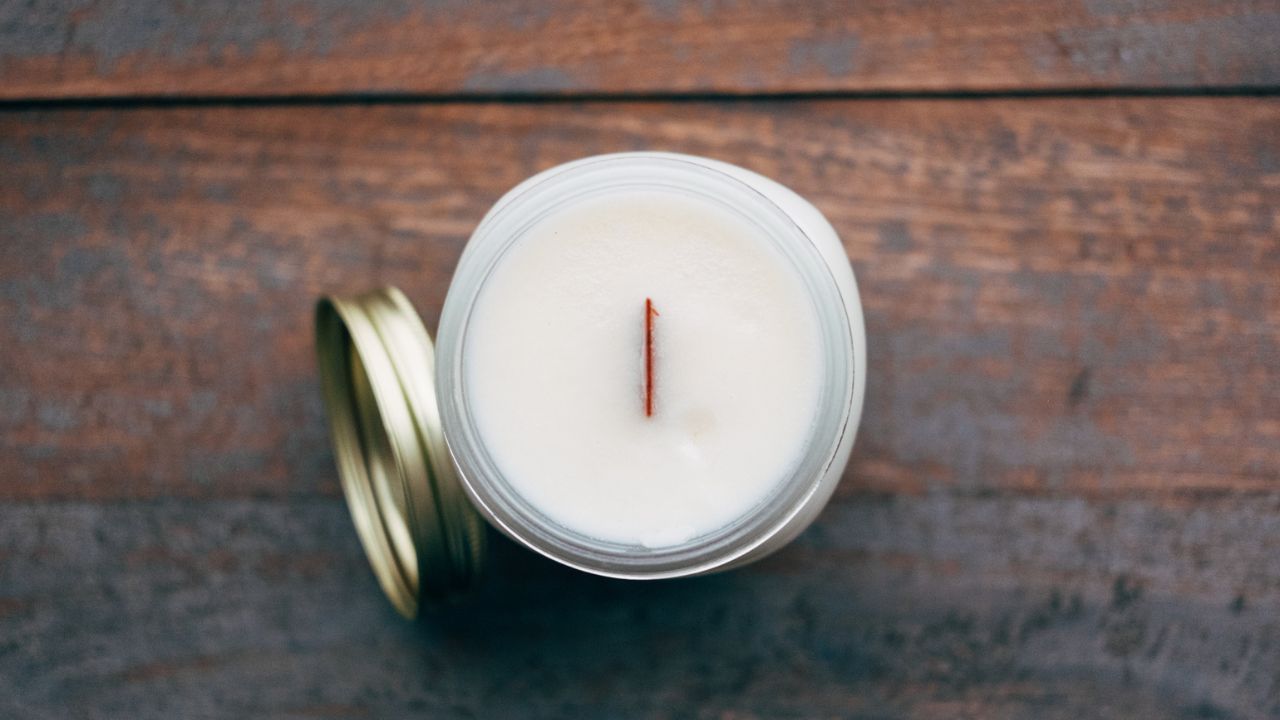
Wooden wick candles can be used safely when they are properly made and burned according to the manufacturer’s instructions. However, they still produce an open flame, hot wax, and combustion emissions. A wooden wick does not automatically make a candle safer or cleaner than one with a cotton wick.
Their gentle crackling sound and distinctive flame make wooden wick candles appealing for home décor. But before lighting one, it helps to understand the risks—and how they compare with plastic flameless candles.
What Are Wooden Wick Candles?
Wooden wick candles use a specially manufactured wood wick instead of a conventional cotton wick. The wick draws melted wax toward the flame, where the fuel burns.
Depending on the design, the wick may be a thin strip, several joined pieces, or a wider shaped wick. Some produce a soft crackling sound.
The wick is only one part of the candle. Safe performance also depends on the wax, fragrance formulation, container, and how these components work together.
Are Wooden Wick Candles Safe to Burn Indoors?
Yes, a properly designed wooden wick candle can be suitable for indoor use. It should remain within sight, sit on a stable, heat-resistant surface, and stay away from combustible materials.
The main hazards are similar to those of other burning candles:
- Fire: The flame can ignite nearby curtains, paper, decorations, or furniture.
- Burns: Melted wax and the container can become hot.
- Container damage: A damaged or overheated vessel can create a hazard.
- Indoor air pollution: Burning candles releases particles into the air.
The U.S. Fire Administration’s candle safety guidance recommends keeping lit candles at least 12 inches from anything that can burn and extinguishing them before leaving the room or going to bed.
Do Wooden Wick Candles Produce Smoke or Soot?
They can. A wooden wick is not a guarantee of a smokeless or soot-free candle.
Persistent smoking may result from an unsuitable wick length, drafts, debris in the wax, or a problem with the candle’s design. If the flame becomes unusually large or leaves heavy soot, extinguish it and let everything cool before checking the care instructions.
Also, a flame without visible smoke is not necessarily emission-free. The EPA identifies burning candles as a source of indoor particulate matter and recommends appropriate ventilation when candles are used indoors.
Allow room ventilation without placing the flame directly in a draft. If smoke or fragrance bothers you, an unscented flameless candle avoids burning wax altogether.
Are Wooden Wick Candles Safer Than Cotton Wick Candles?
Neither wick material guarantees a safer candle.
A well-designed cotton wick candle may burn more consistently than a poorly designed wooden wick candle, and the reverse can also be true. The complete candle and its care instructions matter more than the wick’s appearance.
| Feature | Wooden wick candle | Cotton wick candle |
|---|---|---|
| Flame | Real, open flame | Real, open flame |
| Sound | Some designs crackle | Usually quiet |
| Wick care | Follow the product’s specified length | Follow the product’s specified length |
| Smoke and soot | Possible | Possible |
| Supervision | Required while burning | Required while burning |
| Overall safety | Depends on design and use | Depends on design and use |
Choose a product with clear instructions, an identifiable manufacturer, and a sound container. Treat claims such as “natural” or “clean-burning” as descriptions that need supporting evidence, rather than proof of safety.
Are Wooden Wick Candles Safer Than Plastic Candles?
The answer depends on what you mean by “plastic candles.”
Compared With Plastic LED Candles
A properly made plastic LED candle is generally the safer option for avoiding open-flame fires and hot-wax burns. It creates its glow electrically, so its plastic body is not meant to burn.
| Safety consideration | Wooden wick candle | Plastic LED candle |
|---|---|---|
| Open flame | Yes | No |
| Burning wax | Yes | No |
| Combustion smoke during normal operation | Possible | None from burning wax or a wick |
| Hot liquid wax | Yes | No |
| Battery precautions | Usually not applicable | Required |
| Suitable near bedtime | Extinguish before sleeping | Use according to its electrical and battery instructions |
The advantage comes from the flameless design, rather than plastic being an inherently safer material.
LED candles still need sensible handling. Choose products with secure battery compartments, especially around children. Some candles or their remote controls contain button or coin batteries, which can cause severe injury if swallowed. Keep loose batteries inaccessible and stop using a product with a broken compartment.
Compared With a Plastic Wick or Burning Plastic
Plastic strips, drinking straws, and other household plastic items should never be substituted for a candle wick. They are not designed or tested for that purpose.
Likewise, do not pour candle wax into an ordinary plastic cup and assume it can safely hold a burning candle. Use a purpose-made candle vessel suitable for the intended application.
Conventional cotton candle wicks are not plastic. If you are comparing a wooden wick with the string-like wick in a regular candle, the relevant comparison is usually wood versus cotton.
How to Use Wooden Wick Candles Safely
1. Follow the Candle’s Own Wick Instructions
Wooden wick designs vary, so there is no single trimming length that applies to every product.
Read the label before the first burn and before relighting. Trim only when the candle is extinguished and completely cool, and remove loose trimmings from the wax.
2. Choose a Stable Location
Place the candle on a level, heat-resistant surface where it cannot easily be knocked over. Keep it away from shelf edges, curtains, paper, and decorations.
Keep children and pets away from the candle, including while the wax and container are cooling.
3. Check the Container Before Lighting
Do not use a candle in a cracked or chipped glass jar. Stop using it if the wick shifts so that the flame touches the container wall.
Let the candle cool before moving it.
4. Respect the Maximum Burn Time
Follow the manufacturer’s recommended burning duration. Do not extend a burn simply to melt every patch of wax around the edges.
The maximum burn time is a limit, not a target you must reach.
5. Keep the Wax Free of Debris
Remove matches, wick fragments, and other loose material before lighting. Do not add dried flowers, paper, essential oils, or other ingredients to a finished candle.
Changing the contents can alter how it burns.
6. Extinguish It Properly
Use the manufacturer’s recommended method, such as a candle snuffer. Never pour water into hot candle wax; it can cause splattering.
Make sure the flame is fully extinguished before leaving.
7. Stop Before the Wax Is Gone
Follow the label’s minimum remaining-wax instruction. Burning a container candle completely dry can overheat the bottom.
Many jar-candle instructions specify stopping when about ½ inch of wax remains, but the product’s directions take priority.
Warning Signs You Should Not Ignore
Extinguish the candle if you notice:
- Persistent heavy smoke or rapid soot buildup.
- A flame that is unusually high or behaving erratically.
- Flames reaching the container wall or igniting debris.
- Cracking glass.
- Repeated wax spitting or escaping burning fragments.
Let it cool before inspecting it. If the problem continues after following the care instructions, stop using the candle and contact the manufacturer.
Frequently Asked Questions
Is the Crackling Sound Dangerous?
Soft crackling can be normal for a wooden wick designed to produce it. Crackling accompanied by flying embers, wax spitting, or an uncontrolled flame is a reason to extinguish the candle.
Are Wooden Wick Candles Non-Toxic?
“Non-toxic” is too broad to establish safety. A wooden wick does not eliminate combustion emissions, and the wax and fragrance also matter. Avoid assuming that a natural material produces harmless smoke.
Can You Leave a Wooden Wick Candle Burning Overnight?
No. Extinguish it before sleeping, even if plenty of wax remains. Use a suitable flameless LED candle if you want a candle-like glow without an open flame.
Are Wooden Wick Candles Safe Around Children and Pets?
They require careful placement and continuous adult supervision. Keep the flame, hot wax, and heated container out of reach. A flameless candle with a secure battery compartment is generally the more practical choice where a burning candle could be knocked over.