
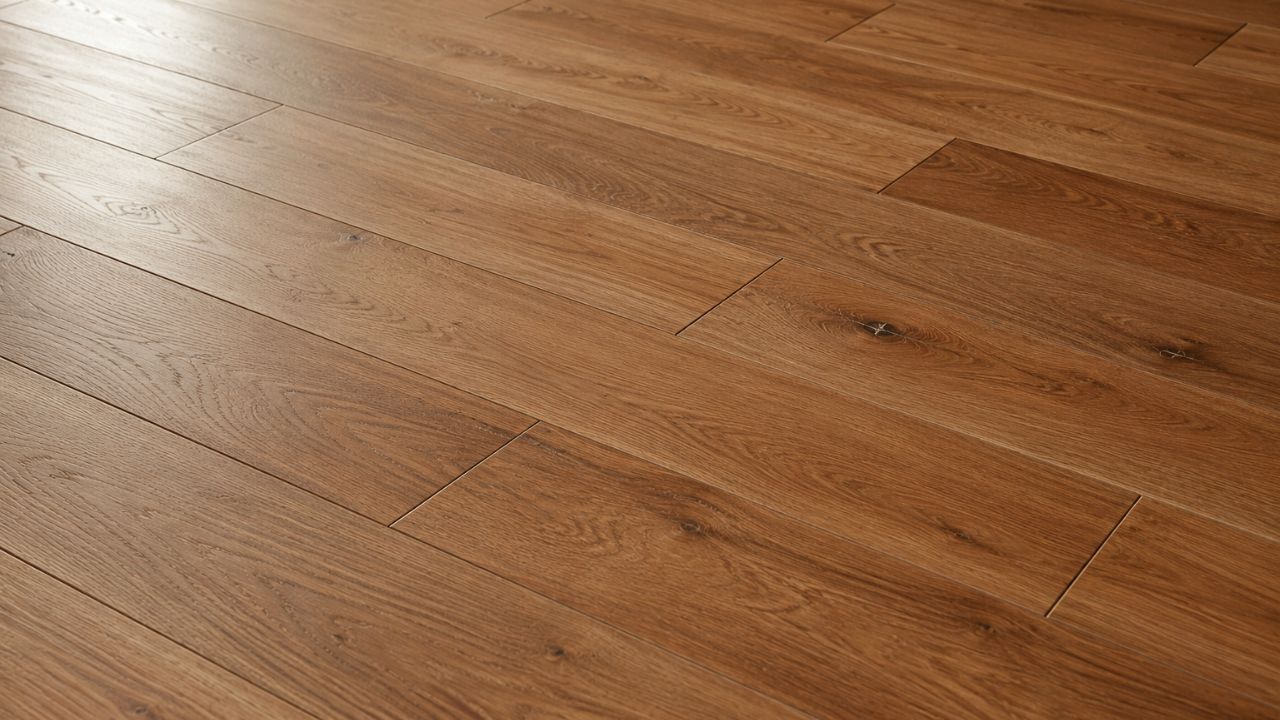
Engineered wood flooring is a popular alternative to solid hardwood because it provides the appearance of real wood while offering greater dimensional stability and, in many cases, a lower overall cost. But how much is engineered wood flooring?
Engineered wood flooring typically costs $6 to $12 per square foot for materials, while the total cost with professional installation commonly ranges from about $7 to $20 per square foot. Premium engineered flooring, complex installation patterns, and extensive subfloor preparation can push the price above this range.
For a 500-square-foot area, you can generally expect to spend approximately $3,500 to $10,000 for materials and professional installation, depending on the flooring quality and project requirements.
Engineered Wood Flooring Cost at a Glance
| Cost Factor | Typical Price |
|---|---|
| Budget engineered flooring | $2–$9/sq. ft. |
| Mid-range flooring | $6–$12/sq. ft. |
| High-end flooring | $9–$16+/sq. ft. |
| Materials only | $6–$12/sq. ft. |
| Installed flooring | $7–$20/sq. ft. |
| Premium installed flooring | $20–$25+/sq. ft. |
Prices vary by wood species, grade, veneer thickness, brand, plank size, installation method, and location.
What Is Engineered Wood Flooring?
Engineered wood flooring is made from a real hardwood veneer attached to a layered core. The core may consist of plywood, high-density fiberboard, or other wood-based materials.
Unlike laminate flooring, engineered wood has a real wood surface.
The layered construction gives engineered flooring greater dimensional stability than solid hardwood, which makes it suitable for a wider range of installation environments.
Engineered flooring is commonly available as:
- Oak
- Maple
- Hickory
- Ash
- Walnut
- Acacia
- Brazilian cherry
- Other domestic and exotic hardwood species
The species used for the top veneer can significantly affect the price.
How Much Does Engineered Wood Flooring Cost Per Square Foot?
The easiest way to estimate the cost is by square foot.
For many homeowners, engineered wood flooring costs approximately:
$6–$12 per square foot for materials
and approximately:
$7–$20 per square foot installed.
However, these numbers cover a broad range of products.
Budget Engineered Flooring
Budget engineered flooring can cost approximately $2–$9 per square foot for materials.
These products generally have thinner veneers and fewer core layers.
They can be suitable for lower-traffic areas or homeowners who want the appearance of real wood while keeping material costs down.
Mid-Range Engineered Flooring
Mid-range products typically cost around $6–$12 per square foot.
They generally offer a better balance between appearance, durability, veneer thickness, and price.
For many residential projects, mid-range engineered flooring provides the best value.
High-End Engineered Flooring
Premium engineered flooring can cost approximately $9–$16 or more per square foot for materials.
Some specialty products can exceed $20 per square foot, particularly when they use premium wood species, thick veneers, extra-wide planks, specialty finishes, or custom designs.
How Much Does Engineered Wood Flooring Cost Installed?
When installation is included, engineered wood flooring generally costs approximately $7–$20 per square foot.
For a typical project, the total price includes:
- Flooring material
- Underlayment or adhesive
- Installation labor
- Basic preparation
- Transitions
- Finishing or related installation materials
However, not every contractor includes all of these items in the initial quote.
For example, removing an existing floor or repairing an uneven subfloor may be charged separately.
Current cost guides put the average complete engineered hardwood installation around $4,750, with many projects falling between $2,000 and $7,000.
Engineered Wood Flooring Cost by Room Size
The larger the area, the higher your total flooring cost.
Using a $7–$20 per-square-foot installed range:
| Floor Area | Estimated Installed Cost |
|---|---|
| 100 sq. ft. | $700–$2,000 |
| 200 sq. ft. | $1,400–$4,000 |
| 300 sq. ft. | $2,100–$6,000 |
| 500 sq. ft. | $3,500–$10,000 |
| 750 sq. ft. | $5,250–$15,000 |
| 1,000 sq. ft. | $7,000–$20,000 |
| 1,500 sq. ft. | $10,500–$30,000 |
| 2,000 sq. ft. | $14,000–$40,000 |
These are planning estimates based on current installed cost ranges. Your actual price may be higher or lower depending on the flooring selected, labor rates, and preparation work.
How Much Does 500 Square Feet of Engineered Wood Flooring Cost?
For 500 square feet, engineered wood flooring typically costs around $3,500 to $10,000 installed.
A basic project using affordable flooring and a simple installation method may be near the lower end.
A premium product, complicated layout, or significant subfloor preparation can push the cost toward the upper end.
One current 2026 cost guide estimates a 500-square-foot engineered hardwood installation at approximately $3,500 to $10,000.
How Much Does 1,000 Square Feet of Engineered Wood Flooring Cost?
For 1,000 square feet, you can expect an approximate installed cost of $7,000 to $20,000.
A mid-range project may fall around $10,000–$14,000, while premium flooring or complicated installation can cost considerably more.
The size of the project isn’t the only factor. The type of wood, flooring grade, plank thickness, installation method, and condition of the subfloor can all affect the final price.
Engineered Wood Flooring Cost by Quality
The quality of engineered flooring has a major effect on its price.
Basic Engineered Wood
Basic engineered flooring typically costs around $2–$9 per square foot for materials.
These floors generally have thinner veneers and fewer core layers.
They are suitable when keeping the initial cost low is the main priority.
Mid-Range Engineered Wood
Mid-range products generally cost around $6–$12 per square foot.
They often provide a good balance between price, durability, appearance, and stability.
For most residential applications, this is a popular price category.
High-End Engineered Wood
High-end engineered flooring can cost approximately $9–$16+ per square foot.
Premium products may feature:
- Thicker hardwood veneers
- More core layers
- Wider planks
- Longer boards
- Higher-quality finishes
- Premium domestic species
- Exotic hardwood species
- Specialty surface treatments
Some premium engineered flooring can cost more than $20 per square foot.
Engineered Wood Flooring Cost by Wood Species
The wood species used for the top veneer can affect the price.
| Wood Species | Approximate Material Cost |
|---|---|
| Heart pine | $3–$5/sq. ft. |
| Hard maple | $5–$8/sq. ft. |
| White ash | $6–$8/sq. ft. |
| Acacia | $5–$10/sq. ft. |
| Brazilian koa | $7–$15/sq. ft. |
| Brazilian cherry | $8–$16/sq. ft. |
These are current example material ranges, and actual prices vary by product, grade, brand, finish, and retailer.
Oak Engineered Flooring
Oak is one of the most popular choices for engineered flooring.
It offers a combination of attractive grain, durability, availability, and relatively broad pricing.
White oak and red oak engineered flooring are available across budget, mid-range, and premium price categories.
Maple Engineered Flooring
Maple has a lighter appearance and relatively subtle grain.
Engineered maple typically falls into the mid-range price category, although premium grades and specialty finishes can cost more.
Hickory Engineered Flooring
Hickory is known for its hardness and distinctive color variation.
It can be a good choice for high-traffic areas, but premium hickory flooring can cost more than standard oak products.
Exotic Hardwood Engineered Flooring
Exotic species such as Brazilian cherry and Brazilian koa can cost more than many domestic species.
For example, current cost data places engineered Brazilian cherry around $8–$16 per square foot for materials, while Brazilian koa can cost around $7–$15 per square foot.
What Factors Affect Engineered Wood Flooring Cost?
Several factors determine how much you’ll actually pay.
1. Wood Species
The species used for the hardwood veneer can significantly change the price.
Common species such as oak and maple are often more affordable than specialty or exotic woods.
2. Veneer Thickness
The thickness of the real hardwood veneer is one of the most important quality differences.
A thicker veneer generally costs more but can provide more opportunities for refinishing, depending on the product and manufacturer.
3. Core Construction
Engineered flooring can contain different numbers of layers.
Budget products may use fewer layers, while higher-end products often use thicker, multi-layer cores.
4. Plank Width
Wide-plank engineered flooring generally costs more than standard-width flooring.
Extra-wide and extra-long boards are particularly common in premium flooring collections.
5. Finish
Factory-finished flooring can cost more than basic unfinished products, but it can reduce the finishing work required after installation.
6. Installation Method
Engineered flooring can commonly be installed using:
- Floating installation
- Glue-down installation
- Nail-down installation
- Staple-down installation
Floating installation can be less labor-intensive for suitable products, while glue-down or nail-down installation may require more preparation and labor.
7. Floor Pattern
A simple straight-plank installation is generally less expensive than decorative patterns.
Herringbone, chevron, parquet, and other complex patterns require additional cutting and installation time.
8. Subfloor Condition
A damaged or uneven subfloor can significantly increase the cost.
You may need:
- Leveling
- Repairs
- Moisture mitigation
- Patching
- Replacement
- Additional underlayment
This is one reason a low advertised installation price may not represent the final project cost.
Engineered Wood Flooring Installation Cost
Professional installation can add approximately $3–$10 per square foot depending on the project and installation method.
Floating Installation
Floating installation can be one of the simpler installation methods.
The planks connect to each other rather than being permanently attached to the subfloor.
This can reduce labor for suitable products.
Glue-Down Installation
Glue-down flooring is attached directly to the subfloor with adhesive.
It can be suitable for concrete slabs and certain other subfloors but requires careful preparation.
Nail-Down Installation
Nail-down installation mechanically attaches the flooring to a suitable wood subfloor.
It can provide a traditional installation method but generally requires more labor and appropriate subfloor conditions.
Additional Costs of Engineered Wood Flooring
The flooring and basic installation aren’t always the entire project cost.
Removing Existing Flooring
If you already have carpet, tile, vinyl, or old hardwood, removing it can add to your budget.
Some current estimates place flooring removal around $1–$3 per square foot, although the actual cost depends heavily on the material being removed.
Subfloor Repair
Subfloor damage, unevenness, or moisture problems can require additional work.
Ask your contractor to inspect the subfloor before finalizing the project price.
Underlayment
Floating engineered flooring may require a suitable underlayment.
The cost depends on the type of underlayment and its moisture, sound, or cushioning properties.
Adhesive
Glue-down installations require flooring adhesive.
The amount required depends on the flooring and installation area.
Trim and Baseboards
You may need new baseboards, shoe molding, quarter-round, or transition strips after installing the flooring.
Stairs
Installing engineered flooring on stairs requires additional labor and materials.
Stairs should generally be quoted separately from the main flooring area.
Engineered Wood vs. Solid Hardwood Cost
Engineered wood flooring is often less expensive than solid hardwood, although there is considerable overlap between the price ranges.
Engineered flooring also has advantages when installing over certain subfloors or in environments with changing humidity.
| Feature | Engineered Wood | Solid Hardwood |
|---|---|---|
| Typical installed cost | $7–$20/sq. ft. | Often higher |
| Construction | Hardwood veneer + core | Solid wood |
| Stability | High | Lower |
| Installation options | Floating, glue, nail/staple | Usually nail/staple or glue |
| Refinishing | Depends on veneer thickness | Usually multiple times |
| Moisture stability | Better | Lower |
| Appearance | Real hardwood surface | Solid hardwood throughout |
Engineered wood isn’t simply a cheaper imitation of solid hardwood. It is real hardwood flooring with a different construction.
Is Engineered Wood Flooring Worth the Cost?
For many homeowners, engineered wood flooring can be worth the cost.
It provides the appearance of real hardwood while offering greater dimensional stability than solid wood.
It can also be installed in locations where solid hardwood may be more challenging to use, depending on the product and manufacturer’s installation requirements.
However, the cheapest engineered flooring isn’t necessarily the best value.
A very thin veneer may have limited refinishing potential, while a higher-quality product with a thicker veneer can provide greater long-term value.
When comparing products, look beyond the price per square foot and consider:
- Veneer thickness
- Core construction
- Finish quality
- Warranty
- Installation method
- Manufacturer reputation
- Expected lifespan
- Refinishing potential
How to Save Money on Engineered Wood Flooring
You don’t necessarily need to choose the cheapest flooring to keep your project affordable.
Compare Several Brands
Prices can vary significantly between manufacturers and retailers.
Choose a Domestic Wood Species
Oak, maple, ash, and other common domestic species are often less expensive than exotic hardwoods.
Use a Simple Installation Pattern
Straight-plank installation is generally less labor-intensive than herringbone or chevron.
Compare Installation Quotes
Get multiple quotes and make sure each contractor includes the same services.
Buy During Sales
Flooring retailers may offer clearance products, seasonal promotions, or discounts on discontinued styles.
Don’t Overpay for Thickness You Don’t Need
A thicker engineered floor can provide advantages, but the most expensive product isn’t necessarily necessary for every room.
Choose a product based on traffic levels, subfloor conditions, expected lifespan, and refinishing requirements.
How Much Does Engineered Wood Flooring Cost Compared With Laminate?
Engineered wood usually costs more than laminate because engineered flooring contains a real hardwood veneer.
Laminate flooring uses a decorative image layer rather than a real hardwood surface.
If your priority is the lowest upfront cost, laminate may be more affordable.
If you want genuine hardwood on the surface and a more natural appearance, engineered wood is generally the better choice.
Final Answer: How Much Is Engineered Wood Flooring?
So, how much is engineered wood flooring?
Engineered wood flooring typically costs $6 to $12 per square foot for materials, while a professionally installed floor commonly costs around $7 to $20 per square foot. Premium flooring, complex patterns, exotic species, and extensive subfloor preparation can push the price above $20 per square foot.
For a 500-square-foot project, a reasonable planning budget is approximately $3,500 to $10,000 installed. For 1,000 square feet, expect roughly $7,000 to $20,000, although actual costs can vary considerably by product and location.
The biggest factors affecting the price are the wood species, veneer thickness, flooring grade, plank size, installation method, labor rates, and condition of the subfloor.
If you’re comparing engineered wood flooring prices, don’t look only at the material cost. Ask for a complete installed quote that includes flooring, labor, underlayment or adhesive, old-floor removal, subfloor preparation, trim, transitions, and cleanup.
FAQs
1. How much does engineered wood flooring cost per square foot?
Engineered wood flooring typically costs $6–$12 per square foot for materials and approximately $7–$20 per square foot installed. Premium products can cost more.
2. How much does 500 square feet of engineered hardwood cost?
Installing 500 square feet of engineered hardwood generally costs about $3,500–$10,000, including materials and professional installation.
3. Is engineered wood flooring cheaper than solid hardwood?
Generally, yes. Engineered wood often costs less than comparable solid hardwood, although premium engineered products can overlap with or exceed the price of some solid hardwood options.
4. Is engineered wood flooring worth the money?
Yes, for many homeowners. Engineered flooring provides a genuine hardwood surface, good dimensional stability, and several installation options. The best value usually comes from choosing a quality product with an appropriate veneer thickness rather than simply buying the cheapest option.
5. What is the cheapest engineered wood flooring?
Budget engineered flooring can cost around $2–$9 per square foot for materials, depending on the product. Lower-cost options generally use thinner hardwood veneers and simpler core construction.
6. What is the most expensive engineered wood flooring?
Premium engineered flooring can cost $16–$20+ per square foot, with specialty and custom products potentially exceeding $25 or even $30 per square foot. Exotic species, wide planks, thick veneers, designer finishes, and custom patterns can all increase the price.
7. Does engineered hardwood increase home value?
Quality hardwood flooring can improve a home’s appearance and appeal to buyers, but the effect on resale value depends on the local housing market, flooring quality, installation quality, and overall condition of the property.
8. Can engineered wood flooring be refinished?
Some engineered floors can be sanded and refinished, but it depends primarily on the thickness of the real hardwood veneer. Floors with very thin veneers may not be suitable for traditional refinishing, while thicker premium veneers may allow one or more refinishing cycles. Always check the manufacturer’s specifications before sanding.