
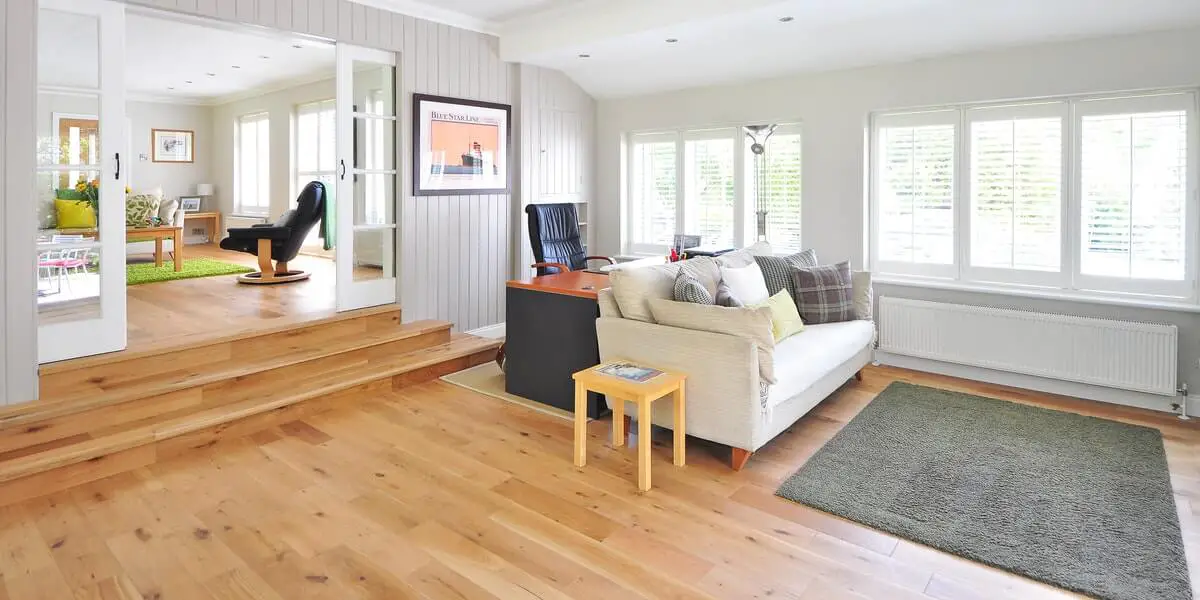
Engineered wood flooring is a popular alternative to solid hardwood flooring. It has a real hardwood surface layer combined with multiple layers of wood or wood-based material underneath. This layered construction gives engineered flooring greater dimensional stability than solid hardwood while maintaining the natural appearance of real wood.
Engineered wood flooring can be a good choice for areas where solid hardwood may be more affected by changes in temperature and humidity. However, it also has some disadvantages, including limited refinishing potential, moisture sensitivity, and differences in quality between products.
What Is Engineered Wood Flooring?
Engineered wood flooring consists of several layers. The top layer is made from real hardwood, while the core is usually made from multiple layers of plywood, wood veneer, or other engineered wood materials.
The layers are bonded together with adhesive, with the grain directions of the core layers typically arranged to improve stability. This construction helps reduce the expansion and contraction that can occur with changes in humidity compared with solid hardwood flooring.
Engineered wood flooring is available in many wood species, colors, textures, plank widths, and finishes. It provides the appearance of traditional hardwood while offering more flexibility in installation.
How Is Engineered Wood Flooring Made?
Engineered wood flooring generally consists of three main components:
- Top or wear layer
- Core layers
- Back layer
The exact construction varies by manufacturer and product.
Top or Wear Layer
The top layer is made from genuine hardwood veneer. This is the visible part of the floor and provides the natural grain, color, and appearance of the selected wood species.
Common species include:
- Oak
- Maple
- Hickory
- Walnut
- Cherry
- Ash
The thickness of this layer is important because it affects how many times the floor can potentially be sanded or refinished.
Core Layers
The core consists of multiple layers of plywood, wood veneer, or another engineered wood material.
These layers are typically arranged in different grain directions and bonded together under pressure. This cross-layer construction improves dimensional stability and helps the floor better handle normal changes in humidity.
Back Layer
The bottom layer helps balance the flooring plank and provides additional structural support.
The construction and materials used for the back layer vary depending on the manufacturer and flooring product.
Engineered Wood Flooring Advantages and Disadvantages
Like every flooring material, engineered wood flooring has both advantages and disadvantages. Understanding both sides can help you decide whether it is suitable for your home.
Advantages of Engineered Wood Flooring
1. Natural Appearance
One of the biggest advantages of engineered wood flooring is its appearance.
The visible top layer is genuine hardwood, so engineered flooring can provide the natural grain, color, and character associated with solid hardwood.
It is available in many species, stains, textures, and finishes, making it easy to find an option that matches different interior styles.
2. Better Dimensional Stability
Engineered wood flooring is generally more dimensionally stable than solid hardwood because of its layered construction.
Solid wood naturally expands and contracts as humidity changes. The cross-layer construction of engineered flooring helps reduce this movement, making it suitable for more locations where solid hardwood may be more difficult to install.
3. Flexible Installation Options
Depending on the specific product, engineered wood flooring can be installed using several methods, including:
- Nail-down
- Staple-down
- Glue-down
- Floating installation
This flexibility can make engineered flooring suitable for different subfloors and installation conditions. Always follow the manufacturer’s installation instructions because not every product supports every installation method.
4. Suitable for Concrete Subfloors
Engineered wood flooring is often a better choice than solid hardwood when installing over concrete.
Its greater dimensional stability makes it suitable for many below-grade and concrete-subfloor installations when the product and installation system are appropriate. A moisture-control system may also be required.
5. Can Be More Affordable Than Solid Hardwood
Engineered wood flooring can be more affordable than some solid hardwood options because it uses a thinner layer of valuable hardwood over an engineered core.
However, prices vary significantly depending on the wood species, wear-layer thickness, construction, finish, plank size, and manufacturer.
6. Wide Range of Styles
Engineered flooring is available in a wide range of:
- Wood species
- Colors
- Finishes
- Textures
- Plank widths
- Plank lengths
- Surface treatments
This makes it easier to match the flooring to your interior design.
7. Good Long-Term Durability
High-quality engineered flooring can provide many years of service when properly installed and maintained.
The durability of the finished floor depends on factors such as the wood species, finish, core construction, wear-layer thickness, installation, and maintenance.
Some engineered floors can also be refinished, which can extend their useful life.
8. Good Performance in Changing Humidity
Engineered wood flooring generally handles normal changes in indoor humidity better than solid hardwood.
The layered construction reduces the amount of expansion and contraction caused by humidity changes. However, engineered wood is still a wood-based product and should not be treated as completely waterproof.
Disadvantages of Engineered Wood Flooring
1. Limited Refinishing
One of the main disadvantages of engineered wood flooring is its limited refinishing potential.
Unlike solid hardwood, which can often be sanded and refinished multiple times, engineered flooring has a finite hardwood wear layer.
Some products with a sufficiently thick wear layer can be sanded and refinished, while thinner products may only be suitable for recoating or may not be suitable for sanding at all.
Always check the manufacturer’s specifications before refinishing.
2. Quality Varies by Product
Not all engineered wood flooring is made to the same standard.
Some products have a thick hardwood wear layer and a high-quality multi-ply core, while lower-cost products may use thinner wear layers or different core materials.
When buying engineered flooring, check:
- Wear-layer thickness
- Core construction
- Overall thickness
- Finish quality
- Manufacturer’s warranty
- Installation requirements
3. Moisture Can Still Cause Damage
Engineered wood is more dimensionally stable than solid hardwood, but it is not automatically waterproof.
Excessive moisture can still cause swelling, warping, staining, or damage to the core and finish.
Some engineered flooring products are specifically designed with enhanced water resistance, but the manufacturer’s moisture rating should always be checked.
4. Can Fade or Change Color
Like other natural wood flooring, engineered wood can change color when exposed to sunlight and UV radiation over time.
The amount of color change depends on the wood species, finish, stain, and exposure.
Using curtains, blinds, and rugs can help reduce uneven exposure. Moving rugs and furniture periodically can also help the floor age more evenly.
5. Can Be Scratched and Dented
Engineered wood flooring can be scratched or dented by furniture, dirt, pet claws, high heels, and other hard objects.
The hardness of the top wood species and the quality of the finish affect how well the floor handles everyday wear.
Using furniture pads and keeping the floor free of abrasive dirt can help prevent damage.
6. More Difficult to Repair Than Individual Solid Boards
Minor surface scratches can often be repaired or concealed, but serious damage to an engineered plank may require replacing the individual board.
The repair options depend on the flooring construction and installation method.
7. Not Ideal for Continuously Wet Areas
Engineered wood flooring should not be treated as a waterproof flooring material simply because it is more moisture-resistant than solid hardwood.
Bathrooms, laundry rooms, and other areas with frequent standing water require products specifically rated for those conditions. In continuously wet environments, tile or a waterproof flooring product may be more appropriate.
Engineered Wood Flooring vs. Solid Hardwood
The biggest difference between engineered and solid hardwood is their construction.
| Feature | Engineered Wood | Solid Hardwood |
|---|---|---|
| Construction | Real wood wear layer over engineered core | Solid wood throughout |
| Appearance | Natural hardwood | Natural hardwood |
| Dimensional stability | Higher | Lower |
| Humidity resistance | Better | More sensitive |
| Refinishing | Limited by wear-layer thickness | Can usually be refinished multiple times |
| Installation | Nail, staple, glue, or floating depending on product | Usually nail/staple, depending on product |
| Concrete subfloor | Often suitable | Generally more difficult |
| Below-grade installation | Often suitable with proper installation | Generally not recommended |
| Water resistance | Better than solid wood, depending on product | Lower |
| Maintenance | Relatively easy | Relatively easy |
Engineered flooring is generally a better choice when stability and installation flexibility are priorities. Solid hardwood may be preferable if you want the maximum number of future refinishing options.
Is Engineered Wood Flooring Waterproof?
No, standard engineered wood flooring is not completely waterproof.
Its layered construction gives it better dimensional stability and moisture tolerance than solid hardwood, but water can still damage wood-based flooring.
Some manufacturers offer engineered products with enhanced water-resistant construction and protective finishes. These products can handle everyday spills better, but you should still follow the manufacturer’s installation and maintenance instructions.
If an area is continuously exposed to water, a truly waterproof flooring material may be a better option.
Can Engineered Wood Flooring Be Refinished?
Some engineered wood flooring can be refinished, but not all products can be refinished.
The most important factor is the thickness of the real-wood wear layer.
A thicker wear layer provides more material for sanding, while a thin veneer may not allow traditional sanding. Some engineered floors may only be suitable for recoating rather than full sanding and refinishing.
Before refinishing, check the manufacturer’s recommendations or consult a professional flooring contractor.
How Long Does Engineered Wood Flooring Last?
The lifespan of engineered wood flooring depends on the product quality, wear-layer thickness, wood species, installation, traffic, and maintenance.
A high-quality engineered floor with a substantial wear layer can last for many years and may be refinished when appropriate.
Lower-quality flooring with a very thin wear layer may have fewer repair and refinishing options.
Therefore, the quality of the construction matters more than simply choosing engineered or solid wood.
Is Engineered Wood Flooring Good for Pets?
Engineered wood flooring can work well in homes with pets, but it can still be scratched or dented.
For homes with dogs or cats, consider:
- Harder wood species
- Durable factory finishes
- Textured or wire-brushed surfaces that can disguise minor scratches
- Protective rugs in high-traffic areas
- Furniture pads
- Regular nail trimming
No real wood flooring is completely scratch-proof.
How to Care for Engineered Wood Flooring

Proper maintenance can help engineered wood flooring retain its appearance and finish for many years.
Do’s and Don’ts
| Do | Don’t |
|---|---|
| Sweep or vacuum regularly using a suitable soft attachment. | Do not allow standing water to remain on the floor. |
| Wipe spills as soon as possible. | Do not use excessive water when cleaning. |
| Use manufacturer-recommended hardwood floor cleaners. | Do not use abrasive cleaners or steel wool. |
| Place felt pads under furniture legs. | Do not drag heavy furniture across the floor. |
| Keep pet nails trimmed. | Do not walk on the floor with damaged or spiked heels. |
| Use rugs in high-traffic areas when appropriate. | Do not use wax or polish unless the manufacturer specifically recommends it. |
| Maintain a stable indoor humidity level. | Do not use a steam mop unless the flooring manufacturer specifically allows it. |
Many manufacturers recommend maintaining indoor relative humidity within a controlled range to reduce excessive movement in wood flooring. Always follow the specific flooring manufacturer’s recommendations.
How to Choose Good Engineered Wood Flooring
If you are planning to buy engineered wood flooring, don’t look only at the appearance or price.
Consider these factors:
1. Wear-Layer Thickness
A thicker real-wood wear layer generally provides greater refinishing potential.
2. Core Construction
A well-constructed multi-ply core can provide better dimensional stability.
3. Wood Species
Choose a species according to the amount of traffic and the appearance you want.
Harder species can be useful in high-traffic areas, although the finish also plays an important role in scratch resistance.
4. Finish
Factory-applied finishes can provide protection against everyday wear, stains, and scratches.
5. Installation Method
Make sure the flooring is compatible with your subfloor and preferred installation method.
6. Moisture Rating
If the flooring will be installed in a moisture-prone area, check whether the product has a specific water-resistance rating.
7. Warranty
Review the manufacturer’s warranty to understand what is covered and what maintenance or installation conditions are required.
Final Thoughts
Engineered wood flooring combines a real hardwood surface with a layered engineered core, giving it a natural appearance with greater dimensional stability than solid hardwood.
Its main advantages include natural beauty, installation flexibility, better stability, compatibility with many concrete subfloors, and a wide range of styles.
Its disadvantages include limited refinishing potential, moisture sensitivity, possible scratches and dents, fading, and differences in quality between products.
Overall, engineered wood flooring can be an excellent choice when you want the appearance of hardwood with greater stability and installation flexibility. However, choosing a quality product with an appropriate wear layer and following the manufacturer’s installation and maintenance instructions are essential for long-term performance.
Frequently Asked Questions
What are the main advantages of engineered wood flooring?
The main advantages are its natural hardwood appearance, dimensional stability, installation flexibility, wide range of styles, and better tolerance of normal humidity changes compared with solid hardwood.
What is the biggest disadvantage of engineered wood flooring?
The biggest disadvantage is its limited refinishing potential. The number of times an engineered floor can be sanded depends on the thickness of its real-wood wear layer.
Is engineered wood better than solid hardwood?
Neither is universally better. Engineered wood offers greater dimensional stability and installation flexibility, while solid hardwood generally offers greater refinishing potential.
Can engineered wood flooring get wet?
Engineered wood can tolerate normal household moisture better than solid hardwood, but standard engineered wood flooring is not waterproof. Standing water and excessive moisture can still cause damage.
Is engineered wood flooring good for kitchens?
It can be suitable for kitchens when the specific product is designed for the environment and installed correctly. Water-resistant engineered products provide additional protection, but spills should still be cleaned promptly.
Can engineered wood flooring be installed over concrete?
Yes. Engineered wood is commonly used over concrete because its layered construction provides greater dimensional stability. The specific product and installation system must be compatible with the concrete subfloor and moisture conditions.
How many times can engineered wood flooring be refinished?
There is no single number for every engineered floor. It depends primarily on the thickness of the real-wood wear layer. Some products can be refinished more than once, while very thin products may not be suitable for sanding at all.
Does engineered wood flooring scratch easily?
It can scratch and dent, just like solid hardwood. The wood species, finish, surface texture, and maintenance routine all affect how well it handles everyday wear.
How do you clean engineered wood flooring?
Sweep or vacuum regularly and use a manufacturer’s recommended hardwood-floor cleaner when necessary. Avoid excessive water, abrasive cleaners, and steam mops unless the flooring manufacturer specifically approves them.
Is engineered wood flooring worth it?
For many homeowners, yes. It provides the appearance of real hardwood with greater dimensional stability and flexible installation options. The best value comes from choosing a quality product with a suitable wear layer and core construction.
Comments are closed.