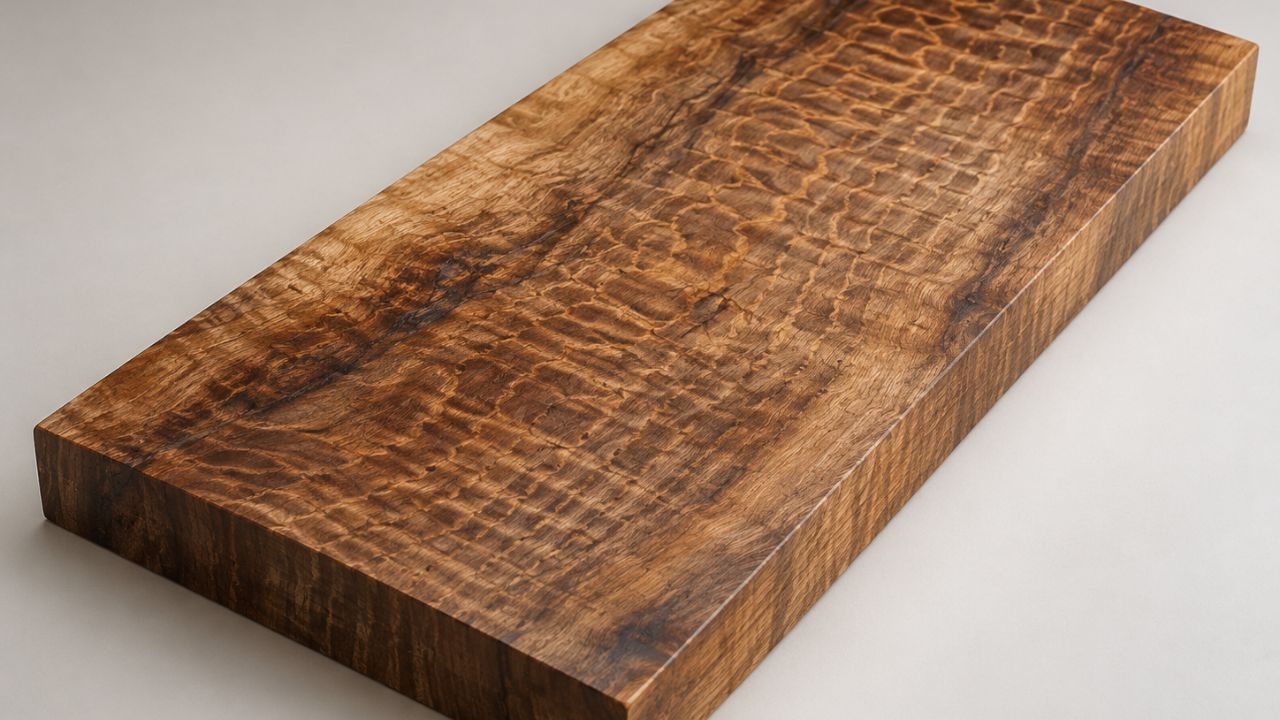
Crocodile wood is a tropical hardwood known for its pale appearance, workable grain, and use in decorative objects and traditional woodcraft. In the Balinese timber and handicraft trade, the name commonly refers to Zanthoxylum rhetsa, also called panggal buaya.
Despite its unusual name, crocodile wood has nothing to do with the animal itself. The name refers to the tree’s rough, thorny bark, which resembles crocodile skin.
Before choosing it for a project, it is worth understanding its properties, limitations, and sourcing. Crocodile wood is a regional trade name, so confirming the species is an important first step.
What Is Crocodile Wood?
Crocodile wood commonly comes from Zanthoxylum rhetsa, a flowering tree in the Rutaceae family, which also includes citrus trees.
Its native range extends from tropical Asia to northern Australia, according to Kew’s Plants of the World Online. It is associated with traditional woodworking in Indonesia, particularly Bali.
The wood is usually pale, with creamy, yellowish, or light-brown tones. Its relatively understated appearance makes it useful for decorative items where the form and surface finish are the main attraction.
Because common names can refer to different woods in different markets, ask the supplier to confirm the botanical name rather than relying on “crocodile wood” alone.
Crocodile Wood Properties
| Property | General Description |
|---|---|
| Common trade name | Crocodile wood |
| Commonly associated species | Zanthoxylum rhetsa |
| Regional name | Panggal buaya |
| Botanical family | Rutaceae |
| Wood classification | Hardwood |
| Color | Pale cream, yellowish tones, or pale brown |
| Grain | Generally straight |
| Texture | Relatively fine and even |
| Density | Variable; individual pieces can differ noticeably |
| Workability | Generally workable with hand and machine tools |
| Moisture behavior | Can shrink and move as moisture content changes |
| Typical applications | Decorative objects, small furniture components, handles, sheaths, and traditional woodcraft |
These descriptions apply to the species commonly sold under this name. They should not be treated as a specification for every product labeled crocodile wood.
Appearance and Grain
Crocodile wood’s pale color is one of its most recognizable features. Some pieces have a creamy appearance, while others show stronger yellow or light-brown tones.
The grain is generally straight, with a relatively fine texture. Color and grain still vary between boards, so matching several components may require careful selection.
A clear finish can deepen the color or add an amber tone. If preserving the pale appearance is important, test the finish on an offcut before applying it to the entire project.
Common Uses of Crocodile Wood
1. Decorative Objects
Crocodile wood is used for ornaments, display pieces, and other decorative wooden articles. Its light appearance allows shape and surface detail to stand out.
It can suit both naturally finished objects and pieces that receive a painted finish.
2. Furniture and Small Wooden Articles
The wood has documented use in furniture and small wooden products. Depending on the available lumber, it may be considered for decorative components, boxes, and similar interior projects.
For larger furniture, proper drying, sound joints, and suitable board selection are important. A decorative trade name does not establish load-bearing performance.
3. Traditional Handles and Sheaths
Traditional applications include tool handles and keris sheaths. A keris, also spelled kris, is a traditional dagger associated with Indonesia and neighboring regions.
The International Tropical Timber Organization’s species guide lists furniture, tool handles, keris sheaths, and light construction among the wood’s uses.
These historical uses do not mean that every blank is appropriate for an impact-loaded handle. Grain direction and defects must be considered.
4. Sculptures and Traditional Woodcraft
Crocodile wood is also associated with sculptures and decorative woodcraft. For a detailed discussion of tools, blank selection, and technique, read our separate guide: Is Crocodile Wood Good for Carving?
5. Light Construction
The species has been used in light construction, but it should not be selected for structural work solely because of that history.
Load-bearing applications require suitable grading, design information, and compliance with local building requirements.
Advantages of Crocodile Wood
Attractive Pale Color
Its creamy to pale-brown appearance is useful when a project calls for a light natural finish. It can complement interiors where darker woods would create a stronger visual contrast.
Generally Good Workability
Crocodile wood can be worked with ordinary woodworking tools. Suitable material can be cut, shaped, and finished without requiring specialized equipment.
Sharp tools and attention to grain direction still matter, especially around defects or changing grain.
Relatively Fine Texture
Its relatively even texture can produce an appealing finished surface. This is useful for small wooden objects that are viewed or handled closely.
Versatile Decorative Applications
The wood has applications beyond one particular craft. Small furniture parts, ornaments, boxes, and traditional wooden articles offer different ways to use suitable stock.
Finishing Flexibility
Depending on the desired appearance, projects can receive clear coatings, stains, or paint.
Always test compatibility and color first. A successful finish depends on preparation and the product used, rather than the wood’s name alone.
Disadvantages of Crocodile Wood
Inconsistent Trade Names
“Crocodile wood” is not a sufficiently precise purchasing specification. Different suppliers may use common names differently.
Confirm the botanical species, origin, and intended use before ordering, particularly when buying remotely.
Variable Density and Performance
Pieces can differ in weight, cutting resistance, and other properties. Describing all crocodile wood as extremely soft, very dense, or uniformly strong is misleading.
For a project requiring predictable performance, ask for information about the actual stock.
Moisture Movement
Crocodile wood is not immune to shrinking, warping, or cracking. Poorly dried material can change shape after a project is completed.
Choose lumber dried for its intended use and allow it to acclimate before assembly.
Limited Availability in Some Markets
The wood may be easier to obtain near established production and craft centers than in overseas lumber markets.
Shipping costs, limited blank sizes, and inconsistent stock can make it less economical than locally available alternatives.
Outdoor Suitability Requires Caution
Do not assume that crocodile wood is suitable for permanent outdoor exposure simply because it is a tropical hardwood.
For ordinary decorative products, indoor use is the more practical choice. Persistent dampness, trapped water, and repeated wetting and drying can shorten service life.
Sustainability Is Not Guaranteed
Neither the common name nor the fact that a product is handmade proves that the timber was responsibly sourced.
Ask where the wood came from and request evidence for any plantation-grown or certification claims.
Is Crocodile Wood a Hardwood?
Yes. Zanthoxylum rhetsa is botanically a hardwood because it comes from a flowering tree.
However, hardwood does not automatically mean extremely hard, heavy, or durable outdoors. Those characteristics must be assessed separately.
Avoid using an unverified hardness number when comparing crocodile wood with other species.
Is Crocodile Wood Waterproof?
No. Crocodile wood can absorb moisture and change dimensions as it gains or loses water.
A suitable finish can slow moisture uptake and make cleaning easier, but it does not make the wood completely waterproof.
Keep finished objects away from standing water, persistent dampness, and repeated soaking.
Is Crocodile Wood Expensive?
There is no single dependable price for crocodile wood across different markets.
Cost depends on the supplier, dimensions, drying, defects, shipping, and whether you are buying raw timber or a finished object. An elaborate handmade sculpture also includes labor and design costs, so its price does not indicate the price of the wood alone.
Compare usable dimensions and condition when evaluating quotations.
How to Care for Crocodile Wood Products
For indoor decorative pieces and furniture components:
- Dust with a soft cloth or brush.
- Wipe spills promptly without soaking the surface.
- Keep objects away from direct heat and persistent dampness.
- Limit strong sunlight if preserving the original color matters.
- Use cleaners and polishes only when compatible with the finish.
Unfinished wood does not automatically need oil or polish. Applying a product can permanently change its color, so check before treating it.
What to Check Before Buying
Confirm the species and ask whether the wood has been dried for its intended application. Inspect the piece for cracks, insect damage, knots, and distortion.
For multiple matching components, request photographs of the actual stock. For responsible sourcing, look for documented information rather than broad environmental claims.
Crocodile wood can be an appealing material for interior decorative work and traditional wooden products. Its suitability depends on the quality and condition of the piece, the demands of the project, and reliable identification.