
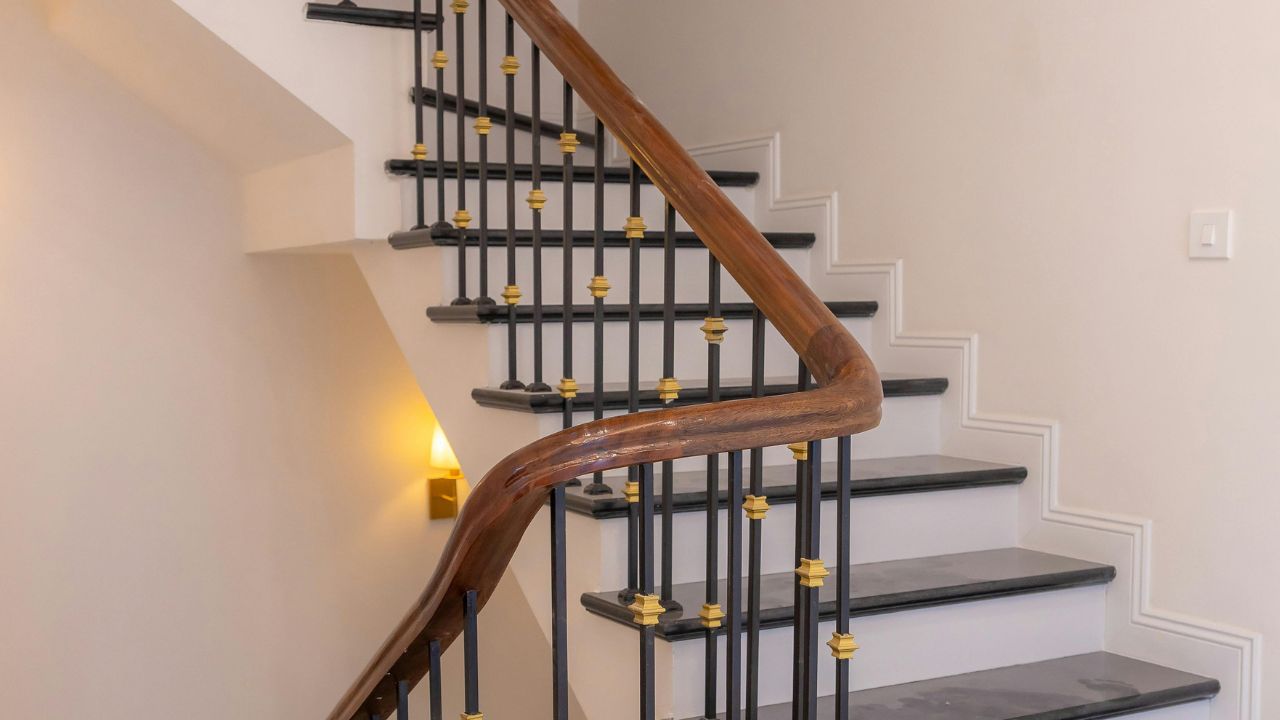
Wood hand railings collect more dirt than you might expect. Every trip up or down the stairs can leave behind skin oils, lotion, and fingerprints. Over time, this buildup attracts dust and can make the surface feel greasy or sticky.
To clean wood hand railings, remove loose dust, wipe the surface with a barely damp microfiber cloth and a cleaner suitable for the finish, then dry it immediately. Avoid soaking the wood, scrubbing with abrasive pads, or applying polish that leaves the railing slippery.
The right cleaning method depends mainly on the finish. A sealed wooden railing can usually tolerate gentle damp cleaning, while bare wood, worn finishes, and waxed surfaces need more careful treatment.
What You Need
Gather these supplies before you begin:
- Two or three clean microfiber cloths.
- Lukewarm water.
- A cleaner approved for your wood finish.
- Mild dishwashing liquid, if the finish manufacturer allows it.
- A soft brush for decorative grooves.
- A towel to catch accidental drips.
You usually do not need strong degreasers or specialized equipment. Start with the mildest method and only move to a stronger, compatible cleaner if necessary.
Check the Finish Before Cleaning
Before applying anything, inspect the railing for peeling, cracks, worn patches, or exposed wood. These areas can absorb moisture more readily than an intact finished surface.
| Railing surface | Cleaning approach |
|---|---|
| Sealed wood with an intact finish | Barely damp cloth; compatible wood cleaner when needed |
| Painted wood | Gentle cleaning with a product suitable for the paint |
| Oiled or waxed wood | Follow the finish manufacturer’s care instructions |
| Unfinished wood | Start with dry dusting; avoid routine wet cleaning |
| Peeling, sticky, or badly worn finish | Test carefully; the coating may need repair |
Do not assume that a shiny surface is waterproof. If you do not know which finish was used, start with dry cleaning and test any damp cleaning method underneath the rail.
How to Clean Wood Hand Railings Step by Step
1. Remove Loose Dust
Wipe the railing with a dry microfiber cloth. Clean the top, sides, and underside, paying attention to the areas around brackets and joints.
For decorative grooves, loosen dust gently with a soft brush, then collect it with the cloth.
Removing loose dirt first prevents it from spreading across the railing during damp cleaning.
2. Test Your Cleaning Method
Choose a small, inconspicuous section, such as the underside near a bracket.
Lightly wipe it with your chosen cleaner and dry it. Allow the spot to dry fully, then check for changes in color, sheen, or texture.
Stop if the coating becomes tacky, cloudy, or begins transferring onto the cloth. Brown residue may be dirt, but it can also be stain or deteriorating finish, so do not keep scrubbing without checking the surface.
3. Start with a Barely Damp Cloth
For light fingerprints and everyday dust, a microfiber cloth lightly dampened with water may be enough.
Wring it out thoroughly. It should feel damp without dripping when squeezed.
Wipe a short section of the railing, following the grain where practical. Avoid letting moisture collect around joints, brackets, or exposed end grain.
4. Use a Suitable Cleaner for Grime
If water alone does not remove the buildup, use a cleaner labeled for your railing’s finish. A product intended for finished wood furniture or trim is generally more relevant than a cleaner chosen simply because it says “wood” on the bottle.
For example, Minwax Wood Cabinet Cleaner lists furniture, doors, paneling, and other wood surfaces among its applications. Always check the label and test compatibility before using a product on your railing.
If the finish manufacturer permits mild dishwashing liquid, mix a few drops into a bowl of lukewarm water. Keep the solution weak rather than heavily foaming.
Dampen the cloth instead of spraying the railing directly. This gives you better control and helps prevent drips onto the stairs.
5. Wipe Away Residue
Work in manageable sections, turning the cloth frequently so you are not spreading dirt back onto the wood.
After using a soap solution, wipe the area with a separate cloth barely dampened with clean water. For a commercial cleaner, follow its instructions about whether a follow-up wipe is needed.
Avoid repeatedly soaking stubborn areas. Several gentle passes are preferable to leaving liquid sitting on the surface.
6. Dry the Railing Immediately
Use a clean, dry microfiber cloth to remove remaining moisture.
Check the underside and around fittings, where droplets are easy to miss. Wipe up any spills on the steps before using the staircase.
Once dry, the railing should feel clean and comfortable to grip. There is usually no reason to add furniture polish afterward.
How to Clean Sticky Wood Hand Railings
Sticky patches are often caused by a combination of hand oils, lotion, dirt, and leftover cleaning products. However, an aging or damaged finish can also become sticky.
Start with the cleaning method above. If the surface still feels greasy after drying, try another gentle pass with a compatible cleaner and a fresh cloth.
If the finish remains tacky, smears, or softens during cleaning, stop. More scrubbing may remove the coating rather than the dirt.
This distinction matters:
- Surface buildup: Often improves with careful cleaning.
- Cleaner residue: May improve after a light follow-up wipe, where the product instructions allow it.
- Deteriorating finish: May require repair or refinishing.
Avoid using rubbing alcohol, acetone, or strong degreasers as an experiment. These can affect finishes, and the damage may be more noticeable than the original sticky patch.
Cleaning Oiled or Waxed Wood Railings
Oiled and waxed surfaces may need different products from those used on varnished or painted wood.
Use the care instructions for the specific finish. For example, Osmo’s TopOil care guidance distinguishes between care during curing and cleaning after the finish has cured.
Do not apply a fresh coat of oil or wax simply because the railing looks dirty. Clean it first and assess its condition once dry. Excess maintenance product can leave residue and make a handrail unpleasant or slippery to hold.
Newly finished railings also need time to cure before routine cleaning. Follow the product’s curing instructions rather than assuming that “dry to the touch” means ready for washing.
What Should You Avoid When Cleaning Wood Railings?
Excess Water and Steam
Do not soak an indoor railing or use a steam cleaner. Moisture can enter damaged coatings and joints, while heat may affect the finish.
Abrasive Pads and Powders
Scouring pads, abrasive powders, and melamine cleaning sponges can change the sheen or wear through a coating. A soft cloth is a better starting point.
Vinegar as an All-Purpose Solution
A homemade vinegar mixture is not suitable for every wood finish. Unless the finish manufacturer recommends it, choose a compatible cleaner instead.
Strong Solvents and Household Degreasers
Products designed for ovens, bathrooms, or heavy grease may damage wood coatings. Their cleaning strength does not make them appropriate for handrails.
Oily Furniture Polish
A handrail needs to provide a reliable grip. Avoid products that leave an oily, waxy, or slippery film.
How Often Should You Clean Wood Hand Railings?
For a typical household, a weekly dusting or light wipe is a useful starting routine. Clean sooner when you notice fingerprints, greasy patches, or visible dirt.
A busy staircase may need attention more frequently, especially in homes with children or near a kitchen.
Deeper cleaning should depend on buildup rather than a fixed schedule. Frequent gentle cleaning helps prevent the need for aggressive scrubbing later.
Can You Use the Same Method on Outdoor Wood Railings?
Outdoor railings face different problems, including pollen, dirt, weathering, and biological growth.
Remove loose debris first, then use a cleaner suitable for the wood and its exterior finish. Follow the product’s instructions for dilution, contact time, and rinsing.
Avoid treating an indoor cleaning recipe as a complete solution for an outdoor railing. Weathered bare wood or growth on the surface may need a different treatment.
During cleaning, check for splinters, soft wood, loose fasteners, and movement in the railing. These require repair rather than additional cleaning.
Frequently Asked Questions
Can You Clean Wood Hand Railings with Dish Soap?
A weak solution of mild dish soap may be suitable for some intact finishes, provided the manufacturer allows it. Test first, use a barely damp cloth, remove residue, and dry immediately.
For unknown, waxed, or damaged finishes, check compatibility before using soap.
Why Is My Wood Railing Sticky After Cleaning?
Possible causes include leftover cleaner, excess polish, remaining grime, or a deteriorating coating. Let the surface dry fully before assessing it. If gentle cleaning makes the finish softer or causes it to smear, stop and have the coating assessed.
Can Disinfecting Wipes Be Used on Wooden Handrails?
Only use a disinfectant labeled as suitable for the finished surface, and follow its directions. Some products contain ingredients that can affect wood finishes.
Disinfection may also require the surface to remain wet for a specified time. If that conflicts with the finish’s care instructions, choose a compatible alternative rather than shortening the required contact time.
Should You Sand a Dirty Wood Railing?
Sanding is not a routine cleaning method. It removes finish and potentially wood, creating a repair or refinishing job.
Clean first. Consider sanding only when addressing damage or preparing the surface for a suitable new finish.
What Is the Best Way to Keep a Wood Handrail Clean?
Wipe away dirt before it builds up, use products compatible with the finish, and dry the railing promptly after damp cleaning. A clean handrail should feel smooth and secure to grip, without a layer of polish or cleaner residue.