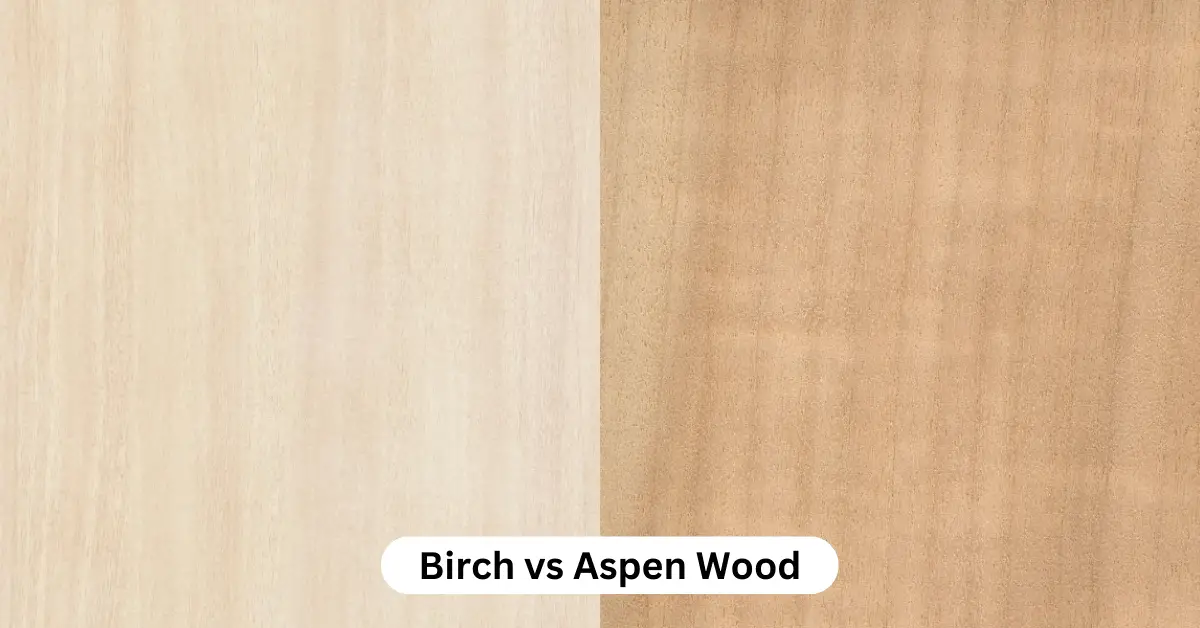
Birch and aspen are both light-colored hardwoods, but they differ in hardness, weight, and workability. While birch generally offers better wear resistance, aspen is lighter, softer, and easier to shape.
For furniture and flooring that must withstand regular wear, birch is usually the better choice. Aspen suits lightweight furniture components, interior trim, and craft projects.
Their properties vary by species. This article focuses mainly on commonly used North American birches and quaking aspen.
What Is Birch?
Birch belongs to the genus Betula in the family Betulaceae. Birch trees grow across cooler regions of the Northern Hemisphere, including North America, Europe, and Asia.
The wood typically has a fine texture and a relatively straight grain. Common commercial species include yellow birch, paper birch, and sweet birch. They differ in hardness, weight, and appearance, so identifying the species helps when comparing lumber.
Birch is widely used for furniture, cabinets, plywood, veneer, and flooring.
What Is Aspen?
Aspen is the common name for several deciduous tree species in the genus Populus, part of the willow family, Salicaceae.
Common examples include quaking aspen (Populus tremuloides), bigtooth aspen (Populus grandidentata), and European aspen (Populus tremula).
Aspen is a soft hardwood: botanically a hardwood, but relatively soft and lightweight. It is useful for products that do not require high surface hardness or heavy load-bearing capacity.
Birch vs Aspen: Comparison Table
| Characteristic | Birch | Aspen |
|---|---|---|
| Scientific name | Betula species | Populus species; quaking aspen is P. tremuloides |
| Wood type | Hardwood | Hardwood |
| Typical color | Nearly white sapwood; heartwood may be reddish brown | White to pale yellow or light brown |
| Grain and texture | Usually straight, with a fine texture | Usually straight, with a fine, even texture |
| Weight | Common commercial birches are heavier than aspen | Lightweight |
| Hardness | Generally harder and more dent-resistant | Softer and more easily dented |
| Workability | Generally good; figured grain needs care | Easy to cut, but may develop fuzzy surfaces |
| Outdoor suitability | Poor natural decay resistance | Poor natural decay resistance |
| Common uses | Furniture, cabinets, flooring, plywood, and veneer | Furniture parts, trim, packaging, pulp, and matchsticks |
Tree height and trunk diameter vary considerably with species and growing conditions, so they are not reliable measures of lumber quality.
Birch vs Aspen Wood Uses
Birch Wood Uses
Furniture and cabinets: Birch provides a pale, understated appearance and useful strength for indoor furniture. It is suitable for tables, cabinet components, doors, and other frequently handled items.
Plywood and veneer: Birch veneers are used in decorative and structural panel products. Check the panel’s core construction and grade; a birch face does not necessarily mean every layer is birch.
Flooring: Harder birch species can be used for wood flooring. Species selection and the finish both affect performance.
Small wooden objects: Birch is used for turnings, toys, handles, and other shaped components. It should not be described as universally soft or effortless to carve.
The American Hardwood Information Center describes yellow birch as a heavy, hard, strong wood with a range of furniture and interior applications.
Aspen Wood Uses
Furniture components: Aspen is useful for drawer sides, frames, and other components where low weight is beneficial. Its softness makes it less suitable for heavily used tabletops.
Interior trim and crafts: Its pale appearance works well for painted trim, picture frames, toys, and craft projects.
Packaging and utensils: Aspen is used for lightweight packaging and certain wooden utensils. For food-contact products, use clean material and finishes intended for that purpose.
Matchsticks and paper products: Aspen is used for match splints and pulp. Its use in matches does not mean the lumber is fire-resistant.
Aspen’s commercial uses also include veneer and engineered wood products.
Birch vs Aspen: Workability
Working With Birch
Birch generally machines, turns, sands, and finishes well. Sharp tools help prevent tear-out when working with irregular or figured grain.
Pre-drilling is useful when installing screws near edges or ends. Although birch can be stained, its pale color does not guarantee even stain absorption. Test your finishing process on an offcut first.
Working With Aspen
Aspen cuts easily, but its soft fibers can leave a fuzzy surface. Sharp cutting edges and careful sanding help produce a cleaner finish.
Choose fasteners and joints suited to the load rather than simply using larger nails. Its soft wood can be damaged by overtightened screws.
Contrary to the original claim, low density does not automatically mean greater shrinkage. Aspen generally has low-to-moderate shrinkage and good dimensional stability when properly dried. Aspen working properties.
Both woods should be dried and acclimated appropriately before use.
Birch vs Aspen: Rot Resistance
Neither birch nor aspen is a naturally durable choice for prolonged damp conditions or ground contact. Both are better suited to dry interior applications.
An exterior finish can slow moisture absorption, but it does not make either wood permanently waterproof or decay-proof. For exposed outdoor furniture, choose material specifically suited to that environment.
Also, distinguish wear resistance from decay resistance. Birch can resist everyday dents better than aspen without being naturally resistant to rot.
Color: Birch vs Aspen
Birch: The sapwood is usually nearly white, while the heartwood can be light reddish brown. Some boards contain noticeable contrasts between the two.
Aspen: The wood is generally white, pale yellow, or light brown, with less contrast between sapwood and heartwood.
Both can provide a light, clean appearance. Inspect actual boards before purchasing if you need a consistent color across a project.
Can Birch and Aspen Cause Allergies?
Dust from either wood can irritate the eyes, skin, and respiratory system. Aspen should not be presented as harmless simply because species-specific reactions are less frequently discussed.
Use effective dust extraction, eye protection, and suitable respiratory protection when needed. If woodworking causes wheezing, persistent coughing, or a skin reaction, stop exposure and seek medical advice.
Birch vs Aspen: Which Is Better for Firewood?
Birch generally provides more heat per stacked volume than aspen. However, the exact result depends on the birch species, moisture content, and combustion conditions.
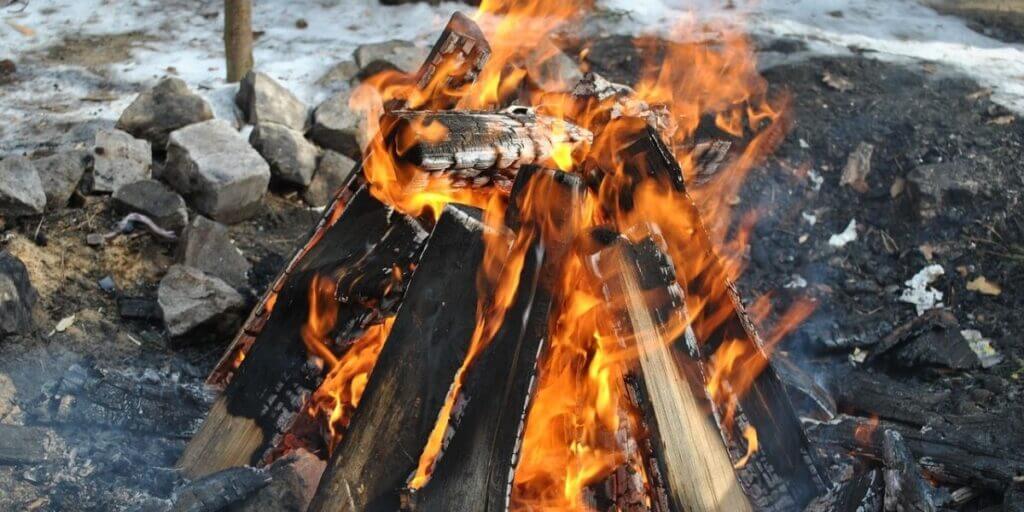
For reference, Utah State University publishes these estimates:
| Firewood | Approximate heat per cord |
|---|---|
| Birch, as listed in the source | 20.8 million BTU |
| Quaking aspen | 18.2 million BTU |
These are comparison figures, not guaranteed heat output from a stove. Aspen remains usable firewood, particularly when it is readily available, but you may need more of it to supply the same heat.
For either wood, burn properly seasoned, untreated logs. EPA guidance recommends a moisture content below 20%; do not assume that a particular species will always burn without smoke or sparks.
Birch Wood Pros and Cons
| Pros | Cons |
|---|---|
| Attractive pale color and fine grain | Poor natural decay resistance |
| Generally harder and stronger than aspen | Heavier to handle |
| Useful for furniture, cabinets, and flooring | Can move with moisture changes |
| Machines and finishes well with suitable preparation | Figured grain may tear during machining |
| Available as solid lumber, veneer, and plywood | Stain may appear uneven without proper preparation |
Aspen Wood Pros and Cons
| Pros | Cons |
|---|---|
| Lightweight and easy to handle | Dents and scratches relatively easily |
| Easy to cut and shape | Lower strength and stiffness than common commercial birches |
| Pale color suits painted projects | Machining may leave a fuzzy surface |
| Useful for trim, crafts, and furniture components | Poor natural decay resistance |
| Generally stable when properly dried | Thick, clear lumber may be difficult to find locally |
Common Birch Species
- Yellow birch — Betula alleghaniensis
- Sweet or cherry birch — Betula lenta
- Paper birch — Betula papyrifera
- River birch — Betula nigra
- Silver birch — Betula pendula
- Downy birch — Betula pubescens
- Bog birch — Betula pumila
- Dwarf birch — Betula nana
- Himalayan birch — Betula utilis
- Water birch — Betula occidentalis
Not all birches are important commercial timber trees. “Weeping birch” generally describes a growth form or cultivated variety rather than one separate species.
Common Aspen Species
- Quaking aspen — Populus tremuloides
- Bigtooth aspen — Populus grandidentata
- European aspen — Populus tremula
- Chinese aspen — Populus adenopoda
- Japanese aspen — Populus sieboldii
- Korean aspen — Populus davidiana
How to Identify Birch Trees
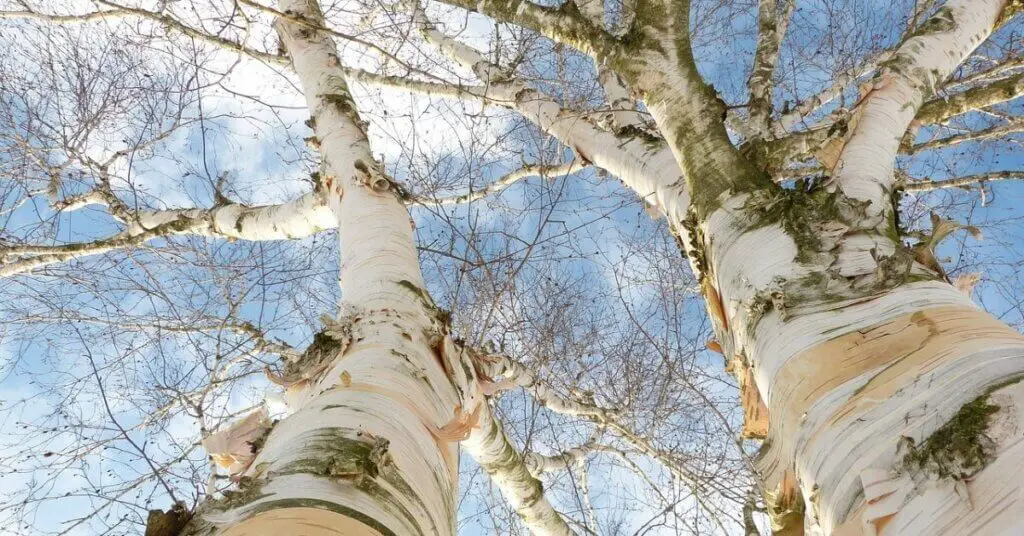
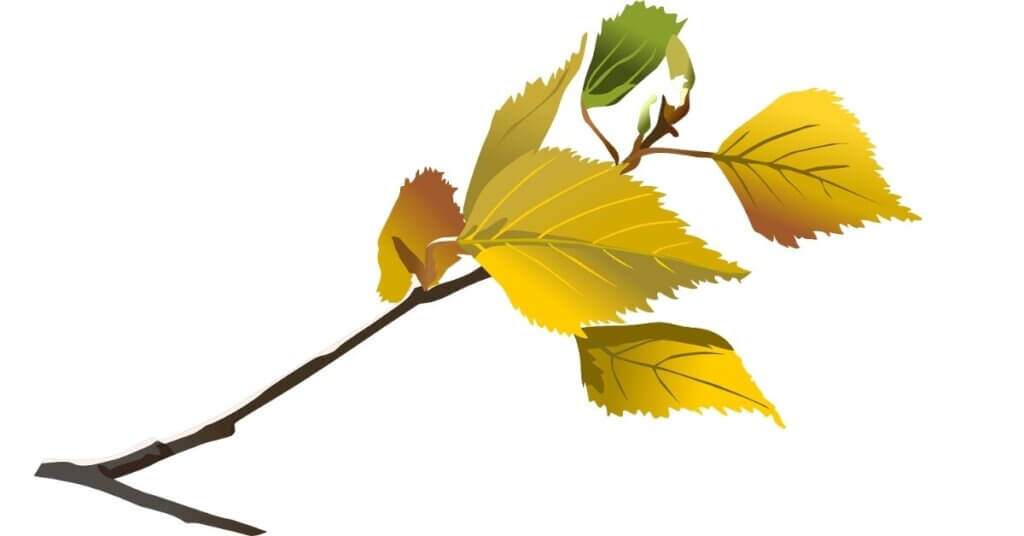
Identification depends on the species, but useful clues include:
- Alternate leaves, often oval or triangular, with toothed edges.
- Flowers arranged in catkins.
- Bark that may be white, silver, yellowish, reddish brown, or darker.
- Peeling bark in species such as paper birch, although not every birch peels in papery sheets.
Do not remove bark to identify a living tree. Compare leaves, twigs, bark, and location together.
How to Identify Aspen Trees
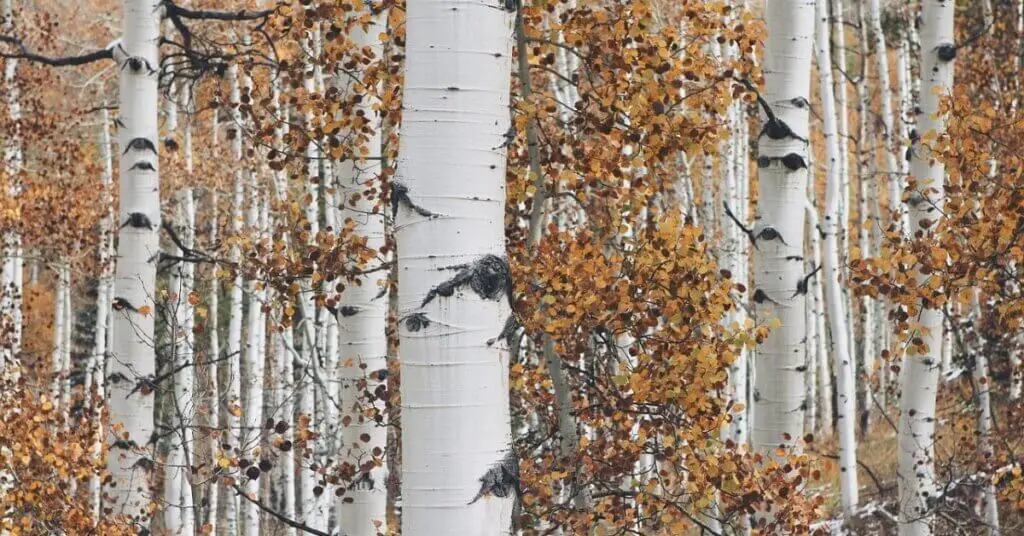
Quaking aspen commonly has smooth, pale bark with dark scars. Older lower trunks may become darker and rougher.
Its rounded to broadly oval leaves have toothed edges and flattened leaf stalks. These stalks allow the leaves to flutter in a light breeze—the source of the name “quaking aspen.”
Male and female flowers generally occur on separate trees. Other aspens differ in leaf shape and bark, so avoid relying on trunk color alone. National Park Service identification guide.
Conclusion
Choose birch when hardness, strength, and resistance to everyday wear matter most. Choose aspen when low weight and easy shaping are more important.
Both can work well indoors when properly dried, constructed, and finished. Neither should be selected for exposed outdoor use simply because it is classified as a hardwood.