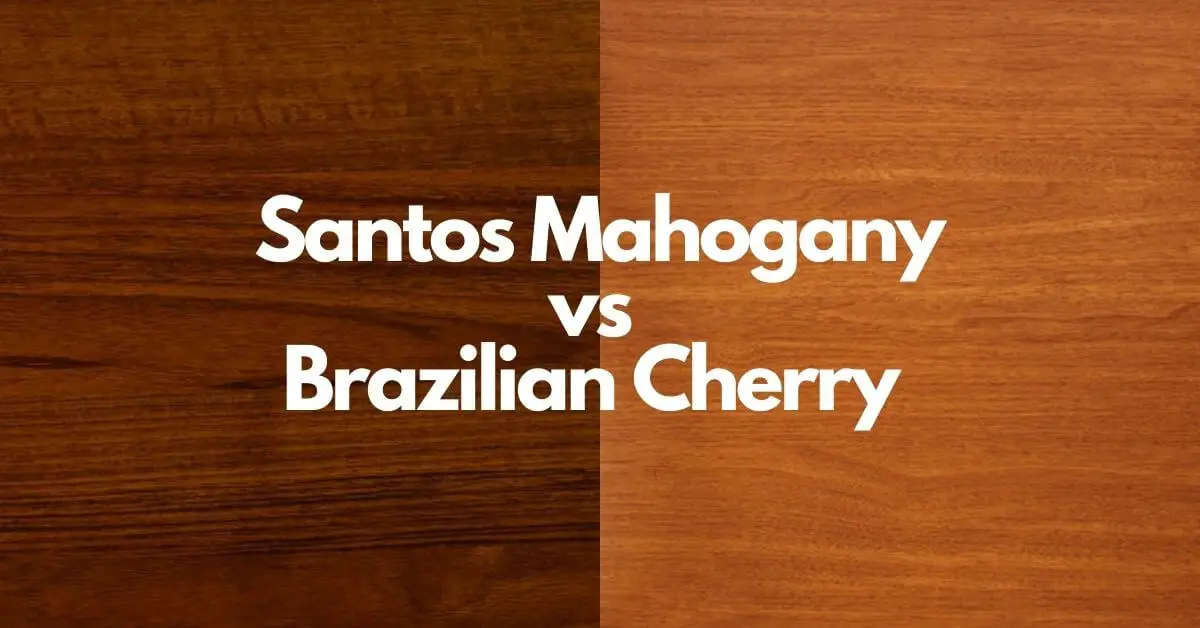
Santos Mahogany and Brazilian Cherry are two of the most popular exotic hardwoods used for flooring, furniture, cabinetry, and high-end woodworking projects. Both woods are known for their rich color, durability, and long lifespan, but they differ significantly in hardness, appearance, workability, and cost.
If you’re trying to decide between Santos Mahogany and Brazilian Cherry, this detailed comparison will help you choose the right wood for your project.
Santos Mahogany vs Brazilian Cherry: Quick Comparison
| Property | Santos Mahogany | Brazilian Cherry |
|---|---|---|
| Botanical Name | Myroxylon balsamum | Hymenaea courbaril |
| Common Name | Santos Mahogany | Brazilian Cherry (Jatoba) |
| Wood Type | Hardwood | Hardwood |
| Color | Golden reddish-brown to dark reddish-brown | Orange-brown to deep reddish-brown |
| Janka Hardness | 2,200 lbf | 2,350 lbf |
| Density | High | Very High |
| Rot Resistance | Excellent | Excellent |
| Workability | Moderate | Difficult |
| Stability | Good | Moderate |
| Durability | Excellent | Excellent |
| Cost | Moderate to High | High |
| Common Uses | Flooring, furniture, cabinetry | Flooring, furniture, decking |
What Is Santos Mahogany?
Santos Mahogany is an exotic hardwood native to Central and South America. Despite its name, it is not a true mahogany species.
The wood is prized for its rich reddish-brown color, excellent durability, and attractive grain patterns. Santos Mahogany has become a popular alternative to genuine mahogany because it offers similar beauty while providing greater hardness and wear resistance.
Common Uses of Santos Mahogany
- Hardwood flooring
- Furniture
- Cabinets
- Doors
- Decorative millwork
- Turned objects
What Is Brazilian Cherry?
Brazilian Cherry, also known as Jatoba, is one of the hardest and most durable flooring woods available.
It is native to Central and South America and is recognized for its striking reddish-brown appearance that deepens over time.
Brazilian Cherry has been a favorite choice for luxury flooring because of its exceptional hardness and long lifespan.
Common Uses of Brazilian Cherry
- Hardwood flooring
- Stair treads
- Furniture
- Countertops
- Decking
- Heavy-duty woodworking projects
Appearance
Appearance is one of the biggest differences between these two hardwoods.
Santos Mahogany
Santos Mahogany typically displays:
- Golden brown tones
- Deep reddish-brown colors
- Fine to medium texture
- Attractive ribbon-like grain
Its appearance resembles traditional mahogany but often has more dramatic color variation.
Brazilian Cherry
Brazilian Cherry usually features:
- Orange-red tones
- Deep red-brown coloration
- Interlocked grain patterns
- Rich exotic appearance
Over time, exposure to sunlight darkens Brazilian Cherry significantly.
Winner: Appearance
This depends on personal preference.
Choose Santos Mahogany if you prefer a traditional mahogany look.
Choose Brazilian Cherry if you want a bold, dramatic floor with rich red tones.
Hardness
When durability matters, hardness becomes extremely important.
Santos Mahogany Hardness
Santos Mahogany has a Janka hardness rating of approximately 2,200 lbf.
This makes it:
- Much harder than Red Oak
- Resistant to scratches
- Suitable for high-traffic areas
Brazilian Cherry Hardness
Brazilian Cherry has a Janka hardness rating of approximately 2,350 lbf.
It is one of the hardest commercially available flooring woods.
Winner: Brazilian Cherry
Brazilian Cherry is slightly harder, but both woods are exceptionally durable.
Durability
Both species are known for their excellent durability.
Santos Mahogany
Advantages:
- Excellent decay resistance
- Good insect resistance
- Long service life
Brazilian Cherry
Advantages:
- Outstanding durability
- Excellent resistance to wear
- Suitable for demanding environments
Winner: Tie
Both woods can last for decades when properly maintained.
Workability
Working With Santos Mahogany
Santos Mahogany generally machines well but its density can dull cutting tools.
It:
- Sands well
- Finishes beautifully
- Accepts stains and finishes effectively
Working With Brazilian Cherry
Brazilian Cherry is significantly harder to machine.
Woodworkers often encounter:
- Tool dulling
- Tear-out
- Difficult cutting
- Challenging sanding
Winner: Santos Mahogany
Santos Mahogany is easier to work with and generally preferred by furniture makers.
Flooring Performance
Both species are excellent flooring materials.
Santos Mahogany Flooring
Pros:
- Elegant appearance
- Good dimensional stability
- Excellent wear resistance
- Easier installation
Cons:
- Slightly softer than Brazilian Cherry
Brazilian Cherry Flooring
Pros:
- Exceptional hardness
- Outstanding durability
- Luxurious appearance
Cons:
- Can darken noticeably over time
- More difficult to install
Winner: Brazilian Cherry
For maximum durability, Brazilian Cherry has a slight advantage.
Furniture Applications
Both woods produce beautiful furniture.
Santos Mahogany Furniture
Best for:
- Dining tables
- Cabinets
- Desks
- Traditional furniture
Brazilian Cherry Furniture
Best for:
- Luxury furniture
- Heavy-use furniture
- Statement pieces
Winner: Santos Mahogany
Many furniture makers prefer Santos Mahogany because it is easier to machine and finish.
Rot Resistance
Both woods have excellent natural resistance to decay.
| Property | Santos Mahogany | Brazilian Cherry |
|---|---|---|
| Rot Resistance | Excellent | Excellent |
| Insect Resistance | Good | Good |
| Outdoor Suitability | Moderate | Moderate |
Winner: Tie
Both perform well when properly finished and maintained.
Cost
Pricing varies depending on grade, availability, and location.
Generally:
- Santos Mahogany is slightly less expensive.
- Brazilian Cherry is often more expensive because of demand and density.
Winner: Santos Mahogany
If budget is a concern, Santos Mahogany usually offers better value.
Pros and Cons
Santos Mahogany Pros
- Beautiful mahogany-like appearance
- Easier to work with
- Excellent durability
- More affordable
- Good dimensional stability
Santos Mahogany Cons
- Slightly softer than Brazilian Cherry
- Can darken over time
Brazilian Cherry Pros
- Extremely hard
- Highly durable
- Excellent for flooring
- Luxurious appearance
Brazilian Cherry Cons
- Expensive
- Difficult to work with
- Dulls tools quickly
- Darkens significantly with age
Which Wood Should You Choose?
Choose Santos Mahogany if:
- You want easier workability.
- You are building furniture or cabinetry.
- You prefer a traditional mahogany appearance.
- You want to save some money.
Choose Brazilian Cherry if:
- Maximum hardness is your priority.
- You need highly durable flooring.
- You prefer bold reddish tones.
- Budget is less important than longevity.
Final Verdict
Santos Mahogany and Brazilian Cherry are both premium exotic hardwoods that offer exceptional durability and beauty.
For furniture, cabinetry, and projects requiring easier machining, Santos Mahogany is often the better choice.
For flooring and high-traffic areas where maximum hardness matters, Brazilian Cherry remains one of the toughest and most durable hardwoods available.
Overall, Santos Mahogany provides the best balance of appearance, workability, durability, and value, while Brazilian Cherry delivers unmatched hardness and long-term wear resistance.