Cedar is one of the most popular woods for both indoor and outdoor woodworking projects. It is valued for its natural durability, dimensional stability, pleasant aroma, and resistance to decay. Unlike many wood species, cedar has excellent resistance to shrinking, swelling, and warping, making it an excellent choice for exterior applications.
Spanish cedar is harder and denser than Western Red Cedar. Western Red Cedar usually has a straight grain, while Spanish cedar can have either straight or interlocked grain.
Spanish Cedar (Cedrela odorata)
Spanish cedar is a lightweight hardwood (despite its name, it is not a true cedar). It is durable, dimensionally stable, and naturally resistant to decay and termites.
It has a pleasant cedar-like aroma that makes it one of the best woods for humidors because the scent helps repel tobacco beetles.
Spanish cedar is commonly known as Cedro or Cuban cedar and is native to Central America, South America, and the Caribbean.
Its grain is generally straight but may also be interlocked. The wood has a medium texture and a natural luster, giving it an attractive appearance after finishing.
Western Red Cedar (Thuja plicata)
Western Red Cedar is a true cedar species valued for its outstanding resistance to decay, insects, and moisture.
It is one of the most widely used softwoods for outdoor construction because it is lightweight, stable, and naturally durable.
Western Red Cedar is also known as Giant Arborvitae and is native to the Pacific Northwest of the United States and Canada.
It is a large evergreen conifer that can grow 165–200 feet (50–60 m) tall.
Spanish Cedar vs Western Red Cedar
| Property | Spanish Cedar | Western Red Cedar |
|---|---|---|
| Scientific Name | Cedrela odorata | Thuja plicata |
| Average Dried Weight | 29 lbs/ft³ (470 kg/m³) | 23 lbs/ft³ (370 kg/m³) |
| Janka Hardness | 600 lbf (2,670 N) | 350 lbf (1,560 N) |
| Crushing Strength | 5,860 lbf/in² (40.4 MPa) | 4,560 lbf/in² (31.4 MPa) |
| Rot Resistance | Naturally resistant to decay and termites | Excellent resistance to decay and insects |
| Workability | Easy to work | Very easy to work with hand and machine tools |
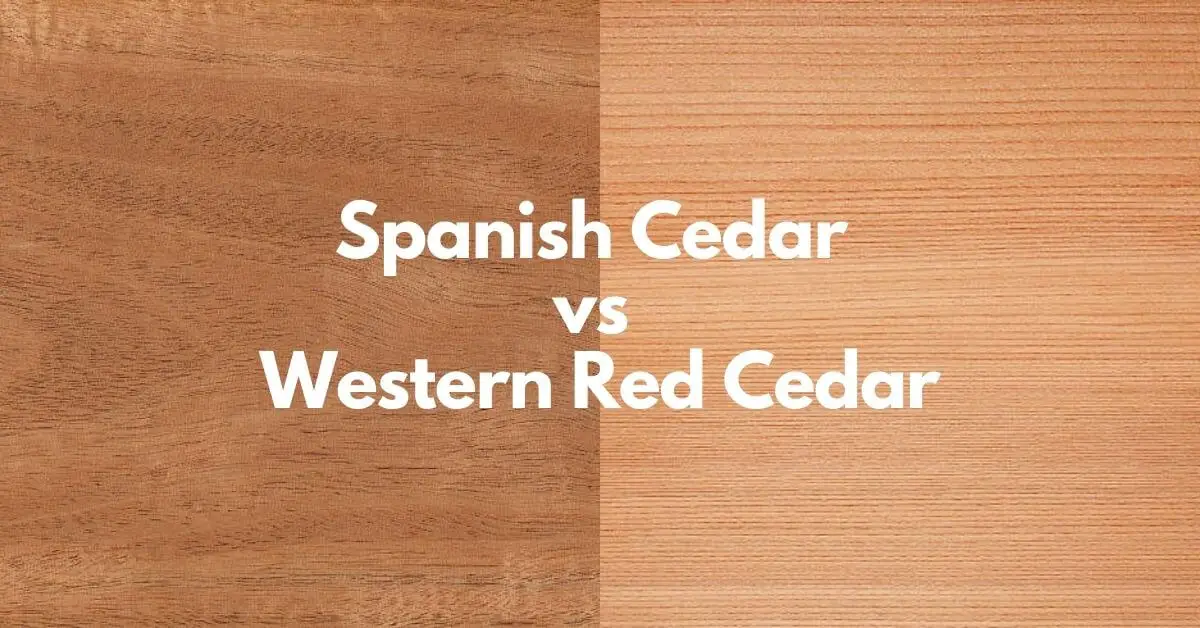
| Wood Color | Light pinkish to reddish-brown | Reddish to pinkish-brown |
| Common Uses | Veneers, plywood, cabinetry, humidors, musical instruments, boatbuilding | Exterior siding, shingles, decking, fencing, boatbuilding, boxes, crates, musical instruments |
Uses of Spanish Cedar and Western Red Cedar
Common Uses
Musical Instruments
Both Spanish Cedar and Western Red Cedar are popular woods for musical instruments.
Western Red Cedar is commonly used as a soundboard wood for classical and acoustic guitars because of its lightweight structure and excellent tonal properties.
Spanish Cedar is often used for guitar necks due to its stability, light weight, and ease of machining.
Boat Building
Both woods are suitable for certain boat-building applications because they are lightweight, dimensionally stable, and naturally resistant to decay.
Although they have moderate moisture resistance, applying a quality exterior finish is recommended for long-term outdoor performance.
Paint or stain helps seal the wood surface, reducing moisture absorption and extending the service life.
Spanish Cedar Uses
Veneers and Plywood
Spanish Cedar is widely used for decorative veneer and plywood. It provides an attractive appearance while reducing the cost compared to solid lumber.
Furniture
Spanish Cedar is an excellent choice for both indoor and outdoor furniture because it is lightweight, easy to work, and finishes beautifully.
Cabinetry
Its attractive reddish-brown color and pleasant aroma make Spanish Cedar a popular material for cabinets, closets, and humidors.
Western Red Cedar Uses
Boxes and Crates
Western Red Cedar is lightweight yet reasonably strong, making it easy to transport while providing adequate strength for packaging applications.
Shingles
Its outstanding natural resistance to decay and weather makes Western Red Cedar one of the most popular materials for roofing shingles.
Exterior Siding
Western Red Cedar is widely used for exterior siding because of its straight grain, dimensional stability, attractive appearance, and exceptional weather resistance.
Long boards, planks, and panels are readily available for siding and cladding projects.
Color and Appearance
Spanish Cedar
The heartwood ranges from light pinkish to reddish-brown, while the sapwood is nearly white.
The color naturally darkens with age, especially when exposed to sunlight.
The grain is usually straight but may be interlocked, with a medium texture and moderate natural luster.
Western Red Cedar
The heartwood ranges from reddish-brown to pinkish-brown, while the sapwood is pale yellowish-white.
Some boards contain darker brown or reddish streaks.
Western Red Cedar generally has a straight grain, coarse texture, and medium natural luster.
Working with Spanish Cedar and Western Red Cedar
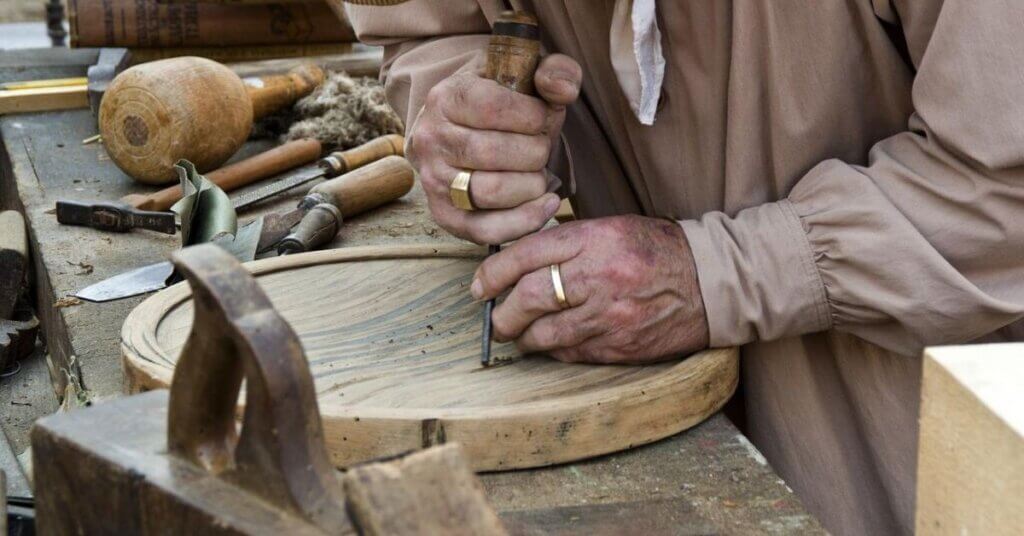
Both woods are easy to machine using hand tools and power tools because of their relatively low density.
Their straight grain allows for easy planing, sawing, routing, gluing, and finishing.
Spanish Cedar is somewhat softer and may leave fuzzy surfaces during machining, so sharp cutters are recommended.
Boards with interlocked grain may occasionally produce tear-out during planing.
Both species accept paint, stain, oil, and clear finishes very well.
How to Stain Spanish Cedar and Western Red Cedar
Applying stain helps preserve the wood’s appearance and provides additional protection against weathering and UV exposure.
Step 1: Sand the Wood
Lightly sand the surface using approximately 100- to 120-grit sandpaper.
Sanding removes scratches, smooths the surface, and opens the wood pores for better stain penetration.
Step 2: Clean the Surface
Remove all sanding dust using a vacuum, tack cloth, or a slightly damp lint-free cloth.
Allow the wood to dry completely before proceeding.
Step 3: Apply a Pre-Stain Wood Conditioner (Optional)
Applying a pre-stain conditioner helps produce a more even finish and minimizes blotchy staining, which can sometimes occur on softwoods.
Step 4: Apply the Stain
Apply the stain evenly in the direction of the wood grain.
For deeper color, apply a second coat after the manufacturer’s recommended drying time (typically 6–8 hours).
Allow the finish to cure completely in a clean, dust-free environment.
Spanish Cedar vs Western Red Cedar: Which Is Better for Outdoor Use?
Both woods perform well outdoors due to their natural decay resistance.
However, Western Red Cedar is generally considered the better choice for exterior projects such as siding, fencing, pergolas, decks, and shingles because of its excellent weather resistance and dimensional stability.
Spanish Cedar is also suitable for outdoor applications, particularly when protected with a high-quality exterior finish.
Proper sealing and regular maintenance will significantly increase the lifespan of either wood.
Are Spanish Cedar and Western Red Cedar Toxic?
Some people may experience allergic reactions when working with cedar wood dust.
Spanish Cedar has been reported to cause respiratory irritation in some individuals.
Western Red Cedar is a known sensitizer and may cause respiratory issues, skin irritation, or asthma-like symptoms after repeated exposure.
When machining either wood, wear:
- Safety glasses
- A dust mask or respirator
- Hearing protection (when using power tools)
Proper dust collection and ventilation are also recommended.
Conclusion
Spanish Cedar and Western Red Cedar are both excellent woods, but they serve slightly different purposes.
Spanish Cedar is harder, denser, and commonly used for cabinetry, humidors, veneers, furniture, and musical instruments. Western Red Cedar is lighter, naturally more weather-resistant, and one of the best choices for exterior siding, shingles, fencing, and other outdoor applications.
If your project requires maximum outdoor durability, Western Red Cedar is usually the better option. If you need a stable, attractive wood for furniture, cabinetry, or humidors, Spanish Cedar is an excellent choice.