

WPC fence panels offer privacy and a wood-like appearance without the regular painting or staining that many timber fences need. They are worth considering if you want a boundary that requires relatively little upkeep.
However, composite fencing is not maintenance-free, and not every product performs equally well. Panel construction, supporting posts, installation, and exposure all influence how the fence looks and lasts.
The main advantages of WPC fencing are low maintenance, resistance to decay, and a choice of colors and styles. Its disadvantages include a potentially higher initial cost, temperature-related movement, and limited options for repairing surface damage.
What Are WPC Fence Panels?
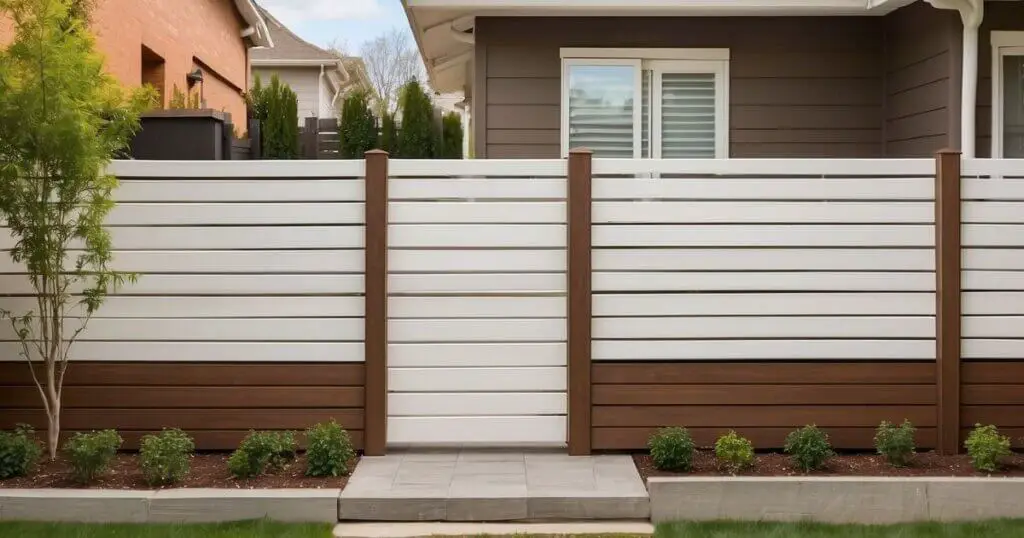
WPC stands for wood-plastic composite, also called wood-polymer composite. It combines wood fibers or wood flour with a thermoplastic and additives that help achieve the required color and performance.
The wood and plastic may include recycled material, but the proportions and sources vary. Not every WPC panel is made entirely from recycled hardwood and polyethylene.
Products may be supplied as individual boards that fit between posts or as larger assembled panels. The supporting system can include aluminum, steel, timber, or composite components.
Capped vs Uncapped WPC Fencing
Some composite boards have a protective outer layer, commonly called a cap. Others have an exposed composite surface.
A cap may improve stain resistance and simplify cleaning, but performance depends on its formulation and coverage. Check whether the product is capped on all exposed sides and how cut ends should be handled.
Neither construction should be judged by appearance alone. Request the technical information and care instructions for the exact product.
WPC Fence Panel Pros
1. Less Routine Finishing
Many WPC fence systems do not require periodic painting, staining, or oiling. This can reduce the time spent maintaining a long boundary or a fence that is difficult to access.
Cleaning is still necessary. Dust, pollen, algae, and other deposits can accumulate, particularly in shaded or damp locations.
The benefit is a simpler maintenance routine—not the complete absence of maintenance.
2. Resistance to Rot and Insect Damage
Quality composite fencing is designed to resist common forms of deterioration that affect untreated timber.
However, resistance varies by product, and the whole fence needs consideration. Timber supports, metal fixings, gates, and foundations can have different maintenance requirements from the composite boards.
Do not assume that a durable panel compensates for unsuitable posts or poorly installed hardware.
3. A Choice of Colors and Textures
WPC fencing is available in wood-inspired browns, grays, and other colors. Surfaces may be brushed, grooved, or embossed to suggest wood grain.
This makes it possible to coordinate a fence with paving, exterior finishes, or garden structures without applying a separate stain.
Order a sample before buying. Texture, sheen, and color can look different outdoors than they do in a product photograph.
4. Useful Privacy Options
Closely fitted boards can create an effective visual screen around gardens, patios, and seating areas.
Some systems have an attractive finish on both sides, which can be useful for shared boundaries.
Check the finished assembly rather than assuming every panel provides complete privacy. Board spacing and joint design vary, and any required movement gaps must remain in place.
5. Modular Assembly
Slide-in boards, matching rails, and dedicated post channels can make assembly straightforward once the supports are correctly installed.
Some systems also allow individual boards to be replaced. This can be useful if a panel is damaged later.
The groundwork remains important. Setting posts accurately, accommodating slopes, and installing gates may require more skill than fitting the boards themselves.
WPC Fence Panel Cons
1. Higher Initial Cost
WPC can cost more initially than basic timber fencing. The difference depends on the products being compared and the amount of installation work.
A complete quote should include:
- Panels or boards.
- Posts, rails, brackets, and caps.
- Foundations or approved anchors.
- Gates and gate hardware.
- Delivery, labor, and removal of the old fence.
Lower maintenance may offset part of the additional cost over time, but WPC is not automatically the cheapest option over its lifetime.
2. Temperature-Related Movement
Composite boards expand and contract as temperatures change. Installation needs to accommodate that movement.
Insufficient clearance or incorrect fastening can contribute to bowing, distortion, or stressed connections. Follow the product’s specified gaps and fixing methods rather than using a spacing rule from another brand.
For example, Cladco’s fencing installation guide includes product-specific movement allowances and describes expected weathering. Those instructions should not be transferred directly to a different system.
3. It Does Not Look Exactly Like Wood
Embossing can imitate grain, but WPC does not have the same natural variation as solid timber.
Repeated patterns or a more uniform surface may be noticeable at close range. Some homeowners prefer that consistency; others prefer the changing character of natural wood.
Viewing an installed fence is helpful when appearance is a major part of the decision.
4. Color Can Change
Some WPC products undergo noticeable initial weathering, while others retain their original appearance more closely. Sunlight, exposure, surface formulation, and accumulated dirt all affect the result.
Replacement boards may also look different from older boards, even when sold under the same color name.
Ask to see weathered samples and read any fade-related warranty terms carefully.
5. Repairs Can Be Limited
Deep scratches, cracks, or damaged edges may require board replacement.
Sanding is not a universal solution. It can alter the texture, expose a different color, or damage a protective cap. Painting can also be unsuitable for some products.
Check the approved repair method before attempting to hide damage.
6. Weight and Wind Exposure Matter
Composite boards can be heavy, and a solid privacy fence presents a large surface to the wind.
The posts, rails, connections, and foundations must suit the fence height and site conditions. A statement that panels are “strong” does not establish the wind performance of the complete fence.
Ask the supplier whether the proposed system is suitable for your location, especially on an exposed site.
How Long Do WPC Fence Panels Last?
There is no dependable lifespan that applies to every WPC fence.
Product quality, installation, climate, impact damage, and maintenance all affect service life. The original claim that every WPC fence lasts 20–30 years is too broad.
A warranty can help you compare products, but it is not a guaranteed replacement schedule. Check:
- Which components are covered.
- Whether coverage is limited to particular defects.
- Whether fading or staining is included.
- Whether labor and removal costs are excluded.
- Whether compensation reduces over time.
- What installation and maintenance conditions apply.
Keep the receipt, product details, and installation records.
Are WPC Fence Panels Waterproof?
WPC fencing is designed to tolerate outdoor moisture, but “waterproof” is an overly broad description.
Water absorption and performance vary between products. Hollow sections, joints, and supporting components also need appropriate drainage and detailing.
Do not bury boards in soil, obstruct drainage openings, or assume permanent water contact is acceptable unless the manufacturer permits it.
Surface mold or algae can still occur where moisture and organic debris remain, even when the panel resists structural decay.
Are WPC Fence Panels Fire-Resistant?
WPC should not be described as inherently fire-resistant or fireproof. It contains wood and plastic, and its reaction to heat and flame depends on the formulation and tested assembly.
If fire performance matters for your project, request the relevant test classification for the exact fence product. A rating for a company’s decking or cladding does not automatically apply to its fencing.
Keep barbecues, fire pits, and heaters at the clearances specified by their manufacturers and the fence supplier.
How to Clean and Maintain WPC Fencing
1. Remove Loose Debris
Brush away leaves, cobwebs, and loose dirt. Keep vegetation from trapping damp debris against the panels.
2. Start With Gentle Cleaning
Where permitted by the manufacturer, use mild soap, water, and a soft-bristle brush. Rinse thoroughly so loosened dirt and detergent do not dry onto the surface.
For example, Trex’s fence care guide recommends soap, water, and a soft brush for routine cleaning and advises against sanding.
3. Use Approved Stain Treatments
There is no single cleaner suitable for every WPC product.
Avoid a blanket rule that all bleach, vinegar, or specialist cleaners are either safe or forbidden. Follow the exact product’s instructions, test an inconspicuous area, and never mix cleaning chemicals.
4. Check Before Pressure Washing
Some manufacturers allow pressure washing under specific conditions; others discourage it.
Excessive pressure, a concentrated nozzle, or working too close can damage the surface. Use a garden hose unless the care guide expressly permits another method.
5. Inspect the Complete Fence
Periodically check posts, rails, brackets, caps, and gate hardware. Look for movement, damage, or corrosion and arrange repairs promptly.
Do not tighten connections in a way that prevents the boards from moving as designed.
Can WPC Fence Boards Be Used for Decking or Cladding?
WPC is used to manufacture decking, cladding, and other outdoor products, but the finished products are not interchangeable.
A fence board may lack the load capacity needed for a walking surface. Cladding also has its own fastening, drainage, and fire-performance requirements.
Use boards only for the applications approved by their manufacturer.
Is WPC Fencing Worth It?
WPC fencing is worth considering when you want privacy, a consistent appearance, and less routine finishing.
Before choosing a system, compare complete installed prices, inspect samples, and confirm the maintenance and replacement arrangements. A suitable product installed correctly will offer more value than a cheaper panel selected only for its color or an ambitious lifespan claim.