
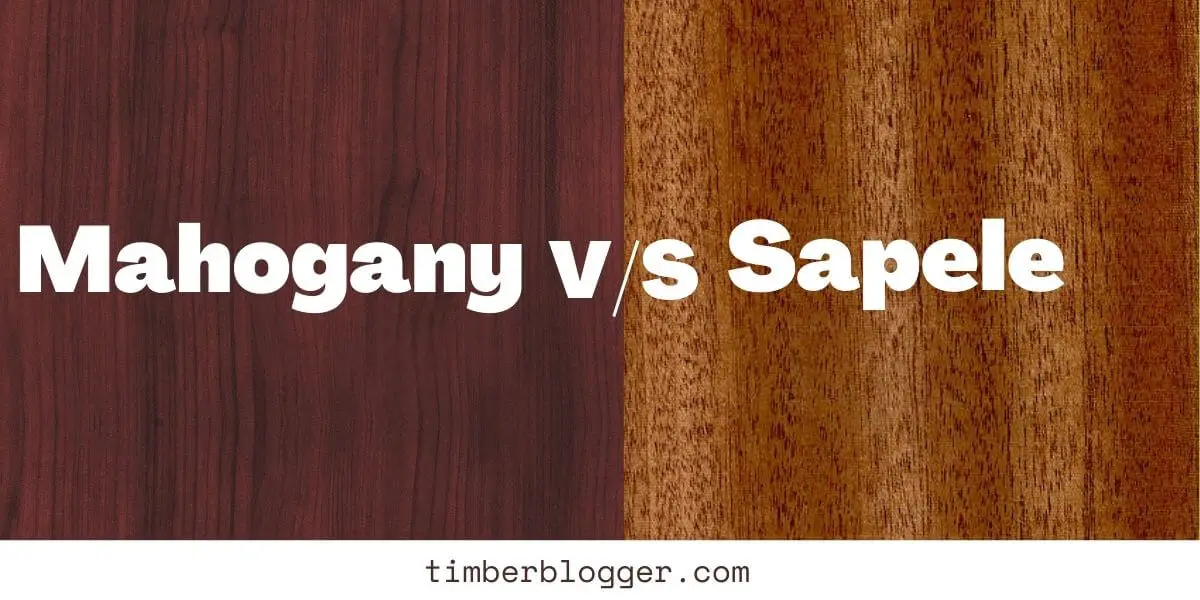
Sapele and Mahogany are often compared because they look similar and belong to the same botanical family. However, they are not the same wood.
In general:
- Mahogany is darker, more traditional, and more widely recognized
- Sapele is harder, heavier, and stronger
Because of their similarities, Sapele is often considered the best alternative to genuine Mahogany.
Let’s break down the differences in detail.
What Is Mahogany?
Mahogany is a premium tropical hardwood known for its rich color, stability, and durability. It is native to Central and South America, as well as parts of Mexico.
True or genuine Mahogany comes from the genus Swietenia macrophylla and related species.
There are three genuine Mahogany species:
- Swietenia macrophylla (Honduran Mahogany)
- Swietenia mahagoni (Cuban Mahogany)
- Swietenia humilis (Pacific Coast Mahogany)
Among these, Honduran Mahogany is the most widely used today.
Mahogany is known for:
- Rich reddish-brown color
- Excellent dimensional stability
- Easy workability
- Natural resistance to rot
What Is Sapele?
Sapele is an African hardwood that belongs to the Mahogany family (Meliaceae). Its scientific name is Entandrophragma cylindricum.
It is often marketed as “African Mahogany,” although it is not a true Swietenia species.
Sapele is:
- Denser and heavier than Mahogany
- About 16% harder than Red Oak
- Known for its interlocking grain
- Slightly more affordable than genuine Mahogany
Because of its strength and similar appearance, Sapele is widely used as a Mahogany substitute.
Quick Comparison Table
| Feature | Mahogany | Sapele |
|---|---|---|
| Scientific Name | Swietenia species | Entandrophragma cylindricum |
| Origin | Central & South America | Africa |
| Color | Reddish-brown to deep red | Golden to dark reddish-brown |
| Grain | Straight to slightly interlocked | Interlocked, ribbon-like |
| Janka Hardness | 900 lbf (Honduran) | 1,410 lbf |
| Average Weight | 36.8 lbs/ft³ | 42 lbs/ft³ |
| Workability | Very easy | Moderate to easy |
| Rot Resistance | Good | Moderate to good |
| Cost | Higher | Moderate |
Hardness Comparison
One of the biggest differences between Sapele and Mahogany is hardness.
- Honduran Mahogany: 900 lbf
- Sapele: 1,410 lbf
Sapele is significantly harder and more dent-resistant.
Here’s how they compare to other popular woods:
| Wood Species | Janka Hardness (lbf) |
|---|---|
| American Chestnut | 540 |
| Black Ash | 850 |
| Honduran Mahogany | 900 |
| Black Walnut | 1,010 |
| Mango | 1,070 |
| Sapele | 1,410 |
| Hard Maple | 1,450 |
| Honey Locust | 1,580 |
If scratch resistance matters, Sapele has the advantage.
Appearance: Color and Grain
Mahogany is typically darker than Sapele.
Mahogany
- Pale pinkish brown to deep reddish brown
- Grain: Straight, sometimes wavy or interlocked
- Texture: Fine and even
Sapele
- Golden brown to dark reddish brown
- Grain: Strongly interlocked, often ribbon-patterned
- Texture: Fine
Both woods darken over time when exposed to sunlight.
Sapele’s ribbon grain pattern is often more dramatic, while Mahogany offers a smoother, more uniform look.
Uses of Mahogany and Sapele
Furniture & Cabinetry
Both woods are widely used for:
- Furniture
- Cabinets
- Veneer
- Interior trim
- Paneling
Mahogany is often chosen for luxury furniture because of its prestige and long-standing reputation.
Sapele is popular for modern designs that highlight bold grain patterns.
Musical Instruments
Mahogany has been one of the most popular woods for guitar bodies for decades.
It produces:
- Warm tone
- Strong midrange
- Balanced sound
Sapele is used as an alternative tonewood.
It produces:
- Slightly brighter tone
- Stronger treble presence
- Clear projection
Many guitar manufacturers use Sapele when Mahogany is unavailable or too expensive.
Sound preference depends on personal taste.
Boat Building
Mahogany is naturally resistant to moisture and rot, making it a traditional favorite for boat construction.
It performs extremely well in wet environments.
Sapele is also used in boat building due to its density and strength. While slightly less rot-resistant than genuine Mahogany, it still performs well when sealed properly.
Flooring
Both species can be used for hardwood flooring.
- Mahogany is stable and durable.
- Sapele is harder and more scratch-resistant.
For high-traffic areas, Sapele may be the better choice due to its higher Janka rating.
Outdoor Use
Mahogany is well-known for outdoor durability. It resists:
- Shrinking
- Splintering
- Checking
- Moisture damage
Sapele is moderately rot-resistant and performs well outdoors when properly finished.
Both woods require sealing for long-term exterior use.
Workability: Which Is Easier?
Mahogany is slightly easier to work with.
It:
- Cuts easily
- Sands smoothly
- Stains exceptionally well
- Rarely dulls tools
Sapele is harder and denser, which can:
- Slightly dull cutters
- Cause tear-out due to interlocking grain
Using sharp blades and proper technique solves most issues.
Tips for Working With Mahogany and Sapele
- Use sharp blades to prevent tear-out
- Sand thoroughly before finishing
- Pre-drill for screws
- Wear protective gear (both woods can cause mild skin or respiratory irritation)
Mahogany finishes beautifully with shellac or lacquer.
Sapele also polishes well and produces a rich finish.
Availability
Mahogany availability varies.
- Genuine Mahogany is rarer and more expensive.
- It is regulated in some regions due to conservation efforts.
Sapele is more readily available and not listed under strict international trade restrictions, though it is considered vulnerable in some areas.
Price Comparison
Mahogany is typically more expensive.
Approximate price range:
- Mahogany: $5 – $30 per board foot (genuine species higher)
- Sapele: $5 – $10 per board foot
Prices vary based on board size, quality, and figure.
Long, clear boards cost more than shorter or lower-grade boards.
Why Is Mahogany So Valuable?
Mahogany is valuable because of:
- Limited supply
- High global demand
- Long history in luxury furniture
- Excellent durability
- Beautiful color
Its reputation in fine woodworking and instrument making increases its market value.
Sapele vs Mahogany: Which Should You Choose?
Choose Mahogany if you want:
- Classic appearance
- Warmer tone for guitars
- Easier workability
- Traditional prestige
Choose Sapele if you want:
- Greater hardness
- Better scratch resistance
- Bold ribbon grain
- More affordable option
Both are excellent hardwoods. The right choice depends on your project needs and budget.
Final Verdict
Sapele and Mahogany are closely related and share many characteristics, but they are not the same.
- Sapele is harder and heavier.
- Mahogany is darker and more traditional.
For many applications, Sapele is an excellent alternative to genuine Mahogany.
If you value heritage and classic appearance, Mahogany may be the better choice. If durability and cost matter more, Sapele is a smart option.
Comments are closed.