
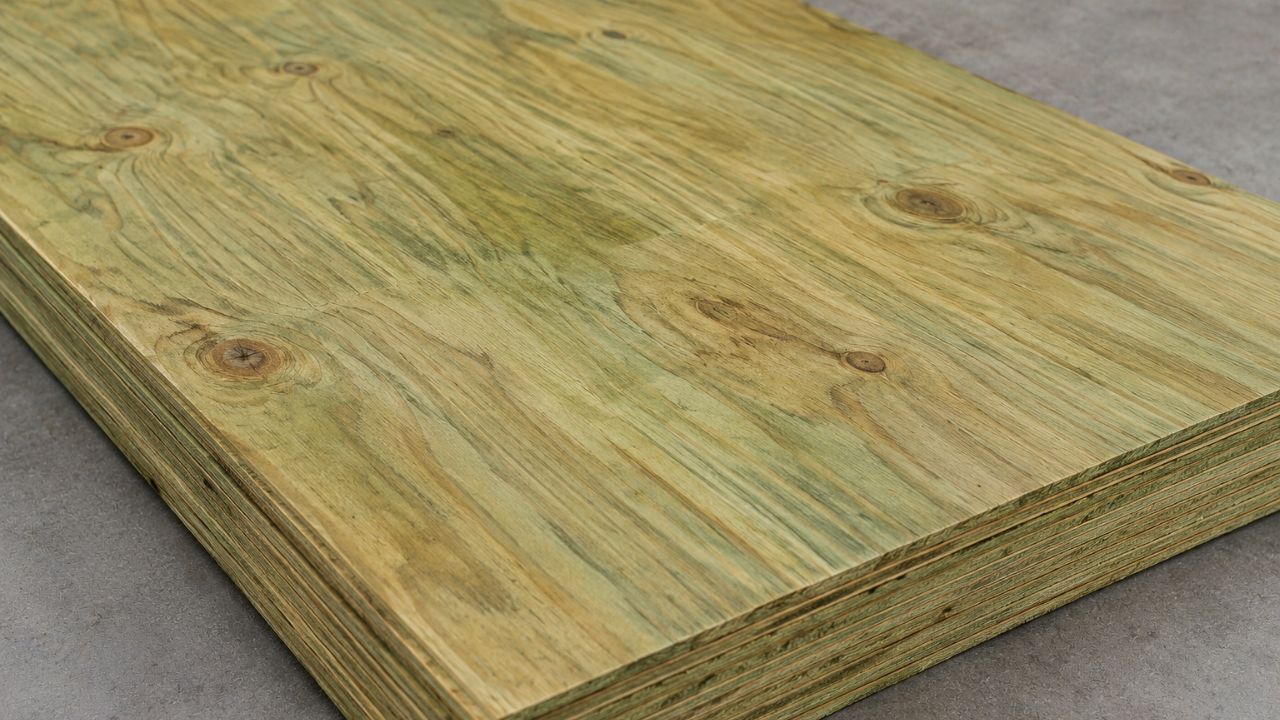
If you’re planning to use plywood for an outdoor project, shed, deck, roof, or other moisture-prone application, you may wonder whether CDX plywood is pressure treated. The short answer is no—standard CDX plywood is not pressure treated.
However, CDX plywood is often confused with pressure-treated plywood because both can be used in construction applications. Understanding the difference is important because using untreated plywood where treated wood is required can lead to moisture damage, rot, and premature failure.
What Is CDX Plywood?
CDX is a type of construction-grade plywood made from multiple layers of wood veneer. The letters describe its grades:
- C – The face veneer has a C-grade surface.
- D – The back veneer has a D-grade surface.
- X – The plywood uses an exterior-rated adhesive.
The “X” does not mean that the plywood has been chemically treated for outdoor exposure. Instead, it indicates that the adhesive used to bond the layers is designed to withstand moisture better than interior-grade plywood.
This distinction is important: exterior-rated plywood is not automatically pressure treated.
Is Standard CDX Plywood Pressure Treated?
No. Standard CDX plywood is not pressure treated.
During pressure treatment, wood is placed inside a treatment cylinder where preservatives are forced deep into the wood fibers under pressure. These preservatives help protect the lumber or plywood against organisms such as fungi and termites.
Regular CDX plywood does not undergo this process.
CDX can have an exterior-rated glue that provides better resistance to moisture than interior plywood, but the wood itself does not have the same preservative protection as pressure-treated plywood.
Can You Use CDX Plywood Outside?
Yes, but where and how you use it matters.
CDX plywood is commonly used in construction for applications such as:
- Roof sheathing
- Wall sheathing
- Subflooring
- Temporary outdoor structures
- Construction projects where the plywood will be protected from prolonged moisture
Although CDX can tolerate some exposure to moisture, it isn’t designed to remain continuously exposed to rain, standing water, or wet ground.
For example, CDX used as roof sheathing is normally covered by roofing materials. The plywood isn’t expected to remain permanently exposed to weather.
CDX Plywood vs. Pressure-Treated Plywood
The biggest difference is the preservative treatment.
| Feature | CDX Plywood | Pressure-Treated Plywood |
|---|---|---|
| Pressure treated | No | Yes |
| Exterior adhesive | Yes | Yes, generally |
| Moisture resistance | Moderate | High |
| Rot protection | Limited | Much better |
| Suitable for ground contact | No | Only if specifically rated |
| Permanent outdoor exposure | Generally not recommended | Depending on treatment rating |
| Typical use | Sheathing and construction | Outdoor and moisture-prone applications |
It’s worth remembering that pressure-treated plywood is not simply “better CDX.” They are designed for different purposes.
What Happens If CDX Plywood Gets Wet?
Occasional exposure to rain doesn’t necessarily mean CDX plywood will immediately fail. However, repeated or prolonged exposure can cause problems.
Water can enter through the plywood’s edges and exposed surfaces. Over time, this can result in:
- Swelling
- Delamination
- Warping
- Mold growth
- Wood decay
- Loss of structural performance
The edges are particularly vulnerable because they expose the ends of multiple veneer layers.
This is why CDX used for exterior construction is normally protected by siding, roofing, waterproof membranes, or another weather-resistant material.
Is CDX Plywood Waterproof?
No.
CDX plywood is better described as exterior-rated, rather than waterproof.
The exterior-rated adhesive helps prevent the plywood layers from separating when exposed to moisture. But the wood itself can still absorb water.
There is an important difference between:
Water-resistant adhesive ≠ waterproof wood ≠ pressure-treated wood
These terms describe different characteristics.
Can You Pressure Treat CDX Plywood?
It is possible for plywood to be manufactured as a pressure-treated product, but you shouldn’t assume that ordinary CDX plywood can simply be treated afterward and achieve the same performance.
If you need plywood for a consistently wet environment, it’s better to purchase a plywood product that is specifically manufactured and labeled as pressure treated for the intended application.
Pay attention to the treatment rating as well. For example, plywood intended for ground contact needs to be specifically rated for that use.
Is CDX Good for a Shed?
CDX plywood can be a practical choice for certain parts of a shed, particularly roof and wall sheathing that will be protected from weather.
However, using untreated CDX directly on the ground or in areas where it will remain continuously wet is generally a poor choice.
For exposed portions of a shed, consider materials specifically designed for exterior exposure and protect plywood from water intrusion through proper construction and finishing.
Can You Use CDX Plywood for a Deck?
CDX is generally not the first choice for exposed deck surfaces.
A deck experiences repeated exposure to rain, humidity, and temperature changes. If plywood is being used in a moisture-prone structural application, select a product specifically rated for that environment rather than assuming CDX is suitable.
For structural applications, always follow the building plans and local building-code requirements.
How Can You Tell If Plywood Is Pressure Treated?
The easiest method is to check the stamp or label on the plywood.
Pressure-treated plywood will normally be identified as a treated product and may include information about the preservative, treatment category, or intended use.
Don’t rely only on the plywood’s color. Some treated wood has a noticeable greenish or brownish appearance, but color alone isn’t a reliable way to determine whether plywood has been pressure treated.
If the product is simply labeled CDX plywood, that designation by itself does not mean the plywood is pressure treated.
Final Answer
Is CDX plywood pressure treated? No, standard CDX plywood is not pressure treated.
CDX is an exterior-rated construction plywood that uses moisture-resistant adhesive, but the wood is not impregnated with preservative chemicals through a pressure-treatment process.
If your project involves constant moisture, outdoor exposure, or ground contact, choose plywood specifically manufactured and rated for that environment rather than assuming CDX will provide pressure-treated performance.
In simple terms:
CDX = exterior-rated plywood, not pressure-treated plywood.
The right choice ultimately depends on whether the plywood will be protected from weather, periodically exposed to moisture, or continuously exposed to moisture or ground contact.