Satinwood and mahogany are beautiful and popular hardwoods used for making high-quality furniture and musical instruments.
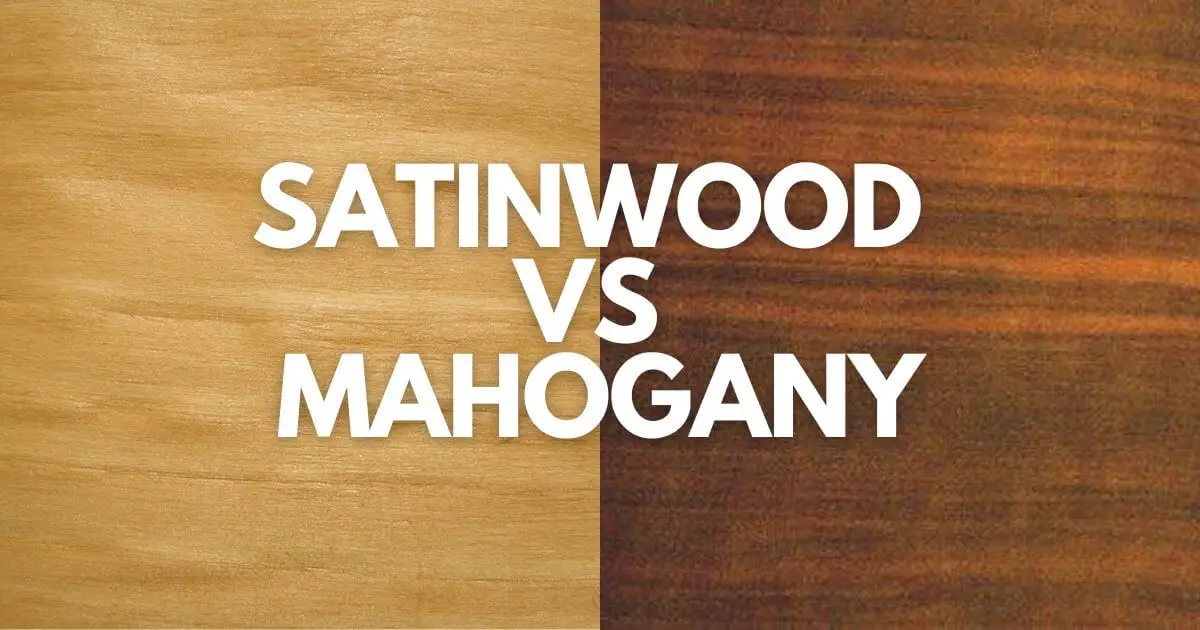
Satinwood is light yellow-brown in color. It has a fine, uniform texture and a straight grain, while mahogany is a deep reddish-brown color that darkens over time. It has a medium to coarse texture and straight to interlocked grain.
Both satinwood and mahogany are known for their durability, but mahogany is more resistant to decay and rot than satinwood.
What is Satinwood?
Satinwood is a hardwood tree native to various regions of Asia, including India, Sri Lanka, Indonesia, and Malaysia. It is known for its durability and hardness and is often used for high-quality furniture, musical instruments, and decorative items.
What is Mahogany Wood?
Mahogany is a type of hardwood that comes from several different species of the genus Swietenia. It is native to tropical regions of the Americas, including Central and South America, and is prized for its durability, beauty, and efficiency.
Mahogany wood is popular for its reddish-brown color and straight, even grain. Its medium texture makes it ideal for making furniture, flooring, and musical instruments. Mahogany is also resistant to rot and insect infestation, making it a popular choice for outdoor applications such as deck and boat building.
| # | Satinwood | Mahogany Wood |
|---|---|---|
| Scientific name | Chloroxylon swietenia | Swietenia mahagoni |
| Tree Size | 40-50 ft (12-15 m) tall, 1-1.5 ft (0.3-0.5 m) trunk diameter | 65-100 ft (20-30 m) tall, 2-3 ft (0.6-1.0 m) trunk diameter |
| Hardness | Very hard | Moderately hard |
| Insect Resistant | Susceptible to insect attack | Resistant to rot and insects |
| Durability | Moderately durable | Extremely durable |
| Wood Type | Hardwood | Hardwood |
| Odor | Pleasant scent when being worked | Spicy scent when being worked |
Uses
Satinwood is commonly used for veneers, musical instruments, and small wooden decorative items. Mahogany is often used in high-end furniture, cabinetry, and boatbuilding.
Satinwood can be used for making furniture, but mahogany is the preferable wood because mahogany has a better finish and can withstand the external environment.
Durability
Both satinwood and mahogany are renowned for their durability, but mahogany is a much harder and more durable wood. Mahogany is naturally more resistant to decay and rot than satinwood. Hence, mahogany requires less maintenance compared to satinwood.
Cost
Mahogany wood is more expensive than satinwood because of its high quality and great appearance. Mahogany is found in a limited area and is a slow-growing tree.
Workability
Satinwood is relatively difficult to work with; it is harder and heavier than mahogany. Satinwood can cause tearout during planing operations. Mahogany is much easier to carve and turn than satinwood, but mahogany’s interlocking grain can be difficult to work with for beginners.
Hardness
There are several species of satinwood and mahogany wood, each with different hardness and weight. The table below lists the hardness of several species of satinwood and mahogany for comparison.
| Wood Species | Janka Hardness |
|---|---|
| African mahogany | 850 lbf (3,800 N) |
| Honduran mahogany | 900 lbf (4,020 N) |
| Cuban Mahogany | 930 lbf (4,120 N) |
| Swamp Mahogany | 1,250 lbf (5,540 N) |
| West Indian Satinwood | 1,820 lbf (8,100 N) |
| Santos Mahogany | 2,400 lbf (10,680 N) |
| East Indian Satinwood | 2,620 lbf (11,650 N) |
| Mountain Mahogany | 3,200 lbf (14,230 N) |
Appearance
Satinwood has a light yellow-brown color with a fine, uniform texture and straight grain. Mahogany generally has a reddish-brown color that becomes darker with age.
Both woods have an attractive appearance, but they provide very different looks. Satinwood is better suited to projects where a lighter, brighter appearance is preferred, while mahogany is often chosen for its rich, warm color.
Water Resistance
Satinwood and mahogany are not completely waterproof, but mahogany generally performs better in moist and outdoor environments. Its natural resistance to decay and moisture makes it suitable for applications such as boatbuilding and outdoor furniture.
Satinwood can also be used for certain outdoor applications, but it may require more protection and maintenance.
Outdoor Use
Mahogany is generally a better choice for outdoor applications because of its natural resistance to decay, rot, and moisture. It is commonly used for boatbuilding, decking, and outdoor furniture.
Satinwood is more commonly used for indoor furniture, veneers, decorative items, and musical instruments.
Maintenance
Both satinwood and mahogany require proper maintenance to preserve their appearance and durability.
Regular cleaning, polishing, and protective finishes can help protect the wood from moisture, dirt, and surface damage. Outdoor mahogany may require additional maintenance depending on the environment and type of finish used.
Allergies
Satinwood has been reported as a sensitizer, which can cause eye and skin irritation when working with it. Working with mahogany can also cause problems such as skin irritation. So, you need to be careful while working with these types of wood.
Satinwood vs Mahogany: Which Is Better?
The choice between satinwood and mahogany depends on the application.
Mahogany is generally the better choice for outdoor applications, boatbuilding, furniture, and projects that require excellent durability and resistance to decay.
Satinwood is a good choice when you want a lighter-colored wood with a fine, uniform texture for furniture, veneers, decorative items, or musical instruments.
If durability and outdoor performance are the main priorities, mahogany is generally preferable. If appearance and a lighter color are more important, satinwood can be an excellent option.
FAQ
Is Satinwood Good for Doors?
Yes, satinwood is a hardwood species known for its durability and stability. It is also resistant to scratches and dents, making it a good choice for various furniture, windows, and doors.
Which Is More Waterproof: Satinwood or Mahogany Wood?
Satinwood and mahogany wood are not waterproof, but mahogany is more water-resistant than satinwood and can withstand moisture and outdoor environments for a long time. We need to understand that no wood species is completely waterproof. Some woods perform well in moist conditions.
Is Satinwood More Expensive Than Mahogany?
Mahogany is generally more expensive than satinwood because of its quality, appearance, durability, and limited availability. However, prices can vary depending on the species, quality, size, and location.
Which Is Harder: Satinwood or Mahogany?
Satinwood is generally harder than many common mahogany species. However, both satinwood and mahogany include multiple species with different hardness ratings, so the exact hardness depends on the species being compared.