
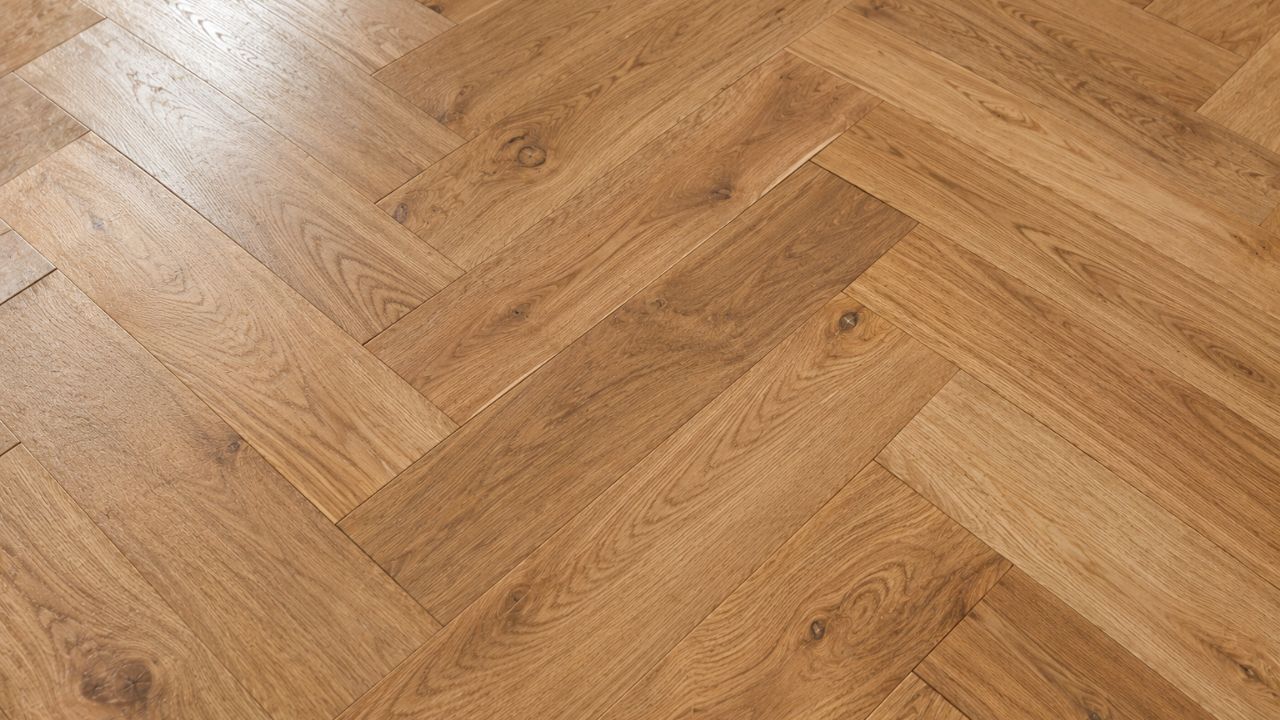
Oak parquet flooring combines the natural beauty and durability of oak wood with decorative geometric patterns such as herringbone, chevron, basketweave, and Versailles. It is a popular choice for homeowners who want the warmth of real wood flooring with a more distinctive appearance than traditional straight planks.
Oak is particularly well suited to parquet because it has an attractive grain, good hardness, and accepts stains and finishes well. White oak, for example, has a Janka hardness of about 1,350 lbf, which gives it good resistance to everyday dents and wear.
Oak parquet flooring is available in solid and engineered construction, so the best option depends on your budget, room conditions, installation method, and how long you want the floor to remain refinishable.
What Is Oak Parquet Flooring?
Oak parquet flooring is wood flooring made from small oak pieces arranged in geometric patterns rather than long, parallel planks.
The individual pieces can be solid oak blocks or engineered oak elements with a real oak wear layer over a more stable core.
Some common oak parquet patterns include:
- Herringbone
- Chevron
- Basketweave
- Versailles
- Brick bond
- Square or mosaic patterns
The pattern changes the appearance of the room, while the oak species determines characteristics such as color, grain, hardness, and wear resistance.
Why Is Oak Good for Parquet Flooring?
Oak is one of the most popular choices for parquet flooring because it offers a good balance between appearance, durability, workability, and availability.
Its natural grain remains visible even when the wood is arranged in complex patterns. Oak also accepts stains, oils, and other finishes, giving homeowners considerable flexibility in changing the final appearance.
Another advantage is its hardness. White oak has a Janka hardness rating of around 1,350 lbf, making it substantially harder than softer flooring woods such as pine.
Types of Oak Parquet Flooring
Oak parquet flooring can be divided into several categories based on construction and oak species.
Solid Oak Parquet Flooring
Solid oak parquet blocks are made from natural oak throughout their thickness.
Because there is no engineered core, solid oak parquet can potentially be sanded and refinished several times during its life, provided sufficient wood remains above the installation system.
However, solid wood responds to changes in moisture and humidity. Proper acclimation, installation, expansion gaps, and indoor humidity control are important.
Best for:
- Traditional interiors
- Heritage properties
- Long-term flooring projects
- Homeowners who want maximum refinishing potential
Engineered Oak Parquet Flooring
Engineered oak parquet consists of a real oak wear layer bonded to a more dimensionally stable core.
The construction generally makes it more stable than solid oak when humidity changes. This can make engineered oak parquet a practical choice for many modern homes.
The main specification to check is the thickness of the oak wear layer, because it affects future refinishing potential.
Best for:
- Modern homes
- Rooms with moderate humidity changes
- Concrete subfloors where the product allows installation
- Faster installation systems
- Homeowners who want real oak with improved dimensional stability
White Oak vs Red Oak Parquet Flooring
White oak and red oak are both popular flooring species, but they have different appearances and characteristics.
| Feature | White Oak | Red Oak |
|---|---|---|
| Color | Light beige to medium brown | Pinkish to reddish brown |
| Grain | Prominent, often slightly more subdued | Strong and distinctive |
| Janka hardness | About 1,350 lbf | About 1,290 lbf |
| Appearance | Neutral and contemporary | Warmer and more traditional |
| Staining | Takes many stains well | Takes stains well |
| Common use | Modern and traditional interiors | Traditional and classic interiors |
The exact appearance varies by grade, growing conditions, cut, finish, and stain.
Oak Parquet Flooring Patterns
The pattern is one of the most important design choices when buying oak parquet flooring.
Oak Herringbone Flooring
Herringbone is one of the most recognizable oak parquet patterns.
Rectangular oak blocks are arranged in a broken zigzag pattern. The changing grain direction creates a distinctive visual effect as light moves across the floor.
Oak herringbone works well in:
- Living rooms
- Dining rooms
- Hallways
- Bedrooms
- Offices
Oak Chevron Flooring
Chevron resembles herringbone but forms a continuous V-shaped pattern.
The ends of the oak pieces are cut at an angle so they meet precisely.
Chevron usually creates a more formal and contemporary appearance, but it requires careful installation because alignment errors are easily visible.
Oak Basketweave Flooring
Basketweave parquet creates a woven appearance using groups of oak pieces.
It is particularly suitable for homeowners looking for a more traditional or decorative floor.
Oak Versailles Flooring
The Versailles pattern uses geometric framed panels and is one of the most elaborate parquet designs.
It can create a luxury or heritage appearance but generally requires more material, planning, and skilled installation than simpler patterns.
Oak Parquet Flooring Pros
1. Attractive Natural Appearance
Oak has a recognizable grain pattern and natural color variation.
When arranged into a parquet pattern, the grain direction changes from one piece to another, creating a dynamic appearance that is different from standard plank flooring.
2. Good Durability
Oak is a relatively hard flooring wood and can withstand normal residential foot traffic when properly finished and maintained.
White oak has a Janka hardness rating of approximately 1,350 lbf, which helps it resist dents and everyday wear.
3. Many Design Options
Oak parquet is available in numerous patterns, finishes, stains, and grades.
You can choose a natural oak appearance or use a stain to create darker, warmer, or more contemporary colors.
4. Can Be Refinished
Solid oak parquet can generally be sanded and refinished multiple times.
Engineered oak parquet may also be refinished, but this depends on the thickness of the oak wear layer.
Refinishing can remove surface scratches and restore the appearance of an older floor.
5. Works With Traditional and Modern Interiors
Oak parquet is versatile enough for both classic and contemporary spaces.
A natural matte finish can create a modern appearance, while a darker stain and decorative pattern can give the floor a more traditional look.
6. Long Service Life
A properly installed and maintained oak parquet floor can last for decades.
Solid oak has particularly good long-term potential because it can be periodically sanded and refinished rather than completely replaced.
Oak Parquet Flooring Cons
1. Installation Can Be More Expensive
Installing parquet requires more precision than installing straight wood planks.
The pattern must be carefully aligned, and complex designs such as chevron and Versailles can require additional cutting and labor.
2. More Sensitive to Moisture Than Tile
Oak is still a natural wood product.
Standing water and excessive moisture can cause swelling, movement, gaps, cupping, or finish damage. Oak parquet should therefore not be treated as waterproof flooring.
3. Can Scratch and Dent
Oak is durable, but it is not scratch-proof.
Furniture, pet claws, grit, and heavy objects can damage the finish or surface.
4. Refinishing Can Be More Complicated
Parquet contains pieces running in multiple directions.
This means sanding requires greater care than sanding a conventional straight-laid plank floor. Professional refinishing is often recommended for intricate parquet patterns.
5. Higher Initial Cost
Oak parquet can cost more than laminate, vinyl, or basic straight-laid flooring because of the material and installation requirements.
Premium oak, custom patterns, reclaimed oak, and complex borders can increase the price significantly.
Oak Parquet Flooring Cost
The cost of oak parquet flooring depends on whether you choose solid or engineered oak, the grade, thickness, finish, pattern, installation method, and location.
For a broad U.S. reference, current oak flooring pricing commonly falls around $7–$14+ per square foot for many solid and engineered oak products before considering all project-specific costs, while specialty products can cost more.
Parquet installation can add significantly to the total because patterned flooring requires more precise layout and labor. Current parquet cost guides show that complex patterns generally require more installation work than simpler layouts.
What Affects Oak Parquet Flooring Cost?
The biggest cost factors are:
- Oak species and grade
- Solid vs engineered construction
- Thickness
- Oak wear-layer thickness
- Herringbone, chevron, or other pattern
- Custom borders
- Factory finish vs site finish
- Subfloor preparation
- Installation labor
- Room size and layout
- Geographic location
Is Oak Parquet More Expensive Than Regular Oak Flooring?
Usually, yes.
The oak itself may have a similar material price, but parquet installation requires additional layout, cutting, alignment, and sometimes more material due to waste.
Simple herringbone can be relatively straightforward for an experienced installer, while chevron and elaborate custom patterns can significantly increase labor costs.
How to Install Oak Parquet Flooring
Oak parquet should be installed over a properly prepared subfloor.
The general process is:
1. Prepare the Subfloor
The subfloor should be clean, dry, structurally sound, and sufficiently level.
Moisture should also be checked before installation, particularly when installing wood flooring over concrete.
2. Acclimate the Flooring
Follow the flooring manufacturer’s instructions for acclimation.
Oak is hygroscopic, meaning it exchanges moisture with the surrounding environment. Allowing the flooring to reach an appropriate moisture condition before installation can help reduce excessive movement afterward.
3. Plan the Pattern
The installer should establish reference lines before installing the first pieces.
This is especially important with herringbone and chevron patterns because small alignment errors can become increasingly visible across the room.
4. Install the Oak Pieces
Depending on the product, oak parquet may be glued, nailed, or installed using another manufacturer-approved system.
Engineered parquet products may have specific adhesive or floating installation requirements.
5. Sand and Finish
Unfinished oak parquet can be sanded and finished after installation.
Finishing options can include:
- Oil
- Hardwax oil
- Polyurethane
- Other manufacturer-approved wood-floor finishes
Factory-finished parquet may not require on-site finishing.
Oak Parquet Flooring Care and Maintenance
Proper care is important if you want oak parquet flooring to maintain its appearance for many years.
Sweep or Vacuum Regularly
Dust and grit can act like abrasives against the finish.
Use a soft broom, microfiber mop, or a vacuum suitable for hardwood floors to remove dirt regularly.
Clean Spills Immediately
Do not allow water or other liquids to remain on the floor.
Wipe spills as soon as possible to reduce the chance of moisture entering joints or damaging the finish.
Use the Right Cleaner
Use a cleaning product recommended for your specific floor finish.
Avoid soaking the floor with water and avoid abrasive or harsh cleaning chemicals unless the flooring manufacturer specifically recommends them.
Use Furniture Pads
Place felt pads under furniture legs to reduce scratches and dents.
Lift furniture instead of dragging it across the floor.
Use Rugs in High-Traffic Areas
Entry mats and area rugs can reduce the amount of dirt and grit that reaches the floor.
However, use rug pads that are approved for hardwood flooring so they do not trap moisture or damage the finish.
Maintain Stable Indoor Conditions
Large changes in humidity can cause oak to expand and contract.
Keeping indoor environmental conditions reasonably stable can help reduce excessive gaps, movement, and other moisture-related problems.
Can Oak Parquet Flooring Be Refinished?
Yes, but refinishing depends on the type of oak parquet.
Solid Oak Parquet
Solid oak parquet generally has excellent refinishing potential because the blocks contain oak throughout their thickness.
However, the amount of material that can safely be removed depends on the floor’s thickness and installation details.
Engineered Oak Parquet
Engineered oak parquet can sometimes be sanded and refinished.
The key factor is the thickness of the real oak wear layer. A thicker wear layer generally provides more opportunity for future refinishing.
Do not assume that every engineered oak parquet floor can be refinished multiple times.
How Long Does Oak Parquet Flooring Last?
A quality oak parquet floor can last for decades, particularly when it is properly installed, protected from excessive moisture, and periodically refinished when necessary.
Solid oak generally offers the greatest long-term refinishing potential.
Engineered oak can also provide a long service life, but its lifespan depends more heavily on the construction and wear-layer thickness.
Is Oak Parquet Flooring Waterproof?
No. Oak parquet flooring is not waterproof.
Oak is relatively durable, but it is still a natural wood material that can absorb moisture.
Short-term spills are usually manageable when cleaned quickly, but prolonged exposure to standing water can cause swelling, movement, staining, or finish failure.
For areas with frequent water exposure, consider a flooring material specifically designed for those conditions.
Is Oak Parquet Flooring Good for Kitchens?
Oak parquet can be used in some kitchens, but it requires more care than tile or waterproof flooring.
If you choose it for a kitchen, wipe spills quickly and avoid standing water. Always check the flooring manufacturer’s recommendations for kitchen installation.
For bathrooms and other areas with frequent standing water, oak parquet is generally not the best choice.
Is Oak Parquet Flooring Good for Pets?
Yes, oak parquet can work well in homes with pets, but it is not scratch-proof.
To protect the floor:
- Keep pet nails trimmed.
- Clean dirt and grit regularly.
- Use rugs in high-traffic areas.
- Wipe up spills quickly.
- Use protective pads under furniture.
- Choose a durable finish.
A distressed or natural-grade oak floor can also make minor scratches less noticeable than a very uniform, glossy floor.
Oak Parquet Flooring vs Oak Plank Flooring
| Feature | Oak Parquet Flooring | Oak Plank Flooring |
|---|---|---|
| Pattern | Geometric | Usually parallel boards |
| Appearance | Decorative and distinctive | Traditional and natural |
| Installation | More complex | Usually simpler |
| Labor cost | Often higher | Usually lower |
| Design options | Many geometric patterns | Mostly plank layout |
| Refinishing | Possible, depending on construction | Generally straightforward |
| Best for | Statement interiors | Versatile everyday flooring |
The best choice depends mainly on your preferred appearance and installation budget.
Is Oak Parquet Flooring a Good Investment?
Oak parquet flooring can be a good long-term flooring investment if you value natural wood, durability, and distinctive design.
Its biggest advantages are the natural appearance of oak, pattern variety, durability, and refinishing potential.
However, it costs more to install than many basic flooring options, and maintaining real wood requires some care around moisture, scratches, and humidity.
For homeowners who want a decorative hardwood floor rather than a simple plank floor, oak parquet is one of the strongest options to consider.
How to Choose the Best Oak Parquet Flooring
Before buying, consider these factors:
1. Choose Solid or Engineered Oak
Choose solid oak if maximum refinishing potential is your priority.
And choose engineered oak if dimensional stability and easier installation are more important.
2. Check the Wear Layer
If you are buying engineered oak parquet, check the thickness of the real oak wear layer.
A thicker wear layer generally provides more future refinishing potential.
3. Choose the Right Pattern
Herringbone is a classic choice, while chevron provides a more formal appearance.
For large luxury spaces, Versailles and other decorative patterns can create a stronger visual impact.
4. Consider the Finish
Matte finishes tend to create a natural appearance and can make everyday marks less noticeable.
Glossy finishes provide a more polished look but can make scratches and surface imperfections easier to see.
5. Check the Installation Requirements
Make sure the product is suitable for your subfloor and intended installation method.
Do not choose a parquet product based only on appearance.
Final Verdict
Oak parquet flooring is an excellent choice for homeowners who want the durability and natural beauty of oak with a distinctive geometric design.
Oak offers good hardness, an attractive grain, and excellent finishing versatility. White oak, for example, has a Janka hardness of about 1,350 lbf.
The main disadvantages are the higher installation cost, greater installation complexity, and sensitivity to excessive moisture compared with non-wood flooring.
For maximum longevity and refinishing potential, solid oak parquet is a strong choice. For better dimensional stability, particularly in environments with changing humidity, engineered oak parquet is often more practical.
If you want a classic wood floor that can remain attractive for decades while adding a strong design element to a room, oak parquet flooring is one of the best options to consider.
FAQs About Oak Parquet Flooring
Is oak good for parquet flooring?
Yes. Oak is one of the most popular woods for parquet because it offers good hardness, attractive grain, durability, and excellent finishing options.
Is oak parquet flooring durable?
Yes. Oak is a relatively hard wood and can withstand normal residential foot traffic when properly installed and maintained. White oak has a Janka hardness of approximately 1,350 lbf.
Is oak parquet better than oak plank flooring?
Neither is universally better. Oak parquet provides more decorative patterns, while oak plank flooring is usually simpler and less labor-intensive to install.
Is white oak or red oak better for parquet?
Both can work well. White oak has a slightly higher Janka hardness and a more neutral appearance, while red oak has warmer pinkish and reddish tones. Your choice should depend on appearance, availability, and budget.
Can oak parquet flooring be refinished?
Yes. Solid oak parquet can generally be refinished multiple times. Engineered oak parquet may also be refinished, depending on the thickness of its oak wear layer.
How do you clean oak parquet flooring?
Regularly sweep or vacuum with a hardwood-floor-safe attachment and clean with a lightly damp microfiber mop and a cleaner recommended for your floor’s finish. Avoid excessive water.
Can oak parquet flooring get wet?
Small spills should be cleaned quickly, but oak parquet should not be exposed to standing water or prolonged moisture.
Is oak parquet flooring expensive?
It can be more expensive than basic wood flooring because the geometric pattern requires more precise installation. The final price depends on the oak grade, construction, pattern, finish, labor, and location.
What is the most popular oak parquet pattern?
Herringbone is one of the most popular oak parquet patterns. Chevron is another common choice for a more continuous V-shaped design.
How long does oak parquet flooring last?
A properly maintained solid oak parquet floor can last for decades and potentially much longer with periodic refinishing. Engineered oak parquet can also last for decades, depending on its construction, wear layer, installation, and maintenance.