
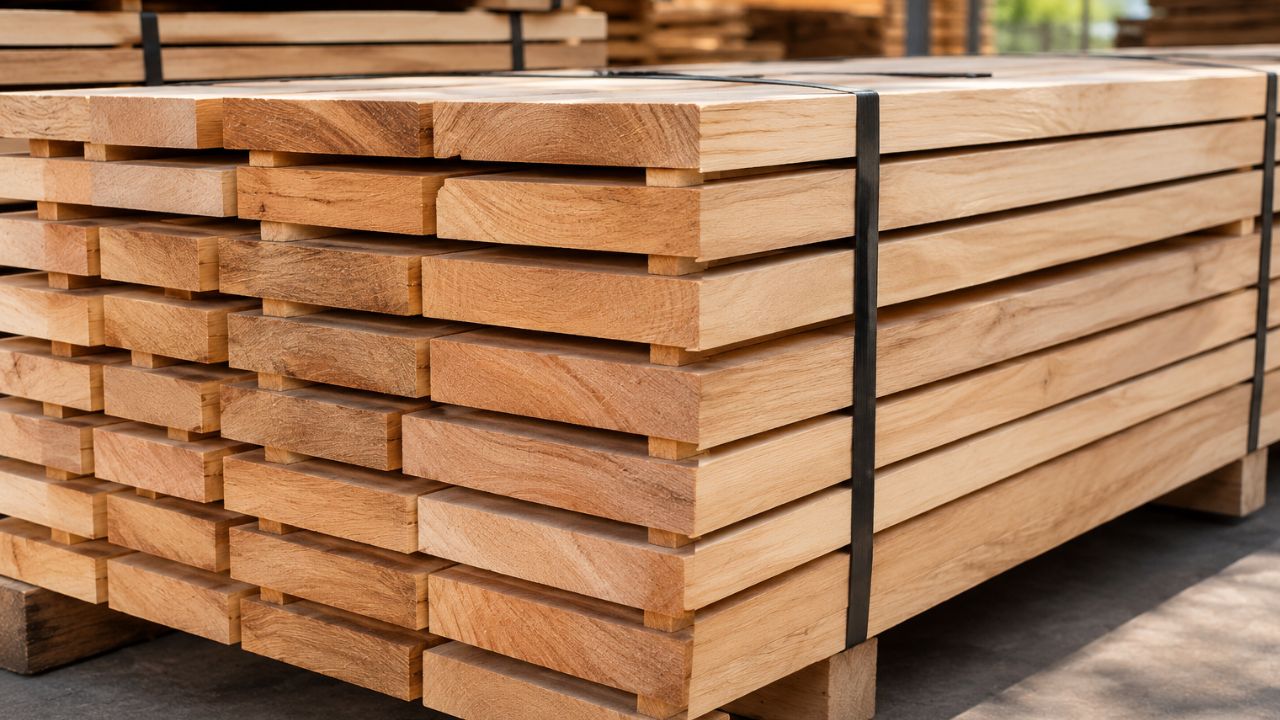
Kiln-dried wood is lumber that has been dried in a temperature- and humidity-controlled chamber called a kiln. The process removes moisture from the wood faster and more consistently than ordinary air drying. Properly dried lumber is less likely to shrink, warp, or develop other problems after it is made into furniture, flooring, or building components.
“Kiln-dried” describes how the wood was dried. It does not automatically mean the wood is waterproof, pressure-treated, or suitable for outdoor use.
How Is Wood Kiln-Dried?
Freshly cut lumber contains water. To prepare it for use, boards are stacked with small spacers between them so air can circulate. The stack is placed in a kiln, where heat, airflow, and humidity are controlled.
The kiln operator adjusts conditions as the wood dries. Drying too quickly can cause cracks, warping, or other defects, so schedules are set according to factors such as wood species, board thickness, and the lumber’s intended use. The drying process ends when the wood reaches its target moisture content. USDA Forest Products Laboratory
What Does Moisture Content Mean?
Moisture content describes how much water is in the wood compared with its dry weight. It is written as a percentage. The target varies by species and intended use. For example, lumber used indoors may need a lower moisture content than wood intended for some outdoor applications.
Kiln-dried wood can also take on or lose moisture after drying. Store it in conditions close to where it will be used, and allow it to acclimate before installation when the product or project instructions recommend it.
Benefits of Kiln-Dried Wood
More predictable dimensions
Drying wood before use helps reduce later shrinkage and movement. This is useful for furniture, cabinetry, flooring, and other projects that rely on accurate dimensions.
Faster than air drying
Air drying can take months or longer, depending on the species, board thickness, weather, and storage conditions. Kiln drying speeds up moisture removal under controlled conditions.
Ready for many indoor projects
Lumber dried to a suitable moisture content is often easier to machine, join, glue, and finish than green wood. The correct moisture level still depends on the project and local conditions.
Reduced risk of some pests
The heat used in some kiln-drying processes can kill insects and larvae in the wood. However, kiln drying is not the same as pressure treatment, and not every kiln-dried product is certified for pest control or international shipping.
Kiln-Dried Wood vs. Air-Dried Wood
Both methods remove moisture, but they do so differently.
| Feature | Kiln-dried wood | Air-dried wood |
|---|---|---|
| Drying method | Dried in a controlled chamber | Stacked with airflow in an outdoor or covered area |
| Drying time | Usually faster | Can take months or longer |
| Moisture control | Conditions can be monitored and adjusted | Depends more on weather and storage |
| Typical cost | May cost more because of processing | May cost less, depending on supply and handling |
| Best choice | Projects needing controlled moisture and reliable sizing | Projects where slower drying is acceptable |
Neither method guarantees perfect lumber. Defects can occur during either process, so inspect boards for cracks, warping, and other damage before buying.
Common Uses
Kiln-dried wood is used for:
- Furniture and cabinets
- Hardwood flooring
- Interior trim, doors, and molding
- Framing and other construction lumber
- Woodworking, joinery, and turning
- Firewood, when sold and labeled as kiln-dried fuel
The required grade and moisture content depend on the application. For structural lumber, follow the building plans and local code requirements. For flooring or furniture, follow the product manufacturer’s instructions.
Is Kiln-Dried Wood Waterproof or Treated?
No. Kiln drying removes moisture from the wood; it does not make the wood waterproof. The lumber can absorb water again if it is exposed to rain, damp storage, or high humidity.
It is also not the same as pressure-treated wood. Pressure treatment uses preservatives to help protect wood against decay organisms or insects. If a project needs treated lumber or exterior-rated panels, choose a product specifically labeled for that use.
How to Tell If Wood Is Kiln-Dried
Check the product label, grade stamp, or supplier description. Ask the seller:
- What is the wood’s moisture content?
- Was the whole board kiln-dried, or only the surface?
- Is the product treated as well as dried?
- Is it suitable for the location and application I have in mind?
A moisture meter can provide an estimate, but readings vary by species, temperature, and meter type. For important projects, confirm the target moisture content with the supplier or manufacturer.
Frequently Asked Questions
Is kiln-dried wood better than air-dried wood?
It depends on the project. Kiln drying provides more controlled drying in less time, while air drying may be suitable when the slower process and resulting moisture level meet the project’s needs. Inspect the lumber and check its moisture content either way.
Does kiln-dried wood still shrink?
It can. Wood continues to respond to changes in humidity after drying. Kiln drying reduces the amount of moisture in the lumber but does not stop future movement.
Is kiln-dried wood safe to burn?
Kiln-dried firewood is intended to be burned when sold as firewood, but follow the instructions for your stove or fireplace. Do not burn painted, glued, or chemically treated lumber as firewood.
Is kiln-dried wood good for outdoor use?
It may be used outdoors if the species, grade, treatment, and design are suitable for exterior exposure. Kiln drying alone does not protect wood from rain, decay, or insects.
Does kiln-dried mean pressure-treated?
No. Kiln drying removes moisture. Pressure treatment adds preservatives using a different process. Check the label to see whether lumber has been treated.
Conclusion
Kiln-dried wood is lumber dried in a controlled chamber to reach a target moisture content. This helps make it more predictable for furniture, flooring, construction, and other projects. Since it can still absorb moisture and move with changing conditions, select the right grade for the job and store and install it according to the supplier’s guidance.