Hevea wood, commonly known as rubberwood, comes from the rubber tree (Hevea brasiliensis). The tree is best known as a source of natural latex, but its timber is also used for furniture, flooring, cabinetry, and household products. Hevea has a light, even appearance and is relatively easy to work with. Its main limitation is low natural resistance to decay and insects, so it needs appropriate treatment and protection.
What Is Hevea Wood?
The rubber tree is native to the Amazon region of South America and is now widely grown in tropical plantations. Trees are tapped for latex, which is used to make natural rubber. When a plantation tree is no longer productive for latex, it may be harvested for timber.
The wood is often called rubberwood, plantation hardwood, or Hevea. “Rubberwood” refers to the tree’s use in rubber production; the lumber itself is not unusually elastic or rubbery.
Hevea Wood Properties
| Property | Description |
|---|---|
| Botanical name | Hevea brasiliensis |
| Common name | Rubberwood or Hevea |
| Wood type | Hardwood |
| Color | Pale cream to straw or light brown, sometimes with a pinkish cast |
| Grain | Usually straight to slightly interlocked |
| Texture | Moderately coarse and fairly even |
| Average dried weight | About 37 lb/ft³ (595 kg/m³) |
| Janka hardness | Around 960–980 lbf (4,280–4,350 N), depending on sample and test conditions |
| Natural durability | Low; susceptible to fungi and insects if untreated |
These figures are approximate. Wood properties can vary with growing conditions, plantation, and moisture content. The FAO’s rubberwood profile describes its physical properties and uses, while the PROSEA Hevea reference discusses its drying, workability, and durability.
Appearance
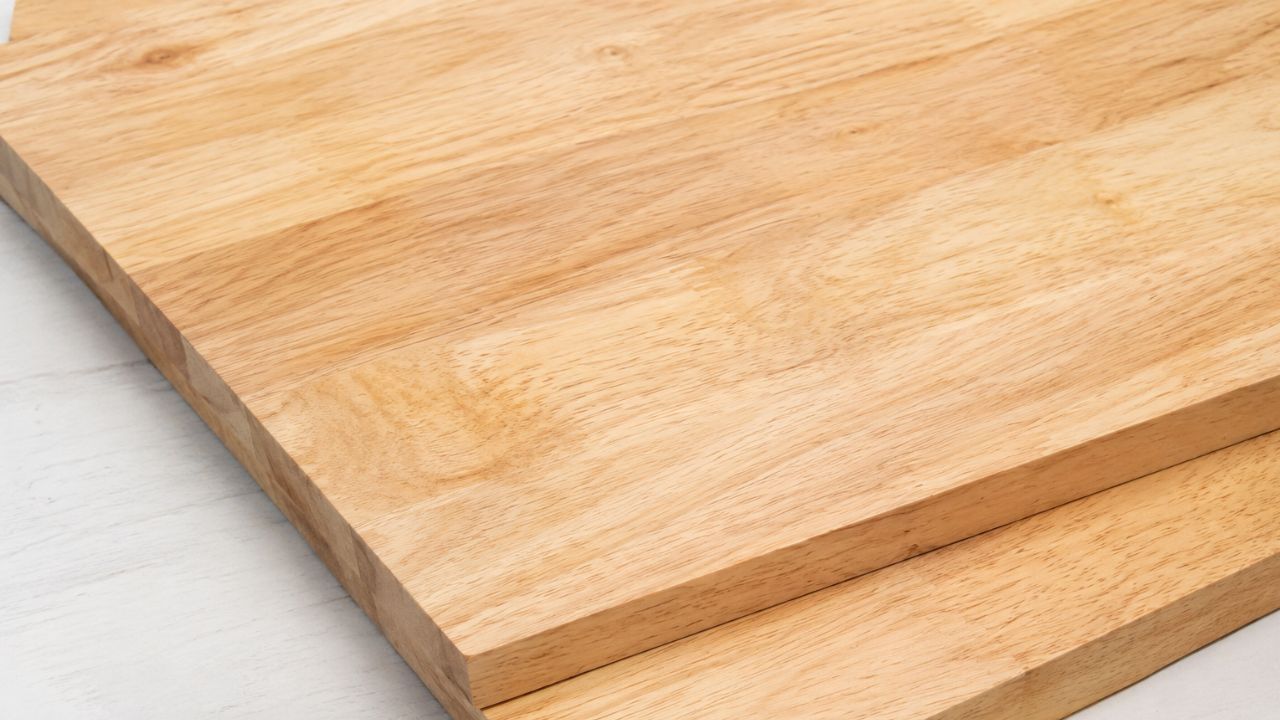
Hevea heartwood is pale cream to light brown, sometimes with a pinkish tint. The heartwood and sapwood can be difficult to distinguish. The grain is usually straight, though it may be slightly interlocked or wavy. Its texture is moderately coarse but even, giving the wood a fairly consistent look.
Freshly sawn rubberwood may have a noticeable latex-like odor. The color can deepen or shift toward a pale straw tone as the wood dries and ages.
Common Uses of Hevea Wood
Furniture and Cabinetry
Furniture is one of the best-known uses for Hevea. It is used for tables, chairs, bed frames, cabinets, shelves, and interior components. Its workability makes it practical for furniture production, and its light color can be stained or finished to suit different styles.
Flooring and Parquet
Hevea is used in some solid and engineered flooring products, including parquet. It can suit interior rooms with ordinary household traffic, though it is not as hard as some common flooring woods. Protect it from scratches, dents, and moisture.
Interior Joinery and Millwork
The wood can be used for trim, paneling, stair parts, door components, and other interior joinery. It is also used in veneer, plywood, blockboard, and other composite products.
Household Items
Rubberwood is made into cutting boards, trays, bowls, and other household products. For items that contact food, use a finish intended for food-contact surfaces and follow the product’s care instructions.
Particleboard and Fiberboard
Offcuts and other rubberwood residues can be used to manufacture particleboard, medium-density fiberboard, and related products. Using the timber and processing residues can make more complete use of plantation harvests.
Advantages of Hevea Wood
Attractive, Light Appearance
Its pale color and relatively uniform grain work well in furniture and interiors. The wood can also be stained if a darker appearance is desired.
Easy to Work
Hevea is generally easy to saw, plane, shape, glue, and finish with suitable tools. Preservatives can penetrate it effectively, which is useful because untreated rubberwood is not naturally durable.
Useful for Many Indoor Products
The wood is used for furniture, joinery, flooring, household items, and composite panels. Its range of uses makes it a practical plantation timber.
Potential Use of Plantation Trees
Rubberwood may be recovered from trees harvested after latex production declines. This can provide a timber use for plantation trees. However, the environmental impact depends on how the plantation was managed and how the wood was processed; the name alone does not guarantee sustainable sourcing.
Disadvantages of Hevea Wood
Low Natural Durability
Untreated Hevea is vulnerable to fungal decay and insect attack, especially in damp conditions. It is best suited to dry interior use unless properly treated for a specific application.
Can Dent and Scratch
With a Janka rating around 960–980 lbf, it is moderately hard but can dent more easily than harder species such as hard maple. Use protective pads under furniture and avoid dragging heavy objects across it.
Needs Careful Drying and Storage
Rubberwood can develop drying defects, including bowing or springing, if it is not properly dried and handled. Choose kiln-dried material from a supplier who can confirm it is suited to the intended use.
Not Naturally Suited to Outdoor Exposure
Without suitable treatment and a compatible exterior finish, Hevea can deteriorate when exposed to rain, persistent moisture, or ground contact. Even treated wood requires appropriate construction and ongoing inspection.
Working With Hevea Wood
Hevea generally machines and finishes well. Use sharp tools for clean cuts, and test glue or finish on an offcut before applying it to the whole project. If machining freshly processed or poorly dried stock, inspect the equipment and lumber for residue or surface defects.
For furniture or flooring, use kiln-dried timber with a moisture content appropriate for the final indoor environment. Acclimate flooring as directed by its manufacturer and install it over a suitable, dry subfloor.
Is Hevea Wood Sustainable?
Rubberwood can make productive use of plantation trees that have completed their latex-producing life. That is a potential benefit, but sustainability depends on the plantation’s land-use history, forestry practices, treatment chemicals, and supply chain. Look for credible certification or sourcing details if environmental impact is a priority.
How to Care for Hevea Wood
For indoor furniture, dust with a soft cloth and clean spills promptly. Avoid soaking the surface or leaving water standing on it. Use a finish appropriate to the product, and keep the wood away from prolonged dampness.
For flooring, sweep or vacuum regularly to remove grit, use cleaners approved by the flooring manufacturer, and avoid wet mopping unless the product instructions allow it. Outdoor use requires wood specifically treated and finished for that exposure.
Frequently Asked Questions
Is Hevea wood a hardwood?
Yes. Hevea is a hardwood because it comes from a broadleaf tree. It is moderately hard, but it is softer than some flooring species, including hard maple.
Is Hevea the same as rubberwood?
Yes. Hevea wood and rubberwood generally refer to timber from the rubber tree, Hevea brasiliensis.
Is Hevea wood waterproof?
No. It is not waterproof and has low natural resistance to decay. Keep it dry or use a product treated and designed for the exposure conditions.
Is Hevea wood good for furniture?
Yes. It is commonly used for indoor furniture because it is workable, has a light appearance, and accepts finishes. Proper drying and protection help the finished piece perform well.
Can Hevea wood be used outdoors?
Untreated Hevea is not a good choice for prolonged outdoor exposure. Use it outdoors only when the specific product is properly treated, rated for the intended conditions, and maintained according to the manufacturer’s instructions.
Conclusion
Hevea wood is a light-colored, workable hardwood used for furniture, flooring, joinery, household items, and composite panels. It can be a practical choice for indoor projects, especially when properly dried and finished. Its low natural durability means it needs protection from moisture, fungi, and insects, so confirm the treatment and intended-use rating before buying.