
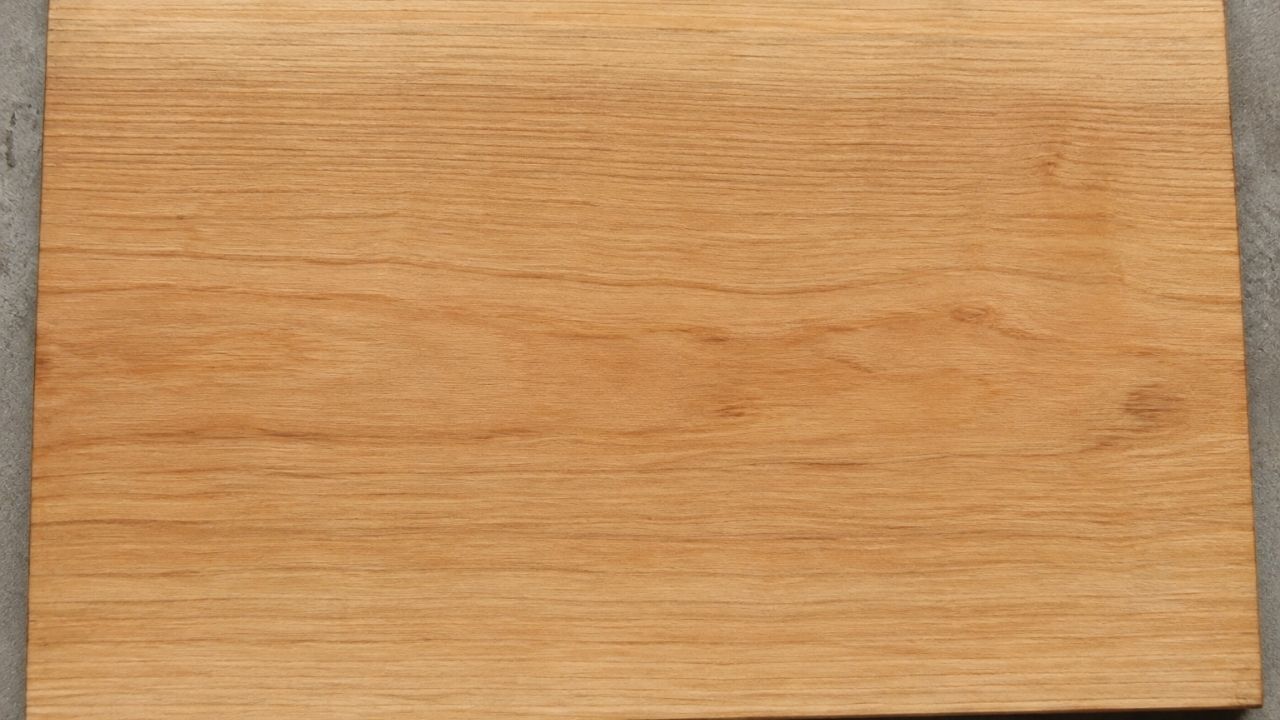
Yes, tulip poplar is a hardwood. Its scientific name is Liriodendron tulipifera, and it belongs to the Magnoliaceae, or magnolia, family. Although its wood is relatively soft compared with many other hardwoods, it is botanically classified as a hardwood because it comes from a flowering, broadleaf tree.
This is where the name can be confusing. Tulip poplar is also called yellow poplar or tulipwood, but it is not a true poplar from the Populus genus.
Why Is Tulip Poplar Called a Hardwood?
The terms hardwood and softwood describe the botanical classification of a tree rather than how hard the lumber feels.
Hardwoods generally come from angiosperms, which are flowering plants that produce seeds enclosed within a structure. Softwoods generally come from gymnosperms such as pine, fir, and spruce.
Tulip poplar is an angiosperm, so it is classified as a hardwood even though its lumber is relatively soft.
This distinction is important because a hardwood is not necessarily harder than every softwood. For example, tulip poplar has a Janka hardness of about 540 lbf, which is considerably lower than many common hardwoods.
Is Tulip Poplar a True Poplar?
No. Tulip poplar is not a true poplar.
Tulip poplar belongs to the genus Liriodendron and the magnolia family. True poplars belong to the genus Populus.
The common name “tulip poplar” can therefore be misleading. The tree is also commonly called yellow poplar or tuliptree.
The name “tulip tree” comes from its distinctive tulip-shaped flowers and leaves.
How Hard Is Tulip Poplar Wood?
Tulip poplar is considered a relatively soft hardwood. Its Janka hardness is approximately 540 lbf (2,402 N).
For comparison:
| Wood Species | Janka Hardness |
|---|---|
| Tulip Poplar | 540 lbf (2,402 N) |
| Black Ash | 850 lbf (3,780 N) |
| Red Oak | 1,220 lbf (5,430 N) |
| White Oak | 1,350 lbf (5,990 N) |
| Black Locust | 1,700 lbf (7,560 N) |
| Hickory | 1,880 lbf (8,360 N) |
This lower hardness makes tulip poplar easy to cut, plane, drill, and shape compared with many harder hardwoods.
Tulip Poplar Wood Characteristics
Tulip poplar has several characteristics that make it useful for woodworking.
Its sapwood is generally creamy white, while the heartwood can range from pale yellowish-brown to olive green. The green coloration can darken after exposure to light and eventually become more brown. The wood generally has a straight grain and medium-to-fine texture.
It is also widely available throughout the eastern United States and is valued for its versatility and relatively low cost.
Is Tulip Poplar Easy to Work With?
Yes, tulip poplar is one of the easier hardwoods to work with.
It can be easily machined, planed, turned, glued, and bored. It also has little tendency to split when nailed and accepts paint, enamel, and stain well.
Because it is relatively soft, sharp tools are still important. Dull blades can cause fuzzing or a less-than-smooth surface.
Its easy workability makes tulip poplar a popular choice for both professional woodworking and beginner projects.
What Is Tulip Poplar Used For?
Tulip poplar has a wide range of applications. It is commonly used for:
- Furniture
- Kitchen cabinets
- Doors
- Interior trim
- Molding and millwork
- Paneling
- Veneer
- Plywood
- Turned objects
- Carvings
- Musical instruments
- Light construction
- Painted woodworking projects
Its combination of availability, workability, relatively low weight, and ability to hold paint makes it particularly useful for interior applications.
Is Tulip Poplar Good for Furniture?
Yes, tulip poplar is a good wood for furniture, especially painted furniture and furniture components.
It is easy to machine and has a relatively uniform texture. It also accepts paint exceptionally well, making it a popular choice for paint-grade furniture and cabinet parts.
However, its relatively low hardness means it can dent more easily than harder woods such as oak, maple, or hickory. Therefore, it may not be the best choice for high-wear surfaces that receive heavy daily use.
Is Tulip Poplar Good for Outdoor Use?
Tulip poplar is not generally considered a highly decay-resistant wood, so it is better suited to protected or interior applications.
It can be used for certain exterior applications when properly protected with an appropriate finish, but prolonged exposure to moisture can increase the risk of decay.
For outdoor projects where natural resistance to rot is important, woods such as white oak, black locust, or naturally durable tropical hardwoods may be better choices.
Is Tulip Poplar Good for Flooring?
Tulip poplar can technically be used for flooring, but it is not usually the first choice for high-traffic floors.
Its relatively low Janka hardness of about 540 lbf means it is more susceptible to dents and wear than harder flooring woods such as oak, maple, or hickory.
It can still be useful for certain flooring applications, particularly when cost and workability are more important than maximum wear resistance.
Tulip Poplar vs. Oak
Tulip poplar and oak are both hardwoods, but their physical properties are quite different.
Oak is considerably harder, denser, and generally more durable than tulip poplar. White oak has a Janka hardness of around 1,350 lbf, compared with approximately 540 lbf for tulip poplar.
Tulip poplar, however, is easier to work with and is generally more suitable when you need an inexpensive, lightweight hardwood for interior projects.
If durability and wear resistance are the priority, oak is usually the better choice. If easy machining, paintability, and affordability are more important, tulip poplar can be an excellent option.
Tulip Poplar vs. Pine
Tulip poplar and pine can sometimes be used for similar applications, but they belong to different botanical categories.
Tulip poplar is a hardwood, while pine is a softwood.
Despite this difference, tulip poplar can have a similar practical feel to some softwoods because of its relatively low hardness and density. It is easy to work with and is widely used for interior construction, furniture, and millwork.
Is Tulip Poplar Expensive?
Tulip poplar is generally considered an affordable domestic hardwood because it is widely available throughout the eastern United States. Purdue Extension describes yellow poplar as abundant and inexpensive, with a wide range of functional and decorative uses.
Its availability and fast growth also contribute to its popularity as a cost-effective hardwood.
The actual price depends on lumber grade, thickness, width, quality, location, and supplier.
Advantages of Tulip Poplar
Tulip poplar has several advantages:
- Easy to work: It can be easily cut, planed, drilled, turned, and glued.
- Affordable: It is generally less expensive than many premium hardwoods.
- Widely available: It is abundant throughout much of the eastern United States.
- Good for painting: It accepts paint and enamel exceptionally well.
- Stable: Properly dried tulip poplar has relatively good dimensional stability.
- Versatile: It is used for furniture, cabinets, trim, doors, veneer, and many other products.
Disadvantages of Tulip Poplar
Despite its advantages, tulip poplar also has some limitations:
- Soft: It can dent and scratch more easily than harder hardwoods.
- Low wear resistance: It is not ideal for applications that experience heavy abrasion.
- Limited natural decay resistance: It is better suited to interior or protected applications.
- Color variation: Its heartwood can contain green, gray, purple, or brown mineral streaks.
- Not ideal for high-wear outdoor projects: Prolonged moisture exposure can lead to decay.
FAQ
Is Tulip Poplar a Hardwood or Softwood?
Tulip poplar is a hardwood. It is an angiosperm belonging to the magnolia family, even though its wood is relatively soft compared with many other hardwood species.
Is Tulip Poplar Harder Than Pine?
The answer depends on the pine species, but tulip poplar has a Janka hardness of about 540 lbf and can be similar in hardness to some softwoods. Therefore, it should not be assumed that every hardwood is harder than every softwood.
Is Tulip Poplar Good Wood?
Yes. Tulip poplar is an excellent choice for furniture, cabinets, trim, molding, painted projects, and other interior applications where easy workability and affordability are important.
Is Tulip Poplar Good for Cabinets?
Yes. Tulip poplar is widely used for kitchen cabinets, cabinet parts, doors, and millwork. It machines easily and takes paint exceptionally well.
Is Tulip Poplar Strong?
Tulip poplar has useful strength for many interior and light construction applications, but it has relatively low stiffness, bending, shock resistance, and compression values compared with many denser hardwoods.
Is Tulip Poplar the Same as Yellow Poplar?
Yes. In North American lumber markets, tulip poplar and yellow poplar commonly refer to Liriodendron tulipifera. It is also called tuliptree and tulipwood.
Final Answer
Yes, tulip poplar is a hardwood, even though it is relatively soft compared with many other hardwoods. It is botanically classified as a hardwood because it is a flowering broadleaf tree. Its relatively low hardness, easy workability, affordability, and wide availability make it particularly useful for furniture, cabinets, trim, molding, veneer, and other interior applications.
The important thing to remember is that “hardwood” does not necessarily mean “hard wood.” Tulip poplar is a good example of why botanical classification and physical hardness are two different things.