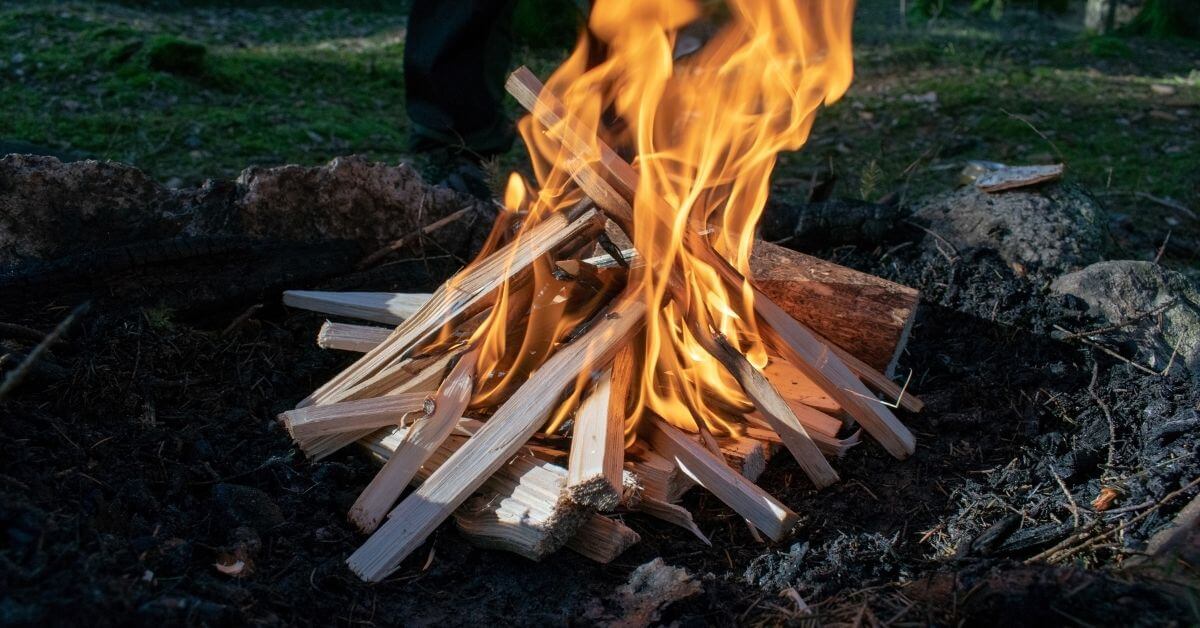
Yes, sassafras makes useful firewood, especially for kindling and shorter fires. However, its relatively low density makes it less suitable for long-lasting heat than denser woods such as oak or hickory.
If you already have sassafras logs, they are worth splitting and seasoning. You do not need to discard them simply because sassafras is not considered a premium heating wood. The key is understanding where it performs well and when another species would be more practical.
This guide focuses on American sassafras, Sassafras albidum.
Sassafras Firewood at a Glance
| Characteristic | What to expect |
|---|---|
| Wood classification | Hardwood, despite being relatively soft and lightweight |
| Approximate heat content | 18.9 million BTU per cord at 20% moisture content |
| Splitting | Generally manageable, particularly with straight-grained pieces |
| Best uses | Kindling, shorter fires, and supplementing other firewood |
| Main limitation | Less energy per stacked volume than denser fuelwoods |
| Seasoning requirement | Dry it thoroughly and verify moisture before burning |
| Overnight heating | Usually not the first choice |
| Cooking and smoking | Choose an established cooking wood instead |
Actual performance varies with moisture content, log size, airflow, and the appliance.
How Much Heat Does Sassafras Firewood Produce?
A firewood comparison published through the University of Kentucky’s woodland magazine lists sassafras at approximately 18.9 million BTU per cord at 20% moisture content.
That figure describes the fuel’s approximate energy content. It does not mean your stove will deliver all that energy into the room; appliance efficiency and operating conditions affect useful heat.
A cord is a stacked volume of 128 cubic feet, commonly arranged as a stack measuring 4 feet high, 4 feet deep, and 8 feet long.
Sassafras contains less wood mass in that volume than many denser hardwoods. As a result, you generally need more stacked volume to obtain the same total heat.
Does Sassafras Burn Hot?
Properly seasoned sassafras can produce a lively, hot fire. However, a vigorous flame is not the same as a long-lasting fuel supply.
Think of the distinction this way: flame intensity describes what is happening now, while energy per cord describes how much fuel value is available across the whole stack.
How Long Does Sassafras Firewood Burn?
There is no reliable number of hours that applies to every sassafras fire.
Burn time depends on:
- The size and number of pieces.
- Their moisture content.
- The appliance and its settings.
- The amount of combustion air.
- How the fire is loaded.
Compared with an equal volume of denser wood, sassafras generally requires more frequent replenishment. This makes it useful for shorter heating periods but less convenient when you want sustained heat with fewer reloads.
Do not restrict airflow excessively just to stretch the burn. Follow the appliance’s operating instructions.
Is Sassafras Good for Kindling?
Yes. Dry sassafras split into small pieces can be useful for starting a fire.
Straight-grained pieces are generally manageable to split, although knots and twisted grain make any log more difficult.
Set aside suitable offcuts or small splits when processing your firewood. Keep them dry and use them to establish the fire before adding larger pieces.
Kindling should still be seasoned. Small size does not make wet wood a good fire starter.
How Long Does Sassafras Take to Season?
Avoid relying on a fixed seasoning period. Drying time changes with the starting moisture content, climate, split size, and storage conditions.
A general firewood drying allowance of several months to a year may be useful for planning, but it is not proof that your sassafras is ready.
The EPA’s moisture-meter guidance recommends checking a freshly split interior surface and identifies wood below 20% moisture content as ready to burn.
How to Season Sassafras
- Cut it to the correct length. Match your stove or fireplace.
- Split larger rounds. Exposing more surface helps moisture escape.
- Stack it off the ground. Use a stable support.
- Allow airflow. Avoid tightly enclosing the stack.
- Protect the top from rain. Keep the sides ventilated.
- Test several pieces. Check freshly split surfaces rather than only the dry-looking ends.
Use the meter according to its instructions, including any required species or temperature adjustment.
Does Sassafras Produce Smoke or Creosote?
Sassafras, like other firewood, produces more troublesome smoke when it is wet or burning poorly.
A fire that repeatedly hisses, struggles to stay alight, or smolders deserves attention. Fuel moisture, airflow, and chimney draft may all contribute.
No firewood should be described as creosote-free. Dry fuel and correct operation help reduce buildup, but the chimney and appliance still need appropriate inspection and maintenance.
The wood’s aromatic smell is not a reason to breathe its smoke.
Does Sassafras Pop and Spark?
Do not assume a sassafras fire will be free of popping or escaping embers. These can occur as wood burns, and behavior varies between pieces and conditions.
Use a suitable screen with an open fireplace. For a stove, operate the door as directed by the manufacturer.
With outdoor fires, keep combustible materials clear and avoid burning when conditions or local restrictions make it inappropriate.
Advantages of Sassafras Firewood
Useful for Short Heating Periods
Sassafras is worth considering when you want a shorter fire during milder weather rather than an extended heating cycle.
Practical Kindling Material
Small, dry splits can help establish a fire before larger logs are added.
Makes Use of Available Wood
If sassafras is already available from appropriate tree work on your property, processing it can provide useful fuel.
The value is different from buying it at the same delivered price as a denser firewood.
Relatively Easy to Handle
Its lower density can make similarly sized seasoned pieces easier to carry than heavier hardwood splits.
Disadvantages of Sassafras Firewood
Lower Heat per Cord
A stack contains less fuel energy than an equal volume of many denser hardwoods. This matters when storage space is limited.
More Frequent Reloading
For sustained heating, you may need to add wood more often.
Less Convenient for Long Burns
It is generally not the first choice when the priority is holding useful heat for an extended period.
Buying Value Depends on Price
A low purchase price may be attractive, but compare the amount of seasoned wood and its likely heating value. A cheap load of wet wood is not necessarily a bargain.
Sassafras vs Oak Firewood
For extended heating, properly seasoned oak generally has the advantage because its greater density provides more energy per stacked volume.
Sassafras can still earn a place in the woodpile for kindling or shorter fires.
Moisture condition matters in this comparison. Dry sassafras can be more useful immediately than oak that is still too wet to burn properly.
If both woods are suitable for your appliance, you can use them together. Follow normal loading guidance rather than overfilling the stove to compensate for lighter fuel.
Can You Burn Sassafras in a Wood Stove?
Yes, properly seasoned, untreated sassafras can serve as cordwood fuel in a stove designed to burn firewood.
Follow the manufacturer’s instructions for loading and operation. Monitor the fire, particularly when using a load of small splits that can burn rapidly.
Never include painted, treated, or glued wood products in the load.
Is Sassafras Good for Smoking Meat?
Sassafras would not be my choice for smoking food. Use a wood sold and intended for that purpose, such as suitable oak, hickory, or fruitwood.
Heating fuel and cooking fuel are different decisions. A wood’s usefulness in a stove does not establish its suitability for flavoring food.
Is Sassafras Firewood Worth Buying?
It can be, especially when it is local, properly seasoned, and priced to reflect its lower energy per cord.
Before purchasing, confirm:
- How much wood the load contains.
- Whether it is split to a suitable size.
- Its moisture condition.
- Whether delivery is included.
- How its price compares with other seasoned wood nearby.
For occasional fires or supplementary fuel, sassafras can be a sensible purchase. For primary winter heating with limited storage, denser firewood may offer better value.
Final Verdict
Sassafras is useful firewood for kindling, shorter fires, and supplementing a mixed woodpile. Its main drawback is lower heat per stacked volume, which means more frequent loading for sustained warmth.
If you already have it, split it, stack it properly, and check its moisture before burning. If you are buying it, compare the price with other seasoned options and choose according to how you plan to use the fire.