A real Christmas tree can fill your home with the look and fragrance of the holiday season. But when you visit a tree farm or seller, you may find several types of trees that look similar at first glance.
Some have soft needles and a strong scent. Others have sturdy branches for heavy ornaments or a full, dense appearance. Choosing the right tree depends on what matters most to your family.
Fraser fir, balsam fir, Douglas-fir, noble fir, Scotch pine, and Colorado blue spruce are among the real Christmas trees you may find for sale. Each has different characteristics, and availability varies by region.
This guide compares popular Christmas tree types and explains how to choose a fresh tree that fits your home and decorating style.
Types of Real Christmas Trees at a Glance
| Tree Type | Appearance and Needles | Main Appeal | Keep in Mind |
|---|---|---|---|
| Fraser fir | Dark green needles with silvery undersides | Sturdy branches and good needle retention | Price and availability vary |
| Balsam fir | Soft, dark green needles | Strong traditional fragrance | Check branch strength for heavier ornaments |
| Douglas-fir | Soft needles and a full appearance | Lush shape and pleasant scent | May not support the heaviest ornaments |
| Noble fir | Blue-green needles and an open branch structure | Stiff branches for larger ornaments | May be harder to find in some areas |
| Canaan fir | Dark green needles with lighter undersides | Classic appearance and good needle retention | Individual branch strength varies |
| Concolor fir | Longer, soft, blue-green needles | Citrus-like fragrance | Branches vary in stiffness |
| Scotch pine | Green needles and relatively stiff branches | Strong branches and a pine scent | Appearance differs from soft-needled firs |
| Eastern white pine | Long, soft needles and a full look | Soft texture | Flexible branches suit lighter ornaments |
| Colorado blue spruce | Blue-green color and sharp needles | Stiff branches and distinctive color | Can shed needles as it dries indoors |
These are general characteristics. The freshness, shape, and branch strength of individual trees can vary.
1. Fraser Fir
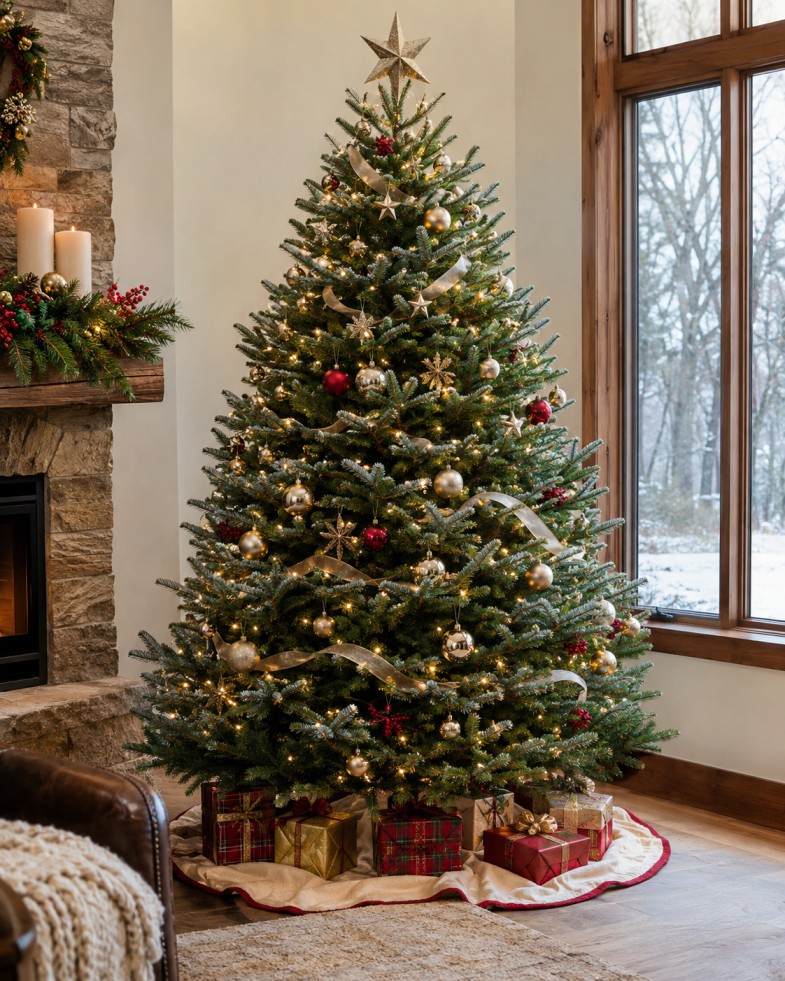
The Fraser fir is a popular choice for a classic Christmas tree. Its short needles are dark green on top, with silvery markings underneath. The branches often angle upward and provide room to display ornaments.
Fraser fir is known for good needle retention, a pleasant evergreen fragrance, and relatively sturdy branches.
Best for: Families who want a traditional-looking tree with soft needles and room for heavier ornaments.
Things to consider: Its price and availability depend on your location. Even with a sturdy tree, hang the heaviest ornaments on thicker branches closer to the trunk.
Fraser fir is often recommended for its combination of branch strength, fragrance, and needle retention. content.ces.ncsu.edu
Related reading: Is Fraser Fir a Good Christmas Tree?
[Yahan apne existing Fraser Fir article ka link add karna.]
2. Balsam Fir
Balsam fir is a good choice if you want a strong, traditional Christmas tree fragrance. It has soft, flat needles and a classic evergreen appearance.
Its foliage can look dense and attractive, while its scent makes it a favorite for people who want the aroma of a real tree throughout the room.
Best for: Homeowners who value fragrance and a traditional fir appearance.
Things to consider: Branch strength varies between trees. If you have heavy ornaments, check the branches before buying and hang the heaviest pieces close to the trunk.
Balsam fir is widely recognized for its fragrance. hort.extension.wisc.edu
3. Douglas-fir
Douglas-fir is known for its soft needles and full, lush appearance. Its fragrance is pleasant and often described as sweet or slightly citrus-like.
Despite its name, Douglas-fir is not a true fir in the Abies genus. It remains a popular choice for Christmas decorations.
Best for: People who prefer a full-looking tree and use mostly lightweight ornaments.
Things to consider: Its branches may not be suitable for the heaviest ornaments. Test individual branches before hanging valuable decorations.
Related reading: Fraser Fir vs Douglas Fir: Which Christmas Tree Is Better?
[Yahan comparison article ka link add karna.]
4. Noble Fir
Noble fir has blue-green needles and relatively stiff branches. Its branch structure often provides room for larger ornaments to hang.
It is also used in wreaths and garlands, and its appearance makes it a distinctive choice for holiday decorating.
Best for: Heavier ornaments and a tree with a blue-green appearance.
Things to consider: Noble fir may not be available everywhere, so check with local tree farms or specialty sellers.
University of Illinois Extension describes noble fir as having short, stiff branches suitable for heavier ornaments. Illinois
5. Canaan Fir
Canaan fir has a traditional Christmas tree shape, dark green foliage, and lighter tones underneath its needles. It is often compared with Fraser and balsam fir.
It has a good reputation for needle retention and can be an appealing choice if you find a fresh tree from a local grower.
Best for: A classic fir appearance and a mix of common ornament styles.
Things to consider: Branch stiffness varies. If you plan to display heavy ornaments, inspect the individual tree first.
6. Concolor Fir
Concolor fir, also known as white fir, has longer, soft needles that can appear blue-green. When the needles are crushed, they may have a citrus-like scent.
Its unusual color and fragrance make it a good option for someone who wants a real tree that looks a little different from a traditional dark green fir.
Best for: Soft needles, blue-green foliage, and a citrus-like fragrance.
Things to consider: Branches can range from flexible to moderately stiff, so check whether they suit your ornaments. extension.psu.edu
7. Scotch Pine
Scotch pine, also called Scots pine, has a classic pine appearance and relatively strong branches. Its needles grow in pairs, giving it a different look from fir trees.
The sturdy branches can accommodate many heavier ornaments, and its pine fragrance appeals to those who enjoy a traditional evergreen scent.
Best for: Strong branches and a classic pine tree look.
Things to consider: Its needles and branch appearance differ from the flat, soft needles of fir trees.
8. Eastern White Pine
Eastern white pine is known for its long, soft needles and full appearance. Its flexible branches create a gentle, feathery look.
It can be attractive with lights, ribbons, and lightweight decorations.
Best for: Soft foliage and lighter ornaments.
Things to consider: Its flexible branches may bend under heavy decorations. If you have many large glass or ceramic ornaments, inspect the tree carefully or consider a sturdier species. Illinois
9. Colorado Blue Spruce
Colorado blue spruce stands out because of its blue-green to silvery color. Its stiff branches can support many heavier ornaments.
Its needles are sharp, however, and can make decorating uncomfortable without gloves. The tree can also lose needles as it dries in a warm room.
Best for: A distinctive blue color and heavier decorations.
Things to consider: Sharp needles may be inconvenient around children and pets. Monitor the tree’s freshness carefully.
Which Real Christmas Tree Should You Choose?
| If Your Priority Is… | Trees to Consider |
|---|---|
| Traditional Christmas tree fragrance | Balsam fir or Fraser fir |
| Heavy ornaments | Fraser fir, noble fir, Scotch pine, or Colorado blue spruce |
| Soft needles | Fraser fir, balsam fir, concolor fir, or eastern white pine |
| A full appearance | Douglas-fir or eastern white pine |
| Blue-green foliage | Noble fir, concolor fir, or Colorado blue spruce |
| Good needle retention | Fraser fir, balsam fir, Canaan fir, or concolor fir |
| A citrus-like scent | Concolor fir; Douglas-fir may also have a sweet, citrus-like fragrance |
The best individual tree is one that is fresh, fits your space, and suits your decorations. Branches and fragrance can vary even among trees of the same species.
How to Choose a Fresh Christmas Tree
1. Measure Your Space
Measure the ceiling height and the width of the area where you plan to place the tree. Leave room for the stand, topper, and clearance from heat sources.
2. Check the Needles
Look for healthy-looking outer needles. Gently run your hand along a branch; excessive loss of green needles can indicate the tree is drying out.
Some brown needles falling from the interior may be normal seasonal shedding.
3. Feel the Branches
Fresh branches should feel flexible rather than dry and brittle. If you plan to use heavy ornaments, also check whether the thicker branches provide enough support.
4. Inspect the Tree’s Shape
Look at the tree from several sides. Consider whether you prefer a dense tree or one with more space between branches for decorations.
5. Check the Trunk and Stand
Make sure the trunk will fit securely in your stand. Choose a stand that holds enough water and avoid shaving down the outside of the trunk to make it fit.
6. Ask the Seller About Freshness
Ask when the tree was cut and how it has been stored. A local grower may also help you compare species available in your area.
How to Care for a Real Christmas Tree
Once you bring the tree home, proper care helps it stay fresh:
- Make a fresh cut if needed. Ask the seller for guidance if the tree has been out of water.
- Place the trunk in plain water. Keep the cut end submerged.
- Check the stand daily. Refill it as needed.
- Keep the tree away from heat. Place it at least 3 feet from fireplaces, heaters, candles, and heat vents.
- Turn off the lights before leaving home or going to bed.
- Remove the tree promptly when it dries out.
A dry tree can be a fire hazard, regardless of species. The National Fire Protection Association recommends adding water daily and keeping the tree away from heat sources. nfpa.org
Related reading: How to Keep a Christmas Tree Fresh Longer
[Yahan apne published article ka link add karna.]
Frequently Asked Questions
Which Type of Real Christmas Tree Lasts the Longest?
There is no guaranteed lifespan for every tree of a species. Fraser, balsam, Canaan, and concolor firs are known for good needle retention, but freshness at purchase and proper care are essential.
Which Christmas Tree Has the Strongest Smell?
Balsam fir is well known for its strong traditional Christmas tree fragrance. Fragrance preferences vary, so smell the available trees before choosing.
Which Christmas Tree Is Best for Heavy Ornaments?
Fraser fir, noble fir, Scotch pine, and Colorado blue spruce are options to consider because of their relatively sturdy branches. Inspect the individual tree and place heavy ornaments close to the trunk.
Which Christmas Tree Has the Softest Needles?
Several types have soft needles, including Fraser fir, balsam fir, Douglas-fir, and eastern white pine. Eastern white pine has long, soft needles, while fir needles are typically shorter and flatter.
Which Christmas Tree Drops the Fewest Needles?
Fraser fir and several other firs have good reputations for needle retention. However, even a species known for holding needles can dry out and shed if it is not fresh or properly watered.
Can I Replant a Real Christmas Tree?
A cut Christmas tree cannot be replanted because its roots have been removed. A living tree sold with a suitable root system may be planted, depending on its condition, your local climate, and nursery guidance.
Final Thoughts
There is no single best real Christmas tree for every home. A Fraser fir is a strong all-around choice, a balsam fir is appealing for fragrance, and a noble fir or blue spruce may suit heavier decorations. If you prefer a full tree with soft foliage, consider Douglas-fir or eastern white pine.
Whatever type you choose, look for a fresh tree that fits your space and decorations. Keep it watered, place it away from heat, and remove it promptly when it becomes dry.