
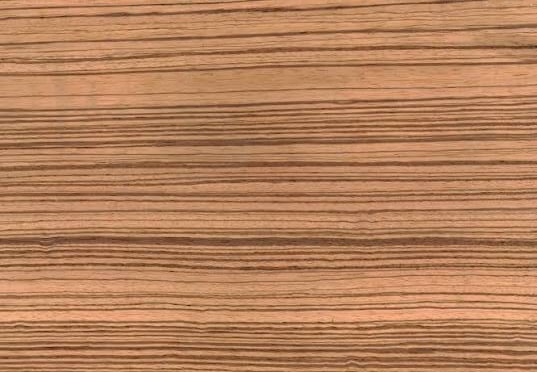
Zebrawood hardwood flooring is a bold choice for homeowners who want a floor with a distinctive natural pattern. Its light golden-brown color and dark stripes create a dramatic appearance that stands out from more familiar woods such as oak and maple.
But appearance is only one part of the decision. Before choosing zebrawood flooring, it is important to understand its hardness, cost, installation requirements, and response to moisture.
In this guide, we’ll explore the advantages and disadvantages of zebrawood flooring and help you decide whether it is right for your home.
What Is Zebrawood Hardwood Flooring?
Zebrawood hardwood flooring is flooring made with zebrawood, an exotic hardwood known for its contrasting light and dark stripes. The wood commonly referred to as African zebrawood comes from Microberlinia brazzavillensis, a tree native to tropical regions of West and Central Africa.
Depending on the product, the flooring may be made from solid zebrawood or engineered boards with a real zebrawood top layer. You may also find laminate or vinyl flooring with a zebrawood-style printed pattern.
If you want genuine wood, check the product description carefully. A floor advertised as “zebrawood look” is not necessarily made from zebrawood.
Zebrawood Flooring at a Glance
| Feature | Details |
|---|---|
| Wood species | Commonly Microberlinia brazzavillensis |
| Appearance | Light golden to brown background with dark stripes |
| Janka hardness | Approximately 1,830 lbf |
| Grain | Often interlocked or wavy |
| Texture | Medium to coarse |
| Common flooring types | Solid hardwood and engineered hardwood |
| Best suited for | Indoor spaces where a bold natural wood floor is desired |
| Waterproof? | No |
| Main considerations | Cost, availability, moisture control, and professional installation |
The Janka value is an average for the wood species. The wear layer, finish, construction, and installation also influence how a particular floor performs. The Wood Database (Hardwood)
What Does Zebrawood Flooring Look Like?
Zebrawood flooring is known for its high-contrast striped grain. The lighter areas can range from pale golden brown to cream, while the darker streaks may appear chocolate brown or nearly black.
The appearance varies from board to board. Some planks have relatively straight stripes, while others show a more irregular or wavy pattern. The way the log is cut also affects the look of the finished flooring.
Because zebrawood has a strong visual character, it works well in spaces with simpler furniture and neutral colors. It can become the main design feature in a living room, dining room, bedroom, or office.
Tip: Ask for several samples or view a larger installed display before buying. A small sample may not show the full variation you will see across the floor.
Is Zebrawood Good for Flooring?
Yes, zebrawood can be a good flooring material for homeowners who like its dramatic appearance and are comfortable with the cost and care requirements.
It is a hard, dense wood that can be used in residential interiors. However, hardness does not make it scratchproof or waterproof. The finish can still show wear, and changes in indoor humidity can cause wood to expand or contract.
Zebrawood flooring is best considered when:
- You want a distinctive natural wood pattern.
- You are comfortable with a premium or specialty flooring product.
- The installation area can be kept within the manufacturer’s temperature and humidity guidelines.
- You can find a qualified installer familiar with the product.
If you prefer a subtle grain or a widely available floor that is easy to match later, a more common hardwood may be a better fit.
How Hard Is Zebrawood Flooring?
Zebrawood has a Janka hardness rating of approximately 1,830 pounds-force, making it harder than many common domestic flooring woods, including red oak and hard maple. OHC
| Wood Species | Approximate Janka Hardness |
|---|---|
| Red oak | 1,290 lbf |
| White oak | 1,360 lbf |
| Hard maple | 1,450 lbf |
| Zebrawood | 1,830 lbf |
| Hickory | About 1,820–1,880 lbf |
Janka hardness measures resistance to indentation; it does not measure scratch resistance or guarantee how a finished floor will perform. A shoe sole with grit, a heavy object, or moving furniture can still damage the surface.
For engineered flooring, the overall product construction and the thickness of the real wood wear layer also matter.
Pros and Cons of Zebrawood Hardwood Flooring
Advantages
1. Unique Appearance
The biggest advantage of zebrawood flooring is its striped grain. It creates a look that is difficult to replicate with more familiar domestic hardwoods.
2. Good Hardness
With a Janka rating of around 1,830 lbf, zebrawood offers good resistance to dents compared with many commonly used flooring woods.
3. Works Well as a Design Feature
Zebrawood can add visual interest to a room without requiring a complicated floor pattern. It can also be used in a smaller area or as an accent alongside a more neutral flooring material.
4. Available in Different Constructions
Depending on the supplier, you may find solid zebrawood flooring or engineered flooring with a real zebrawood surface. This gives buyers more than one option to consider.
Disadvantages
1. Can Be Expensive
Zebrawood is an imported specialty hardwood. Material prices, shipping, and installation can make it more expensive than common flooring choices.
2. Limited Availability
Not every flooring store carries genuine zebrawood. Depending on your location, you may need to order it from a specialist supplier.
3. Challenging to Work With
The wood’s interlocked grain can tear during machining. Cutting, sanding, and finishing may require additional care and experience. WoodWorkers Guild of America
4. Strong Pattern Is Not for Everyone
The striped appearance can look beautiful in the right space, but it may feel too busy for homeowners who prefer a quiet, uniform floor.
5. Sensitive to Moisture Changes
Zebrawood is not waterproof. As with other hardwood floors, changes in humidity can cause movement, gaps, or other problems if the product is installed or maintained incorrectly.
6. Matching Boards Later Can Be Difficult
Natural color and grain vary, and availability can change. Finding closely matching replacement boards years after installation may be challenging.
Solid vs. Engineered Zebrawood Flooring
| Feature | Solid Zebrawood Flooring | Engineered Zebrawood Flooring |
|---|---|---|
| Construction | A plank made from solid wood | A real zebrawood top layer bonded to a layered core |
| Appearance | Natural zebrawood throughout the plank | Real zebrawood visible on the surface |
| Wood movement | Can expand and contract with humidity changes | Layered construction generally helps limit movement |
| Refinishing | May be sanded and refinished, subject to remaining thickness and condition | Depends on wear-layer thickness and manufacturer guidance |
| Installation options | Depend on the product and subfloor | Depend on the product and may include glue-down, nail-down, or floating |
| Basement suitability | Often limited; check manufacturer instructions | Some products may be suitable for below-grade installation if conditions meet requirements |
Which One Should You Choose?
Solid zebrawood may appeal to buyers who prefer a solid wood plank and want refinishing potential over the life of the floor.
Engineered zebrawood may be useful where a manufacturer-approved layered floor is better suited to the subfloor or room conditions. However, engineered flooring is not waterproof, and not every product can be installed in a basement.
For either option, follow the specific product’s installation and moisture requirements.
How Much Does Zebrawood Flooring Cost?
Zebrawood flooring prices vary considerably based on whether the product is solid or engineered, its wear layer, plank size, finish, availability, and supplier.
As one example, a U.S. retailer lists a prefinished engineered zebrawood product with a 1 mm wear layer at $5.99 per square foot. That listing also notes an additional charge for smaller orders. This is one product example, not a reliable average for all zebrawood flooring.
When comparing quotes, ask whether the price includes:
- Flooring material and an allowance for waste
- Shipping and delivery
- Removal of old flooring
- Subfloor preparation and moisture testing
- Underlayment, adhesive, or fasteners
- Installation labor
- Trim, transitions, and finishing
Important: Zebrawood lumber sold by the board foot is not directly comparable to finished flooring sold by the square foot. Lumber may still need to be milled, dried, installed, and finished.
For a realistic budget, request written quotes for the exact product and room conditions from local suppliers and installers.
Zebrawood Flooring Installation
A successful zebrawood floor installation starts with a suitable subfloor and proper moisture control. The exact steps depend on the flooring manufacturer and the installation method.
1. Inspect the Flooring
Before installation, inspect the boards for visible damage and review the range of colors and grain patterns. Mix planks from multiple boxes if recommended by the manufacturer to distribute variation across the room.
2. Check the Subfloor
The subfloor should meet the manufacturer’s requirements for cleanliness, flatness, structural condition, and moisture content.
Moisture testing is especially important over concrete or in rooms where moisture problems have occurred.
3. Follow Acclimation Instructions
Allow the flooring to acclimate as directed by the manufacturer. The required conditions and time can vary by product, so there is no single acclimation period that applies to every zebrawood floor.
4. Choose an Approved Installation Method
Depending on the product, flooring may be nailed, stapled, glued, or installed as a floating floor. Use only the methods and materials approved by the manufacturer.
5. Allow for Expansion
Wood flooring needs appropriate expansion space around walls and other fixed objects. The required gap depends on the product and room size.
Because zebrawood is dense and can be difficult to machine cleanly, hiring an experienced hardwood flooring installer is a sensible choice.
How to Clean and Maintain Zebrawood Floors
Regular care can help protect the finish and preserve the floor’s appearance.
Sweep or Vacuum Regularly
Remove dust, grit, and small particles with a soft broom or a vacuum designed for hard floors. Grit trapped under shoes and furniture can scratch the finish.
Use a Suitable Cleaner
Use a cleaner recommended by the flooring or finish manufacturer. Apply it with a lightly damp mop when directed, and avoid leaving standing water on the floor.
Clean Spills Quickly
Wipe up spills promptly with a soft cloth. Zebrawood is not waterproof, and prolonged moisture exposure can damage the finish or wood.
Protect Against Furniture Scratches
Place felt pads under furniture legs and avoid dragging heavy items across the floor. Use suitable mats near entrances to reduce tracked-in dirt.
Control Indoor Humidity
Keep the room within the temperature and humidity range recommended by the flooring manufacturer. Seasonal changes can affect how wood expands and contracts.
Limit Direct Sunlight
Sunlight can change the appearance of wood over time. Curtains, blinds, or UV-filtering window treatments can help reduce uneven exposure.
Can Zebrawood Flooring Be Refinished?
Solid zebrawood flooring may be refinished, provided enough wood remains above the tongue and the floor is in suitable condition. A flooring professional can inspect it and recommend whether sanding is appropriate.
Engineered zebrawood flooring may or may not be refinished. The answer depends mainly on the thickness of its real wood wear layer, the floor’s condition, and the manufacturer’s instructions.
For example, an engineered product with a thin wear layer offers less material for sanding than a product with a thicker one. Ask the manufacturer or installer before attempting to refinish it.
Is Zebrawood Flooring Suitable for Kitchens?
Zebrawood flooring can be installed in a kitchen if the flooring manufacturer permits it and the homeowner is prepared to manage spills and humidity.
However, kitchens have a higher risk of water exposure from sinks, dishwashers, and appliances. Clean up spills quickly and check for leaks regularly. If you need a waterproof surface, consider a product designed specifically for that requirement.
Is Zebrawood Flooring Suitable for Basements?
Basements can have higher moisture levels than other rooms. Solid hardwood is often restricted in below-grade spaces, while some engineered flooring products may be approved for them.
Before choosing zebrawood for a basement, confirm that:
- The manufacturer allows below-grade installation.
- The concrete or subfloor meets moisture limits.
- Any required moisture barrier or underlayment is installed.
- The room can maintain the required temperature and humidity.
A flooring professional should assess the space before you order the material.
Zebrawood Flooring vs. Oak Flooring
| Feature | Zebrawood | Oak |
|---|---|---|
| Appearance | Bold, contrasting stripes | More familiar grain with a range of finishes |
| Hardness | Approximately 1,830 lbf | Approximately 1,290 lbf for red oak; 1,360 lbf for white oak |
| Availability | Often sold through specialty suppliers | Widely available |
| Cost | Often a premium specialty option | Wide range of prices and grades |
| Design style | Best for a dramatic statement | Suits both traditional and modern interiors |
Choose zebrawood if its unusual grain is the feature you want to highlight. Choose oak if you prefer broader availability and a more familiar flooring appearance.
Is Zebrawood Flooring Sustainable?
Sustainability depends on the species, where the wood was harvested, and how it was sourced. Zebrawood should not automatically be considered sustainable simply because it is a natural material.
Microberlinia brazzavillensis is listed as Vulnerable on the IUCN Red List, according to The Wood Database. A related species sometimes sold as zebrawood, Microberlinia bisulcata, is listed as Endangered.
Before buying, ask the supplier for:
- The flooring’s scientific species name
- Its country of origin
- Information about legal and responsible sourcing
- Any available certification or chain-of-custody documentation
An engineered floor uses a thinner visible layer of zebrawood than a solid plank, although the sustainability of the complete product also depends on its core, sourcing, manufacturing, and transport.
Frequently Asked Questions
Does Zebrawood Flooring Scratch Easily?
Zebrawood is relatively hard, but its finish can still be scratched by grit, furniture, pet claws, and other abrasive contact. Routine cleaning and protective pads can help reduce damage.
Is Zebrawood Flooring Waterproof?
No. Solid and engineered zebrawood flooring are not waterproof unless a specific product makes a supported claim about its complete construction. Follow the manufacturer’s care instructions and clean spills promptly.
Does Zebrawood Flooring Change Color Over Time?
Like many natural woods, zebrawood can change color with age and light exposure. The amount of change depends on the wood, finish, and conditions in the room.
Can Zebrawood Flooring Be Used With Underfloor Heating?
Some flooring products may be approved for use over radiant heating, but you should not assume every zebrawood floor is suitable. Check the flooring manufacturer’s instructions for maximum surface temperature, installation method, and humidity requirements.
Is Zebrawood Flooring Good for Homes With Pets?
Its hardness can help resist dents, but pet claws and tracked-in grit can still scratch the finish. Keep nails trimmed, clean floors regularly, and choose a finish that matches your household’s needs.
Final Thoughts
Zebrawood hardwood flooring offers a dramatic striped appearance and a relatively hard surface for indoor spaces. It can be an excellent choice for a statement room or a homeowner who wants something different from conventional oak or maple flooring.
Its higher potential cost, limited availability, and sensitivity to moisture make planning important. Compare samples, confirm the product’s construction and sourcing, and obtain an installation quote before making a final decision.
Want to learn more about the wood itself? Read our complete guide to Zebrawood: Uses, Properties, Pros and Cons.