
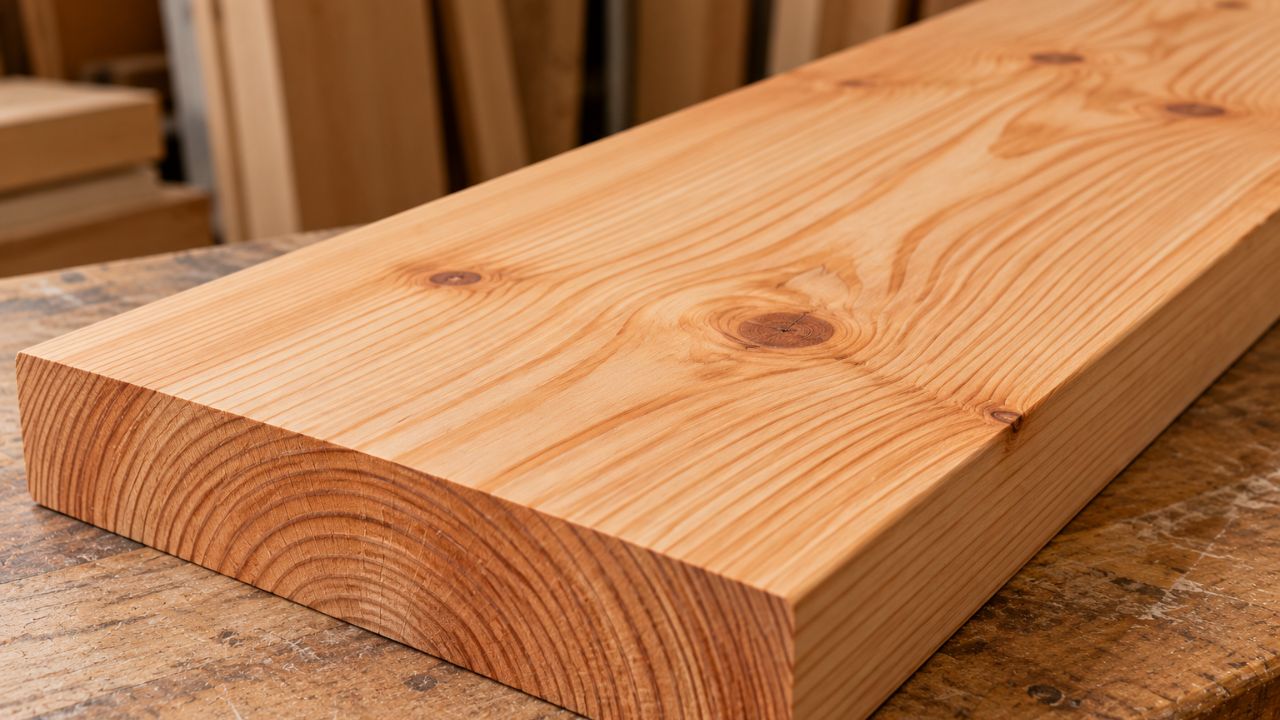
Yes, you can stain larch wood to change its color and highlight its grain. For outdoor projects, a suitable exterior stain can also help protect the surface from weathering. The challenge is preparing the wood so the finish absorbs or adheres evenly.
Larch can contain resin, and different parts of a board may absorb stain differently. Applying stain directly over resin, damp wood, or a deteriorating finish can leave an uneven result.
The right approach depends on whether you are finishing indoor furniture, outdoor cladding, fencing, or decking.
Does Larch Take Stain Well?
Larch can produce an attractive stained finish, but results depend on the surface condition and coating system.
Its growth rings contain bands of wood with different densities, which can develop different shades when stained. Knots and resinous areas may also behave differently from the surrounding wood.
Some contrast is natural and helps define the grain. However, unwanted blotches, pale patches, or sticky areas usually need closer attention.
Before starting, check for:
- Resin deposits or sticky knots.
- Dirt, grease, and glue residue.
- An existing coating that prevents penetration.
- Weathered or loose surface fibers.
- Moisture levels above the coating manufacturer’s limit.
What Is the Best Stain for Larch Wood?
Choose the finish for the application first, then select the color. A product suitable for an indoor shelf may be unsuitable for a deck.
| Project | Finish to consider | What to check |
|---|---|---|
| Interior furniture or paneling | Interior wood stain with a compatible topcoat | Color consistency and wear protection |
| Exterior cladding or fencing | Exterior stain approved for the surface | Weather resistance, preparation, and maintenance |
| Decking | A decking stain or oil suitable for larch | Foot-traffic suitability and application requirements |
| Exterior doors and windows | A coating system intended for exterior joinery | Compatibility with the existing finish and construction |
Oil-Based or Water-Based Stain?
Either may work if the manufacturer approves it for the wood and intended use.
Oil-based products may provide a longer working time, while water-based products often dry faster. However, formulations vary, so those differences should not replace reading the instructions.
Some products sold as “stains” primarily add color. Others also function as a protective exterior coating. Check whether a separate topcoat is required.
Is a Pigmented Finish Better Outdoors?
A suitable pigmented finish generally provides more protection against sunlight-related color change than a simple clear finish.
Very light transparent colors may offer limited UV protection. Osmo notes this limitation in its Natural Oil Woodstain technical information.
A stain can slow changes in appearance, but it will not preserve freshly cut larch’s color indefinitely without maintenance.
Should You Weather New Larch Before Staining?
Only weather the wood when the selected finish requires it.
Some coating systems recommend weathering fresh larch before application because the surface may initially be less absorbent. For example, Osmo identifies larch among woods that may need weathering before its oils are applied. See its weathering guidance.
That does not mean every stain requires the same waiting period. Other systems may specify different preparation or factory application.
Choose the product before deciding to leave new boards exposed. Unnecessary weathering can create additional cleaning and preparation work.
How to Stain Larch Wood Step by Step
1. Identify the Existing Surface
Determine whether the larch is bare, previously oiled, stained, painted, or varnished.
A penetrating stain will not work properly over a coating that blocks absorption. An existing finish may need cleaning, abrading, or removal, depending on its condition and the new product.
If you cannot identify the coating, test a small area and seek compatibility advice before treating the entire surface.
2. Clean the Wood
Remove dirt, algae, grease, and other contamination using a cleaner suitable for the wood and finish.
For exterior surfaces, follow the cleaner’s instructions for dilution, rinsing, and drying. Avoid aggressive cleaning that damages the fibers.
Weathered gray boards may need a suitable restoration treatment or sanding before a transparent stain can produce a reasonably consistent color. Stain alone will not conceal every weathering mark.
3. Address Resin Deposits
Do not apply stain over sticky resin.
Carefully remove hardened surface deposits without gouging the wood. For remaining residue, use only a cleaning method or solvent approved by the coating manufacturer, then allow the surface to dry as directed.
Resin can reappear, particularly around knots in warm conditions. If bleeding remains active, resolve it before coating rather than repeatedly covering it.
Knot-blocking primers are generally associated with opaque paint systems. They may leave visible patches beneath a transparent stain.
4. Check That the Wood Is Dry Enough
The surface feeling dry is not always sufficient. Use a moisture meter where practical and compare the reading with the finish manufacturer’s permitted limit.
Allow adequate drying after washing or rain. Do not rely on one universal moisture percentage or waiting period for every coating.
For outdoor work, also check the required temperature range and rain-free application window.
5. Sand as Required
On smooth larch, sand evenly to remove defects and prepare the surface. Follow the finish manufacturer’s recommended grit.
Do not polish the wood with very fine abrasive unless the product calls for it; this can affect stain uptake.
Rough-sawn cladding may not require the same sanding process as furniture. Preserve the intended texture and prepare it according to the coating instructions.
Remove dust thoroughly before continuing.
6. Test the Complete Finish
Use an offcut from the same batch of wood, or choose an inconspicuous area.
Include both clear wood and a knot if possible. Apply the same preparation, number of coats, and topcoat planned for the project.
Let the sample dry before judging it. Larch’s natural yellow, orange, or brown tones influence the result, so the finished color may differ from the label.
7. Apply the Stain Evenly
Stir the product as directed and use the recommended brush, pad, or applicator.
Work along the grain in manageable sections. On cladding or fencing, completing one board at a time can help reduce visible overlaps.
Maintain a wet edge where required. Apply the specified amount rather than assuming a thicker coat provides better protection.
Remove excess only when the product instructions call for it. Wiping stains and exterior coating stains are not all applied in the same way.
8. Allow Drying and Add Further Coats
Follow the stated drying and recoating intervals. Cool weather, high humidity, and excessive application can delay drying.
If another coat or a protective topcoat is required, confirm compatibility before applying it.
Do not automatically add clear varnish over an exterior stain. That can change the intended coating system and create maintenance problems.
Does Larch Need Pre-Stain Conditioner?
A compatible conditioner may help an interior penetrating stain color the wood more evenly. However, it can also reduce the depth of color.
Test it alongside an untreated sample and follow the stain manufacturer’s recommendations.
For exterior larch, do not assume an interior conditioner is appropriate. The exterior coating may require direct application to prepared wood or a particular primer.
Common Larch Staining Problems
| Problem | Possible cause | What to check |
|---|---|---|
| Pale patches | Resin, old finish, glue, or uneven preparation | Remove the obstruction and repeat a test |
| Dark overlaps | Uneven application or drying between sections | Work in smaller sections and maintain consistent timing |
| Sticky finish | Excess product, resin contamination, or unsuitable drying conditions | Follow the manufacturer’s correction advice |
| Peeling | Poor adhesion, trapped moisture, or an incompatible coating | Identify the cause before recoating |
| Patchy gray areas | Uneven weathering remaining beneath transparent stain | Improve preparation or consider a more opaque system |
Adding another coat without identifying the cause can make the problem harder to correct.
How Often Should You Restain Larch?
There is no fixed maintenance interval for every larch surface.
Exposure, coating type, color, orientation, and wear all matter. A sheltered wall and an exposed deck will not age at the same rate.
Inspect periodically for worn areas, coating failure, and changes around joints or cut ends. Clean and renew the finish according to its maintenance instructions before widespread deterioration occurs.
Frequently Asked Questions
Can You Stain Larch Dark Brown or Black?
Yes, with a suitable product. Test first, because dark colors can emphasize application differences and may increase surface heating in direct sunlight.
Can You Stain Gray, Weathered Larch?
Yes, after appropriate preparation. Transparent stain will still reveal underlying color variation, so cleaning or restoration may be necessary.
Can You Stain Larch Without Sanding?
Sometimes. A clean, sound, rough-sawn surface or compatible maintenance coat may not need sanding. Smooth, damaged, or previously coated wood may require more preparation.
Will Stain Make Larch Waterproof?
No. A suitable finish can reduce wetting and protect the surface, but drainage, ventilation, and sound construction remain important.
Can You Leave Larch Unstained?
Some exterior larch installations are intended to weather naturally. Whether that is appropriate depends on the timber, exposure, and construction. Expect color changes, which may develop unevenly in sheltered and exposed areas.
When applying finishes, follow the label’s ventilation and protective-equipment requirements. Handle oil-soaked rags as directed; leaving them piled together can create a fire risk.